
Maharashtra
Heavy rains in Mumbai city affect urban system

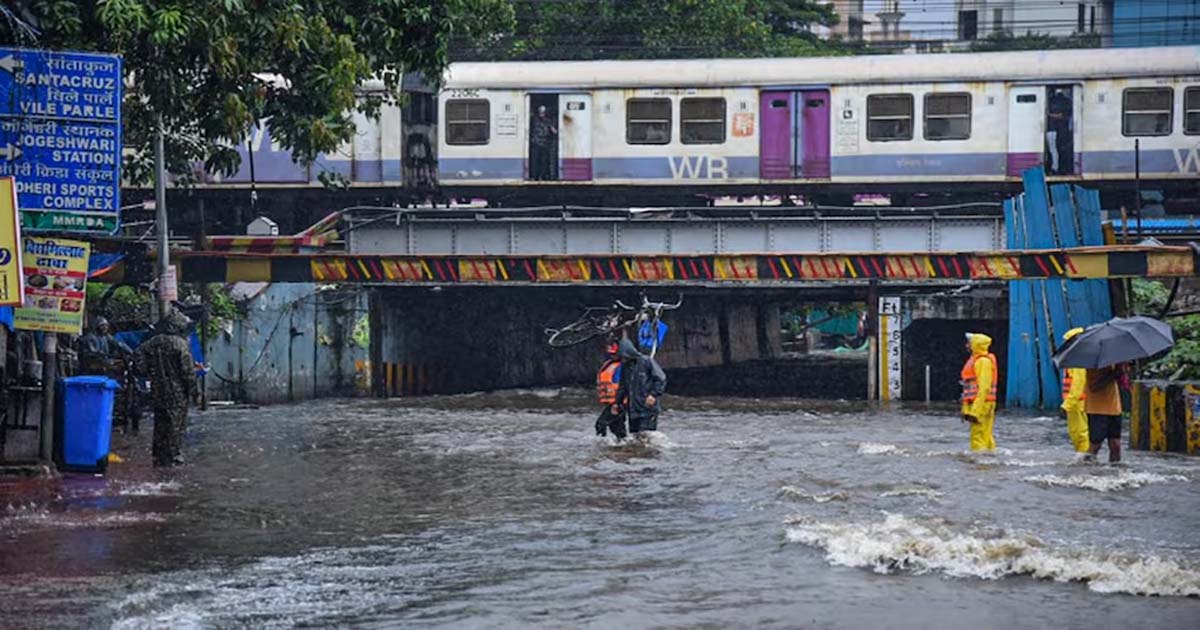
Mumbai: Heavy rains have been continuing in Mumbai city since midnight, due to which traffic in Mumbai has also been affected and local trains, which are called lifelines, are also running late. Central Railway trains are running late by 15 to 20 minutes, while services on the Western Line have also been affected due to the impact of rain. Due to the rain in Mumbai since last night, citizens are facing a lot of trouble due to traffic jams on the roads. Due to traffic and water accumulation in low-lying areas, the routes of BEST buses have also been changed. Due to rain, a bus of the back depot got stuck in a pothole on the road when it was raining. The wheel of the bus got stuck in the pothole on Jaikar Marg, after which the route of the bus was changed. The Meteorological Department has predicted heavy to very heavy rains in Mumbai city and suburbs for the next 48 hours, so the government has ordered the BMC to remain on alert mode.
Air services were also affected due to rain. Flights were also affected due to bad weather, while there have been complaints of traffic jams due to potholes on the roads in Mumbai city during the rain. The sea has also been flooded due to the rain and high waves have risen in the sea. 95 mm of rain was recorded in the city, 58 mm in the northern suburbs and 75 mm in the western suburbs. Due to the flood situation in Mumbai city, normal civil order was definitely affected, but normal life was going on. A flood alert has been issued in the sea and there will be floods tomorrow as well, so citizens have been appealed not to go to the beach. Along with this, divers have also been deployed on the beach. There have been complaints of water accumulation in low-lying areas due to rain in Andheri metro area.

Maharashtra
Bollywood in the Crosshairs After Firing at Tiger Shroff; Legal Action Initiated Against Bishnoi Gang, Three Shooters Arrested

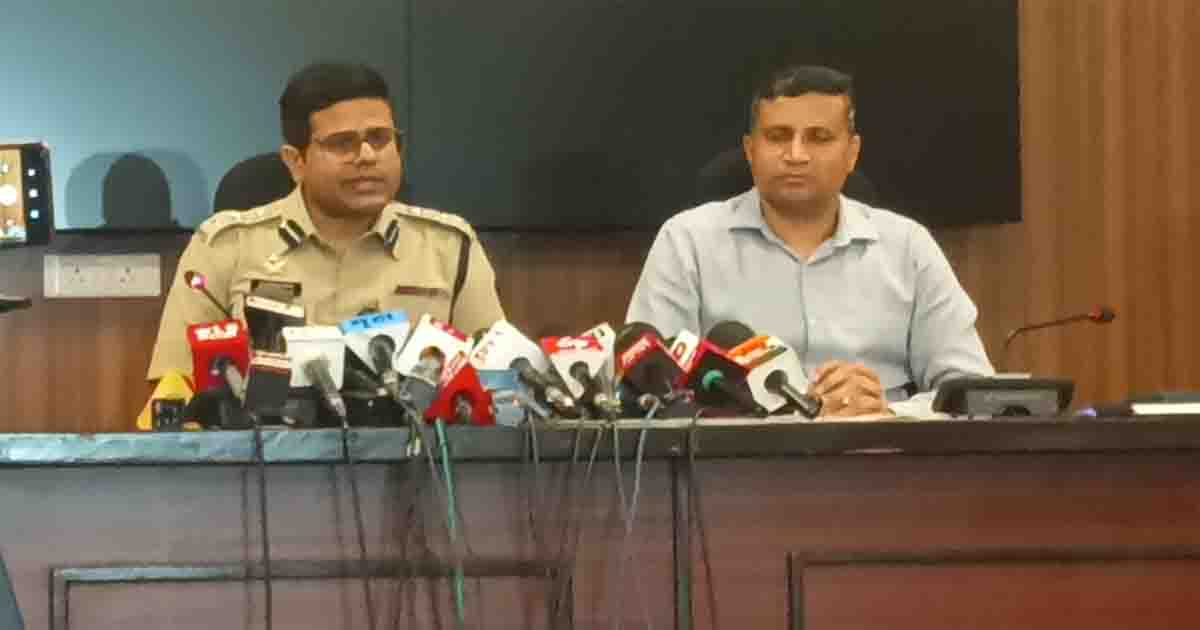
Mumbai: The Crime Branch has claimed to have solved the case involving a shooting incident targeting Tiger Shroff in the Juhu area of Mumbai. Addressing a press conference, Mumbai Crime Branch DCP Raj Tilak Roshan stated that two unidentified individuals on a motorcycle carried out the shooting. The Crime Branch received information that, following the incident, the shooters abandoned their Pulsar motorcycle at Andheri station and traveled by train toward Kota. The Crime Branch alerted the Kota police, who subsequently arrested three suspects. The police have now taken all three individuals into custody. Additionally, Anil Pandit had circulated a post online referencing the ‘Bishnoi gang,’ a matter that is currently under police investigation. Regarding the targeting of Bollywood figures by the Bishnoi gang, DCP Raj Tilak Roshan noted that action has been taken against the group—including in the earlier case involving the shooting incident at Salman Khan’s residence. In the current case, the Crime Branch has registered a case under charges of attempted murder and the Arms Act. Legal proceedings are also underway concerning the Lawrence and Anmol Bishnoi gang, with efforts being made to secure the custody of Lawrence Bishnoi. The DCP explained that comprehensive information was provided to the Kota police, as Crime Branch teams had been actively pursuing the shooters. To date, no weapons have been recovered from the suspects. Authorities are currently verifying a post circulating on social media to determine whether it originated from the Bishnoi gang, and action is being taken against those involved. The suspects spent 10 to 15 minutes surveying the scene before carrying out the shooting. One of the suspects, 22-year-old Ritik (alias Roshan), has completed his education up to the 12th grade. None of the three suspects are minors; therefore, they will all be held in custody for further interrogation. Five rounds were fired. Prior to this incident, no complaints regarding threats against Tiger Shroff had been received; the police are investigating every aspect of the case and have already begun questioning the three suspects while they remain in custody. The three individuals—Ritik (alias Roshan), Rehan Rashiduddin, and Paul Singh—have been arrested. Rehan, who previously worked as a ‘Rapido’ (ride-hailing) driver in Mumbai, eventually became a shooter. The suspects were apprehended from the general compartment of a train; they were attempting to flee toward Delhi and Nepal. DCP Raj Tilak Roshan stated that, in light of their involvement in past shooting incidents and their ties to the Bishnoi gang, the MCOCA (Maharashtra Control of Organised Crime Act) has been invoked against these shooters.
Maharashtra
E-Office System Implemented in Mumbai Municipal Corporation; 14,000 Users to Be Integrated in Phases to Make Administration More Transparent and Efficient
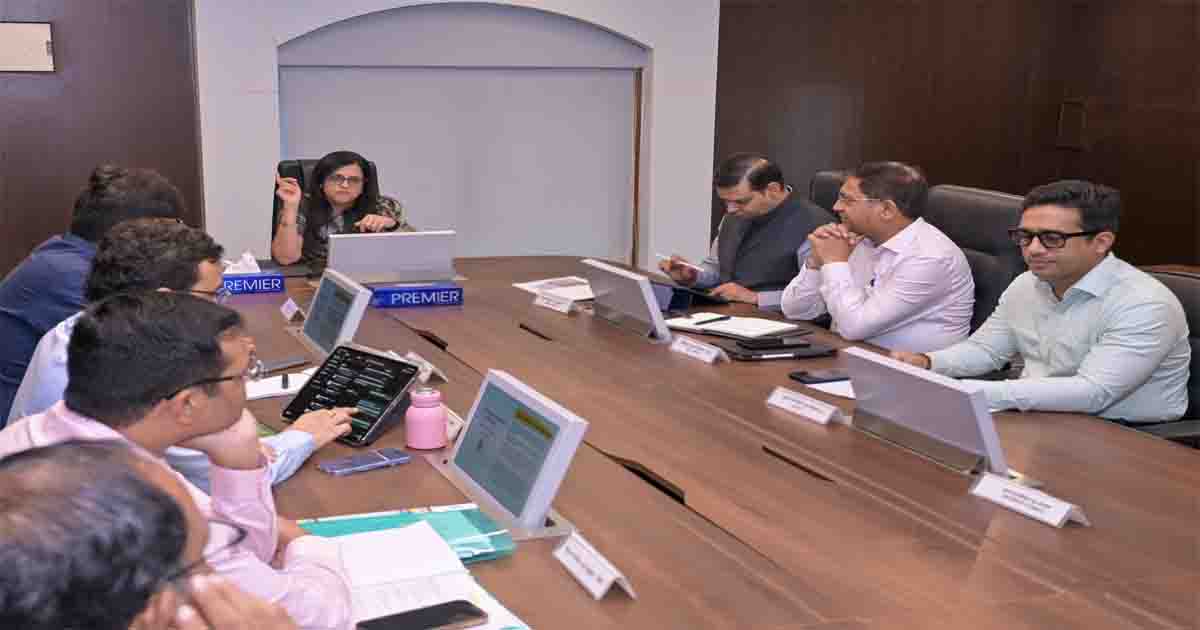
Mumbai – The Brihanmumbai Municipal Corporation (BMC) is implementing an ‘E-Office’ system to make its administrative operations more dynamic, transparent, and efficient through the effective use of modern technology. This system will facilitate the digitalization of various administrative processes, including the management of official files, correspondence, and the processing of proposals. Municipal Commissioner Ashwini Bhide stated that the system will be rolled out across the entire corporation in a phased manner, encompassing approximately 14,000 users. This initiative is expected to reduce paper consumption and render the decision-making process smoother, faster, and more transparent.
On October 17, 2026, a monthly review meeting involving various BMC departments was held at the ‘Command and Control Centre’ in Worli. During the meeting, preparations for the implementation of the ‘E-Office’ system—including technical infrastructure, training requirements, and administrative planning—were reviewed. Ashwini Bhide addressed the meeting in this regard.
The meeting was attended by Additional Municipal Commissioner (Western Suburbs) Dr. Vipin Sharma, Additional Municipal Commissioner (Projects) Abhijit Bangar, Additional Municipal Commissioner (Eastern Suburbs) Dr. Avinash Dhakne, Joint Commissioner (Vigilance) Dr. M. Devender Singh, and Deputy Commissioner (Commissioner’s Office) Prashant Gaikwad. Additionally, all Joint Commissioners, Deputy Commissioners, Assistant Commissioners, and heads of various departments were also present.
Digitalization of Administrative Affairs via ‘e-Office’
Providing information about the ‘e-Office’ system, Municipal Commissioner Ashwini Bhide explained that ‘e-Office’ is an office management system developed by the National Informatics Centre (NIC). In accordance with a government resolution issued by the Government of Maharashtra, the Brihanmumbai Municipal Corporation (BMC) has initiated the implementation of this system. The ‘e-Office’ system will enable the execution of administrative tasks digitally, thereby reducing reliance on paper-based files. Processes such as recording notes (note sheets), drafting documents, submitting proposals, and granting approvals can now be completed online, following a defined workflow. Consequently, this will not only accelerate the pace of work but also ensure transparency and accountability within administrative procedures.
Managing File Movement and Monitoring Pending Matters
The ‘e-Office’ system facilitates the creation and management of electronic files, as well as their routing to the relevant officers or departments. It allows for the systematic recording of inward and outward correspondence, the integration of scanned documents into the system, and the tracking of subsequent actions taken. Furthermore, the system enables the approval of notes, drafts, and orders through the use of digital signatures. Furthermore, it enables the monitoring of file movement, pending cases, decisions taken, and official correspondence. The ability to save and archive electronic records—along with the existence of a centralized repository for documents—makes information management highly organized and efficient. Phased Onboarding of 14,000 Users.
The implementation of the e-Office system across the Brihanmumbai Municipal Corporation (BMC) will take place in phases. This process will involve approximately 14,000 users, with specific roles and responsibilities defined at every level to ensure the effective use of the system. Municipal Commissioner Ashwini Bhide stated that a circular has been issued regarding the re-implementation of the e-Office system and its effective application in administrative affairs.
Focus on Training, Technical Facilities, and Digital Signatures
To ensure the effective implementation of the e-Office system, the Information Technology Department will conduct ‘Train-the-Trainer’ sessions for nodal officers. A central help desk will be established to resolve any technical issues that may arise during the use of the system. Additionally, a core team—led by the heads of the respective departments—will be formed to oversee the implementation process.
Emphasis is being placed on providing the necessary computing facilities and technical infrastructure, as well as ensuring that the relevant officers and staff receive appropriate training. Ms. Bhade stated that ‘Digital Signature Certificates’ (DSC) have been provided to the officers authorized to sign documents. She further explained that the effective implementation of the ‘e-Office’ system will promote digital operations within the BMC administration. This will expedite office tasks, reduce paper usage, and make the decision-making process more transparent and accountable.
Maharashtra
‘Should face same punishment as adults’: Abu Azmi demands lowering of age of juvenile offenders to 14
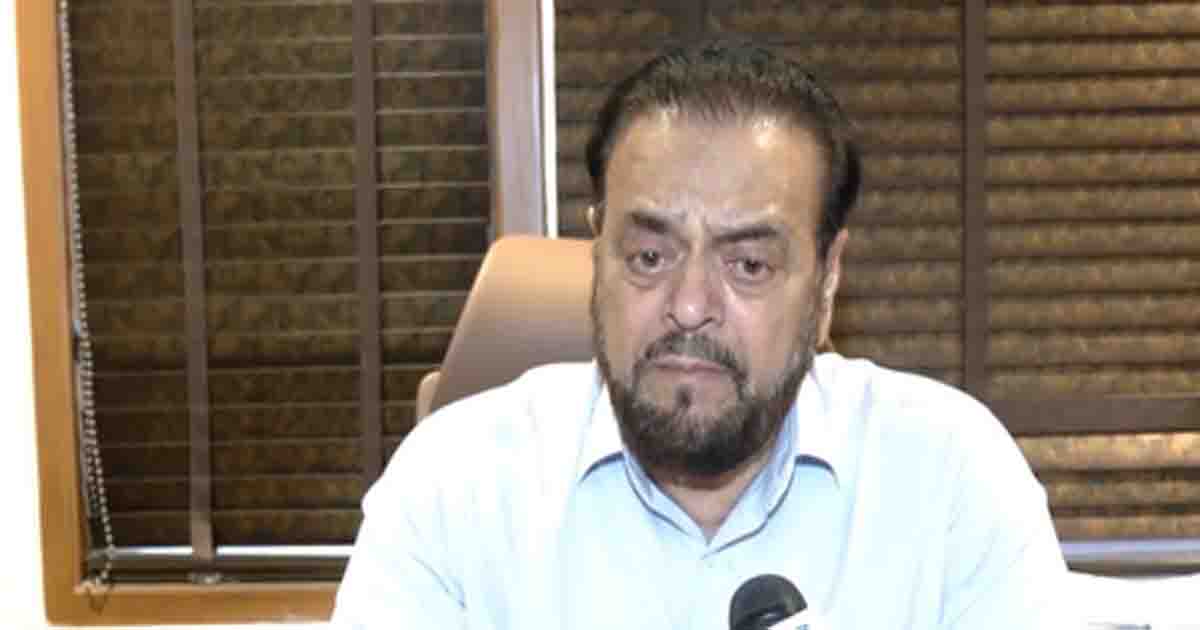
Samajwadi Party (SP) Maharashtra President and MLA, Abu Asim Azmi, on Monday demanded that the age threshold for treating an accused as a minor be lowered, arguing that juveniles aged 15 or 16 should face the same punishment as adults if they commit murder.
Speaking to media, Azmi said, “First and foremost, my demand is that the age threshold for a minor be lowered from 17 years to 14 years. At 15 or 16, young people have ‘hot blood’; they fear no one and are capable of doing anything. This age limit should be reduced to 12, 13 or 14 years. If they commit murder, they should face the same punishment as anyone else.”
Reacting to the firing incident involving actor Tiger Shroff in Mumbai, Azmi criticised Mumbai’s law and order situation, alleging that several incidents of murder and violence had taken place without receiving adequate public attention.
“First Baba Siddique, now Tiger Shroff, and it doesn’t end there. Many other murders have occurred previously as well. However, since those victims were not prominent or famous figures, their cases haven’t been highlighted. Murders are rampant in Mumbai. In Mankhurd-Shivaji Nagar, people are being murdered over the most trivial matters. The law and order situation is in a dire state,” he said.
Azmi also criticised the Maharashtra government, alleging that it was focussing its efforts on targeting Muslims rather than addressing law and order concerns.
“I want to tell Chief Minister Fadnavis that this government is focussing all its energy on humiliating Muslims. I ask, why don’t such murders happen in Singapore? Why does no one dare to commit such acts there? Why are there no murders in Arab countries? And if a murder does occur, how quickly is a verdict reached? Just look back at the pages of history,” he said.
He added that people in Mumbai were living in constant fear and said it was shameful for the government when individuals openly claimed responsibility for such crimes.
The firing incident took place on Sunday at around 7 p.m. when Tiger Shroff was returning by car from a football ground in Mumbai’s Juhu area.
According to police, the assailants fired at the vehicle with a pistol, injuring the driver. Another person present at the scene was also hit by a bullet.
A Mumbai Police official said Shroff managed to lean forward when the shots were fired, helping him avoid a direct hit. However, he sustained an injury from a fragment of shattered glass.
Police are investigating the motive behind the attack, tracing the weapon used in the shooting and determining whether other individuals were involved.
In a major development in the case, Kota City Police in Rajasthan apprehended three suspects, including a minor, at Kota railway station in connection with the firing incident on the Bollywood star.

Suspicious passenger apprehended at Delhi Jama Masjid Metro Station after trying to flee during screening

Tiger Shroff attack: Bihar family denies accused is their son

Bollywood in the Crosshairs After Firing at Tiger Shroff; Legal Action Initiated Against Bishnoi Gang, Three Shooters Arrested

E-Office System Implemented in Mumbai Municipal Corporation; 14,000 Users to Be Integrated in Phases to Make Administration More Transparent and Efficient

Bihar MLC election: Three FIRs filed against Anant Singh, Jan Suraaj candidate Anuj Singh

Rahul, Cong ecosystem want to force regime change: BJP after Neha Bora praises B’desh Gen-Z protest

BJP pays tribute to ex-President Abdul Kalam, recalls his enduring influence on generations of India’s youth

Attack on democratic rights: INDIA Bloc leaders on detentions of anti-ECI protestors

INDIA bloc begins protest march against ECI

Maha Congress stages agitation against Gyanesh Kumar
-

 Crime4 years ago
Class 10 student jumps to death in Jaipur
-

 Maharashtra2 years ago
Mumbai Local Train Update: Central Railway’s New Timetable Comes Into Effect; Check Full List Of Revised Timings & Stations
-

 Maharashtra2 years ago
Mumbai To Go Toll-Free Tonight! Maharashtra Govt Announces Complete Toll Waiver For Light Motor Vehicles At All 5 Entry Points Of City
-

 Maharashtra2 years ago
False photo of Imtiaz Jaleel’s rally, exposing the fooling conspiracy
-

 National News2 years ago
Ministry of Railways rolls out Special Drive 4.0 with focus on digitisation, cleanliness, inclusiveness and grievance redressal
-

 Maharashtra2 years ago
Maharashtra Elections 2024: Mumbai Metro & BEST Services Extended Till Midnight On Voting Day
-

 National News2 years ago
J&K: 4 Jawans Killed, 28 Injured After Bus Carrying BSF Personnel For Poll Duty Falls Into Gorge In Budgam; Terrifying Visuals Surface
-

 Crime2 years ago
Baba Siddique Murder: Mumbai Police Unable To Get Lawrence Bishnoi Custody Due To Home Ministry Order, Says Report