
Business
Govt expenditure on big infra projects to drive growth in 2025-26: Report

New Delhi, Jan 13: The Centre’s capital expenditure in big-ticket infrastructure projects such as highways, railways and power development and investments in critical sectors such as defence are expected to propel India’s economic growth in the financial year 2025- 2026 and beyond, according to a report by financial services firm Prabhudas Lilladher (PL).
“We are already witnessing an uptick in momentum in railways, defence, power, data Centers, etc., the execution of which will accelerate growth in FY26 and beyond,” the report states.
The government allocated a massive Rs 11.1 lakh crore for infrastructure projects in the budget for 204-25 and this is expected to be increased further in the forthcoming budget for 2025-26.
The anticipated measures to pump-prime the economy could provide the much-needed push to stimulate demand and support long-term growth, the report states.
The report states that the forthcoming budget will be instrumental in shaping the economic recovery, with expectations of a growth-driven focus aimed at boosting middle-class spending with inflation having eased.
In addition, sectors such as healthcare, tourism, discretionary consumption, and financialisation are poised to benefit from the recovery, according to the report.
The report’s observations on the economic revival are supported by the surge in industrial growth which touched a 6-month high of 5.2 per cent in November, up from 3.5 per cent in October of the current financial year (2024-25), according to data released by the Ministry of Statistics on Friday.
The increase also marks a significant rise over the industrial growth of 2.5 per cent recorded a year before in November 2023.
The growth rate of the manufacturing sector, which accounts for more than three-fourths of the index of industrial production (IIP), accelerated to 5.8 per cent during Nov 2024 from 4.1 per cent in October. This augurs well for employment generation as the sector plays a key role in providing quality jobs to the young graduates passing out from the country’s engineering institutes and universities.
The figures on use-based classification show that the production of capital goods, which comprise machines used in factories, went up by a robust 9 per cent. This segment reflects the real investment taking place in the economy which has a multiplier effect on the creation of jobs and incomes going ahead.
There was also a double-digit surge of 13.1 per cent in the production of consumer durables such as electronic goods, refrigerators, and TVs during November 2024 reflecting the higher consumer demand for these items amid rising incomes.


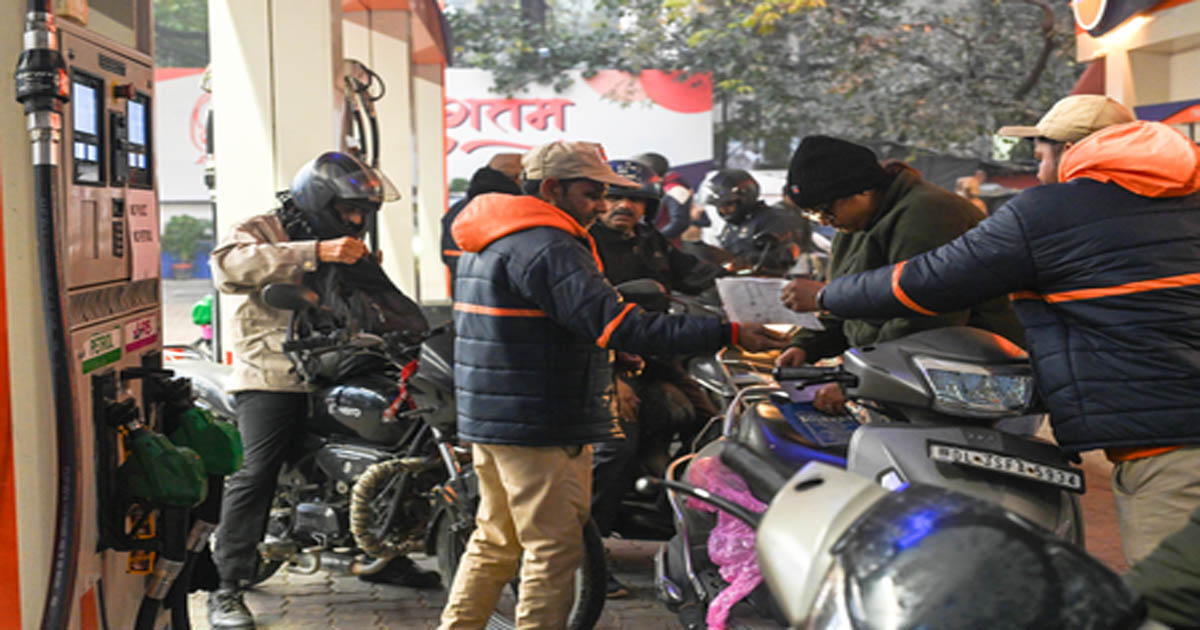
New Delhi, March 15: India still has a meaningful tax buffer to absorb crude shocks, as excise duties of Rs 19.9 per litre on gasoline and Rs 15.8 per litre on diesel can be cut to protect retail prices until about $110 per barrel crude, a report said on Monday.
The report from Elara Capital said retail gasoline and diesel prices “could be fully protected through excise cuts until roughly $110/bbl, beyond which price hikes on diesel and gasoline would become inevitable”.
It estimated India can absorb a $40–45 crude shock via tax, adding that beyond $110/bbl, the burden would shift from the government to consumers, the report added.
For every $10 per barrel rise in crude, oil marketing companies’ diesel and gasoline margins would fall by Rs 6.3 per litre and LPG losses would rise by Rs 10.2 per kg.
The dynamics implies about Rs 328 billion in annual LPG under‑recovery, the report further said.
Gross refining margins of OMCs could rise by about $5/bbl for every $10/bbl crude move, but that would not fully offset their marketing and LPG losses, the report added.
At current Brent of $100/bbl, earnings could drop sharply around 90-190 per cent absent retail price hike, tax cut, or higher LPG subsidy, it said.
IOCL is better placed among OMCs due to higher refining share, but still vulnerable if crude stays high and retail price unchanged.
“The US-Iran war has changed the way the Indian Oil & Gas sector reacts to crude prices. Our sensitivity analysis at Brent crude oil price of $100, $125 and $150 shows ‘EBITDA swing range’ from a collapse of >400 per cent for OMCs to 10-15x expansion for standalone refiners,” the report explained.
Two-thirds of India’s LNG imports pass via Hormuz, adding a supply risk on the gas side, it noted.
The firm suggested that GAIL is better positioned among gas stocks, adding that is a relatively defensive play in the current environment, as only around 16 per cent of its marketing volumes is dependent on Hormuz-linked LNG, significantly lower than for most peers, limiting direct supply disruption risk.
New Delhi, March 15: The Bharat Progress Report 2025-26, released by the NXT Foundation, highlights India’s rapid economic and technological growth over the year with the achievement of as many as 101 major milestones across digital public infrastructure, highways, railways, space, and renewable energy, taking the country towards the goal of becoming a developed nation.
The report underscores that India became the world’s fourth-largest economy in 2025, overtaking Japan with a nominal GDP of about $4.18 trillion. Driven by a robust 8.2 per cent growth rate, India continues to be the world’s fastest-growing major economy. The country is now on course to soon become the third-largest economy in the world.
The report points to several high-frequency indicators that reflect the economic growth momentum. GST collections reached a record Rs 2.17 lakh crore in April 2025, while the country’s mutual fund industry surpassed Rs 80 lakh crore in assets under management. Besides, cumulative foreign direct investment crossed $1.15 trillion with the surge in investor confidence.
The development of India’s digital public infrastructure, which is being adopted by other countries as well, is reflected in the monthly UPI transactions surpassing Rs 21 lakh crore, while Aadhaar authentication crossed one billion. This enabled the expansion of financial inclusion in the country with a marked improvement in the delivery of government services to the poor in a transparent manner, directly into the accounts of beneficiaries.
On the infrastructure and connectivity front, the major achievements included the completion of the Chenab Rail Bridge, the world’s highest railway arch bridge, and the continued expansion of the Vande Bharat train network, which has enhanced high-speed rail connectivity. At the same time, the country expanded its national highways and logistics networks, helping improve supply chains and reduce transportation costs.
The report further highlights the country’s progress in science and advanced technology. The Space Docking Experiment (SpaDeX) conducted by the Indian Space Research Organisation successfully demonstrated in-orbit docking capability, saw India storming into the exclusive club of countries with this sophisticated technology. A major step was also undertaken during the year to develop domestic capacity in semiconductors, artificial intelligence and quantum computing as the country emerges as an alternative to China for becoming a world manufacturing hub for hi-tech electronic products.
India also made major advancements in achieving its renewable energy goals in the fight against climate change. The country’s share of non-fossil fuel power capacity reached the 50 per cent mark five years ahead of the 2030 target, on the back of strong growth in solar, hydel and wind energy. The report points out that the achievement of these milestones showcases the country’s evolution into a major driver of global growth in the new world order.
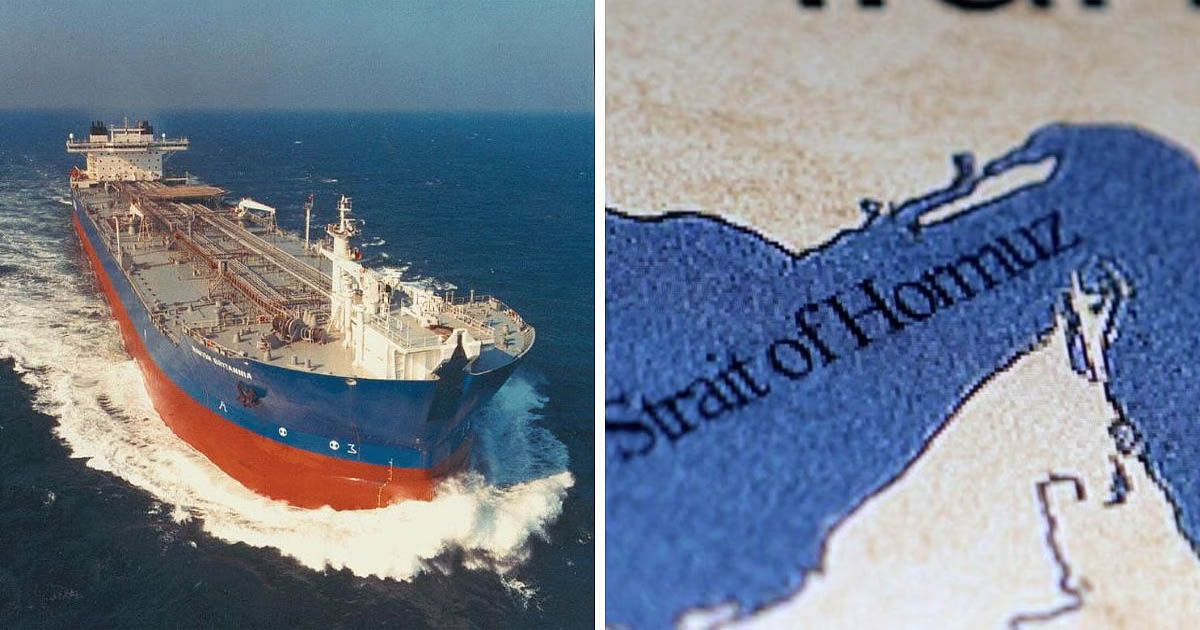
New Delhi: Iranian Ambassador Mohammad Fathali’s words of reassurance that India will receive safe passage through the Strait of Hormuz will certainly gladden Indian hearts. The Iranian envoy to India told reporters that “changes would be seen in two-three hours,” suggesting that ships carrying Indian oil and Indian nationals may be safe while going through the Strait.
The reality isn’t that simple. India is dependent on 40% of its oil from the Strait of Hormuz, but there’s a catch. Energy experts say that Indian ships do not pick up oil from the Strait but have so far outsourced it to foreign tankers.
The main reason for this is insurance. Due to the Strait being so geopolitically sensitive, insurance costs are very high, and therefore Indian Oil Corporation (IOC) or BPCL prefer to outsource it.
There is another advantage to outsourcing the oil to foreign tankers – Indian oil companies do not have to own the fleet.
India could attach its flag to the foreign tankers, but naval regulations state that there must be a minimum number of Indian crew members on the ship, along with other regulations that have to be met before the Indian flag can be put on the tanker.
If there is no flag, there is no way that an Iranian ship can detect if a ship is carrying Indian oil or not.
Coming to Indian crew members, India is one of the top three nations in the world that supplies sailors.
Government data shows the number of Indian sailors has grown from around 1.25 lakh a decade ago to more than three lakh now. Indians now comprise around 10–12% of the total number of sailors in the world.
The problem for India is that most of the Indian crew members work on oil tankers, containers, LPG vessels and bulk carriers on foreign tankers and are at great risk when naval warfare takes place.
The Ministry of Ports, Shipping and Waterways has confirmed three Indian seafarers died, with four others injured in maritime attacks around the strait amid escalating hostilities. Naval experts believe the figure is likely to be much higher.
Despite these problems, some level of coordination seems to be taking place between India and Iran.
Agency reports said that on Thursday, the Suezmax tanker Shenlong, carrying Saudi crude, arrived at a port in Mumbai after transiting the strait. The Liberia-flagged vessel was the first crude carrier to reach India from the Middle East since the war between Iran and the United States and Israel broke out in late February, according to LSEG data.
The customer is state-run Bharat Petroleum Corp.
But the lack of a formal agreement between the Iranian Navy and tankers carrying Indian oil suggests the Iranian envoy’s assurance does not guarantee a safe maritime corridor.
An MEA official says talks are on to make this happen, but so far Iran has not provided such assurance. In turn, Iran wants assurance from New Delhi that it will provide a joint statement from BRICS nations condemning the US-Israeli aggression.
India currently holds the chairmanship of BRICS, and so far there has been no joint statement. This has not been viewed well by Iran, which is a full member of BRICS.

India has tax buffer to avoid retail fuel price hike up to $110 a barrel: Report

RS polls: BJP says NDA will secure majority, BJD hopeful of ‘good result’

Govt warns of deepfake video of former Army Chief circulated online with misleading claims

Iranian Embassy appeals for cash donations in India amid online transfer issues

Mumbai Airport Customs Arrest Kerala Man Smuggling Hydroponic Weed Worth ₹12.68 Crore From Bangkok

Salim Khan hospitalised following complaints of swelling

Mulund Horror: Maharashtra CM Devendra Fadnavis Expresses Grief After 1 Killed In Mumbai Metro 4 Slab Collapse; ₹5 Lakh Aid Announced For Deceased

Mumbai: JBCN International School In Borivali Gets Bomb Threat, Search Reveals Hoax, Students Safe

Former Arsenal Star Mesut Ozil’s Convoy Gets Involved In Road Accident During Bangladesh Visit

Gold and silver surge on safe haven demand, margin cut
-

 Crime4 years ago
Class 10 student jumps to death in Jaipur
-

 Maharashtra1 year ago
Mumbai Local Train Update: Central Railway’s New Timetable Comes Into Effect; Check Full List Of Revised Timings & Stations
-

 Maharashtra1 year ago
Mumbai To Go Toll-Free Tonight! Maharashtra Govt Announces Complete Toll Waiver For Light Motor Vehicles At All 5 Entry Points Of City
-

 Maharashtra1 year ago
False photo of Imtiaz Jaleel’s rally, exposing the fooling conspiracy
-

 National News1 year ago
Ministry of Railways rolls out Special Drive 4.0 with focus on digitisation, cleanliness, inclusiveness and grievance redressal
-

 Maharashtra1 year ago
Maharashtra Elections 2024: Mumbai Metro & BEST Services Extended Till Midnight On Voting Day
-

 National News1 year ago
J&K: 4 Jawans Killed, 28 Injured After Bus Carrying BSF Personnel For Poll Duty Falls Into Gorge In Budgam; Terrifying Visuals Surface
-

 Crime1 year ago
Baba Siddique Murder: Mumbai Police Unable To Get Lawrence Bishnoi Custody Due To Home Ministry Order, Says Report