
National News
Government Cracks Down on OTT Platforms Over Obscene Content


New Delhi, July 25, 2025 — In a significant move targeting explicit digital content, the Government of India has taken steps to block several over-the-top (OTT) platforms accused of streaming obscene and vulgar material. Platforms such as ALTBalaji, ULLU, and a few others have come under the scanner for allegedly violating Indian content regulations and societal norms.
The Ministry of Information and Broadcasting, acting on multiple complaints from citizens and civil society groups, initiated the ban after conducting an internal review. Authorities stated that certain shows and web series available on these platforms contained content that was “sexually explicit,” “vulgar,” and “not suitable for public viewing,” especially in households with children.
The decision has stirred a wider debate around content regulation and creative freedom in India’s rapidly growing digital entertainment sector. While officials maintain that the step was necessary to uphold decency standards and protect cultural values, critics warn of overreach and censorship.
A senior official said, “This is not about targeting creative freedom. This is about ensuring that OTT content does not cross legal and moral boundaries. There are clear guidelines, and platforms are expected to adhere to them.”
The platforms affected reportedly failed to comply with warnings issued earlier regarding their programming. Despite advisory notices and reminders to filter or restrict adult content, several web series continued to feature nudity, explicit scenes, and suggestive themes without proper age-gating or viewer discretion tools.
In recent years, OTT platforms have grown in popularity, especially among younger audiences, with many bypassing traditional film and TV regulations. The government had previously introduced a self-regulation framework for digital content providers, but critics say enforcement has been lax, leading to the current clampdown.
Some media rights advocates and artists expressed concern over the lack of transparency in the banning process and called for an independent review mechanism. Others, however, welcomed the move, stating that unchecked access to graphic content could have a detrimental effect on social behavior and minors.
As of now, the banned platforms remain inaccessible in India. The Ministry has hinted at further actions if other OTT providers do not align their content with the prescribed code of ethics and IT rules.
This development marks a turning point in India’s digital media regulation and sets the stage for possible stricter content monitoring across streaming platforms in the future.

Business
Adani Energy Solutions profit more than doubles to Rs 1,364 crore in Q2, revenue rises 51 pc

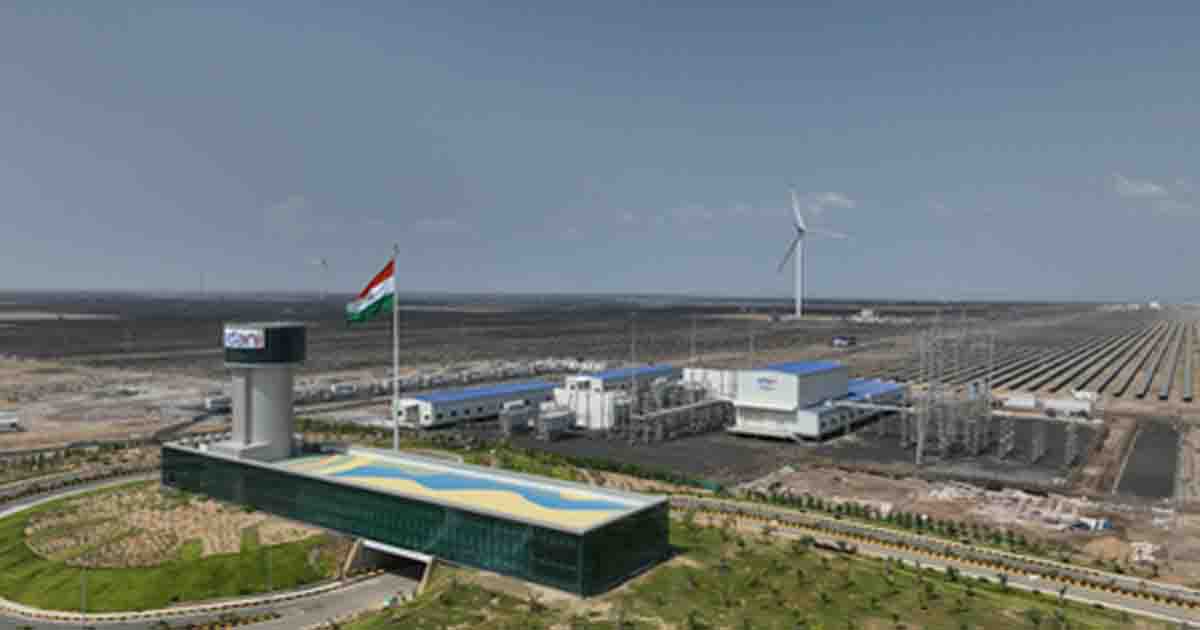
Adani Energy Solutions Ltd (AESL) on Thursday reported a 145 per cent year-on-year rise in consolidated net profit to Rs 1,364 crore for the quarter ended September 30, 2026, delivering record performance.
According to the company’s exchange filing, total income rose 51 per cent to Rs 10,239 crore in Q2 FY27 from Rs 6,767 crore in Q2 FY26.
Meanwhile, operational revenue grew 51 per cent to Rs 7,167 crore driven by healthy contribution from the transmission and energy solutions platform.
In Q2FY27, EBITDA stood at Rs 3,548 crore, an increase of 67 per cent year-on-year, while operating EBITDA rose 68 per cent to Rs 3,070 crore. This is an all-time high quarterly EBITDA for the company.
In addition, consolidated PAT jumped 137 per cent to Rs 2,600 crore for H1 FY27, while total income rose 46 per cent to Rs 20,092 crore.
Commenting on the earnings, Adani Energy Solutions CEO Kandarp Patel said, “AESL closed the first half of the fiscal year with strong financial and operational momentum, laying a robust foundation for future growth. We significantly expanded our growth pipeline by winning the strategic Vizag and Satara transmission assets, elevating our active order book to around Rs 87,000 crore.”
He said operationally, the Mumbai distribution business grew by about 11 per cent in units sold, while the smart metering platform scaled its installation base to approximately 15 million meters.
“A significant 2.5 GW RTC power supply contract with MSEDCL reinforced AESL’s core competencies in multi-source energy aggregation and power supply optimisation for customers,” Patel said.
“Backed by robust quarter-on-quarter performance across all business segments and strict financial prudence, we are well-positioned to convert this massive project pipeline into long-term stakeholder value,” he added.
Segment-wise, the company’s transmission operating revenue rose 17 per cent year-on-year to Rs 1,521 crore in Q2, while distribution (AEML and MUL) revenue grew 2 per cent to Rs 3,181 crore.
Smart metering operating revenue (Ind AS) surged 129 per cent to Rs 267 crore and energy solutions revenue stood at Rs 2,197 crore.
Shares of Adani Energy Solutions ended at Rs 1,293 on the BSE. The Adani Group stock has recorded a 52-week high of Rs 1,789 and a 52-week low of Rs 804.70, according to the exchange data.
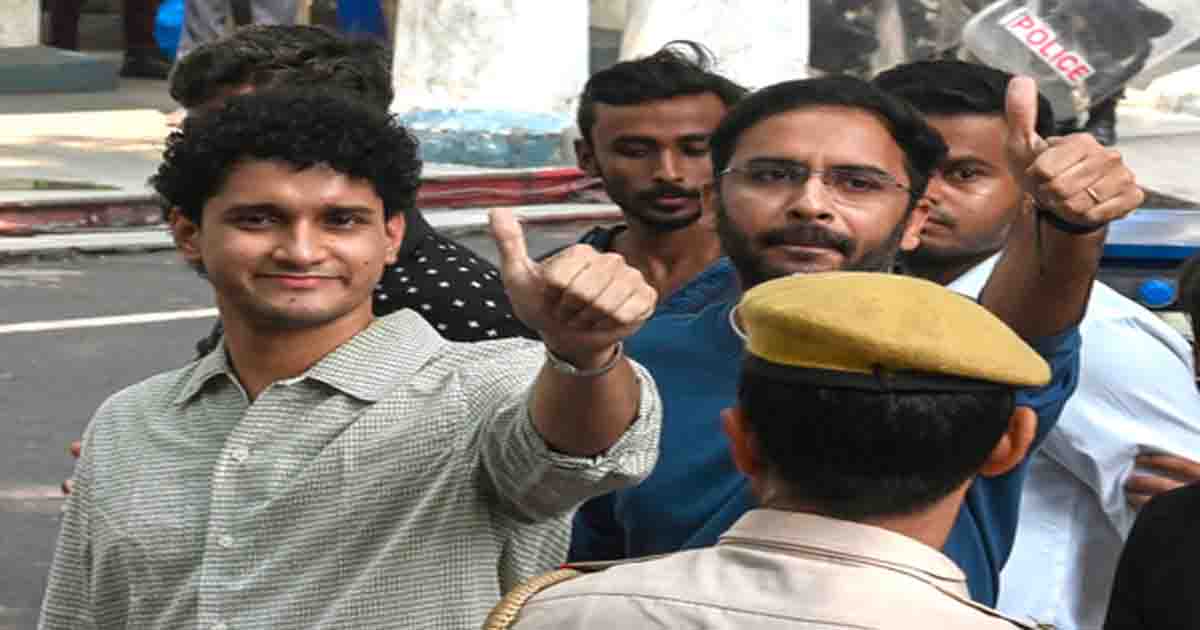
Cockroach Janta Party (CJP) leaders Saurav Das, Ashutosh Ranka and Ajinkya Shinde have sought more time to appear before the Delhi Police Crime Branch for questioning.
Das, Ranka, and Shinde were asked to appear before the Delhi Police Crime Branch at its office in Rajouri Garden at noon on Thursday. However, they requested more time from the Delhi Police.
The police will now issue fresh summons to them.
This comes a day after Das and Ranka were released from Tihar Jail following a week in judicial custody.
Earlier this week, Delhi Police transferred protest cases against the CJP leaders to the Crime Branch.
The cases are in connection with the incident on October 13, when Das, Ranka and Shinde, along with 11 others, trespassed into Jantar Mantar, which has been de-notified as the designated protesting site.
All were detained by the Delhi Police. While Shinde was released on bail bond, Das and Ranka remained in judicial custody for a week.
The CJP members were protesting against alleged irregularities in the Special Intensive Revision (SIR) of electoral rolls and raised slogans against Chief Election Commissioner (CEC) Gyanesh Kumar.
Das and Ranka were released on Wednesday after submitting written undertakings before a Special Executive Magistrate (SEM), assuring that they would maintain peace and refrain from calling for protests at Jantar Mantar until the site is de-notified in accordance with law.
SEM Ritu Raj directed the release of the two activists after they furnished personal bonds and surety bonds of Rs 50,000 each until the conclusion of the inquiry in connection with the Jantar Mantar trespassing case.
In their written undertakings, both activists promised not to commit any breach of peace and expressed full faith in the judiciary and all its instruments, including the SEM court.
The SEM court observed that the immediate measures required under Section 135(3) of the Bharatiya Nagarik Suraksha Sanhita (BNSS) to prevent a breach of peace or disturbance of public tranquillity could be adequately secured through the execution of bonds, supported by the written undertakings.
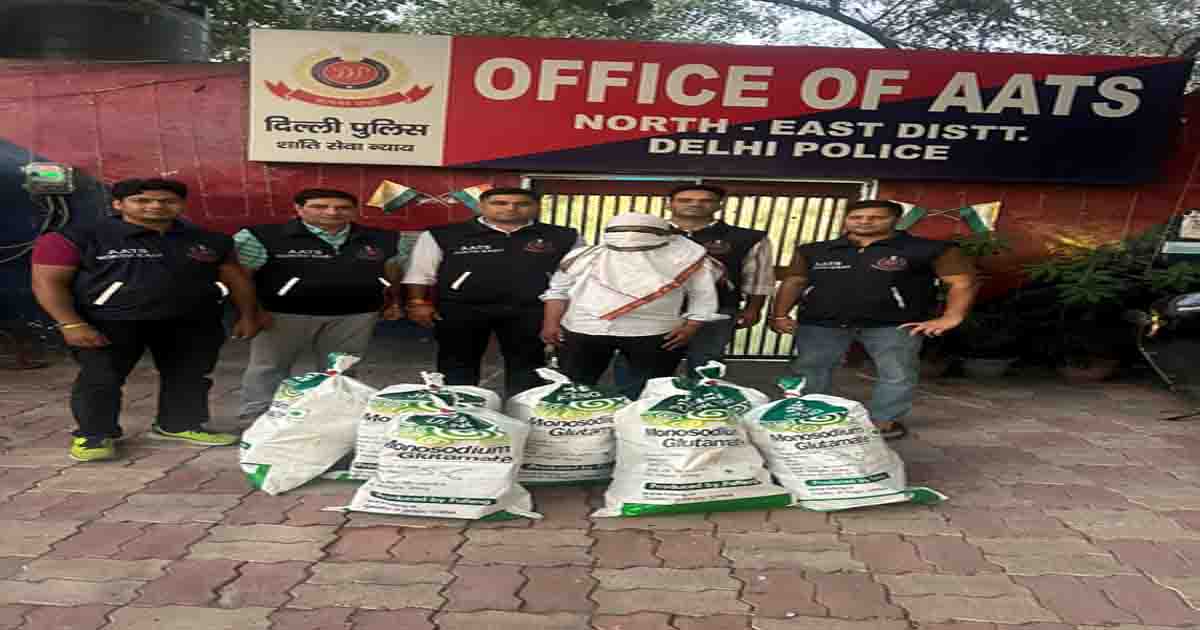
The Anti-Auto Theft Squad (AATS) of Delhi Police’s North-East District has apprehended a supplier of banned firecrackers and recovered 57.8 kg of the prohibited material from his possession, police said on Thursday.
The accused, identified as Vishal (35), a resident of Ashok Nagar in Delhi, was apprehended on October 21 following a targeted operation to curb the illegal supply of banned firecrackers in the district.
According to the police, the operation was conducted on the directions of senior officers by an AATS team led by Inspector Deepak Pandey, in-charge of AATS, North-East District. Acting on secret information, the team laid a trap in the Ashok Nagar area and apprehended the accused while he was carrying multiple sacks containing banned firecrackers weighing 57.8 kg.
Following the recovery, a case was registered under FIR No. 466/26, dated October 21, at Jyoti Nagar police station under Section 223(b) of the Bharatiya Nyaya Sanhita (BNS) and Section 9B of the Explosives Act. An investigation into the matter has been initiated.
Police said the accused had previously been involved in three criminal cases registered under Sections 188 and 286 of the Indian Penal Code (IPC), Sections 223(A) and 288 of the BNS, and Sections 115(2), 126(2) and 3(5) of the BNS.
In a separate incident earlier this month, a joint team of the Delhi Police’s Anti-Auto Theft Squad and Harsh Vihar police station uncovered an illegal storage facility for firecrackers in Mandoli village and recovered 567.30 kg of firecrackers and related material. One person was apprehended in connection with the case, police said on Wednesday.
According to the police, the incident came to light on October 12 when a police team conducting area patrol received information about firecrackers being stored at a premises in Mandoli. The information was immediately shared with Harsh Vihar police station, following which a team reached the location.
At the premises, located on the first floor of a house in Gali No. 12, near Government Senior Secondary School in Mandoli, police found a large quantity of firecrackers and materials used in their manufacture stored in cartons and sacks.
The recovered material was inspected, weighed, sampled and seized following the prescribed procedure.
An FIR (No. 315/2026) was subsequently registered at Harsh Vihar police station under Section 288 of the BNS and Section 9B of the Explosives Act, 1884.

Adani Energy Solutions profit more than doubles to Rs 1,364 crore in Q2, revenue rises 51 pc

Mika Singh recalls gatecrashing Amitabh Bachchan’s party, Big B says Jaya Bachchan has kept doors open for all

Shahid Kapoor ‘promptly breaks out of character’ after wrapping up ‘Farzi 2’ shoot

Jantar Mantar protest: Saurav Das, Ranka, Shinde seek more time to appear before police

Delhi Police arrests supplier of banned firecrackers, recovers 57.8 kg from his possession

Rahul, Cong ecosystem want to force regime change: BJP after Neha Bora praises B’desh Gen-Z protest

Attack on democratic rights: INDIA Bloc leaders on detentions of anti-ECI protestors

BJP pays tribute to ex-President Abdul Kalam, recalls his enduring influence on generations of India’s youth

INDIA bloc begins protest march against ECI

Maha Congress stages agitation against Gyanesh Kumar
-

 Crime4 years ago
Class 10 student jumps to death in Jaipur
-

 Maharashtra2 years ago
Mumbai Local Train Update: Central Railway’s New Timetable Comes Into Effect; Check Full List Of Revised Timings & Stations
-

 Maharashtra2 years ago
Mumbai To Go Toll-Free Tonight! Maharashtra Govt Announces Complete Toll Waiver For Light Motor Vehicles At All 5 Entry Points Of City
-

 Maharashtra2 years ago
False photo of Imtiaz Jaleel’s rally, exposing the fooling conspiracy
-

 National News2 years ago
Ministry of Railways rolls out Special Drive 4.0 with focus on digitisation, cleanliness, inclusiveness and grievance redressal
-

 Maharashtra2 years ago
Maharashtra Elections 2024: Mumbai Metro & BEST Services Extended Till Midnight On Voting Day
-

 National News2 years ago
J&K: 4 Jawans Killed, 28 Injured After Bus Carrying BSF Personnel For Poll Duty Falls Into Gorge In Budgam; Terrifying Visuals Surface
-

 Crime2 years ago
Baba Siddique Murder: Mumbai Police Unable To Get Lawrence Bishnoi Custody Due To Home Ministry Order, Says Report