
Maharashtra
Good News For Mumbaikars! MMRCL Submits Proposal For New Underground Metro Line 11 In SoBo; Project To Pass Through Byculla & Bhendi Bazaar


Mumbai: As the much-anticipated Mumbai Metro Aqua Line 3 nears full operation this August, the Mumbai Metro Rail Corporation Limited (MMRCL) has already begun laying the groundwork for the city’s next major underground metro line. The agency submitted a proposal for Metro Line 11, an extension of the Green Line, to the Maharashtra government for initial approval. The proposed line will start from Wadala and go up to CSMT.
Proposed Metro To Pass Through Nagpada & Bhendi Bazaar
detailed project report (DPR) submitted by MMRCL, the proposed Line 11 will span 17.5 km, running from Anik Depot in eastern Mumbai to the historic Gateway of India in the south. This route will pass through key, densely populated areas such as Nagpada and Bhendi Bazaar. Much like the Aqua Line, Line 11 will be predominantly underground, with Anik Depot being the only ground-level station. This corridor is expected to majorly boost connectivity across South Mumbai.
Stages Of Approval Before Work Kickstarts
A senior MMRCL official explained that the proposal is currently under review by the state’s Urban Development Department (UDD). Once cleared by the UDD, it will be forwarded to the Union Ministry of Urban Development for central approval. The project’s feasibility study and DPR are key components of this approval process. Once sanctioned, the next steps will include acquiring environmental and statutory clearances and seeking financial backing from domestic or international agencies.
The plan outlines the initial use of six-coach metro trains. A new depot has been proposed at the existing BEST Anik–Pratiksha Nagar bus depot, covering 16 hectares. This will allow seamless integration of the metro with the existing bus infrastructure.
Importantly, Line 11 is set to intersect with multiple major transport networks, including Metro Line 4 (Wadala–Thane–Kasarvadavli), the Aqua Line, the Monorail and key suburban railway stations like Byculla and Chhatrapati Shivaji Maharaj Terminus (CSMT).
Details On Metro Station Construction For Line 11
Of the 13 stations along Line 11, eight will be built using the cut-and-cover method, a process involving trench excavation followed by tunnel construction and surface restoration. The remaining five stations will be developed using the New Austrian Tunnelling Method (NATM), a technique that utilises the strength of surrounding rock to support tunnel formation, especially suitable for congested urban areas.
The MMRCL estimates the line will serve approximately 5,80,000 commuters daily by 2031, with ridership expected to grow to nearly 8,69,000 by 2041. Specific timelines regarding tendering, project execution and completion will be outlined once the project gains final approvals from both state and central authorities.


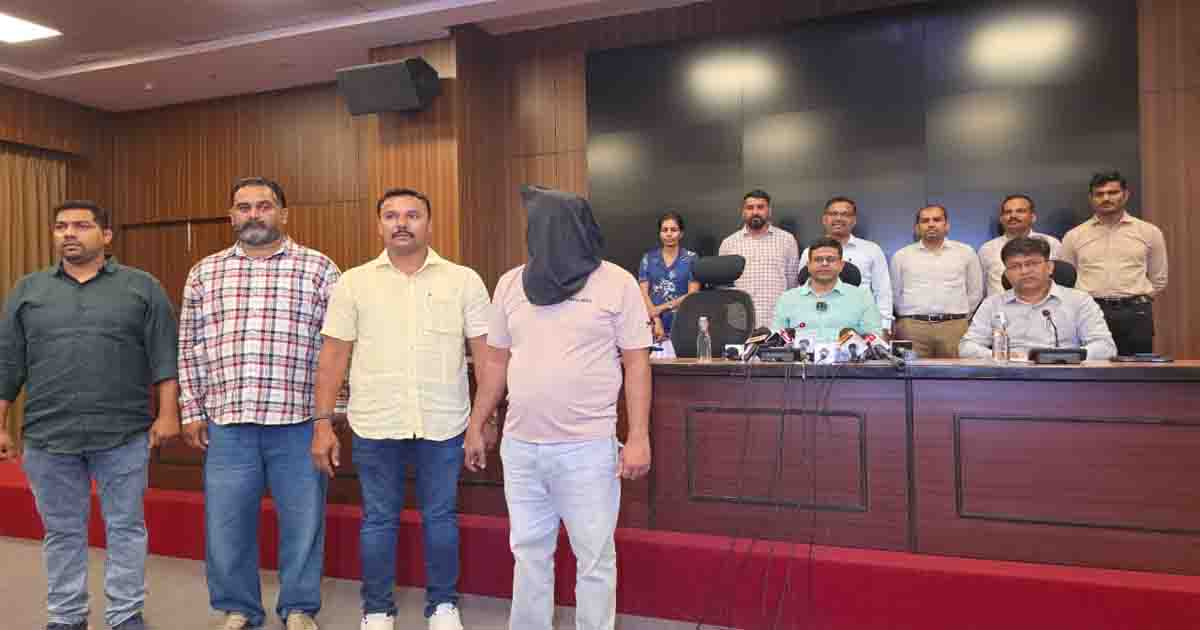
In a case involving the defrauding of a 72-year-old senior citizen in Mumbai on August 13, an unidentified caller—posing as Dinesh Kumar, a Senior Manager at Bank of India—gained the victim’s trust by promising to facilitate the issuance of a Senior Citizen Card. The caller sent an APK file named “Senior Citizen Card http://Verification.apk” to the complainant’s WhatsApp and coerced them into entering personal and bank debit card details, resulting in the misappropriation of ₹5,62,000. Initially, the Byculla Police Station registered a case (No. 497/26) under Sections 318(4) and 319(2) of the BNS and Sections 66(C) and (D) of the Information Technology Act, 2000. While the Property Cell of the Mumbai Crime Branch was conducting a parallel investigation, senior officials ordered the transfer of the case to the Crime Branch; it was subsequently re-registered as Case No. 927/2026 for further investigation.
A thorough technical analysis of the aforementioned APK file was conducted, leading to the identification and arrest of the accused—a 36-year-old male software developer and resident of Madhya Pradesh—who was responsible for developing the fraudulent APK file. During a raid on the accused’s office in Madhya Pradesh, authorities recovered a pen drive, a CPU, three hard disks, a Wi-Fi router, and three mobile phones. Preliminary technical analysis revealed that the accused was utilizing servers from various service provider companies. Investigation confirmed that the accused had created and sold a total of 2,805 malicious APK files to other cybercriminal gangs. These files were used to defraud 9,673 people across India. Complaints regarding these incidents have been registered on the cyber helpline number 1930—specifically 1,074 nationwide, 143 in Maharashtra, and 36 in Mumbai—revealing a total fraud amount of ₹15.75 crore. Cases have been cracked involving 88 incidents across India, 8 in Maharashtra, and 5 in Mumbai.
This successful operation was executed by a team comprising Police Commissioner Devin, Joint Police Commissioner Anil Kumbhare, Additional Commissioner Krishna Kant Upadhyay, DCP (Crime) Raj Tilak Roshan, and the Crime Branch. DCP Raj Tilak Roshan stated that this action was taken in response to fraud targeting the elderly under the guise of issuing senior citizen cards; the police also regularly conduct awareness campaigns among the elderly regarding this issue.
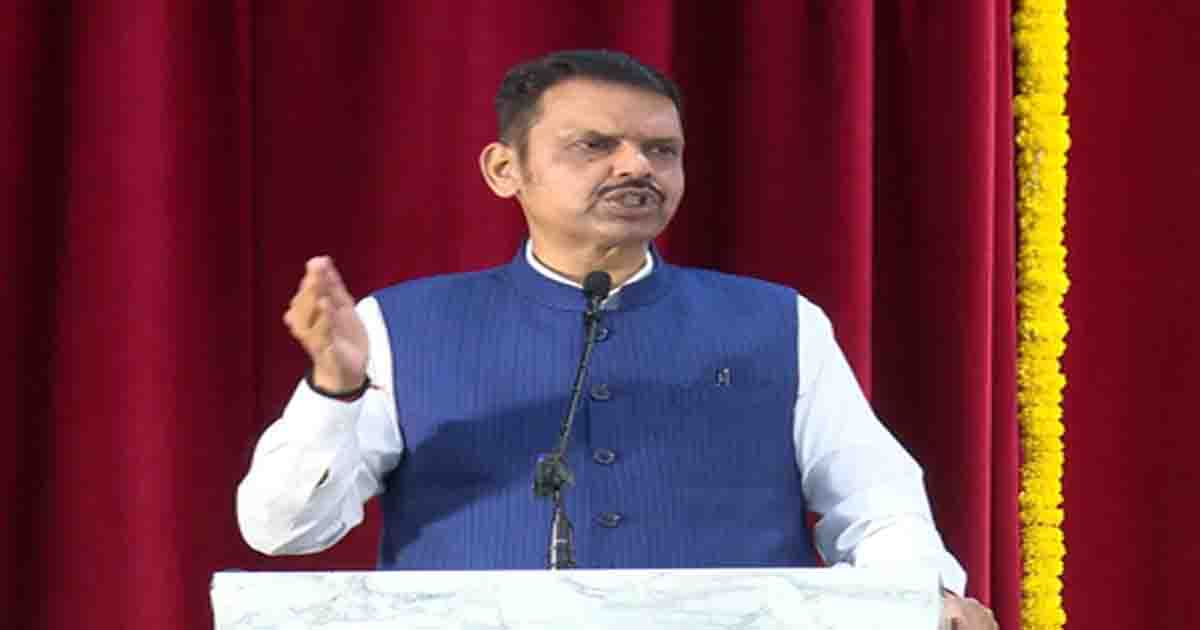
Mumbai, Oct 5: Responding to escalating protests by competitive examination aspirants, Maharashtra Chief Minister Devendra Fadnavis on Monday formally recommended that Governor Jishnu Dev Varma constitute a high-level inquiry panel to initiate proceedings against current and former members and chairpersons of the Maharashtra Public Service Commission (MPSC) under Article 317 of the Constitution.
The Chief Minister proposed that a committee headed by a retired High Court judge investigate the allegations and submit a comprehensive report within three months to determine subsequent action.
CM Fadnavis highlighted that removing MPSC officials, who hold constitutional posts, requires a strict procedure.
Under Article 317, removal can only take place following a formal inquiry and subsequent action involving the President of India and the Supreme Court.
Following assurances given during discussions between the Chief Minister and a delegation of student representatives, MPSC Secretary Mahendra Harpalkar has been officially relieved of his duties.
Agitation intensified across Pune after a paper leak was confirmed in the Drug Inspector examination conducted by the MPSC for the Food and Drug Administration (FDA).
Investigations revealed that three candidates had directly benefited from the leak. All three candidates and several alleged accomplices have since been arrested.
Aspirants led by MLA Rohit Pawar have been protesting at multiple locations in Pune, demanding the immediate resignation of MPSC Chairman Vivek Bhimanwar, who assumed office in early 2026.
The demonstrations also reflect ongoing student concerns regarding the examination pattern, particularly the issue of multiple-choice questions versus descriptive formats, as well as broader questions of administrative accountability.
Students have been demanding the resignation of the MPSC chairperson, with opposition parties extending full support to the protest movement.
The movement now appears to have achieved a breakthrough with Chief Minister Devendra Fadnavis’ formal recommendation to Governor Jishnu Dev Varma.
Meanwhile, amid the ongoing controversies surrounding MPSC examinations, Shiv Sena MLA Sanjay Gaikwad publicly criticised his own government on Sunday.
Making serious allegations against the MPSC Board, he demanded that the board itself be dissolved.
He also said that he would hand over his evidence and a formal letter directly to the Chief Minister.
The state government’s latest measures aim to restore candidates’ trust by establishing a time-bound, independent judicial inquiry into the commission’s administrative functioning.
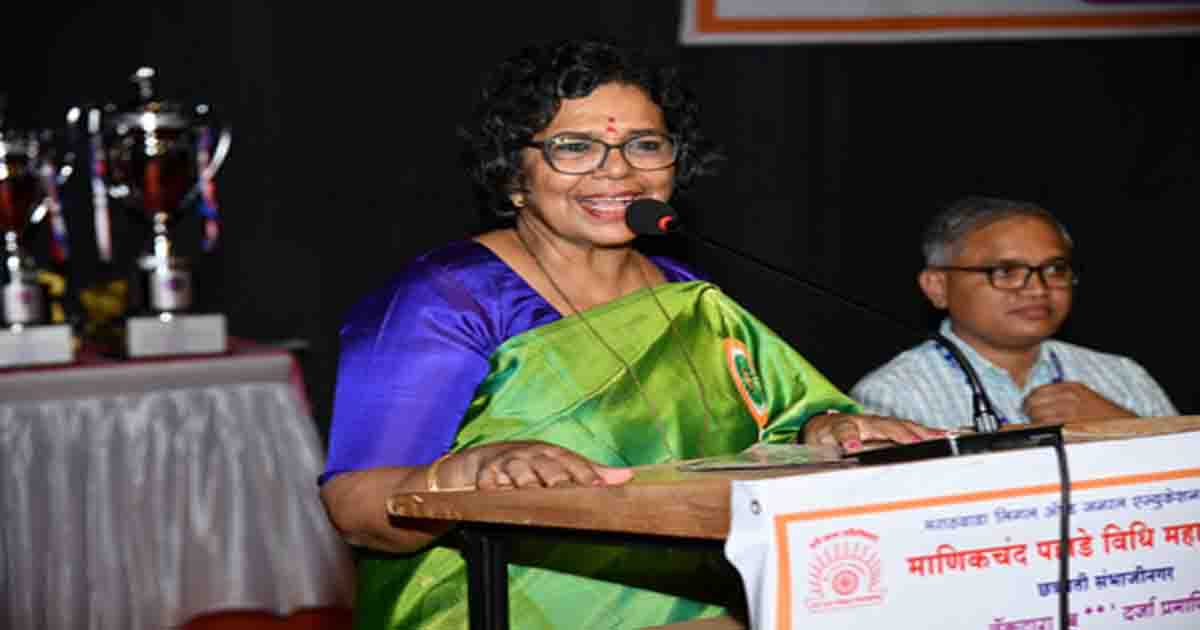
Mumbai, Oct 5: National Commission for Women Chairperson Vijaya Rahatkar on Monday began a visit to Maharashtra, looking forward to interacting with working women and discussing issues related to empowerment and security.
Her single-day visit kicked off with an awareness programme with employees of a private bank on the Sexual Harassment of Women at Workplace (Prevention, Prohibition and Redressal) Act, 2013 (POSH Act), according to a statement.
She later visited the Tata Institute of Social Sciences and led consultations on state-specific laws with Maharashtra State Women Commission officials.
Discussions with the Mumbai Police Commissioner on women’s safety were also scheduled at the Commissionerate Office, the statement said.
On Sunday, Rahatkar attended and gave away prizes at the state-level inter-collegiate debate competition organised by Manikchand Pahade Law College of the Marathwada Legal and General Education Society in Chhatrapati Sambhajinagar, said a statement.
The topic of the competition was: “Gen Z’s Path is Conducive to Transformation.” On this occasion, she interacted with the students, participants, and faculty members of the college.
While sharing her thoughts on the competition’s topic, the NCW Chairperson said, “India is passing through a phase of transformation today, and in this journey, the youth class is not merely a spectator. The youth are India’s largest stakeholders, India’s greatest strength, and the most important force that will bring the dream of a developed India into reality.”
“Therefore, let there be confidence in your minds, but along with that, let there also be humility. Acquire knowledge, but along with that, nurture curiosity as well. Have the courage to firmly express your opinions; but also maintain the patience to listen to others’ opinions,” she said.
“And most importantly, know your rights, be aware of your duties, and have faith in our Constitution. Because India’s future is not shaped only in Parliament; India’s future is also shaped in the classrooms of universities and colleges. These students of today will be the lawyers, judges, researchers, administrators, policymakers, and citizens who will lead society tomorrow,” said Rahatkar.
In a message on X, she said, “The students’ ideas, values and faith in the Constitution will therefore play a crucial role in shaping the journey towards a Viksit Bharat.”

Bihar: SI recruitment protest turns tense as candidates clash with police

Man arrested in Mumbai for defrauding senior citizens and others using fake APK files.

MPSC paper leak row: Maha CM seeks Guv’s nod for judicial probe

Mumbai: NCW chief Vijaya Rahatkar holds POSH workshop, reviews security with top cop

Mumbai CSMT: Case Filed Against Garjana Morcha Over Demand to Scrap SIR; Nitesh Rane Defends Action, Calls for Aditya Thackeray Passport to Be Seized

Gift to President Putin part of PM Modi bid to globally display India’s heritage

PM Modi’s warm camaraderie with Putin, Xi on full display at BRICS Summit

Corporators of all parties in trouble! Corporators of all major parties including Shiv Sena (UBT), BJP and Congress are facing legal challenges.

Complaint against Netflix & Mukesh Chhabra for inappropriate language on ‘India’s Got Latent 2’

Maha Congress stages agitation against Gyanesh Kumar
-

 Crime4 years ago
Class 10 student jumps to death in Jaipur
-

 Maharashtra2 years ago
Mumbai Local Train Update: Central Railway’s New Timetable Comes Into Effect; Check Full List Of Revised Timings & Stations
-

 Maharashtra2 years ago
Mumbai To Go Toll-Free Tonight! Maharashtra Govt Announces Complete Toll Waiver For Light Motor Vehicles At All 5 Entry Points Of City
-

 Maharashtra2 years ago
False photo of Imtiaz Jaleel’s rally, exposing the fooling conspiracy
-

 National News2 years ago
Ministry of Railways rolls out Special Drive 4.0 with focus on digitisation, cleanliness, inclusiveness and grievance redressal
-

 Maharashtra2 years ago
Maharashtra Elections 2024: Mumbai Metro & BEST Services Extended Till Midnight On Voting Day
-

 National News2 years ago
J&K: 4 Jawans Killed, 28 Injured After Bus Carrying BSF Personnel For Poll Duty Falls Into Gorge In Budgam; Terrifying Visuals Surface
-

 Crime2 years ago
Baba Siddique Murder: Mumbai Police Unable To Get Lawrence Bishnoi Custody Due To Home Ministry Order, Says Report