
Crime
Gaza Hospital Blast: Israel And Hamas Trade Blame, Share Videos As Explosion Kills Over 500 Including Children

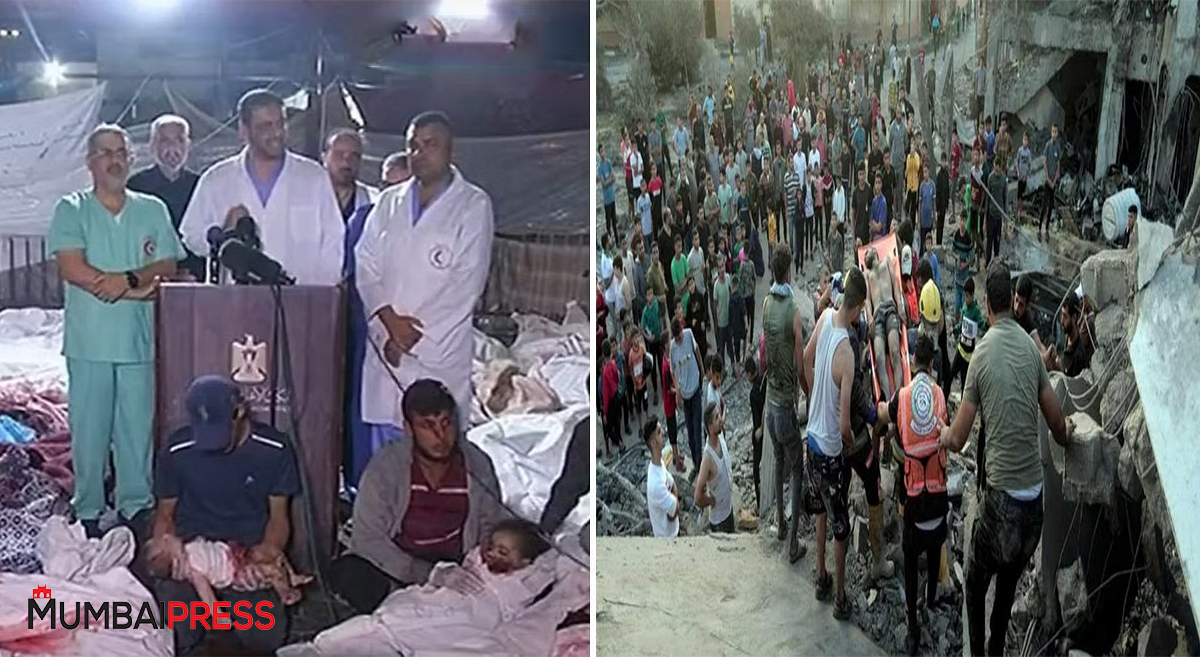
A massive blast rocked a Gaza City hospital packed with wounded and other Palestinians seeking shelter Tuesday, killing hundreds of people, the Hamas-run Health Ministry said. Hamas blamed an Israeli airstrike, while the Israeli military blamed a rocket misfired by other Palestinian militants.
At least 500 people were killed, the ministry said.
As rage spread through the region because of the hospital carnage, and with US President Joe Biden heading to the Mideast in hopes of stopping the war from spreading, Jordan’s foreign minister said his country canceled a regional summit scheduled for Wednesday in Amman, where Biden was to meet with Jordan’s King Abdullah II, Palestinian President Mahmoud Abbas and Egyptian President Abdel Fattah el-Sissi.
War between Israel and Hamas pushing region to the brink
The war between Israel and Hamas was “pushing the region to the brink,” Foreign Minister Ayman Safadi told state-run television. He said Jordan would host the summit only when everyone had agreed its purpose would be to “stop the war, respect the humanity of the Palestinians and deliver the aid they deserve.” Biden will now visit only Israel, a White House official said.
The explosion at the al-Ahli Hospital left gruesome scenes. Video that The Associated Press confirmed was from the hospital showed fire engulfing the building and the hospital grounds strewn with torn bodies, many of them young children. The grass around them was strewn with blankets, school backpacks and other belongings.
Bloodshed and destruction
The bloodshed unfolded as the US tried to convince Israel to allow the delivery of supplies to desperate civilians, aid groups and hospitals in the tiny Gaza Strip, which has been under a complete siege since Hamas’ deadly rampage in southern Israel last week. Hundreds of thousands of increasingly desperate people were searching for bread and water.
Hamas called Tuesday’s hospital blast “a horrific massacre,” saying it was caused by an Israeli strike.
Israel Blames Islamic Jihad
The Israeli military blamed Islamic Jihad, a smaller, more radical Palestinian militant group that often works with Hamas. The military said Islamic Jihad militants had fired a barrage of rockets near the hospital and that “intelligence from multiple sources” indicated the group was responsible.
In a briefing with reporters, the chief army spokesman, Rear Adm. Daniel Hagari, said the army determined there were no air force, ground or naval attacks in the area at the time of the blast. He said radar detected outgoing rocket fire at the same moment, and intercepted communications between militant groups indicated that Islamic Jihad fired the rockets.
Hagari also shared aerial footage collected by a military drone that showed a blast that he said was inconsistent with Israeli weaponry. He said the explosion occurred in the building’s parking lot.
Since the war began, the military said in a statement that roughly 450 rockets fired at Israel by militant groups had landed in Gaza, “endangering and harming the lives of Gazan residents.” Islamic Jihad dismissed those claims, accusing Israel of “trying hard to evade responsibility for the brutal massacre it committed.” The group pointed to Israel’s order that Al-Ahli be evacuated and its previous bombing of the hospital complex as proof that the hospital was an Israeli target. It also said the scale of the explosion, the angle of the bomb’s fall and the extent of the destruction all pointed to Israel.
Palestinians had taken refuge in Al-Ahli and other hospitals in Gaza City in past few days
Hundreds of Palestinians had taken refuge in Al-Ahli and other hospitals in Gaza City in past days, hoping they would be spared bombardment after Israel ordered all residents of the city and surrounding areas to evacuate to the southern Gaza Strip.
Ambulances and private cars rushed some 350 casualties from the al-Ahli blast to Gaza City’s main hospital, al-Shifa, which was already overwhelmed with wounded from other strikes, said its director, Mohammed Abu Selmia. The wounded were laid onto bloody floors, screaming in pain.
“We need equipment, we need medicine, we need beds, we need anesthesia, we need everything,” Abu Selmia said. He warned that fuel for the hospital’s generators would run out within hours.
Israeli strikes on Gaza killed at least 2,778 people and wounded 9,700
Before the Al-Alhi Hospital deaths, Israeli strikes on Gaza killed at least 2,778 people and wounded 9,700, according to the Gaza Health Ministry. Nearly two-thirds of those killed were children, a ministry official said. Another 1,200 people across Gaza are believed to be buried under the rubble, alive or dead, health authorities said.
Hamas attack on Israel on October 7
Hamas’ October 7, attack in southern Israel killed more than 1,400 people, mostly civilians, and resulted in some 200 being taken captive into Gaza. Hamas militants in Gaza have launched rockets every day since, aiming at cities across Israel.
Hundreds of Palestinians flooded the streets of major West Bank cities including Ramallah, the seat of the Palestinian Authority, where protesters hurled stones at Palestinian security forces who fired back with stun grenades. Others threw stones at Israeli checkpoints, where soldiers killed one Palestinian, West Bank authorities said.
Elsewhere, hundreds of people joined protests that erupted in Beirut and Amman, where an angry crowd gathered outside the Israeli Embassy.
Abbas, whose Palestinian Authority exercises limited autonomy in parts of the occupied West Bank, had cancelled his participation in the summit earlier in the day to protest the hospital blast.
He blamed Israel for the destruction, calling it “a massacre that cannot be tolerated or allowed to pass without accountability.” With tens of thousands of troops massed along the border, Israel has been expected to launch a ground invasion into Gaza, but its plans remained uncertain.\
“Preparing for the next stages of war”
“We are preparing for the next stages of war,” military spokesman Lt. Col. Richard Hecht said. “We haven’t said what they will be. Everybody’s talking about a ground offensive. It might be something different.” Throughout the day Tuesday, airstrikes killed dozens of civilians and at least one senior Hamas figure in the southern half of the Gaza Strip, where the Israeli military told fleeing Palestinians to go. An Associated Press reporter saw around 50 bodies brought to Nasser Hospital after strikes in the southern city of Khan Younis.
The Israeli military said it was targeting Hamas hideouts, infrastructure and command centres.
An airstrike in Deir al Balah reduced a house to rubble, killing a man and 11 women and children inside and in a neighboring house, some of whom had evacuated from Gaza City. Witnesses said there was no warning before the strike.
Shelling from Israeli
Shelling from Israeli tanks hit a UN school in central Gaza where 4,000 Palestinians had taken refuge, killing six people and wounding dozens, the United Nations Palestinian refugee agency said. At least 24 U.N. installations have been hit the past week, killing at least 14 members of the agency’s staff.
A barrage of strikes crashed into the Bureij refugee camp in central Gaza, levelling an entire block of homes and causing dozens of casualties, residents said. Among those killed was one of Hamas’ top military commanders, Ayman Nofal, the group’s military wing said – the highest-profile militant known to have been killed in the war.
Gaza City: A sight of destruction
In Gaza City, Israeli airstrikes also hit the house of Hamas’ top political official, Ismail Haniyeh, killing at least 14 people. Haniyeh is based in Doha, Qatar, but his family lives in Gaza City. The Hamas media office did not immediately identify those killed.
Israeli Prime Minister Benjamin Netanyahu sought to put the blame on Hamas for Israel’s retaliatory attacks and the rising civilian casualties in Gaza. “Not only is it targeting and murdering civilians with unprecedented savagery, it’s hiding behind civilians,” he said.
With Israel barring entry of most water, fuel and food into Gaza since Hamas’ brutal attack, US Secretary of State Antony Blinken secured an agreement with Netanyahu to discuss creation of a mechanism for delivering aid to the territory’s 2.3 million people. US officials said the gain might appear modest, but stressed that it was a significant step forward.
Still, as of late Tuesday, there was no deal in place. A top Israeli official said his country was demanding guarantees that Hamas militants would not seize any aid deliveries. Tzahi Hanegbi, head of Israel’s National Security Council, suggested entry of aid also depended on the return of hostages held by Hamas.
Palestinians fleeing their homes
More than 1 million Palestinians have fled their homes – roughly half of Gaza’s population – and 60 per cent are now in the approximately 14-kilometre (8-mile) long area south of the evacuation zone, the UN said.
At the Rafah crossing, Gaza’s only connection to Egypt, truckloads of aid had been waiting to enter for more than a day. The World Food Program said that it had more than 300 tons of food waiting to cross into Gaza.


One person has been arrested by Maharashtra Cyber in connection with a Rs 4.97 lakh online share market investment fraud case, officials said on Tuesday.
The complaint was filed by 42-year-old Kalyan, who was allegedly induced to invest money through an online trading application after being approached through a social media advertisement and a WhatsApp group operating under the name “Breakthrough Communication”, according to the officials.
As per the complaint, the fraud took place between August 25 and September 23, when Kalyan came across a social media advertisement referring to Susquehanna International Group and subsequently joined a WhatsApp group.
“A person using the name ‘Shikha Sharma’ allegedly contacted the complainant, provided investment-related guidance, and encouraged him to invest in the share market through a trading application. Believing the representations to be genuine, the complainant transferred a total amount of 4.97 lakh into eight different bank accounts,” officials said.
After suspecting financial fraud, Kalyan reported the matter through the National Cyber Crime Helpline 1930 on September 27.
Subsequently, an FIR was registered at the Nodal Cyber Police Station, Maharashtra Cyber, under Sections 318(4) and 319(2) of the Bharatiya Nyaya Sanhita (BNS), read with Sections 66(C) and 66(D) of the Information Technology (IT) Act.
Officials said that following this, Maharashtra Cyber initiated an investigation to trace the financial transactions and identify the persons involved in facilitating the fraud.
“During the investigation, the police examined the banking trail and the movement of the defrauded funds across multiple accounts. The investigation revealed that the money had moved through various bank accounts,” they added.
According to officials, further inquiry indicated that the funds received in an account belonging to Nikhil Kamble were allegedly withdrawn in cash and handed over to the arrested accused, Mohammed Ali Kapadia, through an intermediary arrangement.
Mohammed Ali Kapadia (23) appeared before the investigating officer on October 26. During questioning, his alleged role in receiving and disposing of cash linked to the fraudulent transactions came under investigation. He was subsequently arrested in connection with the case, officials said.
They added that the investigation further indicates that the accused may have acted in coordination with other persons to facilitate the withdrawal of money generated through cyber fraud.
Crime
Tiger Shroff firing case: Crime Branch probes arrested women visit to Bandra Bandstand, suspects possible reconnaissance

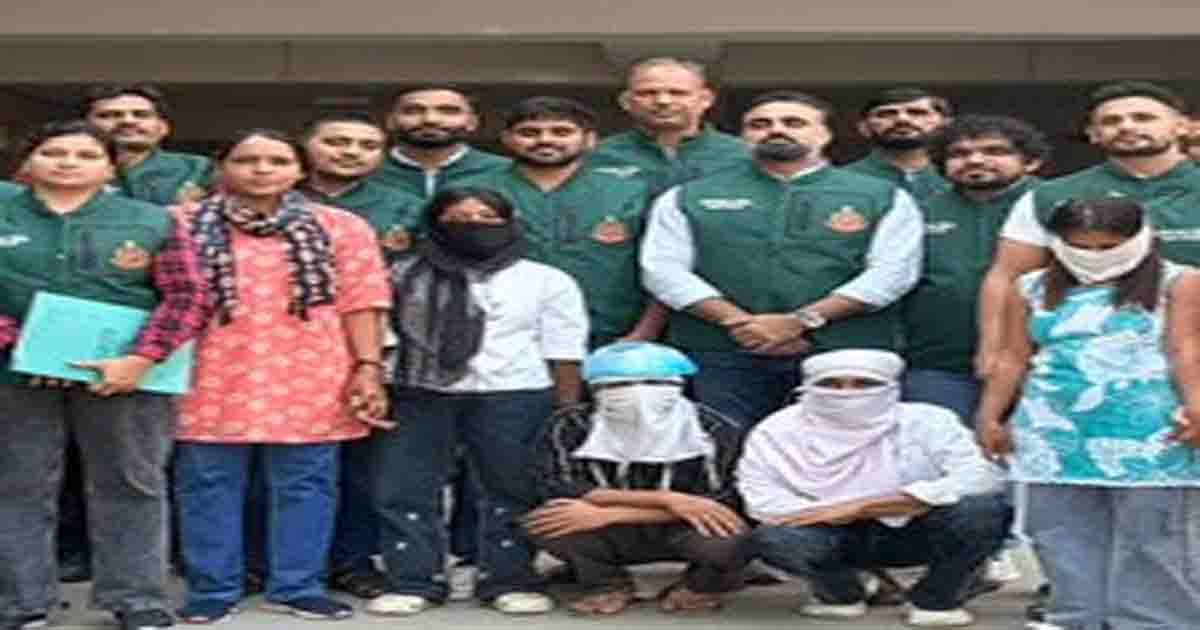
The Mumbai Crime Branch is investigating whether two women, Babita and Radha, arrested in connection with the firing at Bollywood actor Tiger Shroff’s car, conducted reconnaissance in Mumbai’s Bandra Bandstand area, where several prominent film personalities, including actor Salman Khan, reside.
According to a Mumbai Crime Branch official, the investigation revealed that the two women visited the Bandra Bandstand area after arriving in Mumbai. Investigators are now examining the purpose of their visit and whether they conducted reconnaissance of the residences of film personalities in the locality.
The official said the information about the women’s movements emerged from an analysis of their mobile phones and other technical evidence. However, investigators are yet to establish whether the visit was connected to any potential plan targeting film personalities.
The Crime Branch is also examining the alleged links of the arrested women with Anil Pandit, who remains absconding in the case. According to the police, the two women were in contact with Pandit, and their remand was obtained to question them further about the information that has emerged during the investigation.
Police officials said evidence recovered from the mobile phones of the arrested women indicated that they were aware of the purpose of their visit to Mumbai.
The police are also investigating whether the accused, most of whom are suspected to be originally from Haryana, received assistance from a local person in Mumbai. Investigators suspect that a local contact may have helped the alleged gang members execute their plan and are searching for the person.
According to the Crime Branch, eight of the 11 accused arrested in the case were directly in contact with the alleged main accused, Anil Pandit. Investigators are trying to establish the individual roles of the accused and determine how the alleged network operated.
Earlier, the Mumbai Crime Branch, in coordination with Madhya Pradesh Police, detained a suspect in Indore for allegedly providing logistical and financial support to a network linked to the Lawrence Bishnoi gang in connection with the October 18 firing incident.
Indore Deputy Commissioner of Police Rajesh Dandotia confirmed the detention, stating that it was carried out during a joint operation by the Mumbai and Indore Crime Branch teams. The latest detention took the number of accused apprehended in the case to 11, according to reports.

More than five months after Tanuja Ranjan, wife of retired Indian Police Service (IPS) officer Ray Vinay Ranjan, was brutally murdered at their residence in Hyderabad, police on Monday arrested four Nepalese.
Those arrested include the domestic worker, Dharma Tiruwa alias Kalpana, who had worked at the victim’s residence.
The arrests were made following a five-month-long investigation spanning several states and the India-Nepal border.
Hyderabad Police Commissioner V. C. Sajjanar announced the arrests at a press conference.
A Special Investigation Team (SIT), probing rising property offences committed by Nepali gangs across the three Police Commissionerates, arrested four accused near Nampally Railway Station on Monday (October 26).
Dharma alias Kalpana, 26, is from Surkhet district in Nepal. Ganesh B.K. alias Ganesh Bishwakarma alias Dinesh Thapa, 31, is a labourer who was residing in Pune; Chandra Bahadur Tamang alias Ranjeet Thapa alias Shanker Chandra Lama alias Kancha, 44, a cook whose listed Indian address is in Gurugram, Haryana; and Ganesh Bahadur Shahi, 37, a watchman who was residing in Pune.
Police said two other accused remained absconding and that teams were continuing efforts to trace them. The police had earlier arrested two other accused in the case.
Police said the accused entered the house in Prashasan Nagar on the night of May 7–8, restrained Tanuja Ranjan and smothered her. They allegedly escaped with 225 grams of gold jewellery and other valuables.
The police investigation revealed that Dharma came to Hyderabad in June 2025 through a relative and began working as a domestic help at the Jubilee Hills residence for a monthly salary of about Rs 20,000. During her employment, she allegedly remained in contact with Bikas, a Nepal national based in Pune, who repeatedly asked about her employer, the household’s assets and the valuables inside the house. He eventually proposed a robbery in return for a share of the proceeds. In April 2026, Dharma travelled to Pune to visit her ailing father and came into contact with other members of the alleged gang.
On May 4, when her employer left for Bengaluru, she allegedly alerted the group. The police account says Ganesh Bahadur Shahi, Shanker Chandra Lama and Sunil Pariyar met at Kalamboli in Raigad district, Maharashtra, on May 4 and travelled to Pune in a hired Maruti Ertiga. The next day, they met other alleged accomplices, including Ganesh B.K., before setting out for Hyderabad.
On the morning of May 7, Ganesh B.K. and Suresh Shahi allegedly met Dharma near her workplace, surveyed the premises and discussed how the group could enter the house. Two groups allegedly carried out the operation.
According to police, the gang assembled at Ravindra Bar near the Mahatma Gandhi Bus Station area on the evening of May 7. It allegedly split into two groups under a plan devised by Sujan Shahi, also known as Suresh Shahi. One group, comprising Ganesh B.K., Suresh Shahi and Shanker Lama, was assigned to enter the house and carry out the robbery. The other, comprising Ganesh Bahadur Shahi, Sunil Pariyar and Netra Shahi, allegedly remained near Nampally railway station as a lookout team.
During the intervening night of May 7 and 8, Dharma allegedly opened the door to let the others in. Police said Tanuja woke up during the incident. The attackers allegedly gagged and restrained her, causing her death by suffocation. The group then searched the house, broke open cupboards and took gold jewellery and other valuables.
After leaving through the rear gate, the accused allegedly travelled to Nampally and joined the lookout team.
Investigation revealed that the group subsequently travelled towards Kazipet, moved into isolated hilly terrain and divided the stolen property into nine equal shares. Members then split into smaller groups, fled towards Nepal and disposed of the valuables at different locations.
On May 22, Task Force teams arrested Sunil Bahadur Aauji alias Sunil Pariyar and alleged receiver Dilip Bahadur Mijar alias Sonar. Police recovered 26 grams of the stolen property from them.
The investigation continued across Bengaluru, Mumbai, Pune, Surat, Patna, Delhi, Lucknow and Uttarakhand. The SIT also carried out field inquiries near the India-Nepal border, spending more than five months gathering intelligence in remote and hilly areas.
Police said local informers helped the team track the suspects’ alleged hideouts, travel routes, employment and contacts.

Actor Imran Khan gets major relief as Bombay HC stays ‘Leave India’ notice

SC defers hearing on Rahul Gandhi, other Oppn leaders’ plea against SIR

Maha Cyber arrests one in 4.97 lakh online share market investment fraud case

BB 20: Qazi Touqeer recalls sharing a room with Arijit Singh during struggling days before ‘Fame Gurukul’ win

Maha Cabinet approves Rs 5,000 advance to each of 1.5 crore farmers in drought-hit areas

Rahul, Cong ecosystem want to force regime change: BJP after Neha Bora praises B’desh Gen-Z protest

Attack on democratic rights: INDIA Bloc leaders on detentions of anti-ECI protestors

BJP pays tribute to ex-President Abdul Kalam, recalls his enduring influence on generations of India’s youth

INDIA bloc begins protest march against ECI

Maha Congress stages agitation against Gyanesh Kumar
-

 Crime4 years ago
Class 10 student jumps to death in Jaipur
-

 Maharashtra2 years ago
Mumbai Local Train Update: Central Railway’s New Timetable Comes Into Effect; Check Full List Of Revised Timings & Stations
-

 Maharashtra2 years ago
Mumbai To Go Toll-Free Tonight! Maharashtra Govt Announces Complete Toll Waiver For Light Motor Vehicles At All 5 Entry Points Of City
-

 Maharashtra2 years ago
False photo of Imtiaz Jaleel’s rally, exposing the fooling conspiracy
-

 National News2 years ago
Ministry of Railways rolls out Special Drive 4.0 with focus on digitisation, cleanliness, inclusiveness and grievance redressal
-

 Maharashtra2 years ago
Maharashtra Elections 2024: Mumbai Metro & BEST Services Extended Till Midnight On Voting Day
-

 National News2 years ago
J&K: 4 Jawans Killed, 28 Injured After Bus Carrying BSF Personnel For Poll Duty Falls Into Gorge In Budgam; Terrifying Visuals Surface
-

 Crime2 years ago
Baba Siddique Murder: Mumbai Police Unable To Get Lawrence Bishnoi Custody Due To Home Ministry Order, Says Report