
Business
Garuda Aerospace to export 12K drones, L1 bidder in RITES

Drone manufacturer and drone-as-a-service provider Garuda Aerospace will ship out about 4,000 drones to African countries and is also the lowest bidder in the RITES Ltd’s tender for LiDAR based survey, said a top company official.
He also said the delivery of grocery packages in Bengaluru for food and grocery player Bundl Technologies Pvt Ltd known by its brand Swiggy is expected to happen soon.
“We are entering the African market. We have signed an agreement with a distributor there to source about 4,000 drones. We have also received signed confirmation orders now of over 8,000 drones from countries like Malaysia, Panama and UAE,” Agnishwar Jayaprakash, Founder & CEO, told IANS.
He also said Garuda Aerospace has emerged the lowest bidder in the RITES Ltd’s tender for LiDAR (light detection and ranging) survey tender.
Queried about the delivery of packages for Swiggy, Jayaprakash said the service is expected to happen soon.
He said Swiggy has to specify the landing spots for the drones with packages.
According to him, the drones will carry the grocery packs from the seller-run ‘dark stores’ and from a store to a common middle point – drone port- where the Swiggy delivery person will pick up the packet and deliver to the end customer.
The common middle point is the responsibility of Swiggy and it will give the addresses, Jayaprakash said.
In February this year, Prime Minister Narendra Modi had virtually inaugurated the drone manufacturing facilities of Garuda Aerospace at Manesar in Gurugram and in Chennai.
Meanwhile, Garuda Aerospace has raised an undisclosed sum as Pre-series A funding from investors led by Ocgrow Ventures.
According to Jayaprakash, the investors include prominent super angels from the global Investment banking circles.
This investment round would serve more so as a primer before the startup’s larger $30 million Series A Round scheduled in June 2022.
“With a potential demand of incoming orders exceeding over $50 million in near future, we firmly believe Garuda will undoubtedly create immense value which will be difficult to ignore from an impact investment and additional global VC (venture capital) funds going forward,” Harish Consul, Founder & CEO of Ocgrow Ventures was quoted as saying in a statement from Garuda Aerospace.

Business
Employees’ body to meet on April 13 as Central govt staff keen on 8th Pay Commission decisions


New Delhi, April 7: Millions of Central government employees and pensioners await the outcome of the drafting committee of the National Council (Joint Consultative Machinery) on April 13 to get cues on the 8th Pay Commission salary revision, a report said on Tuesday.
The drafting committee meeting scheduled for 11:00 am at the JP Choubey Memorial Library (AIRF office premises) here will review a final common memorandum and discuss pay scale revisions, annual increments, allowances and other benefits, the report from NDTV Profit said.
“The April 13 meeting is in continuation of the March 12, 2026, meeting when all drafting committee members of the 8th Pay Commission met to discuss the common memorandum of all employee and pensioner bodies,” said NC-JCM secretary, Shiv Gopal Mishra, in a letter to members of the drafting committee.
The government has not yet announced the official date for the salary increase. Arrears will be calculated based on the date fixed for the implementation of the 8th Pay Commission
even as employee and pensioner groups press for arrears to be calculated from January 1, 2026, the report said.
The Federation of National Postal Organisations has asked the government to merge the 58 per cent dearness allowance with basic pay and give interim relief from the same date.
The salary increase will hinge on the fitment factor the government adopts which analysts expect to exceed 2.5. Some employee groups have sought a fitment factor of 3.15, even though the official decision may take over a year, the report said.
Pankaj Chaudhary, MoS Finance, told Parliament in March that the 8th Pay Commission will make its recommendations on pay, allowances, pensions, and other benefits for central government employees. The 8th Pay Commission is expected to complete this work within 18 months from November 2025.
Business
Thane-Borivali Twin Tunnel Work Launched; Here’s How TBM Nayak Will Transform Travel For Mumbaikars
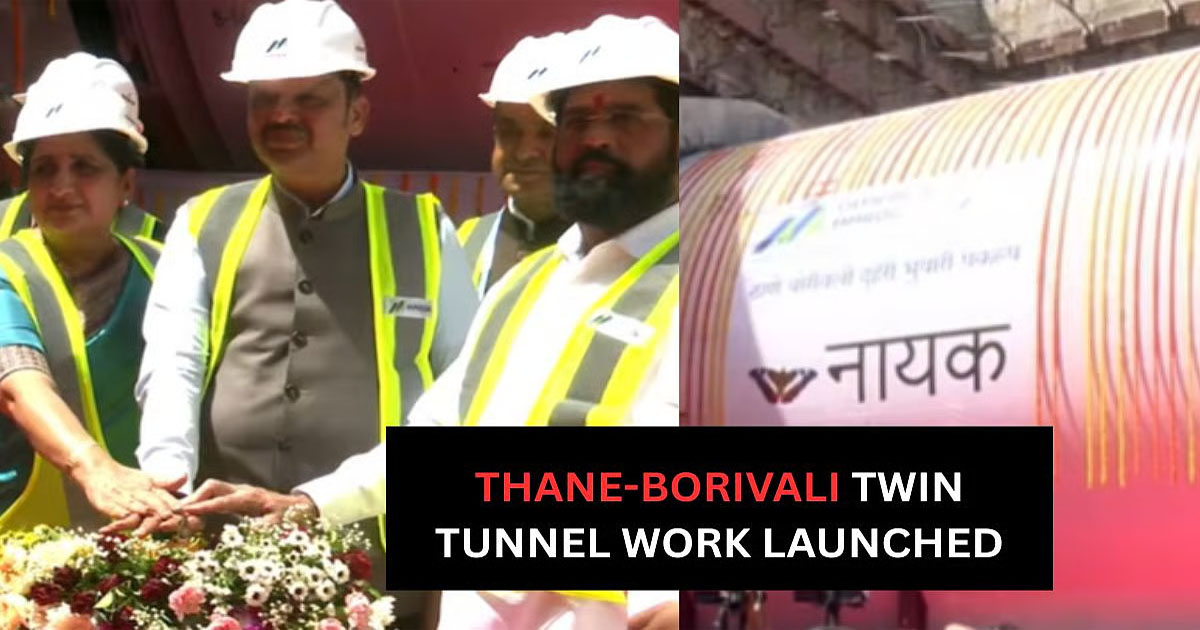
Mumbai: The first Tunnel Boring Machine (TBM), named Nayak, has been launched to begin excavation for the Thane–Borivali Twin Tunnel project today. The inauguration was officially done by Chief Minister Devendra Fadnavis along with Deputy Chief Ministers Eknath Shinde and Sunetra Pawar. Transport Minister Pratap Sarnaik was also present at the event, which took place at the TBM launch site in Manpada, Thane.
At present, the 23-kilometre journey between Thane and Borivali takes anywhere between 60 and 90 minutes, largely due to heavy congestion on Ghodbunder Road. Once completed, the new tunnel route will bring this travel time down to just 15 minutes, offering a faster and more reliable commute. The project, which began on May 19, 2023, is expected to be completed by May 2028.
Implemented by MMRDA, the project also includes connecting roads linking the Western Express Highway in Borivali and Ghodbunder Road in Thane.
A machine built for Mumbai’s toughest terrain, a 13.34-metre diameter single-shield TBM—among the largest deployed in urban tunnelling. Weighing nearly 2,500 tonnes and assembled from over a thousand components, the machine represents cutting-edge engineering tailored for challenging geological conditions.
Meanwhile, prior to this, Phase 1 of the long-awaited Metro Line 9 rail service between Dahisar East and Mira Bhayandar was inaugurated. CM Devendra Fadnavis, along with Deputy CM Eknath Shinde, Transport Minister Pratap Sarnaik, and Mumbai Mayor Ritu Tawde, were present at the inauguration ceremony of phase 1 connecting Dahisar East to Kashigaon.
The 4.97 km line connecting Dahisar and Kashigaon, with stations at Pandurang Wadi and Miragaon, is expected to provide relief to commuters in the Mira-Bhayander region, which currently depends heavily on road transport, leading to frequent traffic congestion.
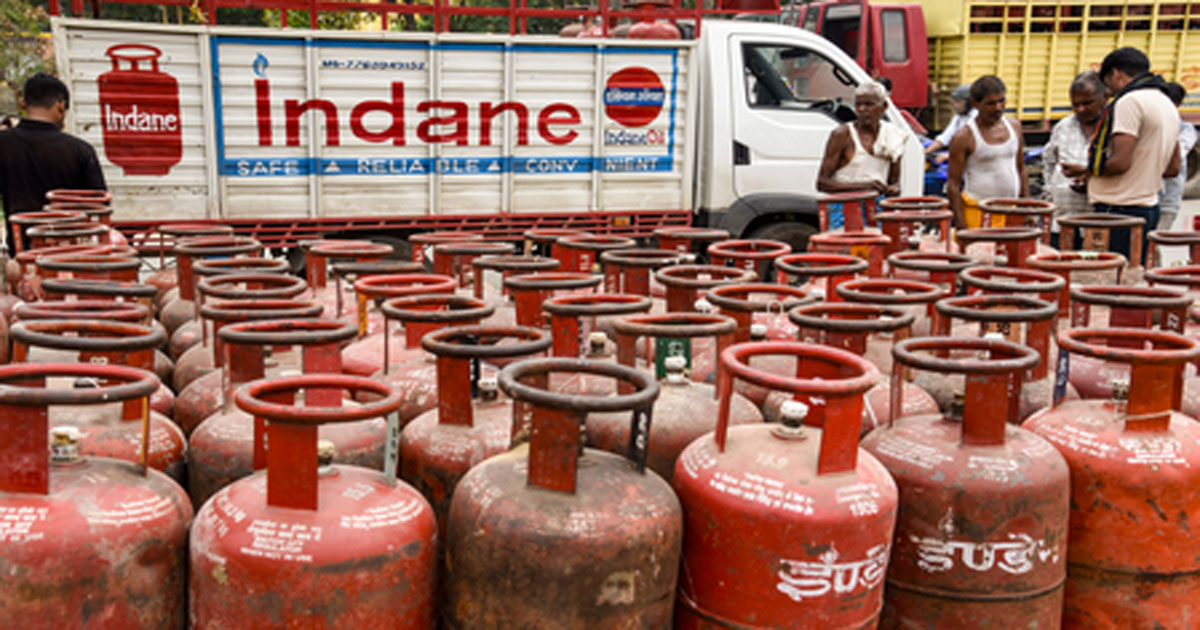
New Delhi, April 7: The Centre has decided to double the daily allocation of 5-kg free trade LPG (FTL) cylinders available for distribution to migrant labourers across states, according to an official communication.
The Petroleum Ministry said in a notification the enhanced allocation will be based on the average daily supply of cylinders provided to migrant workers.
The revised allocation goes beyond the earlier cap of 20 per cent specified in March announcement.
The government also said that the additional 5-kg FTL cylinders will be placed at the disposal of state governments and their Food and Civil Supplies Departments for distribution exclusively to migrant labourers with the assistance of oil marketing companies (OMCs).
Earlier, the government had said it was making all efforts to ensure adequate availability of petrol, diesel and LPG amid the prevailing geopolitical situation, while advising citizens to avoid panic buying and rely only on official sources for information.
Consumers were also encouraged to use digital modes for LPG bookings and minimise visits to distributors unless necessary.
The government has prioritised domestic LPG and PNG supplies, along with critical sectors such as hospitals and educational institutions.
It has also implemented several demand and supply-side measures, including enhancing refinery output and increasing LPG booking intervals to 25 days in urban areas and up to 45 days in rural areas.
To ease pressure on LPG demand, alternate fuels such as kerosene and coal have been made available, while states have been advised to expand PNG connections.
The government also said there has been no disruption in LPG supply affecting migrant workers.
According to official data, around 51 lakh domestic LPG cylinders were delivered recently, with online bookings rising to 95 per cent and delivery authentication-based distribution increasing significantly to curb diversion.

Transparency with quality in Mumbai Municipal Corporation’s road cement concreting project, stay informed about the current status of road work in the area: Municipal Commissioner

Key findings from the investigation into Ashok Kharat… Action to be taken against those who made it viral on social media; 2 FIRs registered, 6 arrested: SIT.

Establishment of SIR Help Desk in Ward No. 211 Madanpura is an important step for public convenience*

Mumbai: Anti-Narcotics Cell cracks down on drug dealers, seizes drugs worth over Rs 10 crore, arrests 10 accused

Mumbai: Massive Fire Engulfs Railway Coach At Matunga Carshed, Welding Sparks Suspected

Married Mumbai Woman Mocked In Andheri Society Over ‘Lift Kissing’ CCTV Video, Files Police Complaint

LPG Crisis In Maharashtra: Cyber Crime On Rise Amid Shortage, 2 Women Lose ₹4 Lakh In ‘Gas Update’ Online Scam In Kalyan-Dombivli

Dhurandhar 2 Box Office Collection Day 1: Ranveer Singh Starrer Takes An Exceptional Opening; Crosses ₹100 Crore Mark

Thane Horror: Man Slashed With Chopper In Naupada For Refusing ‘Vargani’, Caught On Camera

Mumbai Police Busts Fake Apple Accessories Racket In Ghatkopar, ₹16.33 Lakh Goods Seized; Six Booked
-

 Crime4 years ago
Class 10 student jumps to death in Jaipur
-

 Maharashtra2 years ago
Mumbai Local Train Update: Central Railway’s New Timetable Comes Into Effect; Check Full List Of Revised Timings & Stations
-

 Maharashtra1 year ago
Mumbai To Go Toll-Free Tonight! Maharashtra Govt Announces Complete Toll Waiver For Light Motor Vehicles At All 5 Entry Points Of City
-

 Maharashtra2 years ago
False photo of Imtiaz Jaleel’s rally, exposing the fooling conspiracy
-

 National News1 year ago
Ministry of Railways rolls out Special Drive 4.0 with focus on digitisation, cleanliness, inclusiveness and grievance redressal
-

 Maharashtra1 year ago
Maharashtra Elections 2024: Mumbai Metro & BEST Services Extended Till Midnight On Voting Day
-

 National News2 years ago
J&K: 4 Jawans Killed, 28 Injured After Bus Carrying BSF Personnel For Poll Duty Falls Into Gorge In Budgam; Terrifying Visuals Surface
-

 Crime1 year ago
Baba Siddique Murder: Mumbai Police Unable To Get Lawrence Bishnoi Custody Due To Home Ministry Order, Says Report