
Maharashtra
From Reviving Mega Projects To Handling Financial And Water Crisis: Tough Decisions Ahead For Maharashtra CM Devendra Fadnavis

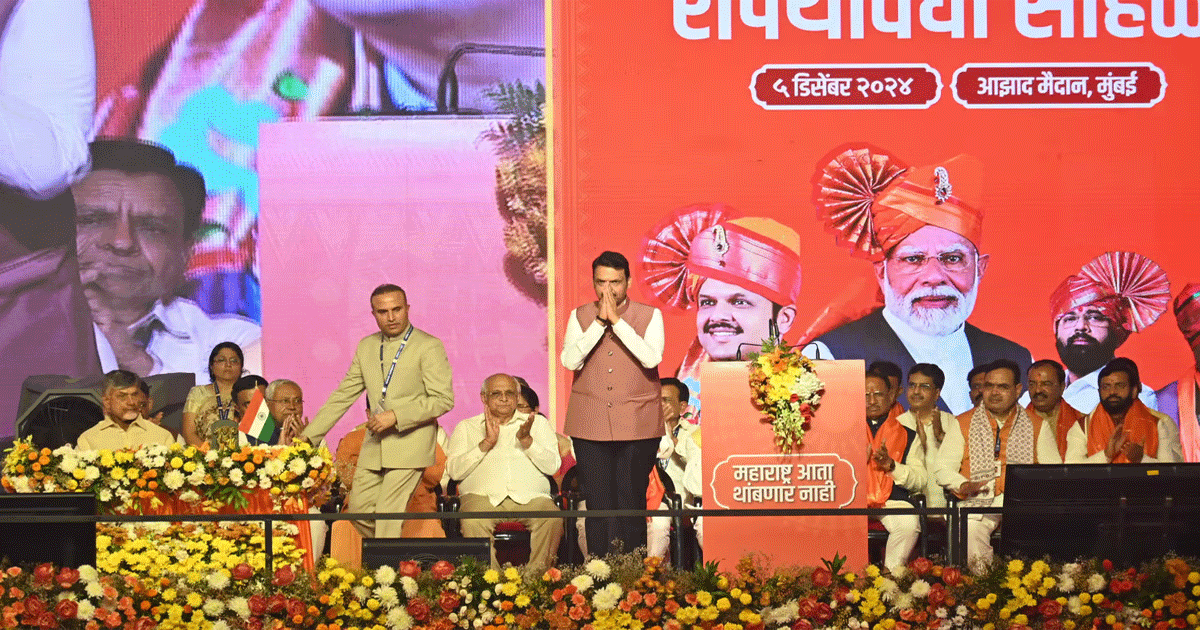
Maharashtra’s 21st chief minister Devendra Fadnavis (54) is facing several challenges which will put pressure on his administrative skills in the extreme.
For starters he will have to revive two big ticket projects which were booted out by the erstwhile Uddhav Thackeray government. One is the Rs 3 lakh crore oil refinery and petrochemical project which was first to come up with investment from the Saudi oil major ARAMCO at Nanar and later shifted to Barsu in the Konkan belt. This mega project would have given a major boost to the state’s economy. But the MVA government led by Uddhav Thackeray vetoed it on environmental grounds. The other project is the Jaitapur atomic power project which the French behemoth Areva was keen on implementing at a cost of Rs 1.12 trillion. With a capacity of 9,900 MW it was to be the biggest nuclear power plant in the world. The MVA said “nakko” (No) to this venture too despite the enormous benefits that would have accrued from it. On the one hand the MVA was complaining about large projects going to Gujarat whereas it was putting the brakes on mega projects in Maharashtra itself.
Fadnavis’ task would be to revive both these projects. The opposition is certain to prod the local villagers into agitation. Here the new CM’s skills at negotiation will have to be used to take the locals on board.
The state is facing a maha public debt of Rs 7.82 lakh crores of which the state has to repay Rs 2.75 lakh crores in the coming seven years. While the state ranks first in terms of foreign direct investment (FDI) in terms of public debt is second only to Tamil Nadu. Populist schemes like Ladki Bahin, on which there is an outlay of over Rs 40,000 crores, have majorly added to the financial burden of the state. It has a bloated and inefficient bureaucracy whose salary bill will shoot up to Rs 1.59 lakh crore in the next three months. The pension burden will be Rs 74,011 crores and interest payment is expected to rise to Rs 56,727 cr. Fadnavis will be required to take tough decisions to bring financial discipline.
Though Maharashtra is perceived as a developed state the fact is that only seven of its 36 districts contribute significantly to its GDP. The World Bank, which sanctioned a $ 188.28 million loan to the state early this week, noted that these seven districts contribute to over half the $ 500 billion state’s GDP.
The other challenge will be to meet the acute water shortage in most parts of the state. Fadnavis had started implementing the revolutionary Jalyukt Shivar Yojana, but it was scrapped by the MVA government. The scheme aimed to provide for rainwater harvesting which was expected to rid 5,000 villages of water scarcity each year. Several questions have been raised regarding the success of this ambitious programme which was expected to drought proof Maharashtra. According to the Centre for Science and Environment, Delhi, the programme has created 24,000 cubic metres of water storage with an irrigation potential of 3.4 million hectares. “That is just enough to provide 487 people with water for an entire year calculated as per the 135 per capita per day norm….” the Centre stated in a report.
Fadnavis needs to prioritise the completion of the Gosikhurd irrigation project in Vidarbha which has an annual irrigation potential of 2,50,800 hectares. It has been a work in progress for the past 40 years and its deadline was extended for the sixth time. It is now expected to be completed in June, 2026. This project can boost farm income substantially for millions of farmers and also put an end to the spate of farm suicides. Over 14,000 farmers have ended their lives and this constitutes 37.6 percent of farmer suicides in the country. The CM is from Vidarbha and hence he has an extra responsibility to ensure the speedy completion of the project.
Over 11,000 state government employees have got their jobs on the basis of fake scheduled tribe certificates. Despite a Supreme Court order the government has not taken criminal action against these employees who have deprived genuine ST candidates of jobs in the government. In fact the government has been treating these criminal employees with kid gloves. If Fadnavis is to provide a clean administration then it should file criminal cases for forgery against all these persons.
In Mumbai, an activist Kalmalakar Shenoy unearthed a Rs 40,000 Cr scam involving several builders and officials of MHADA. Under rule 33 (7) of the Development Control the state government had given additional incentives to builders to redevelop dilapidated buildings in Mumbai. They were to surrender a portion of the flats in the reconstructed buildings to MHADA. But hardly any of them did that and MHADA did precious little to recover the flats from them. Shenoy moved the Bombay high court which ruled in his favour. Shockingly the state government has gone in appeal against this judgement of the Bombay high court even though it is in favour of MHADA. Fadnavis should immediately withdraw the appeal, initiate criminal proceedings against the builders and MHADA officials concerned and recover the Rs 40,000 crores pocketed by them. This is the least he can do to restore public confidence in the government.

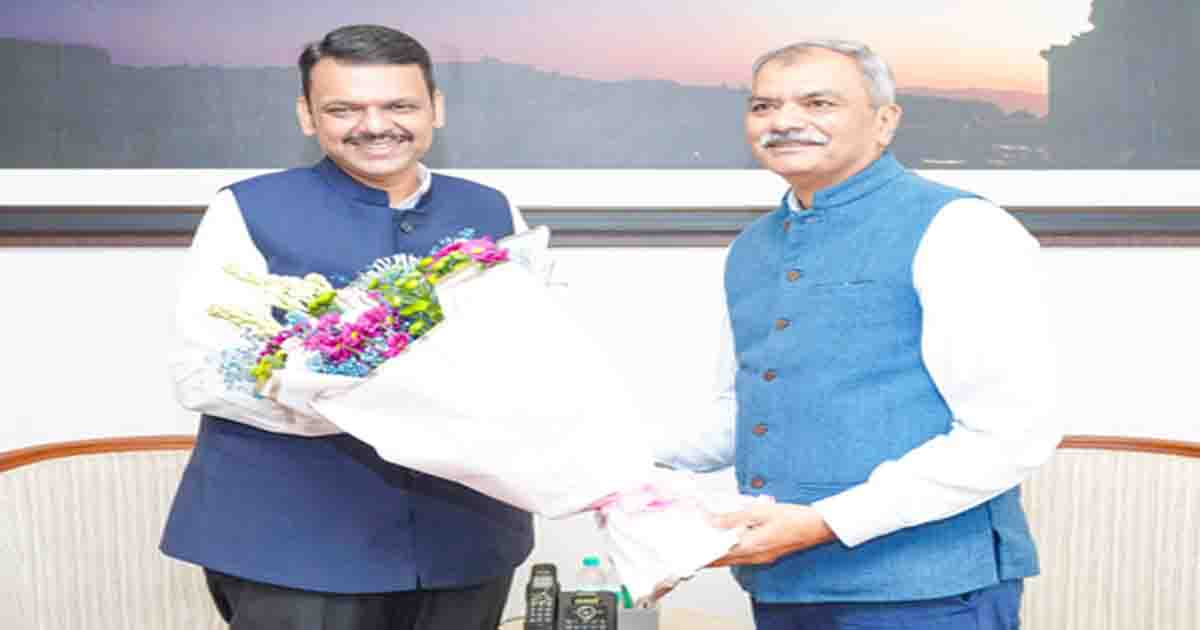
Mumbai, Oct 6: Director General of the Narcotics Control Bureau (NCB) Anurag Garg called on Maharashtra Chief Minister Devendra Fadnavis in Mumbai and discussed measures to intensify the fight against drug trafficking, an official said on Tuesday.
The NCB official said on X, “Detailed discussions were held on the various steps being undertaken by the Ministry of Home Affairs under the Whole-of-Government Approach against drug trafficking and distribution in line with the Central Government’s objective of making the country drug-free by December 2029, along with Maharashtra’s ongoing efforts and the action plan for the coming period.”
“The state continues to be at the forefront of this nationwide mission to build a drug-free Maharashtra,” said the NCB.
Earlier in August, the India-US Counter Narcotics Working Group (CNWG) Pillar I Working Group Meeting was hosted by the Narcotics Control Bureau (NCB) in a hybrid format to strengthen bilateral cooperation in combating narcotics trafficking.
The NCB shared details of the meeting on the social media platform X, stating, “The India-US Counter Narcotics Working Group (CNWG) – Pillar I Working Group Meeting was hosted by the Narcotics Control Bureau on 6 August 2026 in hybrid mode.”
The meeting brought together representatives from several Indian and US agencies. Participants from the Indian side included the NCB, Central Bureau of Narcotics (CBN), Directorate of Revenue Intelligence (DRI), Central Drugs Standard Control Organisation (CDSCO), Ministry of External Affairs (MEA), Department of Revenue and Department of Chemicals and Petrochemicals.
The US delegation included officials from the Drug Enforcement Administration (DEA), LEGAT, Office of National Drug Control Policy (ONDCP) and the US Department of State.
The discussions focused on strengthening operational cooperation, preventing the diversion of precursor chemicals, enhancing policy coordination, and advancing capacity building, said the NCB.
According to the Union Home Ministry, the NCB has strengthened international cooperation in drug control through bilateral agreements with 27 countries and Memoranda of Understanding (MoUs) with 19 countries.
India holds regular Director General (DG) Level/bilateral talks on drug-related matters with countries such as Myanmar, Nepal, Thailand, Sri Lanka, Indonesia, Singapore and the US, said an official.

Navi Mumbai, Oct 6: Navi Mumbai International Airport (NMIA) is strengthening the passenger experience with expanded mobility, transit hospitality and airline support as more flights prepare to shift from capacity-constrained Chhatrapati Shivaji Maharaj International Airport (CSMIA) in Mumbai.
The focus of NMIA, one of India’s largest greenfield airports and operated by Adani Airport Holdings Limited (AAHL), on customer comfort also extends to a futuristic digital art programme and experience zone designed to create a more soothing and engaging environment for passengers.
The measures come ahead of the winter flying schedule, which runs from October 25, 2026, to March 27, 2027.
Maharashtra State Road Transport Corporation will start electric e-Shivai services from October 7 to Dadar, Borivali and Pune, with fares of Rs 170, Rs 210 and Rs 450, respectively. Children below 12 years of age and women travelling with a National Common Mobility Card will be eligible for half-fare.
‘Chalo’ operates 21 daily services to Marol, Bandra, Dadar and Colaba, while Navi Mumbai Municipal Transport runs seven dedicated airport routes.
Bharat Taxi will begin operations with up to 40 vehicles from October 10. Cityflo, Aarya and Chalo will also operate a complimentary hourly shuttle between NMIA and CSMIA.
The airport’s passenger transport network includes 3,787 app-based taxis, 184 car rentals, 171 autorickshaws and 547 buses.
NMIA is also connected to Panvel, Targhar and Bamandongri suburban railway stations, as well as major road corridors including Atal Setu and the Sion-Panvel Highway.
Inside Terminal 1, AAHL will open an 80-room Swirl Transit Hotel in mid-October, offering four-hour and overnight stays, showers, workstations, Wi-Fi and 24-hour dining.
A 21-room Swirl property is also planned at Lokapriya Gopinath Bardoloi International Airport (LGBIA) in Guwahati.
TajSATS’ flight kitchen at NMIA serves more than 40 departing flights a day, with capacity for 7,500 meals daily and expansion to 15,000 as demand rises.
It serves domestic and international carriers, provides local meal uplift for international airlines, and adds to the culinary offering for passengers. TajSATS, which has more than four decades of aviation catering experience, also operates the flight kitchen at CSMIA.
Business
Navi Mumbai Airport expands inflight catering capacity with ‘TajSATS’ ahead of winter season

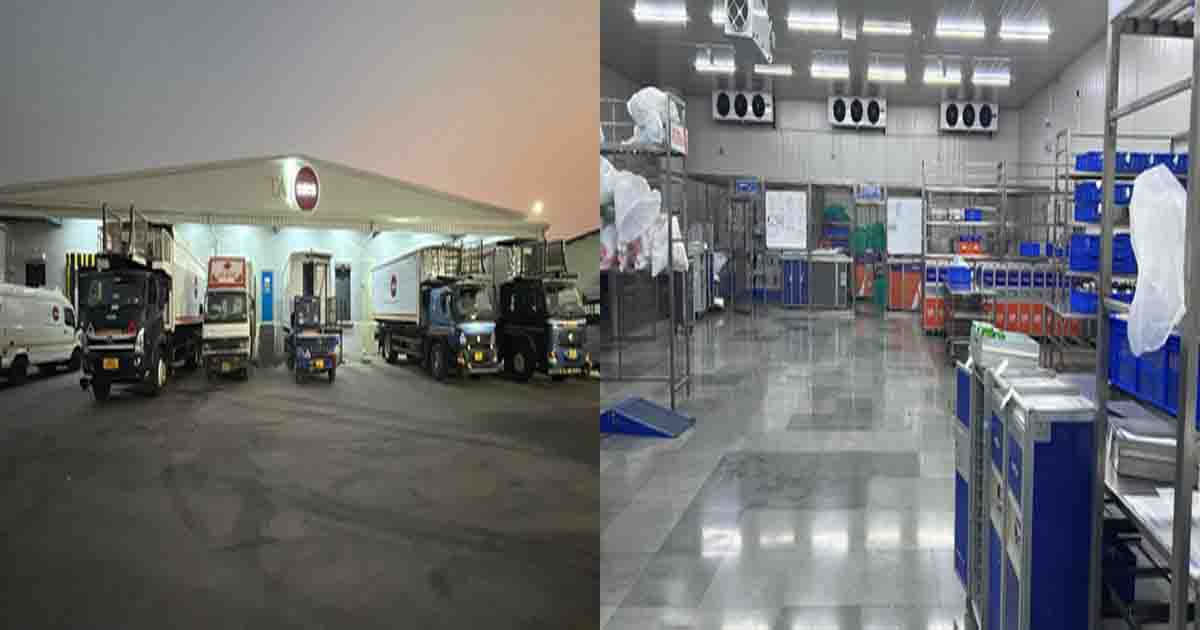
Mumbai, Oct 6: Navi Mumbai International Airport (NMIA) on Tuesday said that its dedicated inflight catering facility — operated by aviation catering company TajSATS — is prepared to support growing airline operations ahead of the Winter 2026-27 schedule, which runs from October 25 to March 27, 2027.
Located within the airport precinct, the flight kitchen currently serves more than 40 departing flights daily and has the capacity to produce up to 7,500 meals a day.
Moreover, the facility can be expanded to produce 15,000 meals daily as airline movements and passenger traffic increase.
“As NMIA expands its airline network, it is important that our supporting infrastructure grows with it,” said Subhash Murikenchery, Chief Airport Officer, Navi Mumbai International Airport.
“The TajSATS flight kitchen gives airlines the flexibility to meet rising demand and enhances the culinary experience for passengers,” he added.
The facility features production infrastructure, refrigeration systems and operational processes designed to respond to changes in airline schedules and demand.
Its location within the airport precinct is intended to facilitate meal delivery to departing aircraft.
NMIA said the facility provides local meal-uplift capabilities for international carriers operating to and from India, offering airlines an additional catering option closer to their point of departure.
“Approximately 40 per cent of international carriers operating from India rely on back catering from their own flight kitchens. NMIA’s inflight catering infrastructure has been developed to support this requirement, alongside the catering needs of domestic carriers,” according to the airport.
The catering infrastructure at NMIA has been developed to support those requirements alongside the needs of domestic carriers.
In addition, the facility offers catering services for both domestic and international airlines and can accommodate a range of dietary requirements, including special meals, allergen-sensitive menus and halal meals.
NMIA said the kitchen complies with food safety and quality standards including Hazard Analysis and Critical Control Points (HACCP), ISO 22000 and regulations of India’s Food Safety and Standards Authority.
TajSATS — which has operated in the aviation catering sector for more than four decades — also runs the flight kitchen at Mumbai’s Chhatrapati Shivaji Maharaj International Airport.
The airport said the facility is already operational and designed to scale in line with future growth in airline connectivity and passenger volumes.

Fan murder case: B’luru court issues notices to YouTube, Facebook, Instagram, X

Gujarat woman tied to tree, gang-raped under ‘purification’ guise; nine arrested

‘Golden, epoch-making day in history of Indian democracy’: HM Shah on PM Modi’s 25 years in public service

After 2014, India went from ‘policy paralysis’ to ‘reform express’, says PM Modi

Satyagraha for SIR injustice draws FIR: Congress on case against Rahul, Priyanka

Gift to President Putin part of PM Modi bid to globally display India’s heritage

PM Modi’s warm camaraderie with Putin, Xi on full display at BRICS Summit

Corporators of all parties in trouble! Corporators of all major parties including Shiv Sena (UBT), BJP and Congress are facing legal challenges.

Complaint against Netflix & Mukesh Chhabra for inappropriate language on ‘India’s Got Latent 2’

Maha Congress stages agitation against Gyanesh Kumar
-

 Crime4 years ago
Class 10 student jumps to death in Jaipur
-

 Maharashtra2 years ago
Mumbai Local Train Update: Central Railway’s New Timetable Comes Into Effect; Check Full List Of Revised Timings & Stations
-

 Maharashtra2 years ago
Mumbai To Go Toll-Free Tonight! Maharashtra Govt Announces Complete Toll Waiver For Light Motor Vehicles At All 5 Entry Points Of City
-

 Maharashtra2 years ago
False photo of Imtiaz Jaleel’s rally, exposing the fooling conspiracy
-

 National News2 years ago
Ministry of Railways rolls out Special Drive 4.0 with focus on digitisation, cleanliness, inclusiveness and grievance redressal
-

 Maharashtra2 years ago
Maharashtra Elections 2024: Mumbai Metro & BEST Services Extended Till Midnight On Voting Day
-

 National News2 years ago
J&K: 4 Jawans Killed, 28 Injured After Bus Carrying BSF Personnel For Poll Duty Falls Into Gorge In Budgam; Terrifying Visuals Surface
-

 Crime2 years ago
Baba Siddique Murder: Mumbai Police Unable To Get Lawrence Bishnoi Custody Due To Home Ministry Order, Says Report