
Maharashtra
From Ayodhya to Jantar Mantar: Uddhav reinvents Sena (UBT) strategy amid threat of split


Mumbai, July 24: Facing existential threats due to the high-profile defections by six Lok Sabha MPs who joined the Eknath Shinde faction, the Shiv Sena (UBT) chief Uddhav Thackeray is deploying a three-pronged approach to save the party, i.e. ideological reclaiming, issue-based youth mobilisation, and constitutional litigation.
Rather than playing defence after losing key party members, the Sena (UBT) is attempting to shift the political momentum back onto the ruling BJP-led Mahayuti/NDA coalition.
Thackeray has raised the issue of financial irregularities in the Shri Ram Temple donations by launching a statewide “Ram Raksha” campaign and a “BJP-free Ram movement.”
This is important as Hindutva has traditionally been the BJP’s sole ideological moat. By questioning the financial integrity of the Ram Temple movement and demanding accountability for donations (especially the silver bricks), Thackeray has targeted the BJP’s core voter base.
It forced the BJP onto the defensive on its home turf. Challenging the BJP in its ideological citadel of Nagpur, is designed to signal to traditional Sena voters that the UBT faction has not abandoned its core ideological roots despite political realignments.
Visiting Jantar Mantar, condemning the police lathi-charge on NEET paper leak protesters, comparing the government to Colonial rulers, and setting up free legal aid cells, Thackeray for a while has changed track beyond the Shiv Sena (UBT)’s traditional hyper-ethno-nationalist and religious appeal to retain relevance among younger, urban, and middle-class voters.
Joining student protests Uddhav Thackeray highlighted governance failures in education, exam integrity and state heavy-handedness. The comparison to Colonial rule and past democratic precedents like Indira Gandhi and Manmohan Singh, aimed to frame the ruling alliance as autocratic, thus appealing to neutral and youth voters affected by systemic administrative failures.
While the SC declined an interim stay on July 22, 2026, obtaining show-cause notices against the Speaker, Secretariat, and rebel MPs keeps a legal sword hanging over the Shinde faction. Legally, it tests the boundaries of the anti-defection law regarding split vs merger provisions when an original party maintains its independent legal identity.
Politically, it framed the rebel MPs as opportunists who betrayed the public mandate under which they were elected. Historically, the split between Uddhav and Raj Thackeray fragmented the traditional Sena voter base in the Mumbai-Thane-Konkan belt.
Re-aligning with Raj Thackeray creates a formidable regional bloc. It consolidates the Marathi vote in upcoming civic body (BMC) and state-level contests, presenting a unified front that is difficult for national parties to divide.
While Thackeray’s aggressive posture has created immediate momentum, several vulnerabilities remain. The ongoing defection of elected MPs/MLAs undermines organisational stability at the constituency level, even if public sympathy favours the UBT faction.
Political observers said that balancing hardline Hindutva messaging through Ram Temple campaigns with broader social/youth issues and coalition politics requires careful calibration to avoid alienating either traditional nationalists or secular alliance partners.
Constitutional litigations in the Supreme Court often stretch over long periods. Without immediate legal stays, the political reality on the ground (recognised mergers) can become difficult to reverse practically before major election cycles.
However, Thackeray through his recent actions signals that his party is refusing to be sidelined into regional irrelevance. By combining ideological counter-attacks, constitutional challenges, youth mobilisation, and tactical regional unity, he is attempting to frame the broader conflict as a fight for democratic accountability and local identity against centralised power.

Crime
Tiger Shroff firing case: Voice samples of threats to be verified through police ‘voice banks’

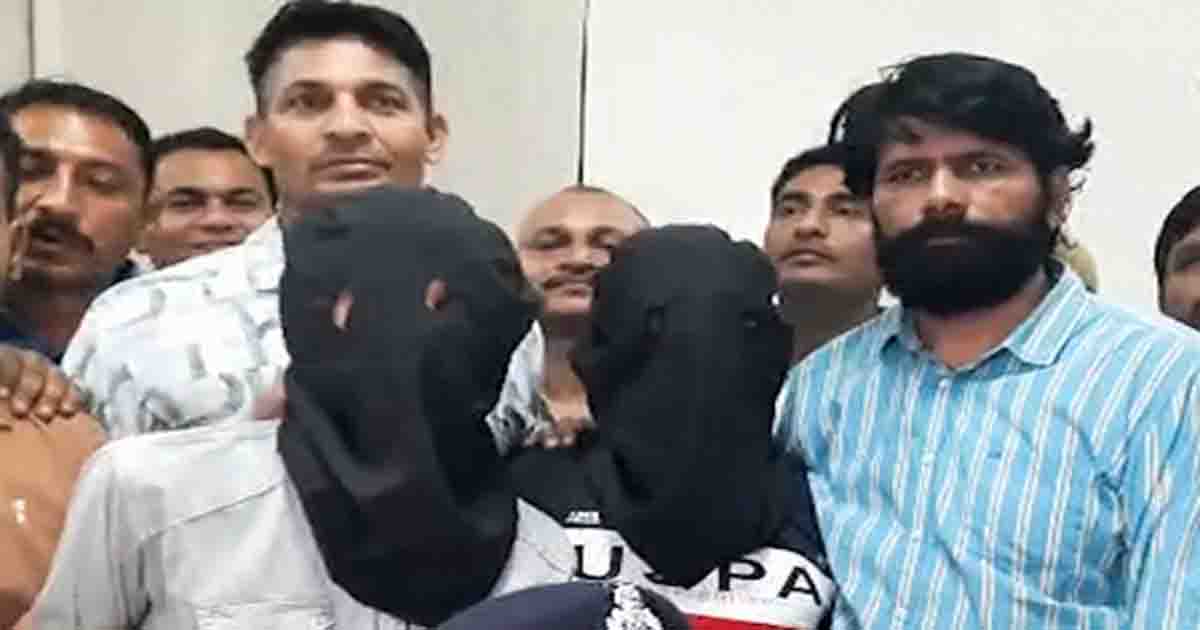
The audio clip containing a threat to Bollywood actor Tiger Shroff will now be examined, as the investigators plan to match the voice sample against the ‘voice banks’ maintained by the Punjab and Delhi Police, officials said.
These databases contain voice recordings of members allegedly linked to the Lawrence Bishnoi gang.
Punjab, Delhi and Rajasthan Police have separate voice banks containing audio samples of the Bishnoi gang members. Similar verification was earlier carried out on audio clips linked to threats received by Salman Khan, Aamir Khan, Rohit Shetty, Baba Siddique and others.
This time, investigators will examine the audio clip of Anil Pandit, which surfaced after the alleged attack threat against Tiger Shroff.
According to senior Mumbai Police sources, identifying the person behind an audio clip is a major challenge, as threats often arrive under different names and in different voices.
Delhi Police reportedly has a voice bank with over 200 voice samples connected to the Bishnoi gang, while Punjab and Rajasthan Police maintain similar databases.
Mumbai Police is also continuing to study the gang’s methods and activities, as the Bishnoi gang has increasingly come into focus in Maharashtra, particularly Mumbai, over the past two to three years.
Meanwhile, the Crime Branch’s Anti-Extortion Cell will produce the arrested accused in the Tiger Shroff firing case before the Esplanade Court at 3 p.m.
According to sources, the accused in the firing incident had arrived in Mumbai about a month ago and allegedly conducted a recce of the homes of several prominent Bollywood celebrities.
The accused would ask auto-rickshaw drivers, whom they hired to travel around Mumbai, to take them to the residences of Bollywood stars. They allegedly claimed that they wanted to photograph the celebrities’ homes.
Meanwhile, the accused allegedly discarded both weapons at an unidentified location while fleeing Mumbai after the attack. The Mumbai Police are now attempting to trace and recover the firearms.
According to police sources, the attackers used two pistols during the incident, one foreign-made and the other domestically manufactured. However, they reportedly had limited information about which of the two weapons was foreign-made.
Investigators are continuing their efforts to locate the discarded firearms as part of the probe into the firing incident.
The Mumbai Crime Branch is investigating the case to establish the roles of the accused and determine the full extent of the conspiracy.

Two people died, and four others sustained burn injuries, including one who suffered 80 per cent burns, after a fire broke out at a scrap godown in Abdul Rashid Compound in Saki Naka, Andheri East, Mumbai, officials said on Wednesday.
The Mumbai Fire Brigade received a call about the blaze at 6.18 p.m. on Tuesday and classified it as a Level-II fire shortly after responding to the incident.
The injured were subsequently rushed to the civic-run Rajawadi Hospital for treatment, police said. The identities of the two deceased persons have not yet been established.
A senior officer of the Mumbai Fire Brigade said the circumstances surrounding the blaze remained unclear, with the scale and nature of the incident making it difficult to determine its cause at this stage.
Preliminary investigations have so far been unable to establish the exact cause or point of origin of the fire.
Officials said the flames spread rapidly, with the large quantity of scrap material at the godown providing fuel and causing the blaze to intensify quickly.
The nature of the material stored at the premises also posed challenges for firefighting personnel, making the operation to extinguish the flames difficult. However, after sustained efforts, the fire brigade eventually managed to bring the blaze under control.
“Extinguishing the fire was also challenging, but it was eventually brought under control,” the officer said.
The four injured individuals were identified as Taufiq Shadil Qureshi, 20, who sustained 80 per cent burns; Jahid Abidulla Qureshi, 20, and Kamal Jalauddin Shah, 47, who both suffered 40 per cent burns; and Lalchand Ramlakhan Gautam, 40, who sustained 10 per cent burns.
All four were admitted to the civic-run Rajawadi Hospital for medical treatment.
According to doctors at the hospital, Taufiq Shadil Qureshi, who sustained 80 per cent burns, is in critical condition. The two other patients who suffered 40 per cent burns each are also in serious condition.
All three have been admitted to the hospital’s trauma ward for treatment and close monitoring.
The fourth injured person, Lalchand Ramlakhan Gautam, who sustained 10 per cent burns, is reported to be stable.
Doctors said he would remain under observation for some time before being discharged, depending on his condition.
Meanwhile, the police and fire brigade officials are continuing to examine the circumstances surrounding the incident.
Further details are awaited.
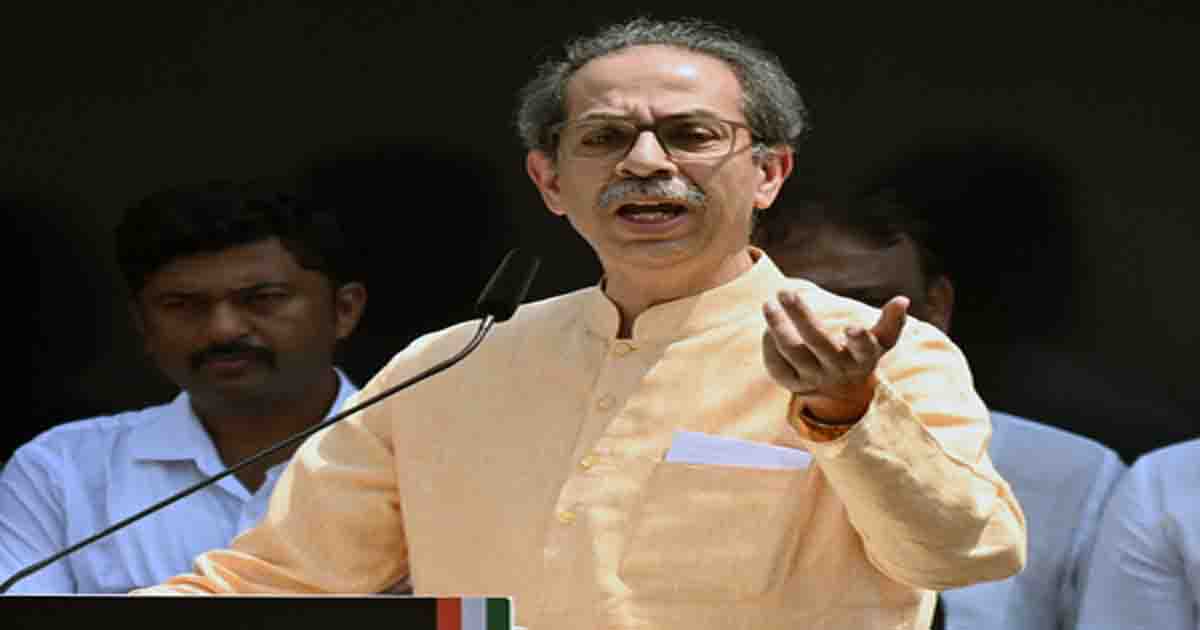
In an unsparing broadside against the Centre, the Shiv Sena Uddhav Balasaheb Thackeray on Wednesday launched a scathing critique in the party’s mouthpiece, ‘Saamana’, questioning the Centre’s misplaced priorities amid ongoing ‘bloodshed’ in Manipur.
Highlighting a grim contrast, an editorial in Saamana condemned the ruling Bharatiya Janata Party (BJP) for deploying massive state machinery to turn the national capital into a “military cantonment” to crush peaceful political protests, while leaving the border state of Manipur to suffer under unrelenting ethnic violence.
The editorial painted a tragic picture of the ground reality in Manipur, pointing out that despite the presence of a “double-engine” government at both the Centre and state, peace remains distant. Over the past three years, the deep-seated clash between the Meitei, Kuki, and Naga communities — originally triggered after legal stances were taken regarding Scheduled Tribe (ST) status — has claimed more than 350 lives. The violence has seen a deadly resurgence. Over the last six months alone, 60 people have lost their lives, with at least 23 fatal attacks recorded over a recent 20-day span.
Highlighting the human cost, the editorial cited a recent incident in the Sunulok region where an armed group opened indiscriminate fire on 14 Meitei civilians collecting firewood in a forest, killing three instantly. Enraged citizens placed the body of a slain youth directly outside Chief Minister Yumnam Khemchand Singh’s residence in Imphal, protesting the administration’s inability to secure citizens’ lives.
“Thousands of displaced Manipuris continue to languish in overcrowded, substandard government relief camps, trapped in constant fear for their lives. Heavy security forces are deployed, yet armed groups clash at will with assault weapons. Sending security contingents is treated as the end of the government’s duty, while grassroots trust-building remains entirely missing,” noted the editorial.
The Thackeray camp claimed that to suppress anti-government demonstrations in New Delhi, the government mobilised sweeping security apparatuses, converting streets into militarised zones with barricades and heavy force to secure political stability in the national capital. Conversely, in Manipur’s hilly and forest regions, where armed outfits clash continuously, security measures have failed to halt daily acts of arson, killings, and terror.
The editorial further remarked that Prime Minister Narendra Modi’s visit to Manipur brought no lasting operational change, accusing the leadership of operating under a narrow directive: “Let Manipur burn, but Delhi must be saved, and the government must survive.”
Concluding with a poignant critique, the Uddhav Thackeray-led Shiv Sena asked, “Is Manipur not a part of India just like Delhi? While the government deploys massive strength in Delhi, why is the same force not applied to Manipur? Manipur is burning over and over again. Who will stop this inferno?”

Tiger Shroff firing case: Voice samples of threats to be verified through police ‘voice banks’

Two arrested in Rs 22.50 Lakh cyber-fraud case in Delhi; four mobile phones seized

This is how Saif Ali Khan reacted after learning that you cannot earn from Instagram

Two killed in fire at scrap godown in Mumbai Andheri

Nine injured as bus rolls down into gorge in J&K’s Udhampur

Rahul, Cong ecosystem want to force regime change: BJP after Neha Bora praises B’desh Gen-Z protest

BJP pays tribute to ex-President Abdul Kalam, recalls his enduring influence on generations of India’s youth

Attack on democratic rights: INDIA Bloc leaders on detentions of anti-ECI protestors

INDIA bloc begins protest march against ECI

Maha Congress stages agitation against Gyanesh Kumar
-

 Crime4 years ago
Class 10 student jumps to death in Jaipur
-

 Maharashtra2 years ago
Mumbai Local Train Update: Central Railway’s New Timetable Comes Into Effect; Check Full List Of Revised Timings & Stations
-

 Maharashtra2 years ago
Mumbai To Go Toll-Free Tonight! Maharashtra Govt Announces Complete Toll Waiver For Light Motor Vehicles At All 5 Entry Points Of City
-

 Maharashtra2 years ago
False photo of Imtiaz Jaleel’s rally, exposing the fooling conspiracy
-

 National News2 years ago
Ministry of Railways rolls out Special Drive 4.0 with focus on digitisation, cleanliness, inclusiveness and grievance redressal
-

 Maharashtra2 years ago
Maharashtra Elections 2024: Mumbai Metro & BEST Services Extended Till Midnight On Voting Day
-

 National News2 years ago
J&K: 4 Jawans Killed, 28 Injured After Bus Carrying BSF Personnel For Poll Duty Falls Into Gorge In Budgam; Terrifying Visuals Surface
-

 Crime2 years ago
Baba Siddique Murder: Mumbai Police Unable To Get Lawrence Bishnoi Custody Due To Home Ministry Order, Says Report