
International News
Erdogan invites Sweden’s new PM to visit Turkey

Turkish President Recep Tayyip Erdogan said he would be pleased to host new Swedish Prime Minister Ulf Kristersson in Turkey during a phone talk between the two leaders, after months of tension with the Nordic country over its NATO bid.
Erdogan told Kristersson on Wednesday that it is in the “common interest to prevent terrorist organisations from taking Sweden’s NATO membership and its bilateral relations with Turkey hostage”, Xinhua news agency reported, citing a statement by the Turkish presidency.
Ankara was ready to enhance bilateral relations with the Swedish government in every field, the Turkish President said.
Erdogan also conveyed his congratulations to Kristersson for being elected as the Prime Minister of Sweden, according to the statement.
Finland and Sweden’s NATO bid was initially blocked by Ankara, which accused them of supporting anti-Turkey groups as they rejected Ankara’s extradition requests for suspects affiliated with the outlawed Kurdistan Workers’ Party (PKK) and the Gulen movement.
On June 28, Turkey, Sweden and Finland agreed on a trilateral memorandum of understanding (MoU) ahead of the NATO Madrid summit.
In the MoU, Finland and Sweden pledged to support Turkey’s fight against terrorism, and agreed to address Ankara’s “pending deportation or extradition requests of terror suspects expeditiously and thoroughly”.
The PKK, listed as a terrorist organisation by Turkey, the US and the EU, has been rebelling against the Turkish government for more than three decades.
The Gulen Movement is led by and named after the US-based Muslim preacher Fethullah Gulen. The Turkish government accuses the movement of masterminding the 2016 failed coup in which at least 250 people were killed.


International News
Gaining Iran’s trust sole way for US to find exit from current situation: Iranian parliament speaker

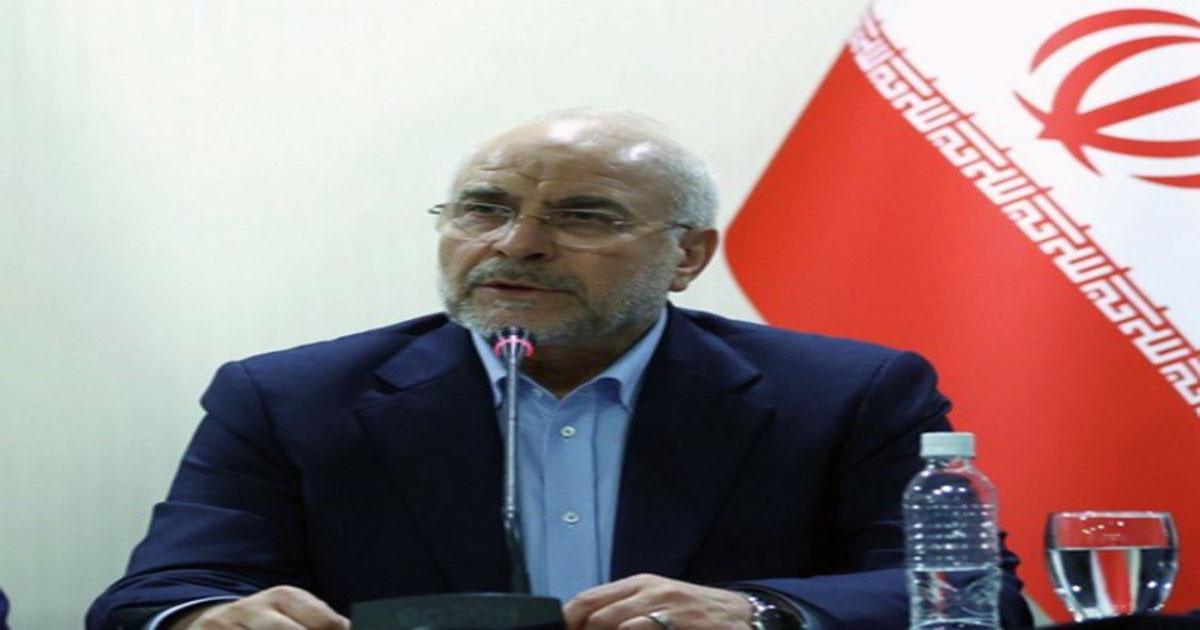
Tehran, April 13: Iran’s Parliament Speaker Mohammad Baqer Qalibaf said that the only way for the United States to find an exit from the current situation is to make its decision and gain the Iranian nation’s trust.
He made the remarks in an address to reporters on the way back to Iran from his trip to Pakistan, where he, along with his accompanying team, took part in peace talks with the US delegation, Xinhua news agency reported.
“The United States is indebted to Iranian people and needs to work hard to indemnify them,” Qalibaf said.
“If they fight, we will fight; and if they come forth with logic, we will react with logic. We will not surrender to any threat,” the parliament speaker added. “They can test our will once again and we will teach them a greater lesson.”
Qalibaf described the talks with the US delegation in Pakistan’s capital Islamabad as very “intensive, serious and challenging,” saying benefiting from capable experts and with a comprehensive and diverse perspective, Iran’s delegation designed “excellent initiatives” to demonstrate the country’s goodwill, “which led to progress in the negotiations.”
“We announced from the very beginning that we do not trust the Americans. Our wall of distrust dates back to 77 years ago. This comes as in less than 12 months, they attacked us two times in the middle of negotiations. Thus, they are the ones who must earn our trust,” he stressed.
Qalibaf dismissed recent threats by US President Donald Trump against Iran, saying such threats fail to have any impact on Iranian people.
Delegations from Iran and the United States held lengthy negotiations in Islamabad on Saturday and early Sunday. The talks, which failed to lead to an agreement, took place after a ceasefire was announced on Wednesday between Iran, the United States and Israel following 40 days of fighting.
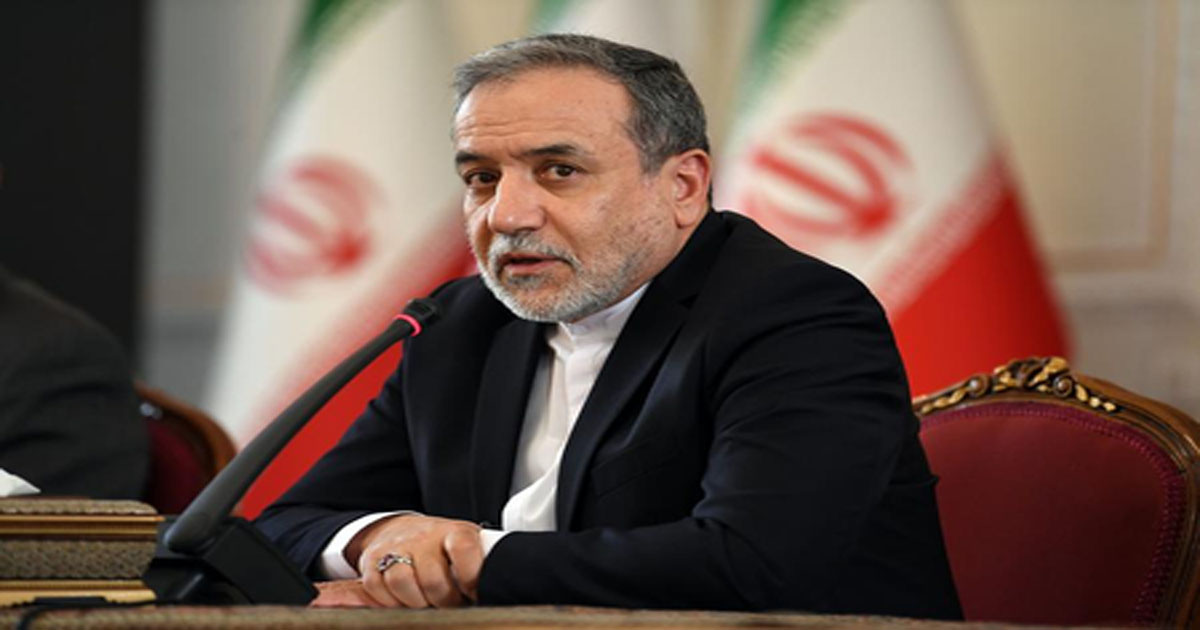
Tehran, April 13: Iran has accused the United States of derailing a potential breakthrough agreement, saying that “maximalism, shifting goalposts, and blockade tactics” prevented what was “inches away” from becoming the proposed “Islamabad MoU”, after 21 hours of intense negotiations ended without a deal.
In a post on X, Iranian Foreign Minister Abbas Araghchi said Tehran had entered into its highest-level direct engagement with Washington in 47 years with sincerity and intent to help bring an end to the ongoing conflict, but lamented that there were “zero lessons earned”.
His assertion that both sides were “inches away” from finalising an agreement highlighted how close the talks had come to success before tensions escalated sharply at the final stage.
“In intensive talks at highest level in 47 years, Iran engaged with US in good faith to end war. But when just inches away from ‘Islamabad MoU’, we encountered maximalism, shifting goalposts, and blockade. Zero lessons earned. Good will begets good will. Enmity begets enmity,” Araghchi posted on X.
Iranian President Masoud Pezeshkian said that the possibility of a diplomatic breakthrough with the United States still exists, provided Washington changes its approach. He urged the US to abandon what he termed “totalitarianism” and to respect Iran’s rights, suggesting that such a shift could pave the way for an agreement.
“If the American government abandons its totalitarianism and respects the rights of the Iranian nation, ways to reach an agreement will certainly be found,” Pezeshkian said in a post on X, while praising members of the negotiating delegation.
Meanwhile, the United States announced that it will begin enforcing a sweeping maritime blockade of vessels entering or exiting Iranian ports from April 13, escalating tensions after high-stakes talks between Washington and Tehran failed to yield agreement on key issues, including Iran’s nuclear programme.
The move, announced by US Central Command (CENTCOM), follows a presidential directive and will target “all maritime traffic entering and exiting Iranian ports”, including those along the Arabian Gulf and Gulf of Oman.
“The blockade will be enforced impartially against vessels of all nations,” CENTCOM said, adding that US forces would not impede ships transiting the Strait of Hormuz to and from non-Iranian ports.
Commercial mariners have been advised to monitor official navigation warnings and remain in contact with US naval forces while operating in the region.
The announcement came hours after US President Donald Trump declared that negotiations with Iran had stalled over its nuclear ambitions, despite progress on other fronts.
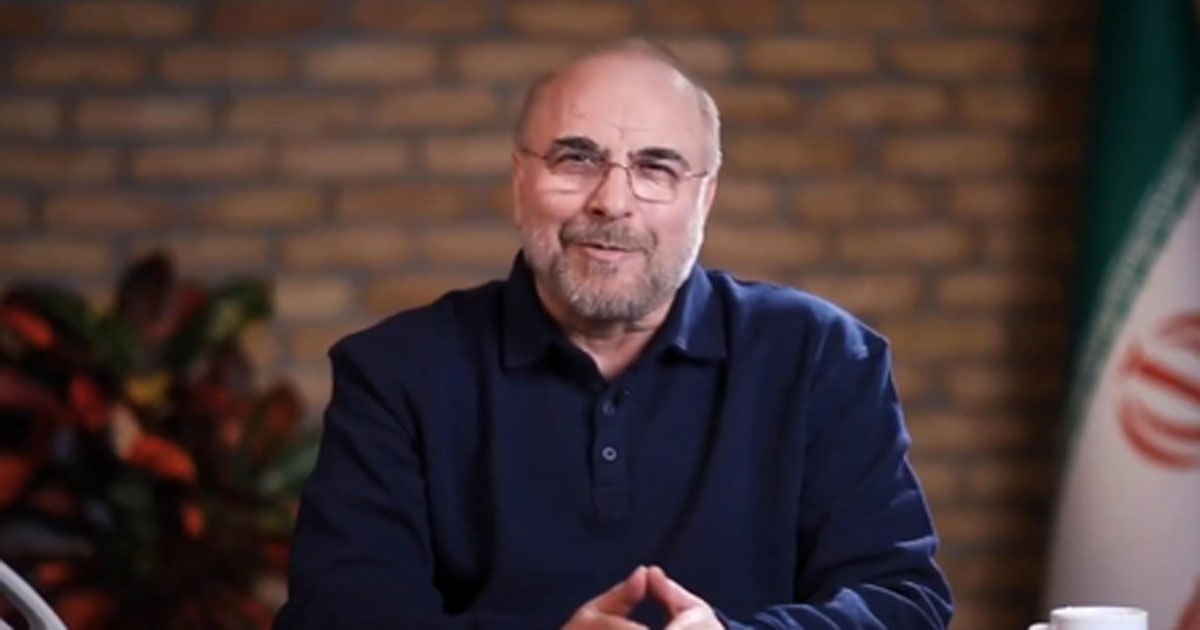
Tehran, April 12: Iranian Parliament Speaker Mohammad Baqer Ghalibaf said on Sunday that the US failed to gain Iran’s trust during recent negotiations, despite what he described as Tehran’s willingness to engage in “good faith”.
In a series of posts on X, Ghalibaf stated that the Iranian delegation raised “forward-looking initiatives”, however, the US failed to gain its trust. He mentioned that the US has to decide whether it can earn Iran’s trust and logic, as it has understood Tehran’s logic and principles.
“Before the negotiations, I emphasised that we have the necessary good faith and will, but due to the experiences of the two previous wars, we have no trust in the opposing side. My colleagues on the Iranian delegation raised forward-looking initiatives, but the opposing side ultimately failed to gain the trust of the Iranian delegation in this round of negotiations,” Ghalibaf posted on X.
In another post, he wrote: “America has understood our logic and principles, and now it’s time for it to decide whether it can earn our trust or not?”
His statement comes as high-level talks between US and Iranian officials in Pakistan failed to produce an agreement. The Speaker led the Iranian delegation during the negotiations with the US in Islamabad.
Ghalibaf also hailed the people of Iran for taking to the streets following the advice of the Supreme Leader and expressed gratitude to his colleagues for attending the 21-hour negotiations.
In a post on X, he stated: “We consider every mirror to be another method of authority diplomacy, alongside military struggle, for upholding the rights of the Iranian nation, and we will not for a moment cease our efforts to consolidate the achievements of the forty days of Iran’s national defence.”
“Iran is a body with 90 million souls, from all the heroic people of Iran who, following the advice of the Supreme Leader and by taking to the streets, supported their children and sent us on our way with their blessings—for this, I am grateful, and to my colleagues in these intense 21-hour negotiations, I say: well done, God strengthen you,” he posted on X.
The failed talks mark a setback in efforts to revive diplomatic engagement over Iran’s nuclear programme, which has long been a point of contention between Washington and Tehran. Previous negotiations have stalled over verification measures, sanctions relief and the scope of Iran’s enrichment activities.
Meanwhile, US Vice President J D Vance said negotiations with Iran failed to produce an agreement after more than 20 hours of talks in Islamabad, warning that Tehran’s refusal to accept Washington’s terms was “bad news for Iran much more than it’s bad news for the United States of America”.
“We have been at it now for 21 hours, and we’ve had a number of substantive discussions with the Iranians. That’s the good news. The bad news is that we have not reached an agreement,” Vance told reporters at a press conference in the early hours of Sunday morning.
The Vice President said US negotiators had clearly outlined their position, but Tehran declined to accept the terms.
“We’ve made very clear what our red lines are, what things we’re willing to accommodate them on, and what things we’re not willing to accommodate them on, and we’ve made that as clear as we possibly could, and they have chosen not to accept our terms,” he said.
Vance emphasised that the core US objective remained preventing Iran from acquiring nuclear weapons capability.
“The simple fact is that we need to see an affirmative commitment that they will not seek a nuclear weapon, and they will not seek the tools that would enable them to quickly achieve a nuclear weapon,” he said.
He added that Washington was seeking long-term assurances from Tehran, not temporary commitments.
“Do we see a fundamental commitment of will for the Iranians not to develop a nuclear weapon, not just now, not just two years from now, but for the long term. We haven’t seen that yet. We hope that we will,” Vance said.
He confirmed that Washington has put forward what it considers its final proposal.

Maulana Khalid Ashraf and his sons attacked in Mumbai Dongri, 4 accused arrested, tension calmed down

Mumbai road accident: Death toll climbs to 11, CM Fadnavis expresses grief

Ashok Kharat Sexual Exploitation Case: ED Searches 11 locations In Nashik, Shirdi & Pune Linked To Self-Styled Godman

Nine killed as dumper truck rams into car in Mumbai’s Kalyan

Child killed, 12 students injured as school van overturns in Bihar Nawada

Dhurandhar 2 Box Office Collection Day 1: Ranveer Singh Starrer Takes An Exceptional Opening; Crosses ₹100 Crore Mark

Mumbai Police Busts Fake Apple Accessories Racket In Ghatkopar, ₹16.33 Lakh Goods Seized; Six Booked

Thane Horror: Man Slashed With Chopper In Naupada For Refusing ‘Vargani’, Caught On Camera

Mumbai: 28-Year-Old Ghatkopar Woman Killed By Speeding Tanker While Crossing Road, Driver Arrested

Dhurandhar 2 Box Office Collection Day 9: Ranveer Singh Starrer Earns ₹41.55 Crore On Its Second Friday; Enters ₹700 Crore Club
-

 Crime4 years ago
Class 10 student jumps to death in Jaipur
-

 Maharashtra2 years ago
Mumbai Local Train Update: Central Railway’s New Timetable Comes Into Effect; Check Full List Of Revised Timings & Stations
-

 Maharashtra1 year ago
Mumbai To Go Toll-Free Tonight! Maharashtra Govt Announces Complete Toll Waiver For Light Motor Vehicles At All 5 Entry Points Of City
-

 Maharashtra2 years ago
False photo of Imtiaz Jaleel’s rally, exposing the fooling conspiracy
-

 National News2 years ago
Ministry of Railways rolls out Special Drive 4.0 with focus on digitisation, cleanliness, inclusiveness and grievance redressal
-

 Maharashtra1 year ago
Maharashtra Elections 2024: Mumbai Metro & BEST Services Extended Till Midnight On Voting Day
-

 National News2 years ago
J&K: 4 Jawans Killed, 28 Injured After Bus Carrying BSF Personnel For Poll Duty Falls Into Gorge In Budgam; Terrifying Visuals Surface
-

 Crime1 year ago
Baba Siddique Murder: Mumbai Police Unable To Get Lawrence Bishnoi Custody Due To Home Ministry Order, Says Report