
International News
Egypt urges full implementation of Gaza ceasefire agreement


Cairo, March 3: Egyptian Foreign Minister Badr Abdelatty reaffirmed the importance of fully and faithfully implementing the ongoing ceasefire agreement between Hamas and Israel in the Gaza Strip, stressing the necessity of transitioning to the second phase of the deal to ensure a lasting truce.
“Since the first phase has been completed, we should now begin discussions and consultations on the second phase. The ultimate goal is to sustain the ceasefire agreement,” Abdelatty said at a joint press conference in Cairo with European Commissioner for the Mediterranean Dubravka Suica.
Abdelatty condemned Israeli Prime Minister Benjamin Netanyahu’s decision to stop the entry of aid to Gaza. He said that using aid as a weapon of collective punishment and starvation in Gaza is unacceptable and impermissible, affirming that this act represents a blatant and explicit violation of international humanitarian law, Xinhua news agency reported.
The Egyptian top diplomat emphasised that Egypt is actively coordinating with the US and Qatar, hosting delegations, and intensifying discussions to ensure the agreement’s implementation, maintain the ceasefire, and facilitate humanitarian aid delivery to Gaza.
“We continue our intensive efforts to ensure the sustainability of the ceasefire and to initiate negotiations on the second phase,” he told reporters.
He also reiterated that the establishment of a Palestinian state is the only viable path to long-term security and stability in the region.
He emphasised Europe’s crucial role, both politically in maintaining regional peace and economically in supporting the upcoming reconstruction of Gaza.
Israel and Hamas have been implementing a ceasefire agreement since January 19, following more than 15 months of a deadly conflict in Gaza. The first phase of the ceasefire agreement ended on Saturday.
Hamas has said it was ready to open negotiations on the second phase, but Israel presented a new framework that would extend the first phase until after the Muslim holy month of Ramadan and the Jewish holiday of Passover, which ends on April 20, describing it as an outline of US envoy Steve Witkoff. Under the proposal, Hamas would free half the hostages on the first day, with the remaining captives freed at the end of the period if a permanent ceasefire is achieved.


US Treasury securities holdings attributed to India rose to $228.2 billion in September, registering a fifth consecutive monthly increase, according to latest figures released by the US Treasury Department.
The September figure was $8.5 billion higher than August’s $219.7 billion, an increase of about 3.9 per cent. Compared with September 2025, holdings rose by $25.5 billion, or about 12.6 per cent.
The monthly series shows a steady recovery from $181 billion in April. Holdings increased to $181.3 billion in May, $186.4 billion in June and $202.6 billion in July before rising further in August and September.
India ranked 14th among the individually listed countries and jurisdictions in Treasury’s table of major foreign holders.
The increase came as total foreign holdings of US Treasury securities declined to about $9.24 trillion in September from $9.32 trillion in August.
Japan remained the largest listed holder, with about $1.06 trillion, followed by the United Kingdom at $985.8 billion and mainland China at $563.9 billion. China’s holdings fell from $590.7 billion in August.
The figures, published on Wednesday under the Treasury International Capital reporting system, require caution when interpreting individual countries’ investment decisions.
Treasury said the country breakdown relies primarily on custodial reporting.
Holdings managed by overseas investment managers on behalf of clients in other countries can create similar difficulties. The India figure therefore does not establish that the Reserve Bank of India purchased the additional securities or explain the reasons for the increase.
A change in the value of holdings also differs from the amount of securities bought during a month.
The broader September release recorded a net international capital inflow into the United States of $261 billion across long-term securities, short-term US securities and banking flows.
Private foreign inflows totalled $267 billion, while foreign official flows recorded a net outflow of $6 billion.
Foreign investors’ net purchases of long-term US securities were $186.7 billion. That category extends beyond Treasury debt and should not be confused with the country holdings table.
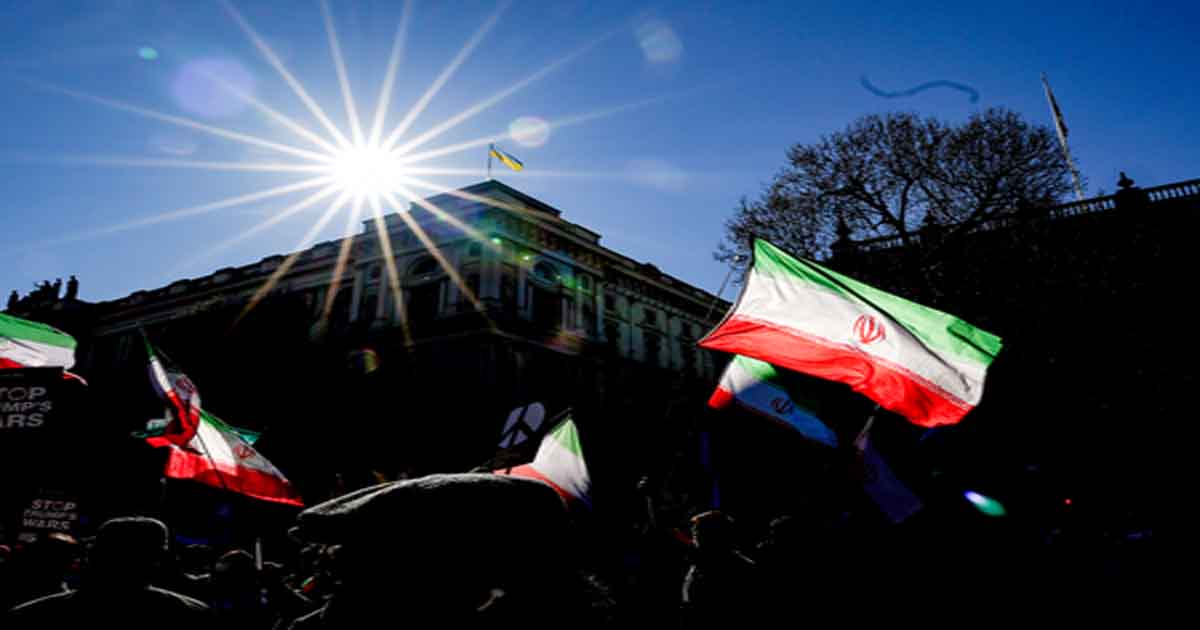
Iran’s Islamic Revolutionary Guard Corps (IRGC) said that the country does not accept the continuation of a war of attrition, and will not allow the situation to persist for a long time.
IRGC spokesman Hossein Mohebbi made the remarks at a conference in Tehran, adding that Iran also does not accept the “neither war nor peace” situation, Xinhua news agency reported quoting Iran’s official news agency IRNA.
He said, “The Islamic Republic of Iran does not accept the continuation of a war of attrition and will not let this situation persist for a long time. We will bring the war to a definitive conclusion. This matter will either be settled on the battlefield, or the United States must accept Iran’s conditions.”
He underlined that Iran will not reopen the Strait of Hormuz unless the United States meets its conditions in a verifiable manner, stressing, “We will not enter the nuclear issue until the matter of the Strait of Hormuz is resolved.”
On February 28, Israel and the United States launched joint attacks on Tehran and other Iranian cities. Iran responded with waves of missile and drone attacks targeting Israel and US bases and assets in the region, and tightened its grip on the Strait of Hormuz.
A ceasefire was achieved between the warring parties on April 8. On June 18, Iran and the United States signed a memorandum of understanding (MoU) on ending the war in the region on all fronts.
Under the MoU, the two countries were scheduled to hold negotiations within 60 days, ending on August 17, to reach a final agreement on Iran’s nuclear program and the removal of sanctions. However, they failed to make sufficient progress toward a deal as tensions continued to escalate.
California Attorney General Rob Bonta served an investigative subpoena on Nvidia, seeking to determine whether advanced chips or confidential information reached China and whether the company misled investors and the public about the risks.
The California Department of Justice said information obtained through the subpoena would help it assess whether Nvidia’s actions violated state law.
Bonta said the inquiry would examine the conduct of both Nvidia and its former chief executive, Jensen Huang, including whether their actions enabled China to obtain sensitive technology or information.
“Companies cannot mislead their investors,” Bonta said, describing investor protection as the central principle underlying the inquiry.
His office linked the investigation to reports of Huang’s relationship with a suspected Chinese intelligence operative. The announcement did not establish that espionage occurred or that Nvidia’s technology or confidential information had been improperly transferred.
The Los Angeles Times reported that Nvidia did not immediately respond to its request for comment.
Nvidia had previously announced its own independent investigation into reports that Huang was targeted by a foreign intelligence operation.
In a November 8 statement, the board said it had no reason at that time to believe national security or company secrets had been compromised, while committing to examine the available information.
The company said a committee of independent directors, supported by independent outside counsel, would oversee that investigation and that Huang had committed to cooperate. That statement preceded California’s subpoena and was not a response to it.
The company has since changed its leadership. According to its filing with the Securities and Exchange Commission, the board accepted Huang’s resignation as president, chief executive and director on November 11, effective immediately.
Chief Financial Officer Colette Kress was appointed interim chief executive while retaining her finance responsibilities. Harvey C. Jones became board chair.
On November 17, Nvidia also established a standing National Security and Export Control Oversight Committee to supervise its security policies, export-control compliance and global trade risks.
Director Suzanne Nora Johnson chairs the committee, alongside directors Stephen C. Neal and John O. Dabiri. Nvidia said its national-security and trade-compliance teams would report directly to the committee and to Kress on day-to-day operations.
The committee will meet at least quarterly and work with independent specialists in law, national security and trade compliance. Nvidia presented the move as an effort to strengthen governance and engagement with government authorities.
Separate congressional scrutiny is also scheduled next month.
The House Foreign Affairs, Intelligence and China committees announced on November 17 that Huang and Nvidia General Counsel Tim Teter had voluntarily agreed to transcribed interviews.
Huang is scheduled to appear on December 1 and Teter on December 2.

Sanjay Raut demands renaming Nagpur to ‘Deekshabhoomi’; sparks debate in Maha

Maha CM directs long term water supply planning for Mumbai and Pune Metropolitan regions

UP CM Yogi Adityanath pays last respects to mother at ancestral village in Uttarakhand

K’taka: Parents abduct medical student over relationship with Hindu youth

Anant Singh’s daughter’s ‘Tilak’ ceremony held in Barh; 100-vehicle convoy for Danapur turns heads

Congress trying to protect 3 crore Bangladeshi infiltrators in voter list: HM Shah

Red Fort car blast probe exposes blueprint for spread of terror modules across India

Trump flags Iran targets as talks continue

‘Conspiracy, not accident’: NCP on Ajit Pawar death

BJP, Shiv Sena slam Mallikarjun Kharge for terming Diwali ‘Khushiyon ka Eid’
-

 Crime4 years ago
Class 10 student jumps to death in Jaipur
-

 Maharashtra2 years ago
Mumbai Local Train Update: Central Railway’s New Timetable Comes Into Effect; Check Full List Of Revised Timings & Stations
-

 Maharashtra2 years ago
Mumbai To Go Toll-Free Tonight! Maharashtra Govt Announces Complete Toll Waiver For Light Motor Vehicles At All 5 Entry Points Of City
-

 Maharashtra2 years ago
False photo of Imtiaz Jaleel’s rally, exposing the fooling conspiracy
-

 National News2 years ago
Ministry of Railways rolls out Special Drive 4.0 with focus on digitisation, cleanliness, inclusiveness and grievance redressal
-

 Maharashtra2 years ago
Maharashtra Elections 2024: Mumbai Metro & BEST Services Extended Till Midnight On Voting Day
-

 National News2 years ago
J&K: 4 Jawans Killed, 28 Injured After Bus Carrying BSF Personnel For Poll Duty Falls Into Gorge In Budgam; Terrifying Visuals Surface
-

 Crime2 years ago
Baba Siddique Murder: Mumbai Police Unable To Get Lawrence Bishnoi Custody Due To Home Ministry Order, Says Report