
Crime
ED likely to use Iqbal Mirchi’s seized property to run it’s zonal office

The Enforcement Directorate (ED) is likely to move it’s Mumbai zonal office to the two floors (third and fourth floor) of Worli-based Ceejay House, which belongs to the late drug dealer Iqbal Mirchi.
Ceejay House is a prime building in Mumbai and a number of politicians are running their offices from there. Millennium Developer Private Ltd, the company of former Union Civil Aviation Minister Praful Patel, had constructed this building. The top floor of the building is the residence of Patel.
The ED had lodged a case of Prevention of Money Laundering Act against Iqbal Mirchi, his family members and others which includes DHFL and it’s promoters. The probe agency had detected a few suspicious transactions related to real estate dealings following which the case was lodged.
The ED had recently moved before the concerned Mumbai court seeking its permission to confiscate Iqbal Mirchi’s properties worth Rs 100 crore. The two floors of Ceejay House are part of the total properties that had to be confiscated.
In February 2021, the concerned PMLA court had declared Mirchi’s wife Hajra and his two sons, Asif and Junaid, as fugitive economic offenders. The order was passed by the court to seize their property.
Now ED wants to shift its zonal office to the third and fourth floor of Ceejay House, which belongs to Mirchi and his family.
Sources have claimed that the ED officials have been visiting the Ceejay Building to make necessary arrangements so that their zonal office could be shifted. As of now ED is running it’s office from the Ballard Estate situated in the Kaiser-e-Hind Building.
Patel’s company, Millennium Developer Private Ltd, bought the rights of Mirchi’s Discotheque and Fishermen Wharf Pub in 2004. A deal was struck between the family members of Mirchi and the company in 2004. Following this deal the third and fourth floor of the Ceejay Buildings were given to Mirchi’s family.
There are 15 properties of Mirchi seized by the ED. As of now ED has not decided to auction his real estate.


Crime
Mira-Bhayandar Crime: 40-Year-Old Housekeeper Brutally Stabbed To Death Inside Residential Complex In Kashimira, Probe Underway


Mira Bhayandar, March 26: The Kashimira locality in Mira-Bhayandar was gripped by fear on Tuesday night following the brutal murder of a 40-year-old female housekeeper. The victim, identified as Suman Nawachi, was repeatedly stabbed with a sharp-edged weapon inside a flat within a prominent residential complex.
Suman Nawachi worked as a housekeeper for several families in the Chandesh Accord residential complex. The attack took place in a flat located in Building Number 27.
According to police reports, the assailant launched a violent attack, stabbing Suman twice in the abdomen, once in the chest, and once across the neck.
Despite being rushed immediately to Gurukrupa Hospital, doctors declared her dead on arrival due to the severity of her injuries.
Upon receiving the alert, Kashimira Police arrived at the scene along with a forensic team to secure the area and collect evidence. Police have seized the weapon used in the crime from the spot.
Investigating officers are currently scanning footage from all CCTV cameras in and around the complex to identify the suspect. Police are recording statements from neighbours and residents to determine if anyone witnessed the entry or exit of the attacker.
The cold-blooded nature of the crime has sent shockwaves through the Kashimira neighbourhood. Local authorities have increased patrolling in the area to reassure panicked residents.
“We are conducting the investigation with the utmost seriousness. Our primary goal is to uncover the motive behind this heinous act and apprehend the perpetrator at the earliest,” stated a senior police official.
While the motive remains unclear, forensic experts are analysing every aspect of the crime scene to provide leads.
Crime
Mumbai: 28-Year-Old Ghatkopar Woman Killed By Speeding Tanker While Crossing Road, Driver Arrested

Mumbai: A 28-year-old woman lost her life after being hit by a speeding tanker at Sindhuwadi Junction on M.G. Road in Ghatkopar East on Wednesday evening.
The deceased, identified as Yamini Suvare, a resident of Pant Nagar in Ghatkopar East, was crossing the road around 7:15 pm on March 25 when the accident occurred. According to police, the traffic signal had just turned green when the tanker driver allegedly accelerated without ensuring the road was clear.
The tanker, driven in a rash and negligent manner, struck Suvare while she was on foot, leading to severe injuries. She was immediately rushed to Rajawadi Hospital for treatment; however, doctors declared her dead on arrival.
Police have registered a case and taken the accused driver into custody. An offence has been filed under relevant sections of the Bharatiya Nyaya Sanhita (BNS) and the Motor Vehicles Act. Further investigation into the incident is currently underway, officials said.
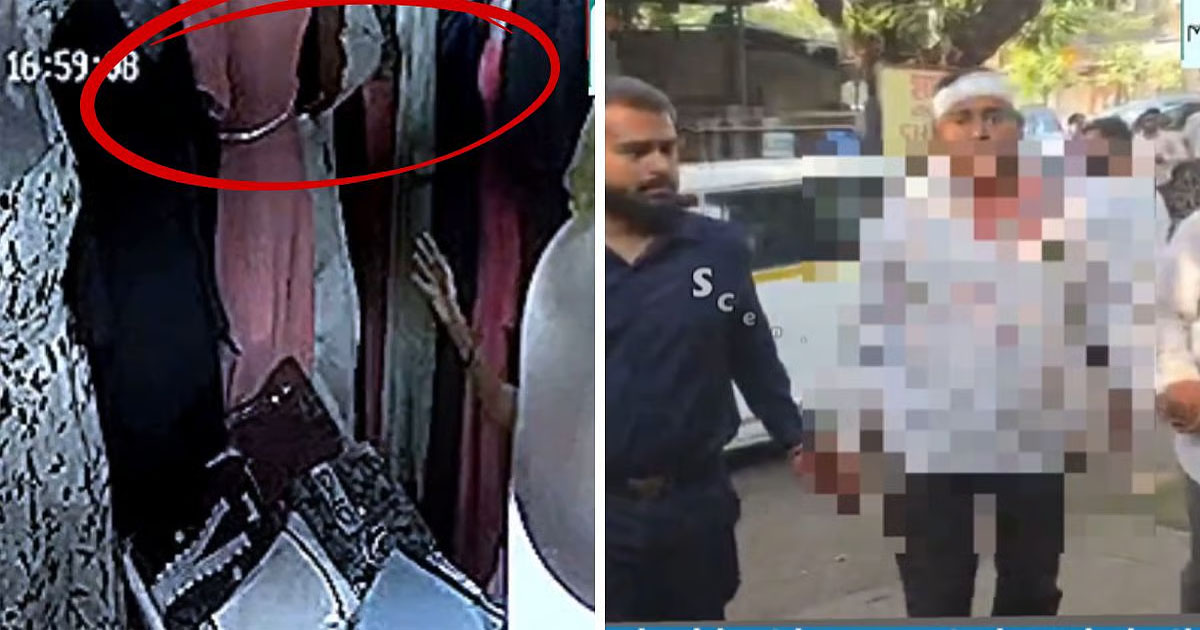
Thane: A shocking incident of violent assault has come to light from Thane’s Naupada area, where a man was allegedly attacked with a chopper after refusing to pay ‘vargani’ (a form of voluntary donation), sparking concern among local residents.
The attack reportedly took place near St. Anthony’s School in Naupada. A CCTV video of the incident, which has surfaced on social media, shows the accused entering a clothes shop and launching a brutal assault on the victim using a chopper.
In the video shared by the Instagram handle, the attacker can be seen striking the man, leaving him seriously injured. The motive, as mentioned in the caption accompanying the video, suggests that the assault was triggered after the victim refused to pay vargani.
Following the incident, the injured man was immediately rushed to a nearby hospital for treatment. His current condition has not been officially disclosed.
The Naupada Police have registered a case against the accused and are currently investigating the matter. Authorities have obtained the CCTV footage and are using it as key evidence to identify and track down the perpetrator. Police officials stated that further details will emerge as the investigation progresses.
The incident has triggered unease among residents in Thane, raising concerns over instances of alleged forced collections in the name of donations. Locals have expressed worry about safety, especially in commercial areas, and have called for stricter action against such acts of violence.
As investigations continue, authorities are expected to intensify efforts to ensure accountability and maintain public order in the area.
Incidents like this have raised growing concerns over the misuse of ‘vargani’ collections, which are often meant to be voluntary but are at times allegedly enforced through intimidation. Residents say such acts not only threaten public safety but also erode trust within communities, prompting calls for stricter monitoring and action against coercive practices.

Mumbai: BMC Diverts ₹90 Crore From Mithi River Works To Ghatkopar–Mankhurd Link Road Flyover Extension, Opposition Seeks Audit

UAE: Indian national among two killed by falling debris of intercepted missile

Mira-Bhayandar Crime: 40-Year-Old Housekeeper Brutally Stabbed To Death Inside Residential Complex In Kashimira, Probe Underway

China’s grip on key minerals sparks US alarm; lawmakers demand swift supply-chain fixes

Mumbai: Controversy while removing the idol of Lord Shiva in Malad! Slogans were raised from both sides, case registered, situation peaceful, security tightened

Married Mumbai Woman Mocked In Andheri Society Over ‘Lift Kissing’ CCTV Video, Files Police Complaint

Mumbai: JBCN International School In Borivali Gets Bomb Threat, Search Reveals Hoax, Students Safe

Mahayoti’s big gift to the people of Mumbai… Now there is no tax for houses up to 500 square feet, the Municipal Corporation has increased this limit to 700 square feet.

LPG Crisis In Maharashtra: Cyber Crime On Rise Amid Shortage, 2 Women Lose ₹4 Lakh In ‘Gas Update’ Online Scam In Kalyan-Dombivli

Rashmika Mandanna-Vijay Deverakonda Wedding: Virosh Turn Modern Day Prince & Princess For Their Dreamy Sangeet Ceremony
-

 Crime4 years ago
Class 10 student jumps to death in Jaipur
-

 Maharashtra1 year ago
Mumbai Local Train Update: Central Railway’s New Timetable Comes Into Effect; Check Full List Of Revised Timings & Stations
-

 Maharashtra1 year ago
Mumbai To Go Toll-Free Tonight! Maharashtra Govt Announces Complete Toll Waiver For Light Motor Vehicles At All 5 Entry Points Of City
-

 Maharashtra2 years ago
False photo of Imtiaz Jaleel’s rally, exposing the fooling conspiracy
-

 National News1 year ago
Ministry of Railways rolls out Special Drive 4.0 with focus on digitisation, cleanliness, inclusiveness and grievance redressal
-

 Maharashtra1 year ago
Maharashtra Elections 2024: Mumbai Metro & BEST Services Extended Till Midnight On Voting Day
-

 National News2 years ago
J&K: 4 Jawans Killed, 28 Injured After Bus Carrying BSF Personnel For Poll Duty Falls Into Gorge In Budgam; Terrifying Visuals Surface
-

 Crime1 year ago
Baba Siddique Murder: Mumbai Police Unable To Get Lawrence Bishnoi Custody Due To Home Ministry Order, Says Report