
Business
EAM Jaishankar lays out three objectives to bolster India-Central Asia trade ties

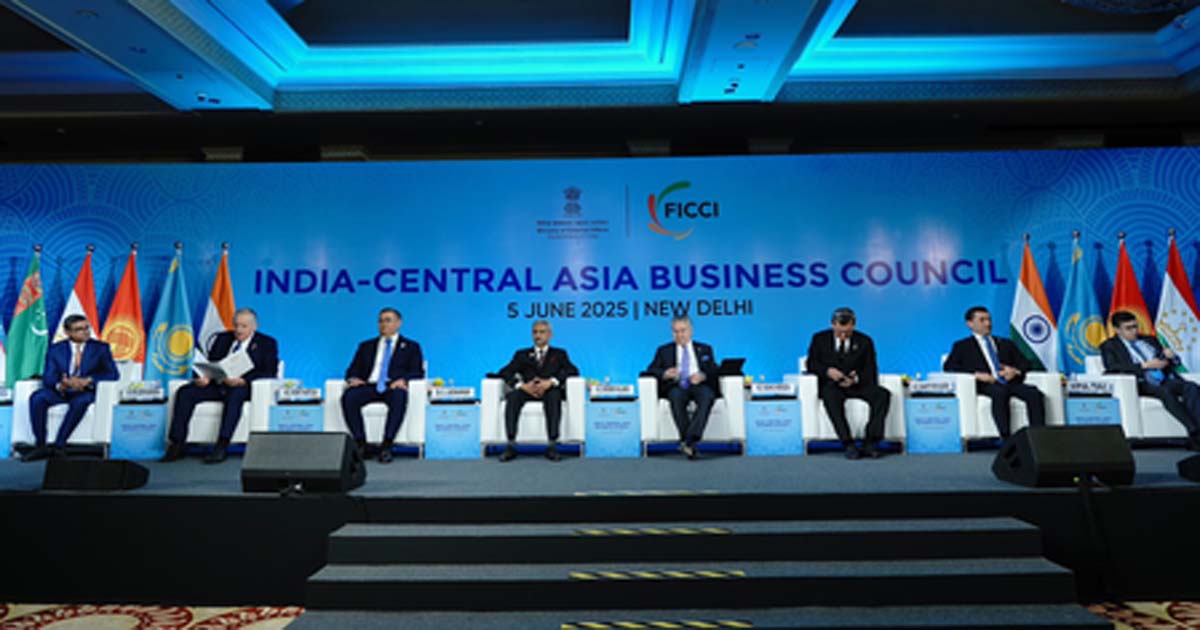
New Delhi, June 6: External Affairs Minister (EAM) S. Jaishankar has urged the India-Central Asia Business Council to recommend a roadmap for further deepening of India-Central Asia ties in trade, economic and investment.
Addressing the Business Council meeting in the national capital, EAM Jaishankar highlighted three broad objectives for strengthening the economic partnership — deepen existing cooperation, diversify the trade basket and introduce sustainability and predictability in economic interactions.
“One, is to deepen the existing cooperation both in terms of volume and in terms of quality. There is already I think a recognition in each others countries and each others economies of the players and of the products. But, we must build further on that foundation and a very good example here is actually the pharmaceutical sector,” he told the gathering.
“Two, we need to diversify our trade baskets so that all of us have more options and we have more competition and in a way we are looking for new opportunities. I would like our friends from central Asian economies to appreciate that an economy today which is in excess of $4 trillion, which is growing at 6-8 per cent annually, it will create new demands for products, for services and even I would say in a way new demands out of more prosperous lifestyles,” EAM Jaishankar emphasised.
He also stressed on the need to introduce greater sustainability and more predictability in economic interactions.
“That means more long-term contracts and arrangements, cross investments, joint ventures and certainly sectors like energy whether we are talking uranium, whether we are talking crude oil even potentially gas, whether we are looking at mining, If you are talking about coal or if you are discussing fertilizers, I think these are all relevant examples to reach really long term understatings between us,” the foreign minister highlighted.
India’s trade and economic ties with Central Asia over the last decade have shown a very strong positive trend. Mutual trade was less than $500 million a decade ago in 2014.
Today, “what we have collectively is actually a trade volume which is almost touching $2 billion. However, this figure does not reflect the full potential. The need to address this is today even more urgent because of the uncertainties of the international economy and this requires governments and businesses to work together in tandem, which is why all of us are here in this room,” EAM Jaishankar noted.
He also laid out five solutions to further bolster the India-Central Asia economic ties: Digital Economy and Innovation, Financial Services, Healthcare and Pharma, improving connectivity and streamlining Transit Procedures.
“In addition to all of this, I think you would agree that tourism, education, films, and cultural exchanges, these are all important, they should be tapped for their economic and business potential,” he mentioned.


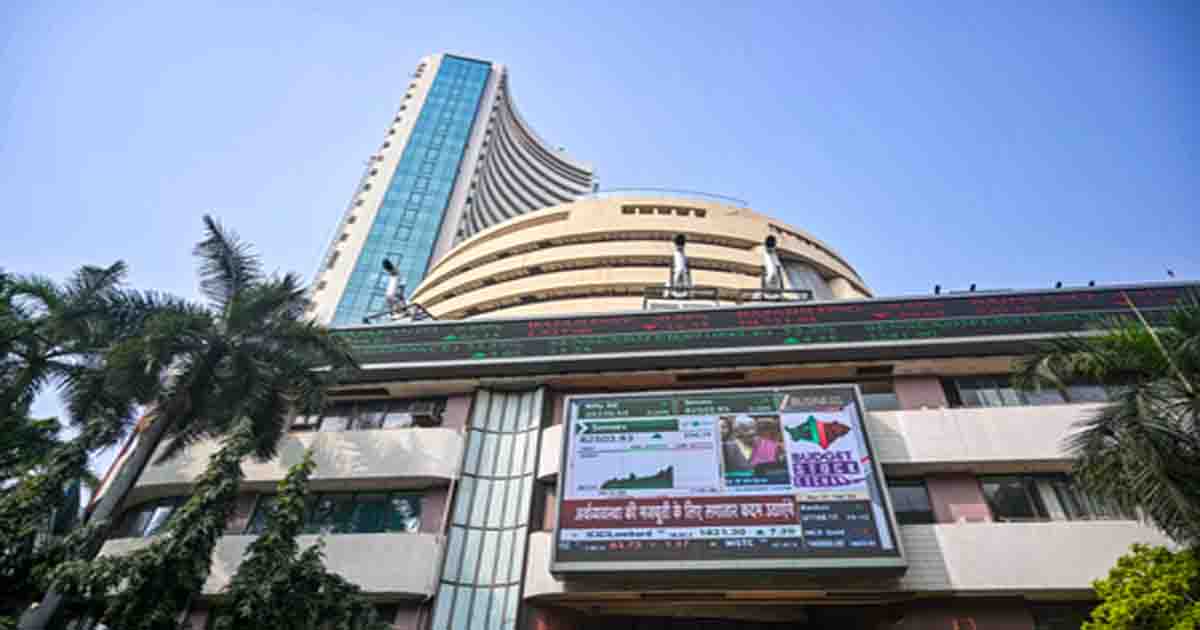
Mumbai, Oct 14: Domestic equity benchmarks opened on a muted note on Wednesday with investors weighing supportive domestic cues against persistent global headwinds.
Nifty began the session at 22,715.75, down 6.20 points or 0.03 per cent. Similarly, Sensex opened at 73,049.76, up 15.98 points or 0.02 per cent.
However, sectoral performance remained mixed with technology stocks leading gains.
Nifty IT emerged as the top gainer, rising more than 1 per cent, followed by Nifty MidSmall IT & Telecom and Nifty FMCG which surged up to 0.38 per cent.
Nifty Media and Nifty Private Bank were also in positive territory.
Meanwhile, Nifty Consumer Durables fell 0.67 per cent. Healthcare-related indices remained under pressure with shedding up to 0.6 per cent.
According to market experts, Tuesday’s sharp rally in the Nifty came as a surprise in an otherwise weak and downtrending market, largely driven by short-covering activity.
The trigger for the upswing was Finance Minister Nirmala Sitharaman’s remarks that the government would carefully review stakeholder feedback on the long-term capital gains (LTCG) tax and securities transaction tax (STT), they added.
The comments raised hopes of potential policy changes, boosting investor sentiment.
Analysts also highlighted the RBI’s recent measures to curb currency market speculation which helped the rupee appreciate nearly 1.5 per cent over the past two trading sessions.
However, caution persists as the US 10-year Treasury yield remains around 5.2 per cent and Brent crude trades near $106 per barrel, both of which are viewed as significant headwinds for equities.
While these factors could limit the sustainability of the rally, analysts believe sectors such as financials, telecom, metals and automobiles could remain relatively resilient on expectations of healthy second-quarter earnings.
Technically, analysts note that the recent surge has revived hopes of a move towards the 23,200 level.
They further noted that the index is approaching a congestion zone that could challenge further upside momentum. Immediate support is seen around 22,550, while a decisive move above the 22,787-22,880 hurdle could strengthen bullish momentum.
Additionally, Asian equities rebounded after two consecutive sessions of losses, supported by expectations that the US Federal Reserve may adopt a less aggressive approach to interest rate hikes next year.
Crude oil prices advanced as traders assessed supply risks stemming from clashes involving Yemen’s Iran-aligned Houthis and Saudi Arabia, while also monitoring the prospect of increased Russian diesel supplies to global markets.
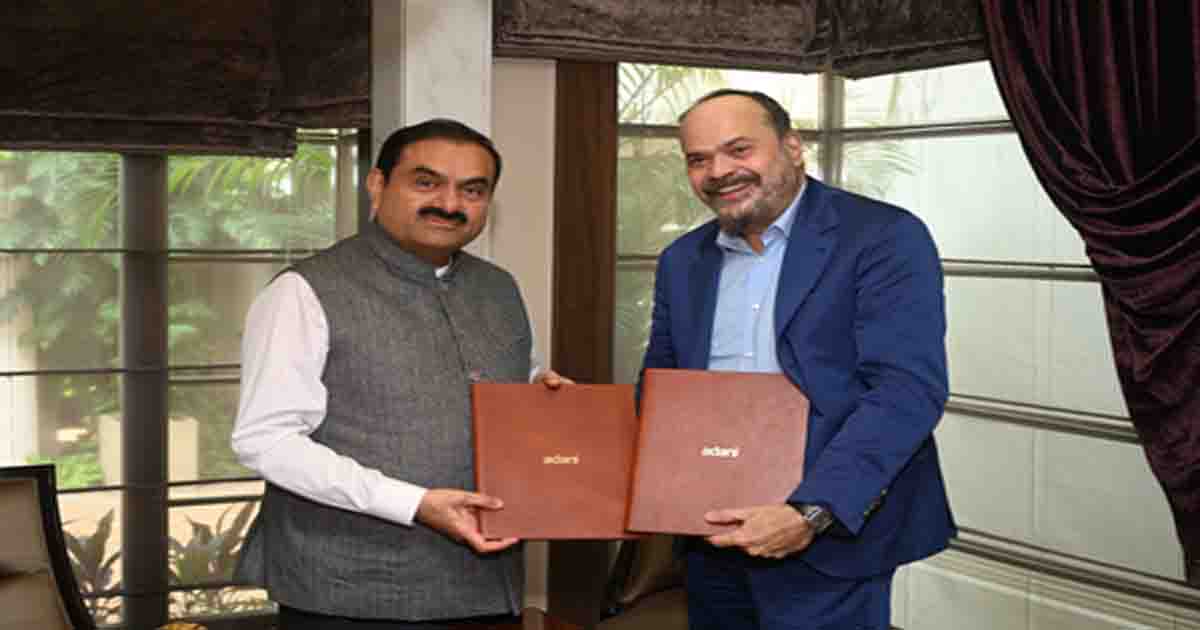
New Delhi, Oct 13: Adani Enterprises Limited (AEL) and global engineering, supply chain and manufacturing company Jabil Inc. on Tuesday said they have signed a non-binding Memorandum of Understanding (MoU) for a proposed 50:50 joint venture to manufacture and assemble artificial intelligence (AI) and data centre equipment in India.
The MoU follows the June 2026 announcement of Adani Group and Jabil’s intent to establish a strategic alliance to develop an AI and data centre infrastructure manufacturing ecosystem in India.
“The AI revolution will demand far more than just breakthroughs in algorithms. It will require an entire new industrial architecture where energy, hyperscale infrastructure, advanced computing and precision manufacturing converge to power the intelligence economy,” Adani Group Chairman Gautam Adani said.
At Adani, “our vision is to expand up the AI value chain evolving from powering and hosting AI infrastructure to engineering and manufacturing the critical systems that will define the next generation of computing”, the billionaire industrialist said.
According to a statement, the proposed joint venture remains subject to execution of definitive agreements, receipt of applicable approvals, and satisfaction of customary conditions.
“Our proposed joint venture with Jabil marks a strategic step towards this future, combining Jabil’s world-class engineering and manufacturing capabilities with Adani’s integrated strengths in energy, infrastructure and data centres to help build the physical backbone of the global AI economy,” said Gautam Adani.
The venture would provide a manufacturing base in India to serve domestic demand and support exports.
The companies estimate the global market opportunity at more than $3 trillion over the next seven years, driven by investment in AI computing.
“The signing of this MoU is the next step forward in our shared efforts to establish a scaled AI infrastructure manufacturing platform in India, a market we believe will become increasingly important for both domestic and global AI infrastructure demand,” Jabil Inc. Chief Executive Officer Mike Dastoor said.
“Integrating Jabil’s 60 years of engineering and manufacturing expertise with Adani’s significant infrastructure and energy capabilities, we can bring our rack-level data centre solutions to more hyperscalers in India and around the world,” he added.
The venture is aligned with Adani Group’s $100 billion commitment to develop 5 GW of green-energy-powered, hyperscale AI-ready data centres by 2035. The proposed venture would add hardware manufacturing to the Group’s presence across infrastructure, energy, logistics and data centres.
The joint venture would manufacture and assemble AI racks, servers, storage and networking equipment used in data centres. The racks would house high-performance computing systems for AI applications and other digital services, the statement said.
Mumbai, Oct 13: India equity benchmark indices opened flat on Tuesday amid buying in IT and realty sector shares.
At the opening bell, Sensex was at 71,951.73, up 27.05 points or 0.04 per cent. Meanwhile, Nifty began trading session at 22,364.15, up 0.80 points or flat.
Sector-wise, Nifty IT, Nifty Midsmall IT & Telecom and Nifty Realty jumped up to up 2 per cent. Nifty PSU Bank was up 0.31 per cent, Nifty FMCG up 0.22 per cent and Nifty Oil & Gas up 0.20 per cent.
On the downside, healthcare and pharmaceuticals shares witnessed selling pressure as Nifty Midsmall Healthcare fell, Nifty 500 Healthcare, Nifty Pharma and Nifty Healthcare declined up to 0.75 per cent.
Market experts said there are no triggers to change ongoing trend of sustained FII selling and DII buying in the cash market.
But with the US 10-year bond yield above 5.2 per cent, FIIs are likely to continue selling in cash market. With net inflows into mutual funds touching a record high of Rs 38,307 crore in September, DIIs will continue to absorb selling from FIIs, experts said.
Moreover, CPI inflation at 5.54 per cent came on expected lines with food inflation at 7.74 per cent and Brent above $100. A rate hike by the RBI in December is a foregone conclusion and will be margin accretive for banks, they added.
Technical analysts said recovery construct has weakened significantly, but day will start with hopes of bounce back as yesterday’s slippage paused without breaking the recent low.
Such an upmove would need to push beyond 22,435 to signal strength, inability to do so could pave way for drop to 22,070-21,900, they said.
Additionally, Asian equities traded lower as AI rally came under fresh pressure ahead of key earnings season.
Nasdaq ended lower on Monday as oil prices surged following attacks on Saudi airport, while investors awaited start of third-quarter bank earnings and key economic data this week.

Hyderabad Police cautions citizens against digital arrest fraud

Delhi court summons Dhruv Rathee in 2018 defamation case

Fake RTO app used to hack phone, siphon Rs 24.40 lakh; Gujarat Police nab account provider in Bengal

Drugs worth Rs 1 crore seized in Greater Noida, three arrested

Israeli military says killed Hamas Commander in Gaza City

INDIA bloc begins protest march against ECI

Maha Congress stages agitation against Gyanesh Kumar

Complaint against Netflix & Mukesh Chhabra for inappropriate language on ‘India’s Got Latent 2’

Delhi court grants three-week interim bail to influencer Swatantra Bhardwaj

Bombay HC warns Vijay Mallya against posting court documents on social media
-

 Crime4 years ago
Class 10 student jumps to death in Jaipur
-

 Maharashtra2 years ago
Mumbai Local Train Update: Central Railway’s New Timetable Comes Into Effect; Check Full List Of Revised Timings & Stations
-

 Maharashtra2 years ago
Mumbai To Go Toll-Free Tonight! Maharashtra Govt Announces Complete Toll Waiver For Light Motor Vehicles At All 5 Entry Points Of City
-

 Maharashtra2 years ago
False photo of Imtiaz Jaleel’s rally, exposing the fooling conspiracy
-

 National News2 years ago
Ministry of Railways rolls out Special Drive 4.0 with focus on digitisation, cleanliness, inclusiveness and grievance redressal
-

 Maharashtra2 years ago
Maharashtra Elections 2024: Mumbai Metro & BEST Services Extended Till Midnight On Voting Day
-

 National News2 years ago
J&K: 4 Jawans Killed, 28 Injured After Bus Carrying BSF Personnel For Poll Duty Falls Into Gorge In Budgam; Terrifying Visuals Surface
-

 Crime2 years ago
Baba Siddique Murder: Mumbai Police Unable To Get Lawrence Bishnoi Custody Due To Home Ministry Order, Says Report