
Maharashtra
Different Journeys, Same Destination: Devendra Fadnavis, Eknath Shinde, And Ajit Pawar Unite As Maharashtra’s Leadership Trio

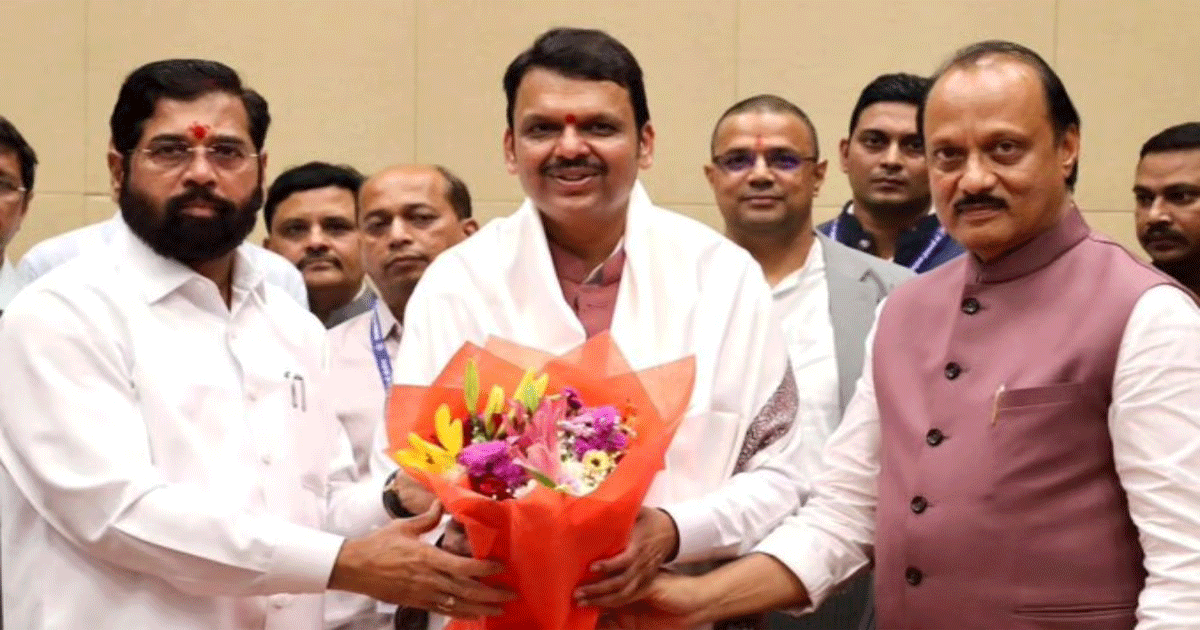
Devendra Fadnavis was sworn in as the new Chief Minister of Maharashtra in a grand and colorful ceremony at the Azad Maidan on Thursday evening. Eknath Shinde, leader of the Shiv Sena, and Ajit Pawar, leader of the NCP, took oath as Deputy Chief Ministers.
Here’s a look at the political careers of the CM and DyCMs.
Devendra Fadanvis
Devendra Fadnavis, the political stalwart who rose from humble beginnings to become a key figure in Maharashtra politics, was on Thursday evening sworn in as chief minister – a position he has held twice before.
During his previous tenure as Chief Minister, before the 2019 elections, Fadnavis famously recited the line “Mi Punha Yein” (I will back), which became both a widely celebrated and critiqued tagline. However, the political landscape shifted dramatically after the elections when Uddhav Thackeray parted ways with the BJP. Fadnavis then allied with the NCP’s Ajit Pawar, and both were sworn in as Chief Minister and Deputy Chief Minister, respectively, in a government that lasted less than 80 hours.
Fadnavis faced ridicule over his “Mi Punha Yein” remark during the Maha Vikas Aghadi (MVA) government’s tenure. In 2022, Eknath Shinde led a split in the Shiv Sena and formed a new government with the BJP. Although many expected Fadnavis to return as the CM, he was appointed Deputy Chief Minister instead. After a challenging political journey of five years, Fadnavis has finally reclaimed the Chief Minister’s position.
From being a corporator and mayor in the Nagpur Municipal Corporation to becoming the Chief Minister of the state, Fadnavis has had a distinguished political career. Fadnavis began his political career as an active member of the Akhil Bharatiya Vidyarthi Parishad (ABVP). At 22, he became a corporator in the Nagpur civic body and its youngest Mayor in 1997 at age 27.
In 1999, he was first elected to the Maharashtra Legislative Assembly from the West Nagpur constituency, where he was re-elected consecutively for two terms. Later, he won the elections from the South West Nagpur constituency four times. Since 1999, he has represented Nagpur in the Maharashtra Legislative Assembly.
Eknath Shinde
From a Shiv Sena rebel in 2022, veteran politician Eknath Sambhaji Shinde went on to acquire the image of a doer and man of action as chief minister in a short span of two-and-a-half years when he headed the Mahayuti government in Maharashtra.
Shinde, who had no prior political background, began his political career in 1980. After working for some time in organisational roles for the Shiv Sena, he was appointed to various constitutional positions. He won his first election as a corporator in the Thane Municipal Corporation in 1997, followed by his appointment as Leader of the House in 2001.
In 2004, Shinde was elected to the Maharashtra Legislative Assembly. A year later, he was named the Thane district head of Shiv Sena. Over the years, Shinde’s popularity grew, leading to his re-election to the Assembly in 2009, 2014, and 2019.
During his tenure in the Legislative Assembly, Shinde held several significant roles. From 2014 to 2019, he served as the Minister for Public Works and Guardian Minister of Thane district. In 2018, he was appointed the Leader of the Shiv Sena in the Assembly.
In 2019, he assumed additional responsibilities as the Minister for Public Health and Family Welfare, as well as the Minister for Urban Development and Public Works. He also briefly served as the acting Minister of Home Affairs later that year.
A turning point in his political career came in June 2022, when Shinde, along with several MLAs, moved to Surat, Gujarat, sparking a political crisis in Maharashtra. This led to Uddhav Thackeray’s resignation as Chief Minister. Shinde subsequently formed a new government in alliance with the BJP and NCP and was sworn in as the 20th Chief Minister of Maharashtra in June 2022.
On December 5, 2024, Shinde took oath as the Deputy Chief Minister of Maharashtra, further cementing his role as a key figure in the state’s political landscape.
Ajit Pawar
Ajit Pawar, who has long aspired to become the chief minister but finished second five times, has once again been appointed as the Deputy Chief Minister. This marks the sixth time as the deputy chief minister, setting a unique record.
A stalwart of Maharashtra politics, Ajit Pawar is a seasoned leader renowned for his administrative expertise, sharp political instincts, and strong grassroots presence. Over his political career, he has served as deputy chief minister under Chief Ministers Prithviraj Chavan, Devendra Fadnavis, Uddhav Thackeray and Eknath Shinde.
Despite speculations about facing challenges in retaining the Baramati constituency during the assembly elections, Ajit Pawar was re-elected for the eighth consecutive time with a significant majority. His re-election solidifies his position as a key figure in Maharashtra politics.
In 1991, Ajit Pawar contested the Lok Sabha elections for the first time and became the Member of Parliament (MP) from Baramati. That same year, following the assassination of Rajiv Gandhi and the subsequent political changes at the Centre, Sharad Pawar was appointed as the Union Defence Minister.
After Sharad Pawar resigned from his position in the Baramati Assembly constituency, Ajit Pawar contested the by-election and was elected as the MLA for the first time. Since then, for the past 35 years, he has been consistently elected from the Baramati.
While in government, Ajit Pawar has handled key portfolios such as finance minister, water resources minister and rural development minister. He has also served as the guardian minister of Pune. After the fall of the MVA government, he served as the Leader of the Opposition in the Maharashtra Legislative Assembly for a year.


Entertainment
Mumbai: Pan-India Hawala Trail Exposes Chilling Conspiracy Behind Rohit Shetty House Firing Case

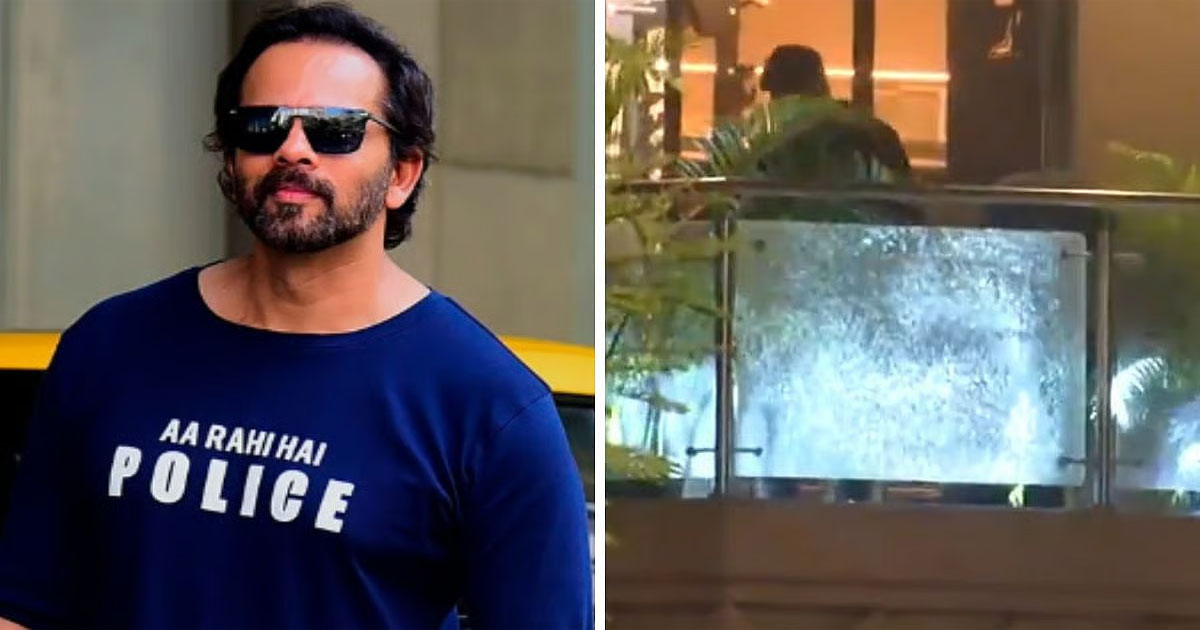
Mumbai: A breakthrough has emerged in the investigation into the firing incident outside filmmaker Rohit Shetty’s residence in Mumbai, with Crime Branch sources indicating that the attack was financed entirely through hawala channels.
According to investigators, the accused involved in recruiting the shooters, identified as Golu Pandit, received funds via an illegal hawala network rather than through formal banking systems. The money was allegedly routed through multiple locations, including Nepal, Delhi, and Uttar Pradesh.
Sources further revealed that the financial operations were orchestrated by Arju Bishnoi, an operator linked to the Bishnoi gang. The gang reportedly used its network to channel funds and execute the plan.
Golu Pandit is said to have played a crucial role in the conspiracy. He not only recruited the shooters but also arranged shelter, logistics, and other support required for carrying out the attack. Preliminary findings suggest that the incident was not spontaneous, but the result of a well-planned operation executed over a period of time.
‘Maintain Silence’ Instructions Before Arrest : Crime Branch sources also disclosed that Golu Pandit had been instructed in advance to remain silent if apprehended by the police. Following the arrest of shooters in Haryana, the gang anticipated that Pandit could be the next target of law enforcement action.
It is alleged that jailed gangster Lawrence Bishnoi conveyed a message through Arju Bishnoi, directing Golu Pandit not to reveal any information about other members of the syndicate under any circumstances. As a result, despite nearly 12 days of police custody, investigators have reportedly been unable to extract significant additional information from him.
Maharashtra
Mumbai: Elphinstone Bridge Demolition Triggers Train Delays, Heavy Crowds At Railway Stations
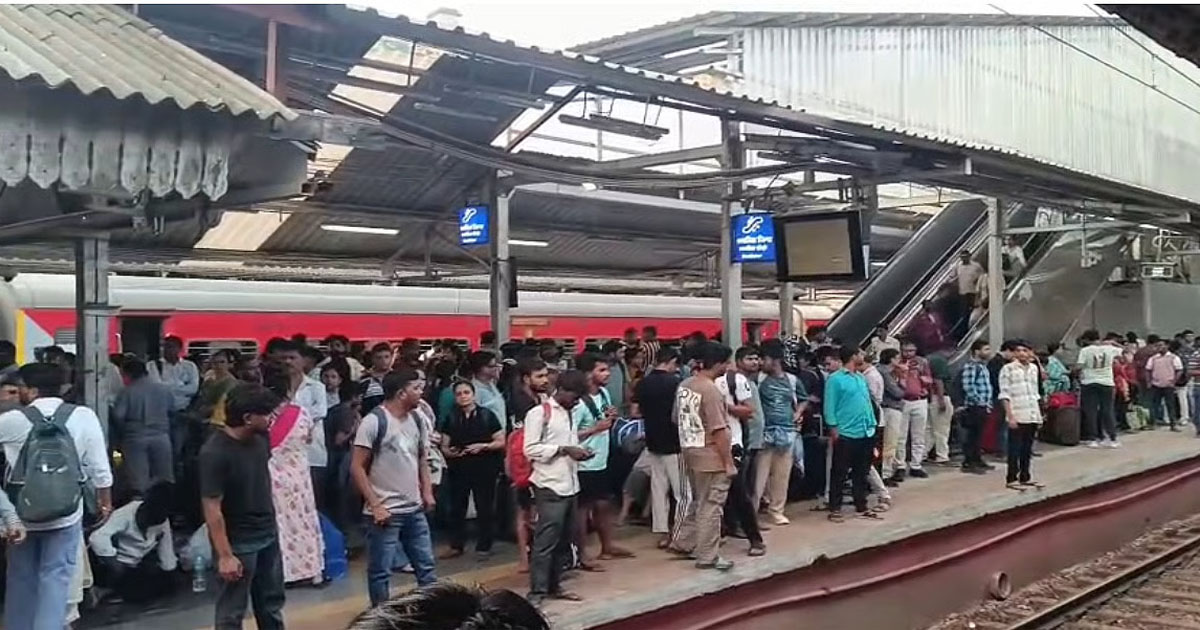
Mumbai’s lifeline was thrown into disarray on Sunday morning as the demolition of the old Elphinstone railway bridge disrupted Central Railway services, leaving thousands of commuters stranded and struggling to reach their destinations.
Train Services Hit Across Key Routes
The demolition work, taking place between Parel and Prabhadevi, has led to the cancellation of several local and express trains. Many others have been short terminated or operated on altered routes, creating a ripple effect across the network.
Train movement between Chhatrapati Shivaji Maharaj Terminus and Dadar has been particularly affected. Services towards Kurla, Thane, and nearby stations have also faced delays and irregular operations, adding to the confusion among passengers.
Overcrowded Platforms and Long Waits
With fewer trains running, railway stations witnessed heavy crowds during the morning rush. Platforms were packed with commuters, many of whom were seen sitting on floors or standing in long queues, waiting for updates.
Regular passengers described the situation as chaotic, with announcements being delayed or unclear. Many were forced to seek alternative transport options, while others chose to wait it out despite the uncertainty.
Authorities Work to Restore Normalcy
Railway officials acknowledged the disruption and stated that efforts are underway to restore services at the earliest. Additional staff have been deployed at key stations to manage crowds and assist passengers. However, officials also warned that services may continue to remain affected until the demolition work is completed and tracks are cleared for smooth operations.
For Mumbai’s daily commuters, the disruption once again highlighted the fragile balance of the city’s transport network, where even planned infrastructure work can bring routine life to a standstill.
Maharashtra
‘Standing Near Local Train Door Not Negligence,’ Says Bombay HC, Orders ₹4 Lakh Compensation In Mumbai Train Fall Death Case
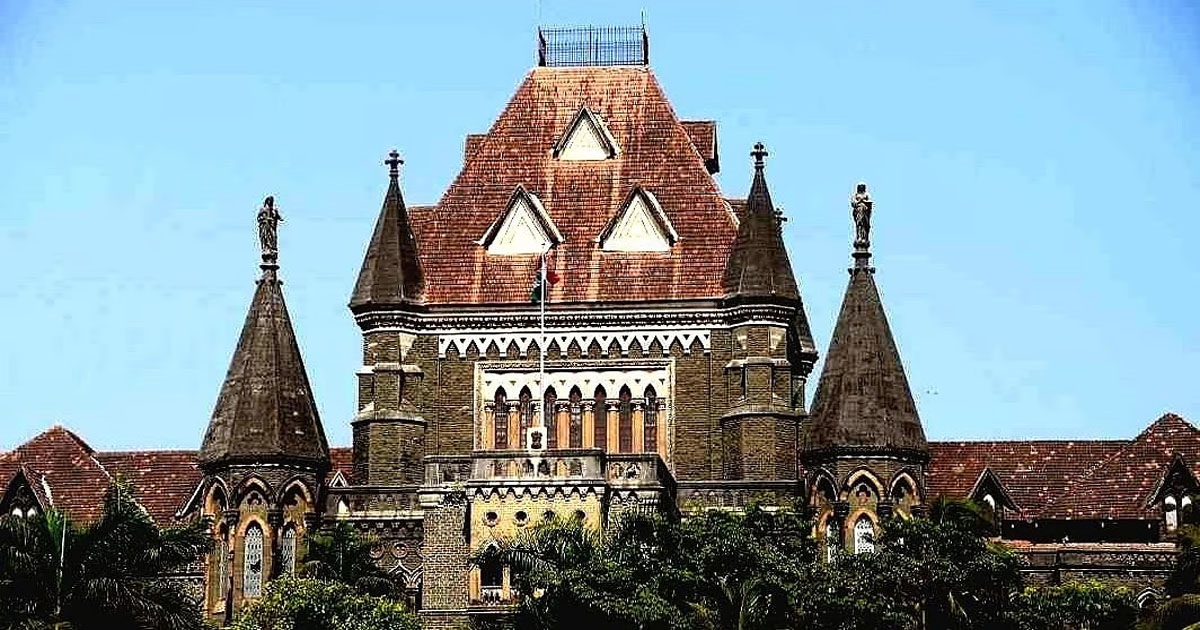
Mumbai, April 4: In a significant ruling on commuter safety, the Bombay High Court has held that standing near the door of a Mumbai local train cannot be treated as negligence, given the realities of overcrowding, and termed a man’s death after falling from a moving train as an “untoward incident” entitling his family to compensation.
High Court overturns tribunal decision
Justice Jitendra Jain, on April 2, allowed an appeal filed by Ashrappa Yellappa Bhandari and Satyamma Ashrappa Bhandari, challenging the Railway Claims Tribunal’s 2019 decision that had denied them compensation for the death of their kin, Balkrishna Bhandari.
Bhandari, a salesman, died on January 29, 2012, while travelling from Kalyan to Dombivli. He fell from a moving train between Thakurli and Dombivli stations. His family’s claim was rejected by the Tribunal on the ground that the incident did not qualify as an “untoward incident” under the Railways Act, 1989.
Court notes inconsistencies in official reports
The High Court, however, found inconsistencies in official reports. While some reports suggested that Bhandari was standing at the edge of the platform and was knocked down by a train, others stated that he fell from a moving train. Noting that there was no eyewitness to the incident, the court said it could not rely conclusively on any one version.
“I fail to understand how these authorities gave contradictory reports, moreso, when there is no eyewitness to the incident,” Justice Jain observed.
Benefit of doubt must favour victim
The court held that in cases involving welfare legislation and conflicting evidence, the benefit of doubt must go to the victim. “This Court has no option but to accept that the deceased died by falling down from a moving train, which constitutes ‘untoward incident’,” the judge said.
Ground realities of Mumbai local trains highlighted
Significantly, the court underscored the ground realities of Mumbai’s suburban rail network. “In Mumbai local, seldom are the seats vacant… even at starting point, people have to jump to occupy seat. Therefore, standing near the door cannot be treated as negligence,” the order noted.
Even if the version that Bhandari was standing near the platform edge were accepted, the court said, the incident would still qualify for compensation.
Safety concerns and need for civic awareness
The court also flagged safety gaps at railway platforms, pointing out that the yellow safety line is often faded and lacks clear communication of its purpose.
It suggested regular repainting and even the use of red markings to indicate danger zones. Authorities should also ensure announcements and enforcement to keep passengers behind safety lines, it said.
Calling for behavioural change, the court remarked, “There is a need to inculcate civic sense amongst ourselves like civic sense amongst Japanese people.”
Compensation awarded to family
Allowing the appeal, the court directed the Railways to pay compensation of Rs 4 lakh with 6% annual interest from the date of the accident, subject to a cap of Rs 8 lakh, to be equally shared by the two claimants within 12 weeks.

‘To My Colleagues In AAP, Picture Abhi Baaki Hai’: Raghav Chadha On Punjab Agenda Row

Mumbai: Pan-India Hawala Trail Exposes Chilling Conspiracy Behind Rohit Shetty House Firing Case

Mumbai: Elphinstone Bridge Demolition Triggers Train Delays, Heavy Crowds At Railway Stations

‘Standing Near Local Train Door Not Negligence,’ Says Bombay HC, Orders ₹4 Lakh Compensation In Mumbai Train Fall Death Case

Mayor’s instructions to maintain water supply in Mumbai, focus on water management, alternative sources and solutions

Married Mumbai Woman Mocked In Andheri Society Over ‘Lift Kissing’ CCTV Video, Files Police Complaint

LPG Crisis In Maharashtra: Cyber Crime On Rise Amid Shortage, 2 Women Lose ₹4 Lakh In ‘Gas Update’ Online Scam In Kalyan-Dombivli

Mahayoti’s big gift to the people of Mumbai… Now there is no tax for houses up to 500 square feet, the Municipal Corporation has increased this limit to 700 square feet.

Dhurandhar 2 Box Office Collection Day 1: Ranveer Singh Starrer Takes An Exceptional Opening; Crosses ₹100 Crore Mark

T20 WC: ‘You just have to control your emotions and express yourself,’ says Piyush Chawla on handling pressure in final
-

 Crime4 years ago
Class 10 student jumps to death in Jaipur
-

 Maharashtra1 year ago
Mumbai Local Train Update: Central Railway’s New Timetable Comes Into Effect; Check Full List Of Revised Timings & Stations
-

 Maharashtra1 year ago
Mumbai To Go Toll-Free Tonight! Maharashtra Govt Announces Complete Toll Waiver For Light Motor Vehicles At All 5 Entry Points Of City
-

 Maharashtra2 years ago
False photo of Imtiaz Jaleel’s rally, exposing the fooling conspiracy
-

 National News1 year ago
Ministry of Railways rolls out Special Drive 4.0 with focus on digitisation, cleanliness, inclusiveness and grievance redressal
-

 Maharashtra1 year ago
Maharashtra Elections 2024: Mumbai Metro & BEST Services Extended Till Midnight On Voting Day
-

 National News2 years ago
J&K: 4 Jawans Killed, 28 Injured After Bus Carrying BSF Personnel For Poll Duty Falls Into Gorge In Budgam; Terrifying Visuals Surface
-

 Crime1 year ago
Baba Siddique Murder: Mumbai Police Unable To Get Lawrence Bishnoi Custody Due To Home Ministry Order, Says Report