
General
Corbevax booster gives maximum protection, reveals Hyd hospital study


Amidst concerns of a new Covid wave in India following massive surge in China and other countries, research at AIG Hospitals here has revealed that Corbevax booster in individuals vaccinated with Covishield gives maximum protection against Omicron variants.
The scientific study has proved the immunity benefits of indigenous heterologous vaccine booster, Corbevax in combating Omicron variants.
The study titled “Heterologous booster dose with Corbevax following primary vaccination with Covishield enhances protection against SARS-CoV-2” has been published in the high-impact factor journal “Vaccines”.
Announcing the findings of the study, AIG Hospitals Chairman Dr D Nageshwar Reddy told media persons that the study was done on 250 healthcare workers who had received 2 doses of Covishield as the primary vaccine regimen not more than 6 months ago. None of the participants had any adverse events following the administration of Corbevax booster dose.
“We knew from our previous studies that mixed vaccines produce better immune response; therefore, when the government approved Corbevax to be given as a heterologous booster to individuals already vaccinated with Covishield, our aim was to determine how a different vaccine platform (protein-based) will impact the immune response especially in context of the Omicron variant,” he said.
Corbevax is an indigenously developed peptide-based vaccine which is different from the viral vector (Covishield) or the inactivated vaccine (Covaxin). The key difference is that Corbevax uses only a protein subunit of the virus replicated inside a yeast cell while the others are whole virus vaccines. The advantage of peptide-based vaccine is that it considerably reduces the risks of allergic and autoimmune responses making them safe for widespread usage.
Dr Reddy said the results further cemented their belief that mixed vaccines are absolutely safe. “The second aspect of the study was to measure the antibody response as well as the T-cell (memory cell) response at 30 days and then at 90 days to correctly estimate the overall protection against the circulating Omicron variant.
When estimating the effectiveness of a vaccine, both the antibody response and T-cell (Memory cell) response are essential.
“In our study, we compared the immune responses among those individuals who were given the same vaccine, i.e., Covishield (homologous group) as a booster and those who were given Corbevax as a booster (heterologous group). The S1/S2-spike protein IgG antibody levels and T/B Cell response of these groups were compared at 30 days and at 90 days. While the homologous and heterologous groups showed increased S1/S2-spike protein IgG antibody level at 30 days, the heterologous group (Corbevax as a booster) showed higher levels of antibodies at both 30 days and 90 days,” Dr Reddy said.
The study was undertaken when Omicron variants are circulating in India; therefore, it would be appropriate to say that heterologous booster (Corbevax) would be effective in combating any wave that is fueled by sub-variants of the Omicron.
High-risk group people should consider taking the booster dose and continue to take Covid appropriate precautions all the time especially when in public spaces.
Replying to queries, Dr Reddy said if a person has taken Covaxin double dose, he should also take Corbevax as the booster dose. “The booster dose should be from the other company as this gives more protection,” he said.
He noted that only 28 per cent of people in the country have taken booster dose. Corbevax is manufactured by Hyderabad-based Biological E.
Dr Reddy said that the vaccine is easy to manufacture and it is already available in the market at a price of Rs 250.
He suggested that China should also import Corbevax to save lives.
Dr Reddy also made it clear that there is no need for panic as the both the central and state governments are taking necessary measures and adequate stocks of vaccines and Remdesivir are available.
He believes that the number of Covid cases may increase over the next two months but from March next year, the situation will be normal.
He said people should wear masks while going in crowded places. He believes that the impact of the new variant of Omicron will not be severe.


Mumbai: Yesterday (October 7, 2026), the ‘N’ Ward office of the Mumbai Municipal Corporation carried out a demolition drive targeting 28 structures in Ghatkopar (West) that were affected by the road-widening project between Jhunjhunwala College and the Andheri-Ghatkopar Link Road.
This demolition campaign was conducted under the supervision of Assistant Commissioner (‘N’ Ward) Jaydeep More.
Adequate police security was deployed alongside municipal officers and staff during the operation.
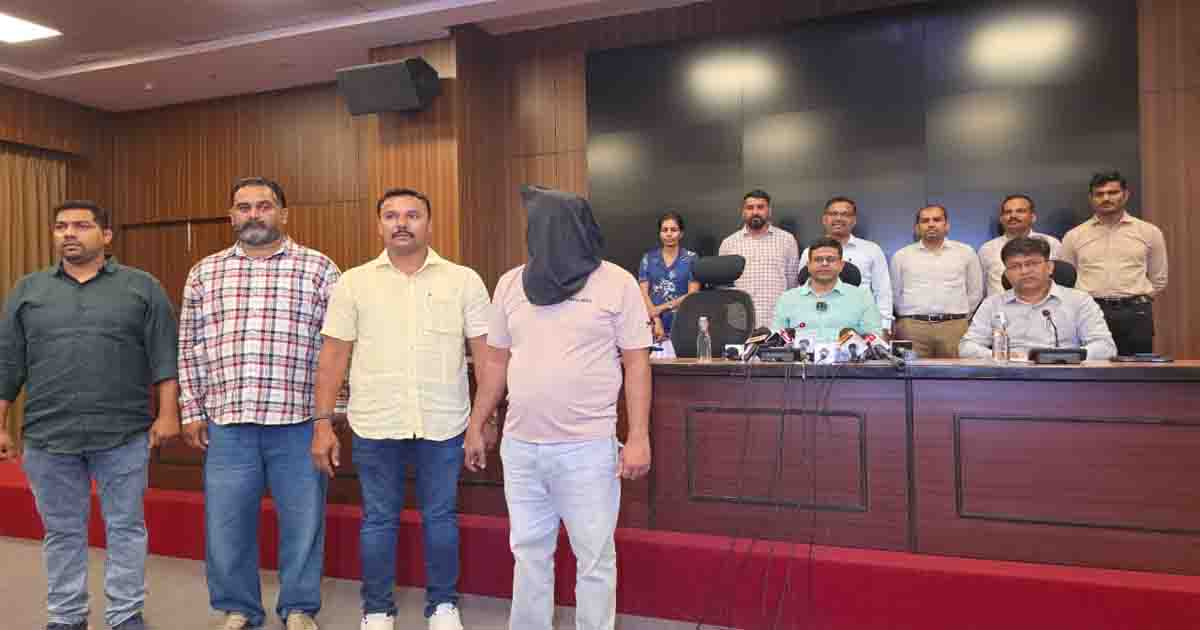
In a case involving the defrauding of a 72-year-old senior citizen in Mumbai on August 13, an unidentified caller—posing as Dinesh Kumar, a Senior Manager at Bank of India—gained the victim’s trust by promising to facilitate the issuance of a Senior Citizen Card. The caller sent an APK file named “Senior Citizen Card http://Verification.apk” to the complainant’s WhatsApp and coerced them into entering personal and bank debit card details, resulting in the misappropriation of ₹5,62,000. Initially, the Byculla Police Station registered a case (No. 497/26) under Sections 318(4) and 319(2) of the BNS and Sections 66(C) and (D) of the Information Technology Act, 2000. While the Property Cell of the Mumbai Crime Branch was conducting a parallel investigation, senior officials ordered the transfer of the case to the Crime Branch; it was subsequently re-registered as Case No. 927/2026 for further investigation.
A thorough technical analysis of the aforementioned APK file was conducted, leading to the identification and arrest of the accused—a 36-year-old male software developer and resident of Madhya Pradesh—who was responsible for developing the fraudulent APK file. During a raid on the accused’s office in Madhya Pradesh, authorities recovered a pen drive, a CPU, three hard disks, a Wi-Fi router, and three mobile phones. Preliminary technical analysis revealed that the accused was utilizing servers from various service provider companies. Investigation confirmed that the accused had created and sold a total of 2,805 malicious APK files to other cybercriminal gangs. These files were used to defraud 9,673 people across India. Complaints regarding these incidents have been registered on the cyber helpline number 1930—specifically 1,074 nationwide, 143 in Maharashtra, and 36 in Mumbai—revealing a total fraud amount of ₹15.75 crore. Cases have been cracked involving 88 incidents across India, 8 in Maharashtra, and 5 in Mumbai.
This successful operation was executed by a team comprising Police Commissioner Devin, Joint Police Commissioner Anil Kumbhare, Additional Commissioner Krishna Kant Upadhyay, DCP (Crime) Raj Tilak Roshan, and the Crime Branch. DCP Raj Tilak Roshan stated that this action was taken in response to fraud targeting the elderly under the guise of issuing senior citizen cards; the police also regularly conduct awareness campaigns among the elderly regarding this issue.
Maharashtra
Mumbai CSMT: Case Filed Against Garjana Morcha Over Demand to Scrap SIR; Nitesh Rane Defends Action, Calls for Aditya Thackeray Passport to Be Seized

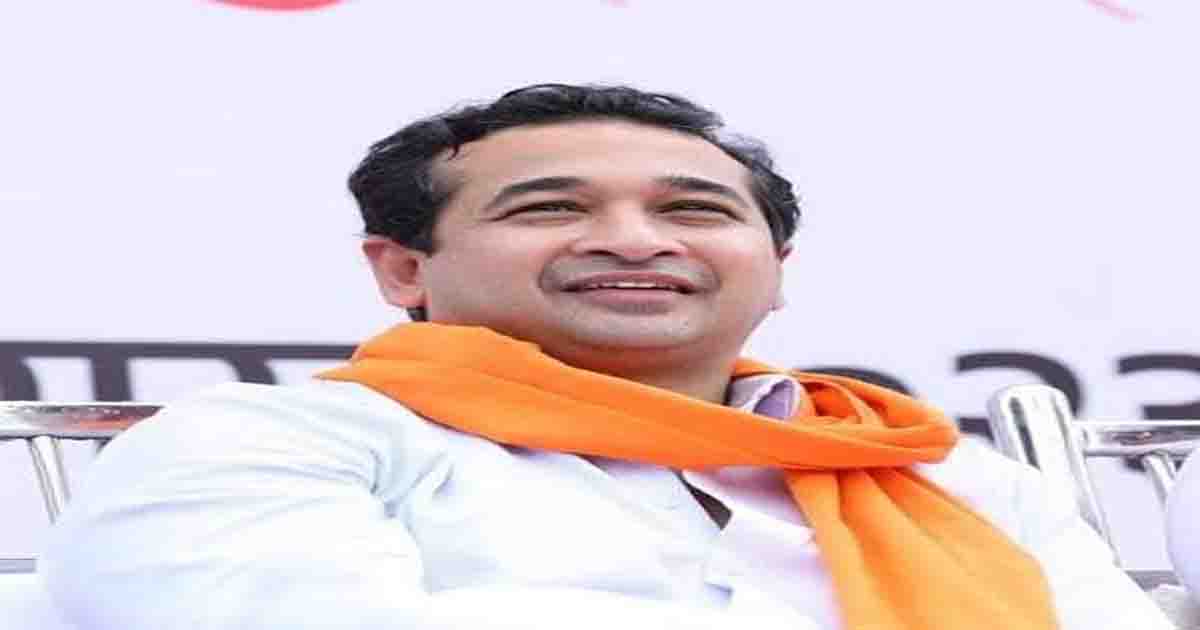
Mumbai: The Mumbai Police have registered a case against the organizers of the ‘Garjana Morcha’ (Roaring Rally), which was held without permission at Azad Maidan near the BMC headquarters. The protest, organized by Shiv Sena chief Uddhav Thackeray and MNS chief Raj Thackeray, saw the participation of party workers from across Mumbai and the state. During the event, demands were raised to cancel the FIR, and Raj Thackeray—in his address—termed the FIR itself illegal; he also proposed a boycott of the elections. The Mumbai Police have registered the case under Sections 223, 189, and 190 of the BNS. Authorities stated that the case was filed due to the unlawful assembly of a crowd. The Azad Maidan Police have initiated an investigation into the matter, and the case has been registered against the organizers as well as other leaders. A case must be registered for an illegal protest: Nitesh Rane
Following the police case registered after the Azad Maidan protest, BJP leader and minister Nitesh Rane stated that filing a case for an unauthorized, illegal protest is mandatory because the Constitution of Babasaheb Ambedkar prevails here. He alleged that the protest was held for “Vote Jihad.” Furthermore, in a vitriolic outburst, Rane noted that Aaditya Thackeray was absent from the protest organized by Uddhav and Raj Thackeray; claiming Aaditya knew action would be taken against him and might flee, Rane demanded that his passport be confiscated.

Regime change certain in 2027: Akhilesh lashes out at BJP, Election Commission

Newlywed poisons husband, 3 family members in Maharashtra Jalgaon

Nana Patekar death: Final post-mortem report out, rules out foul play

Gujarat Police nab three more accused in Punjab’s Mad Sandhu murder case

FairPoint: Rahul-Priyanka aggressive street shows in Oppn power game

Gift to President Putin part of PM Modi bid to globally display India’s heritage

PM Modi’s warm camaraderie with Putin, Xi on full display at BRICS Summit

INDIA bloc begins protest march against ECI

Complaint against Netflix & Mukesh Chhabra for inappropriate language on ‘India’s Got Latent 2’

Maha Congress stages agitation against Gyanesh Kumar
-

 Crime4 years ago
Class 10 student jumps to death in Jaipur
-

 Maharashtra2 years ago
Mumbai Local Train Update: Central Railway’s New Timetable Comes Into Effect; Check Full List Of Revised Timings & Stations
-

 Maharashtra2 years ago
Mumbai To Go Toll-Free Tonight! Maharashtra Govt Announces Complete Toll Waiver For Light Motor Vehicles At All 5 Entry Points Of City
-

 Maharashtra2 years ago
False photo of Imtiaz Jaleel’s rally, exposing the fooling conspiracy
-

 National News2 years ago
Ministry of Railways rolls out Special Drive 4.0 with focus on digitisation, cleanliness, inclusiveness and grievance redressal
-

 Maharashtra2 years ago
Maharashtra Elections 2024: Mumbai Metro & BEST Services Extended Till Midnight On Voting Day
-

 National News2 years ago
J&K: 4 Jawans Killed, 28 Injured After Bus Carrying BSF Personnel For Poll Duty Falls Into Gorge In Budgam; Terrifying Visuals Surface
-

 Crime2 years ago
Baba Siddique Murder: Mumbai Police Unable To Get Lawrence Bishnoi Custody Due To Home Ministry Order, Says Report