
Maharashtra
CM Fadnavis vows to free Marathwada from drought, divert 70 TMC water via river-linking in 7 years

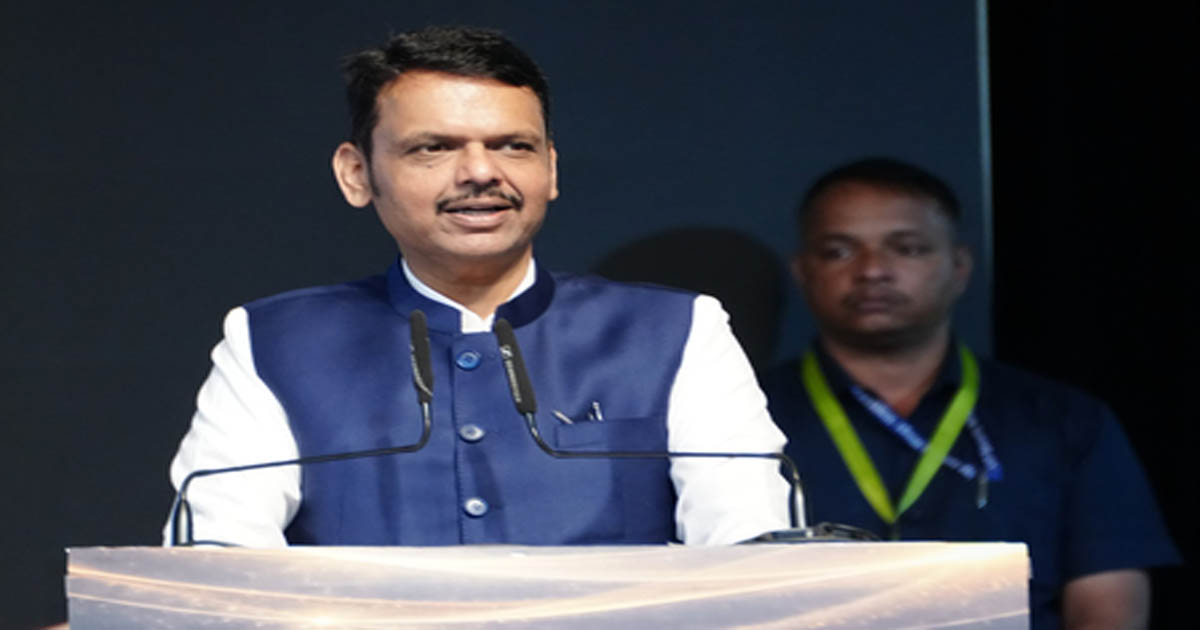
Chhatrapati Sambhajinagar (Maharashtra), Sep 17: Maharashtra Chief Minister Devendra Fadnavis on Thursday reiterated the state government’s resolve to permanently eradicate drought in the Marathwada region, announcing plans to divert 70 TMC of water from the Ulhas basin to the Godavari basin in phases over the next seven years.
He also assured that the government will take necessary measures to provide assistance to the farmers amid scanty rainfall in the Marathwada region.
Addressing a gathering on the occasion of Marathwada Mukti Sangram Day after the flag-hoisting ceremony at the Martyr’s Memorial, Fadnavis said, “Work is underway to divert 70 TMC of water from the Ulhas basin into the Godavari basin. While this generation has endured severe drought, we will ensure the next generation does not. We aim to transfer this water to the Godavari basin in phases over the next seven years.”
The chief minister reiterated the government’s initiatives regarding debt relief, water supply, and river-linking projects.
“About 30 TMC of additional water from the Krishna basin is being diverted to Marathwada following World Bank approval, with tenders currently being issued. Detailed Project Reports (DPR) for river-linking projects to lift water from the Konkan region to the deficit Godavari basin are in the final stages, utilising unique engineering designs,” Fadnavis said.
The Chhatrapati Sambhajinagar water supply project is in its final stages, which will soon ensure daily drinking water for the city, he said, adding that major investments are coming into Chhatrapati Sambhajinagar, supported by upgrading infrastructure and the ongoing work on the Jalna Dry Port.
“Farmers are benefiting from the Punyashlok Ahilyadevi Holkar Debt Waiver Scheme, with remaining beneficiary lists to be released soon,” Fadnavis said.
Addressing the drought situation in Marathwada, the CM reassured the farming community that the government will extend relief and take due measures to tackle the situation.
“Marathwada faces constant struggle, particularly against recurring droughts. This year has again brought drought conditions. Although initial expectations for crops were positive, a long spell without rain severely damaged agricultural yield. I assure farmers that our government will not abandon you under any circumstances. We stand firmly behind you and will provide all necessary assistance,” he said.
He announced that crop damage assessments (panchanamas) will begin after October 5.
“While NDRF assistance will follow, the state government will ensure its aid reaches farmers beforehand. To prepare for potential drinking water and fodder shortages, fodder cultivation was initiated earlier under the Fodder Development Programme,” he stated.
The chief minister announced the cancellation of Rs 48,000 crore in outstanding agricultural electricity bills.
“We previously decided to provide free electricity to farmers, and now the state government has decided to waive their past dues of Rs 48,000 crore so they face no further hardship,” Fadnavis said.
The chief minister briefly recounted the history of the freedom struggle.
“Even after India’s Independence, Marathwada continued its struggle for freedom. Marathwada achieved liberation 13 months later, on September 17, 1948, when the Indian tricolor was finally unfurled. I salute all the freedom fighters who made the ultimate sacrifice, endured atrocities in prison, or protested through satyagraha. I pay my respectful homage to those who are no longer with us. Marathwada was liberated due to their sacrifices. Iron Man Sardar Vallabhbhai Patel mounted a massive effort, applying pressure from all four sides to free the region,” he said.
“Today, we celebrate the 150th anniversary of Vande Mataram. However, during that era, ‘Vande Mataram’ was strictly banned. Speaking or teaching Marathi was prohibited, and atrocities reached extreme levels where people could not celebrate festivals. Freedom fighters pulled Marathwada out of these conditions,” the CM added.
Speaking at a parallel event in Beed, Deputy Chief Minister Sunetra Pawar highlighted the historical weight of the movement.
“Marathwada Liberation was the second freedom struggle for the rest of the country. Beed district served as the epicentre of this struggle. Swami Ramanand Teerth led the movement capably. For me, this history is personal, as my father, Bajirao Patil, actively participated in the liberation struggle,” she said.
Sunetra Pawar also extended birthday wishes to Prime Minister Narendra Modi.

Maharashtra
Fadnavis criticises Congress on SIR; releases parliamentary footage of Kapil Sibal defending process

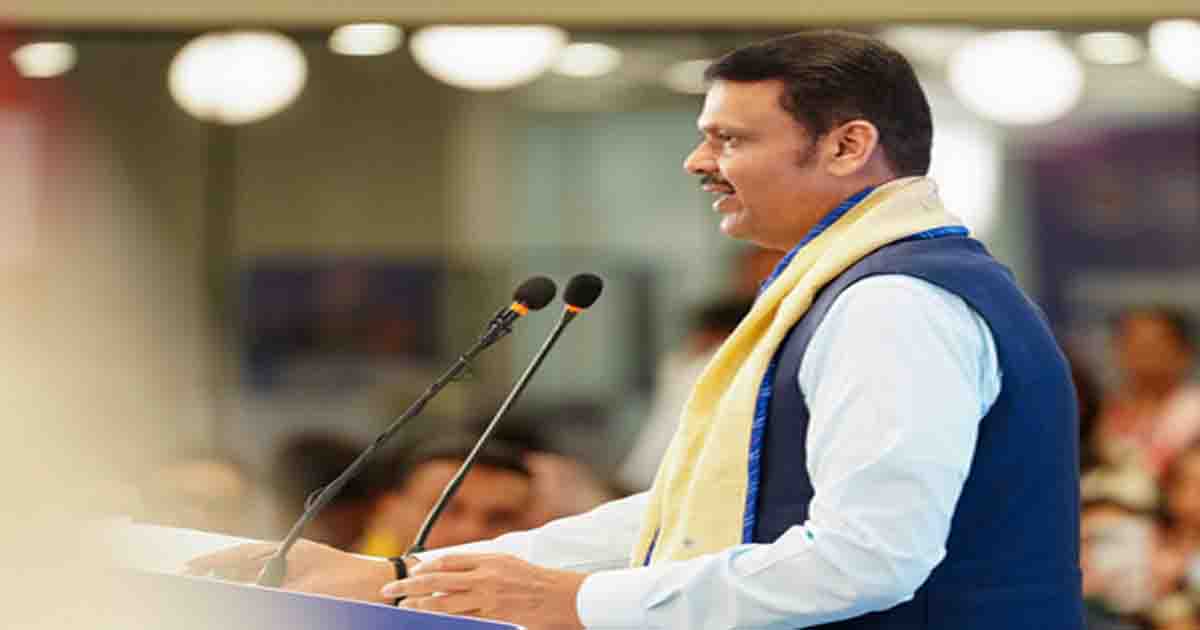
Mumbai, Oct 9: Maharashtra Chief Minister, Devendra Fadnavis, on Friday delivered a scathing rebuttal to the Congress party as high-octane protests led by Leader of the Opposition in the Lok Sabha, Rahul Gandhi, and Congress MP Priyanka Gandhi against the Election Commission and the Special Intensive Revision (SIR) process brought central Delhi to a standstill.
Taking to social media, CM Fadnavis released archival parliamentary footage of former Union Law Minister Kapil Sibal speaking in official support of the SIR framework during the Congress-led UPA tenure.
The clip—which has rapidly gone viral—directly counters the Opposition’s current claims that the voter roll revision is a “conspiracy” or an unconstitutional procedure. The Opposition parties have alleged that over 13 crore names have allegedly been left out in the draft poll rolls and has been protesting against it.
In his direct hit at the Congress leadership, CM Fadnavis highlighted the stark contrast between the party’s historic stance and its current street demonstrations.
“Congress is busy shouting against SIR from every possible stage, only to have its own former Law Minister Kapil Sibal’s words come back to expose the drama. The Parliament record doesn’t change with political convenience. Perhaps Congress should first check their own history before manufacturing new conspiracy theories. Sometimes, the best rebuttal comes from your own party’s past!”
CM Fadnavis captioned the video as ‘Congress’ double standards’, urging citizens to listen to official parliamentary proceedings from the UPA era and judge who is telling the truth.
The video shared by the Chief Minister shows then-Law Minister Kapil Sibal explaining the three precise categories under which the SIR process removes or updates names on the voter list. “Deletion of duplicate entries take place when a voter shifts from one constituency to another, followed by seamless re-registration at the new address. Also during updating old electoral rolls during boundary reorganisations. There will be routine deletion of names of deceased individuals upon verification,” said the former law minister in the video.
In the footage, Sibal emphasised that no legitimate voter could be barred by registration officers, noting that millions of citizens routinely applied for inclusion under established statutory provisions.
The video comes at a sensitive moment as Congress leaders Rahul Gandhi and Priyanka Gandhi Vadra lead sustained street demonstrations demanding the halting of the SIR process and the resignation of Chief Election Commissioner Gyanesh Kumar over what they claim is the disenfranchisement of 13 crore people during the recent SIR process.
The protests near Jantar Mantar and Election Commission headquarters have seen tense scuffles with law enforcement, leading to police complaints and political trade-offs.
BJP leaders have rallied around CM Fadnavis’s statement, asserting that the Opposition is attempting to manufacture a non-existent controversy over a standard voter roll hygiene drive that their own government previously endorsed and defended on the floor of Parliament.
The CM’s comments come a day after the Office of the Chief Electoral Officer (CEO), Maharashtra, in a major push to ensure maximum voter participation and clean electoral rolls, has launched targeted registration drives and door-to-door verification campaigns across the state.
Operating under the guidelines of the ECI, election authorities have committed to ensuring that no eligible citizen is left off the electoral roll and no ineligible entries remain. The extensive outreach forms a crucial leg of the ongoing SIR process.
Special voter registration camps have been conducted across all colleges and universities in Maharashtra from October 5 to October 9. Booth Level Officers (BLOs) are deployed at campus sites to assist eligible students with completing application forms and to resolve queries regarding the SIR workflow, said the Office of the Chief Electoral Officer (CEO), Maharashtra release.
BLOs are conducting home visits to identify eligible citizens missing from the Draft Electoral Roll and collect Form 6 following verification. For residents unavailable during home visits, special voter registration camps will be held at all designated polling stations on October 10 and October 11, 2026.
Citizens whose names appear on the list of absent or migrated voters (compiled during house-to-house enumeration) can apply for re-enrolment or correction. The official list of absent/shifted voters has been published online at ceoelection.maharashtra.gov.in for public verification.
Mumbai, Oct 8: The Enforcement Directorate (ED) attached immovable properties in Mumbai, Pune and Raigad (Maharashtra) worth Rs 567.45 crore in connection with a Rs 48,000 crore collective investment scheme operated by Pearls Agrotech Corporation Limited (PACL) for development of farm land, an official said on Thursday.
The PACL’s properties were attached by ED’s Delhi Zonal Office under the provisions of the Prevention of Money Laundering Act (PMLA), 2002.
The ED has attached 48 immovable properties held in the names of Prateek Kumar, Ansh Prateek Kumar, and entities namely Beaming Infradevelopers, Ganraj Properties, and Greenfield Estates Limited, having a current market value of Rs 567.45 crore.
With this attachment, the ED has so far attached movable and immovable properties worth around Rs 30,235.21 crore, including assets located in India and abroad.
The ED’s investigation was initiated on the basis of an FIR registered by the Central Bureau of Investigation (CBI) in New Delhi under Sections 120-B and 420 of the Indian Penal Code, 1860, dealing with conspiracy and cheating.
Subsequently, the CBI filed a charge sheet and a supplementary charge sheet against 33 accused for their role in running an illegal investment scheme.
According to the charge sheets, the accused entities and individuals operated a massive illegal collective investment scheme, fraudulently mobilising more than Rs 48,000 crore from lakhs of investors across India under the pretext of sale and development of agricultural land.
Investors were induced to invest through cash down payment and instalment payment plans and were made to sign misleading documents such as agreements, powers of attorney and other instruments.
“In most cases, land was never delivered, resulting in unpaid investor dues of around Rs 48,000 crore,” the ED said.
The ED recorded an Enforcement Case Information Report (ECIR) in the case in 2016 and filed a charge sheet in 2018, followed by six supplementary charge sheets in 2022, 2025 and 2026 against the various accused.
“Prateek Kumar was arraigned as an accused (A-13) in the First Supplementary charge sheet dated August 20, 2022, filed in the case immediately, where cognisance was taken by the Special Court vide order dated September 19, 2022,” the ED added.
Subsequently, an open-ended Non-Bailable Warrant (NBW) was issued against Prateek Kumar by the Special Court on April 9, 2025.
These entities are beneficially owned and controlled by Prateek Kumar.
The investigation revealed that these immovable properties were purchased using funds diverted from PACL, which had originally collected money from gullible investors, thereby constituting proceeds of crime.

Kanpur, Oct 8: A woman in Uttar Pradesh’s Kanpur has accused her husband of giving her triple talaq and said on Thursday that she was ousted from their family home after 16 years of marriage and two children. The victim has alleged that her husband was having an affair with a woman living in the same area.
The woman named Afreen has claimed that she caught her husband red-handed cheating on her on July 7 with another woman.
“It has happened multiple times. I have tried to explain and communicate many times; he didn’t agree. Even when I caught him that day, we got into a huge fight. All the relatives were called. When confronted, he said that ‘she is everything to me; I will divorce you. I will stay with her; I will marry her,'” she said, quoting her husband.
The woman also alleged that she was physically abused.
“He used to torment the children and me. He used to beat me up and did not provide for me. I was physically abused, but I persevered through it, thinking that it should not affect my family, my children.”
She said that she was married for 16 years and has two teenage children.
“I have been married for 16 years, and I have two sons. One is 13; the other is 15. His husband’s family did not take any action and just asked me to wait and have patience. I did too, thinking my family would be torn apart,” Afreen added.
According to the woman, at around 9:30 p.m. on August 12, her husband pronounced triple talaq in front of their two sons and threw her out of the house. She subsequently lodged a complaint at Chaman Ganj police station.
Police have registered an FIR under provisions related to dowry harassment, assault, an illicit relationship, and the Muslim Women (Protection of Rights on Marriage) Act.
Speaking on the matter, Kanpur Deputy Commissioner of Police (DCP) (Central), Atul Srivastava, said, “An FIR has been registered in the Chamanganj police station against the accused. Investigations are ongoing in the matter.”
Incidentally, the woman complained that her initial complaints were not being registered by the police, and the FIR was only filed recently in October.
However, when asked, the DCP said mediation was initially being attempted in the matter. After the issue of triple talaq came to light, an FIR was registered immediately.
The woman demanded that her husband should be arrested as soon as possible.

Bengal: BJP candidate wins Nandigram bypoll by a record margin of 1,22,753 votes

Ashish Vidyarthi revisits fond memories with Nana Patekar, shares video of actor making an omelette

334 GRP personnel deployed, 14 CAPF companies sought for October 10 protest: DCP, Railways

Protest politics: Can dissent coexist with public convenience?

Fadnavis criticises Congress on SIR; releases parliamentary footage of Kapil Sibal defending process

Gift to President Putin part of PM Modi bid to globally display India’s heritage

PM Modi’s warm camaraderie with Putin, Xi on full display at BRICS Summit

Complaint against Netflix & Mukesh Chhabra for inappropriate language on ‘India’s Got Latent 2’

INDIA bloc begins protest march against ECI

Maha Congress stages agitation against Gyanesh Kumar
-

 Crime4 years ago
Class 10 student jumps to death in Jaipur
-

 Maharashtra2 years ago
Mumbai Local Train Update: Central Railway’s New Timetable Comes Into Effect; Check Full List Of Revised Timings & Stations
-

 Maharashtra2 years ago
Mumbai To Go Toll-Free Tonight! Maharashtra Govt Announces Complete Toll Waiver For Light Motor Vehicles At All 5 Entry Points Of City
-

 Maharashtra2 years ago
False photo of Imtiaz Jaleel’s rally, exposing the fooling conspiracy
-

 National News2 years ago
Ministry of Railways rolls out Special Drive 4.0 with focus on digitisation, cleanliness, inclusiveness and grievance redressal
-

 Maharashtra2 years ago
Maharashtra Elections 2024: Mumbai Metro & BEST Services Extended Till Midnight On Voting Day
-

 National News2 years ago
J&K: 4 Jawans Killed, 28 Injured After Bus Carrying BSF Personnel For Poll Duty Falls Into Gorge In Budgam; Terrifying Visuals Surface
-

 Crime2 years ago
Baba Siddique Murder: Mumbai Police Unable To Get Lawrence Bishnoi Custody Due To Home Ministry Order, Says Report