
Business
Chinese Banks seek Sitharaman’s urgent intervention in resolution plan for Reliance Infratel

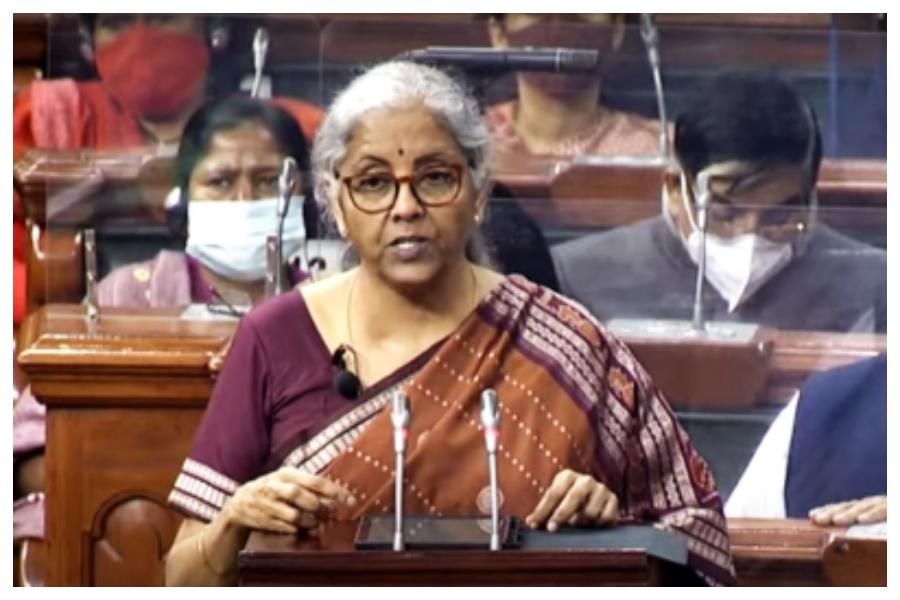
Chinese banks have written to Finance Minister Nirmala Sitharaman on the delays in the implementation of the Resolution Plan for Reliance Infratel Limited.
China Development Bank, Export Import Bank of China, Shubh Holdings Pte. Ltd. and SC Lowy Asset Management have written to the finance minister and IBBI Chairman in their respective capacities as financial creditors of Reliance Infratel Limited (RITL).
Collectively, these banks hold an aggregate financial debt of Rs 13,483 crore out of the total financial debt of RITL of Rs 41,055 crore.
“We wish to bring to your attention a deeply concerning roadblock in the implementation of the resolution plan for RITL by the successful resolution applicant – Reliance Projects & Property Management Services Limited (RPPMSL) (formerly known as Reliance Digital Platform & Project Services Limited), an affiliate of Reliance Jio Infocomm Limited (RJio),” the letter said.
“Given this roadblock and the instances of successful resolution applicants reneging on resolution plans, we further request the MCA and the IBBI to consider instituting appropriate legislative amendments to the Code in order to disincentivise successful resolution applicants from withdrawing or modifying resolution plans (once submitted as part of the CIRP) or delaying or withholding the implementation of National Company Law Tribunal (NCLT)-approved resolution plans,” the banks said.
The banks have said that in the present situation, the NCLT has already approved the RPPMSL Resolution Plan. Considering this, RPPMSL is not permitted to modify or withdraw the RPPMSL Resolution Plan in any manner and for any reason whatsoever (including, on account of the Forensic Audit Report).
Also, given the RPPMSL Resolution Plan will result in a change in the management or control of RITL, the risk (if any) of RPPMSL being liable for offences committed by RITL prior to the commencement of the CIRP is non-existent.
Accordingly, RPPMSL should be required to implement the RPPMSL Resolution Plan on an immediate basis. This will not only uphold the sanctity of the CIRP as envisaged under the Code but will also ensure speedier recovery for creditors who have been awaiting the resolution of RITL for the last two years.
The banks have requested the MCA and the IBBI to intervene in the RPPMSL Application on an urgent basis and to request the NCLT to direct the implementation of the RPPMSL Resolution Plan forthwith.
“As RITL’s financial creditors and stakeholders who have been awaiting the resolution of the RITL since 2018, we request your intervention in the RITL CIRP (where there is a clear NCLT approved resolution plan) on an urgent basis,” the banks said.


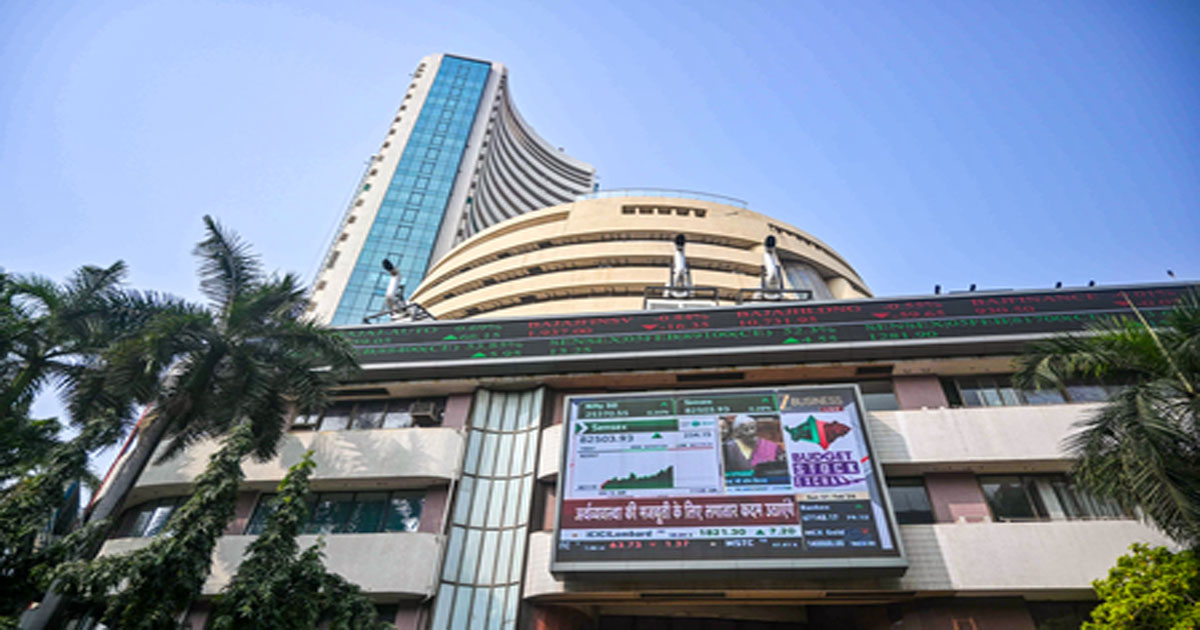
Mumbai, March 11: The Indian equity markets posted moderate losses in early trade on Wednesday over cautious sentiment amid the ongoing war between US-Israel and Iran, leading to the prolonged closure of the Strait of Hormuz.
As of 9.25 am, Sensex lost 109 points, or 0.14 per cent, to reach 78,096 and Nifty eased 26 points, or 0.11 per cent to reach 24,234.
Main broad-cap indices showed divergence with the benchmark indices, as the Nifty Midcap 100 gained 0.72 per cent, and the Nifty Smallcap 100 added 0.85 per cent.
All sectoral indices traded in green except Nifty FMCG, financial services and private banks. Private banks led the losses down 0.73 per cent. Nifty media, metal and consumer durables were among the top gainers, up 1.52 per cent, 1.58 per cent and 1.25 per cent, respectively.
Near-term resistance for Nifty is placed at 24370-24416 area, while strong support spans the 23700-24080 zone, analysts said.
Derivatives data from yesterday’s session showed that foreign investors and proprietary traders remained positive, while retail investors went bearish, they added.
Resistance for Bank Nifty is seen near 57,200–57,300 zone, while support is located in the 56,600–56,700 zone, market participants said.
Sectorally, auto, financials, and consumer-oriented stocks led the recovery in the previous session, while some pressure was seen in select IT and oil & gas counters. Broader markets also remained firm, with midcap and small-cap stocks outperforming the frontline indices, reflecting selective buying interest across sectors.
On Wednesday, markets remained unsettled over fading hopes for an early end to the US-Israeli war on Iran and stagflation concerns compounded by US President Donald Trump’s threat of retaliations following reports of Iran mining the Strait of Hormuz.
Oil prices which had earlier this week touched $120 a barrel, dropped below 90-mark over reports of a group of countries planning to tap emergency crude reserves to mitigate disruption caused by the conflict.
International Brent crude was down 0.44 per cent at $87.39 per barrel early on Wednesday.
In Asian markets, China’s Shanghai advanced 0.05 per cent, and Shenzhen added 0.85 per cent, Japan’s Nikkei moved up 2.48 per cent, and Hong Kong’s Hang Seng Index surged 0.33 per cent. South Korea’s Kospi gained 3.41 per cent.
The US markets ended mixed overnight as Nasdaq added 0.01 per cent. The S&P 500 lost 0.21 per cent, and the Dow Jones declined 0.07 per cent.
On March 10, foreign institutional investors (FIIs) net sold equities worth Rs 4,685 crore, while domestic institutional investors (DIIs) were net buyers of equities worth Rs 6,250 crore.

Mumbai, March 9: Indian stock markets ended sharply lower on Monday as rising geopolitical tensions linked to the ongoing US-Iran war weighed on investor sentiment.
Although the indices recovered partially from the day’s lows after crude oil prices eased.
The Nifty settled at 24,028.05, down 422.40 points or 1.73 per cent. The index also officially entered the technical correction zone after falling more than 10 per cent from its record high of 26,373, which it had touched on January 5.
The Sensex ended the day at 77,566.16, falling 1,352.74 points or 1.71 per cent.
Despite the sharp fall, both indices managed to recover from their intra-day lows as oil prices softened during the session.
The Nifty rebounded about 160 points from its day’s low of 23,868.05, while the Sensex recovered nearly 1,142 points from the intra-day low of 76,424.55.
Commenting on Nifty technical outlook, experts said that the immediate support is placed around 23,700–23,600, and a decisive breakdown below this level could extend the decline toward the 23,400–23,300 zone.
“On the upside, immediate resistance is seen around 24,300 (gap area), followed by a stronger hurdle near 24,600, which needs to be reclaimed to signal any meaningful recovery,” an analyst stated.
Market participants remained cautious amid uncertainty surrounding the conflict between the United States and Iran, which has increased volatility in global financial markets and energy prices.
Broader markets performed worse than the benchmark indices during the session. The Nifty MidCap Index ended 1.97 per cent lower, while the Nifty SmallCap Index declined 2.22 per cent.
Among sectoral indices, the Nifty PSU Bank Index was the worst performer, falling 3.97 per cent as selling pressure intensified in public sector banking stocks.
On the other hand, the Nifty IT Index showed relative resilience and managed to close slightly higher, gaining 0.08 per cent to end at 30,162.05.
Analysts said markets remain sensitive to geopolitical developments and movements in crude oil prices, which could continue to influence investor sentiment in the near term.

Washington, March 9: Oil prices surged past $100 a barrel as the conflict involving Iran disrupted energy flows through the Strait of Hormuz and rattled global markets.
US President Donald Trump defended the spike. He said higher oil prices were a temporary cost tied to confronting Iran’s nuclear threat.
“Short-term oil prices, which will drop rapidly when the destruction of the Iran nuclear threat is over, is a very small price to pay for U.S.A., and World, Safety and Peace,” Trump wrote on Truth Social.
“ONLY FOOLS WOULD THINK DIFFERENTLY!”
Crude oil prices almost touched $110 per barrel after major Middle East producers reduced output while the Strait of Hormuz remained effectively closed due to the Iran conflict, CNBC reported Sunday.
West Texas Intermediate crude jumped about 20.75 per cent, or $18.83, to $109.75 per barrel. Brent crude rose more than 18 per cent to about $109.48 per barrel, according to the report.
The jump marks one of the biggest weekly gains in oil futures trading since the early 1980s, it said.
The rally reflects fears that the Strait of Hormuz could remain disrupted. The narrow waterway is one of the world’s most critical oil routes. A large share of global oil and liquefied natural gas shipments moves through the Strait.
The Wall Street Journal reported that tanker traffic through the Strait slowed sharply as ships avoided the region after threats and attacks linked to the conflict.
Gulf producers have begun cutting output. Storage tanks are filling up. Without export routes, some producers are shutting wells or slowing production.
Financial markets reacted quickly.
Stocks in Asia dropped sharply when trading opened. Japan’s benchmark index fell about five per cent. South Korea’s market dropped more than seven per cent, The New York Times reported. Both economies depend heavily on imported oil and gas.
Analysts warn that prices could rise further if the conflict drags on. Market forecasts cited by financial trackers suggest crude could reach $143 per barrel by the end of the year.
Energy historian Daniel Yergin told The Wall Street Journal the situation could become “by far the biggest disruption in world history in terms of daily oil production.”
The conflict is also disrupting global trade routes. The Washington Post reported that missile and drone attacks in the region have slowed commercial shipping and damaged trade corridors between Asia, Europe and the Middle East.
Economists say Asia and Europe could face stronger economic pressure than the United States. Both regions rely heavily on imported energy moving through the Persian Gulf.
The United States may be somewhat protected because of its large domestic oil production and growing energy exports. Still, higher global oil prices can affect American consumers. Rising fuel costs often lead to higher transport and food prices.
Oil shocks in the Persian Gulf have triggered major economic crises before. The 1973 Arab oil embargo and the 1979 Iranian revolution both caused dramatic price spikes and global recessions.

Mumbai Municipal Corporation: Incinerator facility for cremation of small animals and birds will soon be available at the Tata Trust-run Animal Hospital

Mumbai: Pay outstanding water bill before March 31, 2026, otherwise water connection will be disconnected: Municipal Corporation

Palghar Administration Dismisses Rumours Of LPG Shortage, Warns Against Panic Booking And Hoarding

Fish-Laden Truck Overturns On Mumbai-Pune Expressway, Traffic Disrupted For 45 Minutes Near Amrutanjan Bridge

Maharashtra On Alert: Thunderstorms, Rain, And Possible Hailstorms Predicted Across Multiple Regions From March 17

Salim Khan hospitalised following complaints of swelling

Threatening WhatsApp Audio Note To Ranveer Singh And Rohit Shetty Goes Viral; Voice Linked To Harry Boxer Under Verification

Mulund Horror: Maharashtra CM Devendra Fadnavis Expresses Grief After 1 Killed In Mumbai Metro 4 Slab Collapse; ₹5 Lakh Aid Announced For Deceased

Mumbai: JBCN International School In Borivali Gets Bomb Threat, Search Reveals Hoax, Students Safe

Former Arsenal Star Mesut Ozil’s Convoy Gets Involved In Road Accident During Bangladesh Visit
-

 Crime4 years ago
Class 10 student jumps to death in Jaipur
-

 Maharashtra1 year ago
Mumbai Local Train Update: Central Railway’s New Timetable Comes Into Effect; Check Full List Of Revised Timings & Stations
-

 Maharashtra1 year ago
Mumbai To Go Toll-Free Tonight! Maharashtra Govt Announces Complete Toll Waiver For Light Motor Vehicles At All 5 Entry Points Of City
-

 Maharashtra1 year ago
False photo of Imtiaz Jaleel’s rally, exposing the fooling conspiracy
-

 National News1 year ago
Ministry of Railways rolls out Special Drive 4.0 with focus on digitisation, cleanliness, inclusiveness and grievance redressal
-

 Maharashtra1 year ago
Maharashtra Elections 2024: Mumbai Metro & BEST Services Extended Till Midnight On Voting Day
-

 National News1 year ago
J&K: 4 Jawans Killed, 28 Injured After Bus Carrying BSF Personnel For Poll Duty Falls Into Gorge In Budgam; Terrifying Visuals Surface
-

 Crime1 year ago
Baba Siddique Murder: Mumbai Police Unable To Get Lawrence Bishnoi Custody Due To Home Ministry Order, Says Report