
International News
China renews alert for high temperatures

China’s national observatory has renewed an orange alert, the second highest, for high temperatures on Thursday, as intense heat waves linger in many regions of the country.
During daylight hours on Thursday, vast swathes of China’s southern regions and some parts of Xinjiang and Inner Mongolia are expected to experience temperatures of over 35 degrees Celsius, the National Meteorological Centre said.
Temperatures in some regions of Zhejiang, Jiangxi and Xinjiang may surpass 40 degrees Celsius, according to the forecast.
The meteorological centre has advised the public to avoid outdoor activities during high-temperature periods and suggested that workers exposed to high temperatures shorten continuous working hours, reports Xinhua news agency.
Local governments have been advised to take appropriate heat control measures and necessary protective steps against fires triggered by electrical overloads.
China has a four-tier colour-coded weather warning system, with red representing the most severe warning, followed by orange, yellow and blue.


International News
Bomb threats disrupt flights across Europe, forcing diversions and security checks


More than a dozen passenger flights across Europe received bomb threats on Thursday, forcing several aircraft to divert and prompting security checks at airports in multiple countries, according to local media reports and airline statements.
An Aer Lingus Airbus A320 travelling from Dublin to Rome was diverted to a military airbase in Evreux, France, following a bomb alert. The aircraft landed safely, and all 151 passengers and six crew members were moved to safety while military bomb disposal teams inspected the plane, according to the office of French Prime Minister Sebastien Lecornu.
In Bulgaria, three Ryanair flights bound for the capital Sofia received bomb threats on Thursday morning, local broadcaster bTV reported. Flights from Copenhagen and Madrid landed safely in Sofia, while a flight from London Stansted Airport was diverted to Plovdiv Airport. Security checks found no dangerous objects on board the aircraft, according to the broadcaster.
In Poland, a Paris-bound LOT Polish Airlines plane was stopped while taxiing at Warsaw Chopin Airport following a report of a potentially dangerous object onboard. Flight LO331 was moved to a designated parking stand for inspection, and one runway was temporarily closed. No dangerous items were found, and airport operations subsequently returned to normal, Xinhua News Agency reported.
Another LOT flight, traveling from Warsaw to Brussels, also received a security threat. The aircraft landed at Brussels Airport, where additional inspections found no suspicious items, the airline said.
A Wizz Air flight from Milan to Warsaw was diverted to Vienna following a bomb threat. Two Finnair flights departing from Helsinki, bound for Rome and Vienna respectively, were also targeted. Both landed safely, with the Rome-bound aircraft escorted by Italian military jets.
In Romania, a Wizz Air flight from Milan landed safely at Bucharest’s Henri Coanda International Airport following a bomb threat. The 182 passengers and seven crew members were evacuated while security personnel inspected the aircraft, Romanian public radio reported.
Czech police also reported bomb threats against four aircraft heading to Prague. Police assessed the threats as having low credibility but activated security measures and arranged inspections of the aircraft upon landing.
The European Union Aviation Safety Agency (EASA) said Thursday it would continue to monitor developments and assess potential aviation safety implications following the bomb threats against multiple passenger aircraft in Europe.
In an emailed response to Xinhua, EASA said it would “continue to monitor these developments to identify and assess any potential aviation safety implications arising from such security threats.”
Europol Deputy Spokesperson Claire Georges told Xinhua in an email on the same day that the agency stood ready to support national authorities, at their request, where threats were linked to serious organised crime or terrorism, including by facilitating information exchange and identifying possible links across countries.
The incidents followed a series of similar alerts across Europe on Tuesday when at least seven passenger flights and a cruise ship received bomb threats. The affected flights included two bound for Warsaw, two for Rome, two for Sofia and one for Murcia in Spain, while a cruise ship bound for Israel was searched after a bomb threat at the Greek island of Syros.

India, as Chair of the Kimberley Process (KP) for 2026, has flagged key priorities concerning the global diamond industry, including responsible rough diamond sourcing as part of its outreach ahead of the KP Plenary to be held in Delhi from November 30 to December 4, according to a statement issued by the Commerce Ministry on Thursday.
The issue was discussed at a stakeholder consultation in Angola’s Luanda on Tuesday, chaired by Additional Secretary Yashvir Singh on India’s behalf, which brought together the Chairs and Vice-Chairs of KP Working Groups and Committees (KP Working Bodies), the KP Vice-Chair (of Ghana), and the former KP Chair (of the United Arab Emirates). Representatives of observers and partner organisations, including the World Diamond Council and the African Diamond Producers’ Association (ADPA), also participated in the discussion, the statement said.
India has observer status in the ADPA, providing an institutional platform for engagement with African diamond-producing countries. This offers opportunities for cooperation in securing rough diamond supply chains, technical knowledge exchange, value addition, market access and the promotion of ethical and sustainable practices.
The 13th Extraordinary Meeting of the ADPA Council of Ministers, held alongside the 20th anniversary celebrations, approved a Memorandum of Understanding (MoU) between the Gem & Jewellery Export Promotion Council (GJEPC), India, and the ADPA. The MoU seeks to strengthen cooperation between the Indian gem and jewellery industry and African diamond-producing countries, including through capacity building and skills development in diamond sorting, valuation and manufacturing, exchange of technical expertise, and the promotion of trade and investment linkages across the diamond value chain, the statement said.
Yashvir Singh said: “India’s chairship places emphasis on confidence, compliance and credibility. The consultation in Luanda provided an opportunity to engage directly with the leadership of the KP working bodies, the KP Vice-Chair and observers on issues that are important to the future of the Process and the diamond industry. Our endeavour is to build a shared understanding of the issues before the New Delhi Plenary and to advance practical outcomes through constructive dialogue and consensus-based decision-making.”
Discussions covered the sustainability of diamond-producing countries and communities, sustainable funding and continuity of the KP Secretariat, digitalisation of certification and statistical processes, and strengthening compliance with the Kimberley Process Certification Scheme.
Participants also exchanged views on the reform of the conflict diamond definition, responsible sourcing, artisanal and alluvial diamond production, consumer confidence and the importance of effective reporting and peer-review mechanisms.
The ADPA, established in 2006 in Luanda, seeks to enhance cooperation among African diamond-producing nations. It effectively comprises 15 member countries and 8 observers, including two non-African observers, namely Russia and India. Its member countries collectively account for over 60 per cent of global diamond production.
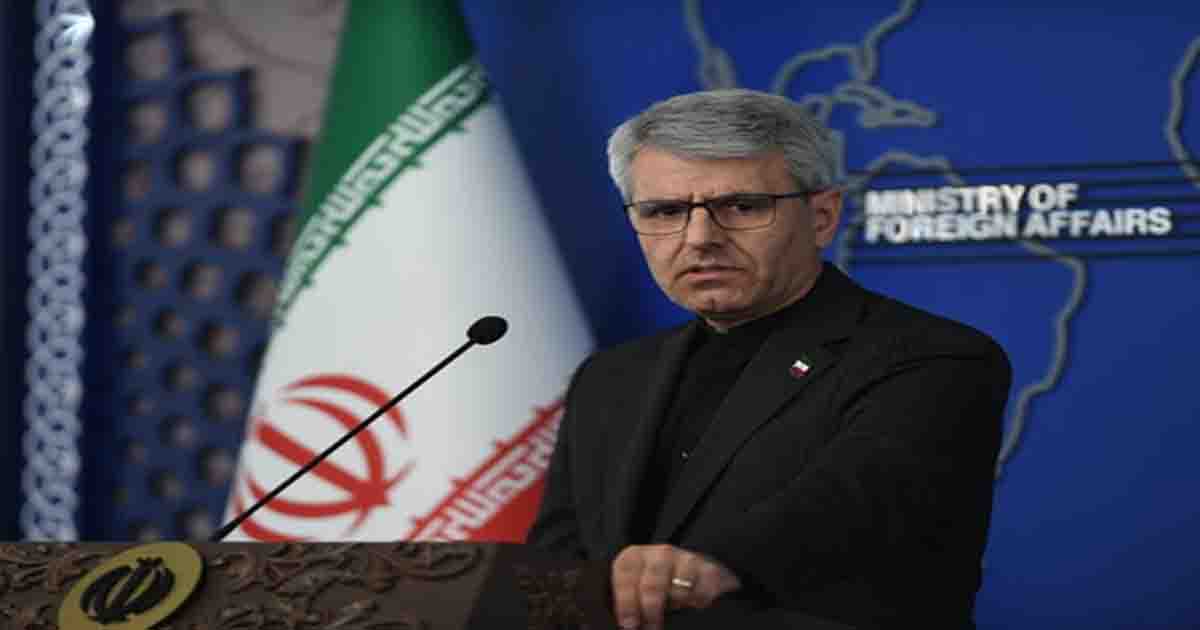
With US midterm elections about to conclude, tensions between Washington and Tehran remained high as both sides exchanged warnings and conditions for a possible settlement, while regional countries stepped up diplomatic efforts to prevent renewed hostilities.
Chief of Staff of the Iranian Armed Forces Ali Abdollahi warned Tuesday that Iran’s armed forces would respond to any level or type of threat from the United States and Israel immediately and “without geographical limitations.”
Meanwhile, Secretary of Iran’s Supreme National Security Council Mohsen Rezaei said in a post on social media platform X that the US response to Iran’s demands was not convincing, Xinhua news agecy reported.
“They must completely and explicitly address Iran’s seven conditions and act upon them. Only in this case the Strait of Hormuz will be reopened,” Rezaei said.
Iran conveyed a plan to the United States through mediators on September 22 to end hostilities and reopen the Strait of Hormuz within seven days if its conditions were met.
Iranian Foreign Ministry spokesman Esmaeil Baghaei said Monday that Iran had reduced the period for implementing the seven-day plan to two days in good faith.
US President Donald Trump said Monday that he was “in no rush” to decide whether to resume military action against Iran.
“One way or the other, we will do something, but there is no rush. We crippled them financially,” Trump said in a phone interview with Axios.
Trump later wrote on Truth Social that Iran wanted a settlement and that one could happen soon.
Axios reported that Trump was weighing three possible courses of action: reaching a diplomatic deal, resuming military action, or maintaining maximum economic pressure without a deal or renewed hostilities.
US Vice President JD Vance and White House envoy Steve Witkoff favor diplomacy, while Israeli Prime Minister Benjamin Netanyahu and US Secretary of Defence Pete Hegseth are pushing for renewed military operations. Treasury Secretary Scott Bessent, CIA Director John Ratcliffe and Secretary of State Marco Rubio favor maintaining the current “no war, no deal” status quo, the report said.
The Wall Street Journal (WSJ) reported Monday that Trump was leaning toward launching a large-scale attack on Iran after the midterm elections, potentially targeting Iranian infrastructure and nuclear facilities, although no final decision had been made.
Qatari Foreign Ministry spokesperson Majed Al Ansari said Tuesday that the United States and Iran were reviewing proposals to end their conflict, but differences remained unresolved.
He told a weekly press briefing that a Qatari delegation had returned from Tehran on Monday evening after more than three hours of talks with Iranian officials.
Qatar was relaying proposals in coordination with Pakistan, Gulf Cooperation Council countries and other regional and international partners, he said, adding that no concrete breakthrough had been achieved.
Also on Tuesday, Egyptian President Abdel Fattah El-Sisi urged the United States and Iran to show maximum flexibility and seek a political settlement.
At a joint press conference in Cairo with visiting Slovenian President Natasa Pirc Musar, he called on the two sides to “create space for understanding and dialogue” and pledged Egypt’s continued efforts with regional and international partners to de-escalate tensions.
Egyptian Foreign Minister Badr Abdelatty and his Iranian counterpart Seyed Abbas Araghchi made a phone call on Tuesday evening and discussed regional efforts to de-escalate tensions and reach a comprehensive deal addressing all parties’ concerns, the Egyptian Foreign Ministry said.
Despite diplomatic efforts, military tensions have persisted.
The United States attacked Iran’s strategic Qeshm Island in the Strait of Hormuz on Monday, The WSJ reported, citing US officials.
Iran’s Islamic Revolution Guard Corps said late Monday that its air defense systems had intercepted three US drones in the country’s southern airspace, identifying two of them as MQM-170 Outlaw drones, which it said were intercepted over Qeshm Island, and the third as an MQ-9 Reaper, which it said was shot down in waters east of the Strait of Hormuz.
The strikes were part of a series of limited attacks Washington had secretly carried out against Iran in recent weeks while President Trump was touting the possibility of a diplomatic deal, the WSJ report said.
Washington did not publicly announce the strikes to avoid signaling a resumption of major combat operations, one US official was quoted as saying.

Diwali gift: K’taka govt hikes DA to 18 pc for state employees and pensioners

Bomb threats disrupt flights across Europe, forcing diversions and security checks

India bolsters ties with diamond-producing countries

Umar Khalid, Sharjeel Imam move SC against Delhi HC order denying bail

July 20 protest: SC asks panel probing police action during student protests to submit report in a month

Rahul, Cong ecosystem want to force regime change: BJP after Neha Bora praises B’desh Gen-Z protest

Attack on democratic rights: INDIA Bloc leaders on detentions of anti-ECI protestors

BJP pays tribute to ex-President Abdul Kalam, recalls his enduring influence on generations of India’s youth

Congress trying to protect 3 crore Bangladeshi infiltrators in voter list: HM Shah

Online betting: ED conducts searches at 20 premises in Mumbai, Pune, Hyderabad
-

 Crime4 years ago
Class 10 student jumps to death in Jaipur
-

 Maharashtra2 years ago
Mumbai Local Train Update: Central Railway’s New Timetable Comes Into Effect; Check Full List Of Revised Timings & Stations
-

 Maharashtra2 years ago
Mumbai To Go Toll-Free Tonight! Maharashtra Govt Announces Complete Toll Waiver For Light Motor Vehicles At All 5 Entry Points Of City
-

 Maharashtra2 years ago
False photo of Imtiaz Jaleel’s rally, exposing the fooling conspiracy
-

 National News2 years ago
Ministry of Railways rolls out Special Drive 4.0 with focus on digitisation, cleanliness, inclusiveness and grievance redressal
-

 Maharashtra2 years ago
Maharashtra Elections 2024: Mumbai Metro & BEST Services Extended Till Midnight On Voting Day
-

 National News2 years ago
J&K: 4 Jawans Killed, 28 Injured After Bus Carrying BSF Personnel For Poll Duty Falls Into Gorge In Budgam; Terrifying Visuals Surface
-

 Crime2 years ago
Baba Siddique Murder: Mumbai Police Unable To Get Lawrence Bishnoi Custody Due To Home Ministry Order, Says Report