
International News
China hails India’s powerful, rising influence in Asia


New Delhi, Feb 20: In yet another sign of thawing ties between the two countries, a Chinese diplomat on Thursday hailed India’s ascent in the Asia Power Index that was released last year.
“India has become the 3rd most powerful and influential country in Asia, after the US and China,” Yu Jing, spokesperson of the Chinese Embassy in India, posted on X citing the 2024 Asia Power Index by Australia’s Sydney-based Lowy Institute.
The report released in September 2024 had placed India as the third-most powerful nation in Asia, behind only the United States and China, highlighting India’s remarkable improvement in various categories, particularly in Diplomatic Influence, which surged due to Prime Minister Narendra Modi’s increased international engagements.
As India overtook Japan to grab the third spot in the Asia Power Index, several leaders attributed the country’s ascent to PM Modi’s visionary leadership and global strategy.
“India’s rise is no accident. This is the direct result of Prime Minister Modi’s aggressive diplomatic strategy and his bold ambitions to reshape India’s place in the world. Without his leadership, India would still be languishing behind, but today, we see a nation on the verge of superpower status,” stressed Union Minister of Petroleum and Natural Gas, Hardeep Singh Puri.
According to the Lowy Institute, the Asia Power Index consisted of eight measures of power, 30 thematic sub-measures and 131 indicators. The Index ranked 27 countries and territories in terms of their capacity to shape their external environment — its scope reaching as far west as Pakistan, as far north as Russia, and as far into the Pacific as Australia, New Zealand, and the United States.
The government listed three major factors behind India’s rise in the index, including economic growth, future prospects and diplomatic influence.
“Prime Minister Narendra Modi’s leadership has gained greater international recognition. India’s non-aligned strategic position has made it possible for New Delhi to effectively navigate complex international waters. India ranked sixth in terms of diplomatic interactions in 2023, reflecting its active participation in multilateral forums,” the Ministry of Information and Broadcasting said, last year.
The strained relations between India and China are showing some improvement following the meeting between PM Modi and Chinese President Xi Jinping held in Kazan in October 2024.
Last month, Foreign Secretary Vikram Misri visited Beijing for a meeting of the Foreign Secretary-Vice Foreign Minister mechanism between India and China on January 27.
The two sides not only decided to resume the Kailash Mansarovar Yatra in the summer of 2025 but also agreed, in principle, to resume direct air services between the two countries.
Analysts reckon that the Chinese diplomat’s post on Thursday could be part of both countries deciding to utilise 2025 – the 75th anniversary of the establishment of India-China diplomatic relations – to redouble public diplomacy efforts, create better awareness about each other and restore mutual trust and confidence among the public, as it was agreed during Foreign Secretary Misri’s visit to Beijing, last month.

International News
EU condemns Pakistani strike on Afghan hospital as deadly escalation, urges restraint

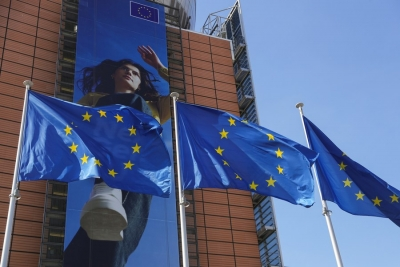
The European Union (EU) has condemned a Pakistani airstrike on a medical facility in Kabul, describing it as a deadly escalation in the ongoing conflict between Pakistan and Afghanistan.
The EU urged both sides to exercise maximum restraint and take all feasible measures to protect civilians, warning that attacks on civilian and medical facilities violate international humanitarian law.
The statement comes after a Pakistani strike on Monday night targeted the 2,000-bed Omid Addiction Treatment Hospital in Kabul’s Pul-e-Charkhi area, killing hundreds and injuring several others.
“Civilian and medical facilities must never be targeted, as they are protected under International Humanitarian Law, including the Geneva Conventions. All parties engaged in military operations have the obligation to respect these provisions under all circumstances,” the EU said.
The EU joined the international community in calling for an immediate ceasefire and the resumption of dialogue between Pakistan and Afghanistan.
Afghanistan’s Acting Foreign Minister, Mawlawi Amir Khan Muttaqi, on Tuesday claimed that the attack carried out by Pakistani forces at Omid Addiction Treatment Hospital killed more than 408 patients undergoing drug rehabilitation and injured over 265.
Addressing ambassadors, heads of missions, and representatives of international organisations in Kabul, Muttaqi said the strikes occurred around 9 p.m. on March 16 and were conducted by “military aircraft and drones of the Pakistani military regime,” deliberately targeting one of the most vulnerable groups in Afghan society.
He added that the victims were drug-addicted individuals receiving treatment through Afghan government programmes supported by international humanitarian organisations, and warned that the numbers could rise further.
Muttaqi accused Pakistan’s military of showing no regard for Islamic or humanitarian principles of warfare, deliberately striking civilian and humanitarian facilities, and highlighted that the assault came during the final days of Ramadan and on the eve of Eid al-Fitr.
He said Afghan security forces had responded with proportionate and defensive measures, targeting only military sites from which attacks were launched, and reiterated that such actions would continue until Pakistan ceased its “violations and crimes.”
International News
Targeting Afghan civilians appears central to Pakistan’s strategy as airstrikes kill 400

New Delhi, March 17: The situation in Afghanistan is going from bad to worse and in the latest attack by Pakistan, 400 people were killed in an airstrike. Officials said this escalation is a dramatic one and signals that Pakistan has no plans of stopping the war that it got into with Afghanistan.
This is the deadliest strike in Afghanistan following the one that took place in 2021 when the US troops were withdrawing from the country. In that attack, which was a suicide bombing, 169 Afghan civilians and 13 US service members were killed.
Since the start of the war in February, there have been repeated clashes between the two sides in the border areas. Pakistan has also used its air power extensively to subdue the Afghan Taliban.
Officials said that Pakistan knows that it cannot sustain boots on the ground with the Taliban. It has tried reaching out to the Taliban, but Kabul has remained firm that it wants no interference from Islamabad.
Another official said that Pakistan is attempting a regime change in Afghanistan. The targeting of a hospital is an attempt by Islamabad to send across a message to the Taliban that they would have to come to the negotiating table, the official added.
Afghanistan’s deputy government spokesperson, Mandullah Fitrat, said the airstrike had hit the hospital at around 9 p.m. local time. A large section of the 2,000-bed facility had been destroyed. He also said that the death toll so far stood at 400, while the number of those injured was at 250. Around 2,000 people were being treated at the drug treatment hospital when the strikes took place.
Fitrat said that rescue operations are on and teams are working to control the fire and recover the bodies. The casualties are likely to be higher, the spokesperson also said.
The ramifications of this strike could be huge, Afghanistan watchers said.
It is clearly a miscalculation by Pakistan, and in this act of madness, it has only managed to unite the Afghan people further. The Afghan people, who were initially not siding with the Taliban, started backing the regime after Pakistan threw out Afghan refugees. This was seen as an act of barbarism by the people of Afghanistan, and they started justifying the Taliban’s actions against Islamabad.
Pakistan was, however, quick to deny any role in the attack. Pakistani Prime Minister Shehbaz Sharif’s spokesman, Mosharraf Zaidi, said that the allegations made by Kabul are baseless and no hospital was targeted.
Pakistan further said that the strikes precisely targeted military installations and terrorist support infrastructure that included technical equipment storage and ammunition storage of the Afghan Taliban. Pakistan continued to claim without proof that the Afghan Taliban is backing terror groups to target innocent Pakistani civilians.
Islamabad has been attacking Afghanistan since February 26. While Pakistan claims that it has hit military targets, the fact remains that there have been many misses as a result of which there have been a large number of civilian casualties.
With the latest strikes, there have been at least 475 civilian deaths, while 1,15,000 people have been displaced.
Officials said that Pakistan is out to destroy Afghanistan, and the targeting of civilians clearly shows that. Pakistan is also looking to take advantage of the fact that the world is focused on the war in Iran.
With no intervention from the rest of the world, Pakistan hopes to inflict maximum damage on the people of Afghanistan, officials also added.
Since the start of the war, Pakistan has been attempting to change the regime in Afghanistan. Islamabad realises that the regime has the backing of the people. This explains why so many civilians are being targeted.
Media accounts clearly suggest that the Afghan people are ready to go with their children to the border and fight against the Pakistan Army.
The Pakistan Army wants to dissuade the people from backing the Taliban and hence is resorting to killing civilians, officials also said.
International News
Afghan cricketer Rashid Khan slams Pakistan over Kabul strike, calls it war crime
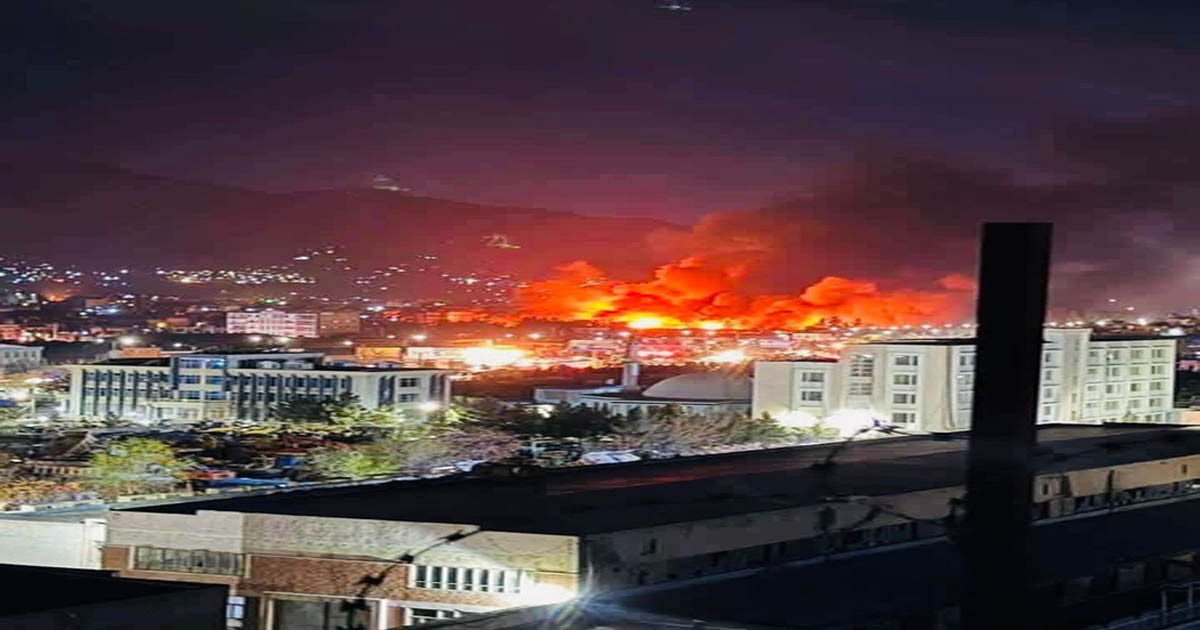
Kabul, March 17: Afghanistan cricket star Rashid Khan has condemned the reported civilian casualties from recent airstrikes by Pakistan in Kabul, calling the targeting of civilian infrastructure a “war crime” and urging international bodies to investigate the incident.
In a post on X, the Afghan cricketer expressed deep sorrow over reports that civilians were killed in the strikes, which local officials say hit a major addiction treatment hospital in the Afghan capital.
“I am deeply saddened by the latest reports of civilian casualties as a result of Pakistani airstrikes in Kabul,” Khan wrote. “Targeting civilian homes, educational facilities or medical infrastructure, either intentional or by mistake, is a war crime.”
He added that the reported attacks during the holy month of Ramadan were particularly disturbing.
“The sheer disregard for human lives, especially during the holy month of Ramadan, is sickening and deeply concerning. It will only fuel division and hatred,” Khan said in the post.
The cricketer also urged international organisations to take action and ensure accountability for the reported attack.
“I call upon the UN and other human rights agencies to thoroughly investigate this latest atrocity and hold the perpetrators to account. I stand with my Afghan people in this difficult time. We shall heal, and we will rise as a nation. We always do. Inshallah,” he wrote.
His remarks come after Taliban officials reported that an airstrike late Monday struck the 2,000-bed Umid addiction treatment hospital in Kabul. Authorities said hundreds of patients and civilians were believed to be inside the facility when the attack occurred.
According to officials of the Taliban-led government, the strike killed more than 400 people and injured at least 250 others, although the figures could not be independently verified.
Deputy spokesman of the Islamic Emirate, Mullah Hamdullah Fitrat, said the bombing caused extensive destruction across the hospital complex, while health officials reported that many sections of the facility had been severely damaged.
Rescue teams continued search and recovery operations through the night as emergency responders worked to treat the wounded and recover victims from the debris.

Kurla: Clash between Hindu community and street vendors, atmosphere deteriorated due to beatings during BMC operation, two suspects in custody, police alert

Pune Lab Lake: Violence against Muslim youth, strict action against attackers, Abu Asim Azmi demands registration of case against culprits

Aditya Dhar requests ‘Please don’t share spoilers’ ahead of Dhurandhar 2 release

Pep Guardiola Sparks Tension With Antonio Rudiger After Manchester City’s Shocking Champions League Defeat Against Real Madrid

Operation Sindoor impact: ISI moves from ideology to cash, eyes pan-India logistics network

Salim Khan hospitalised following complaints of swelling

Married Mumbai Woman Mocked In Andheri Society Over ‘Lift Kissing’ CCTV Video, Files Police Complaint

Mumbai: JBCN International School In Borivali Gets Bomb Threat, Search Reveals Hoax, Students Safe

Former Arsenal Star Mesut Ozil’s Convoy Gets Involved In Road Accident During Bangladesh Visit

Gold and silver surge on safe haven demand, margin cut
-

 Crime4 years ago
Class 10 student jumps to death in Jaipur
-

 Maharashtra1 year ago
Mumbai Local Train Update: Central Railway’s New Timetable Comes Into Effect; Check Full List Of Revised Timings & Stations
-

 Maharashtra1 year ago
Mumbai To Go Toll-Free Tonight! Maharashtra Govt Announces Complete Toll Waiver For Light Motor Vehicles At All 5 Entry Points Of City
-

 Maharashtra1 year ago
False photo of Imtiaz Jaleel’s rally, exposing the fooling conspiracy
-

 National News1 year ago
Ministry of Railways rolls out Special Drive 4.0 with focus on digitisation, cleanliness, inclusiveness and grievance redressal
-

 Maharashtra1 year ago
Maharashtra Elections 2024: Mumbai Metro & BEST Services Extended Till Midnight On Voting Day
-

 National News1 year ago
J&K: 4 Jawans Killed, 28 Injured After Bus Carrying BSF Personnel For Poll Duty Falls Into Gorge In Budgam; Terrifying Visuals Surface
-

 Crime1 year ago
Baba Siddique Murder: Mumbai Police Unable To Get Lawrence Bishnoi Custody Due To Home Ministry Order, Says Report