
National News
Chhattisgarh: CRPF Jawan Injured In Naxal-Triggered IED Blast In Bijapur

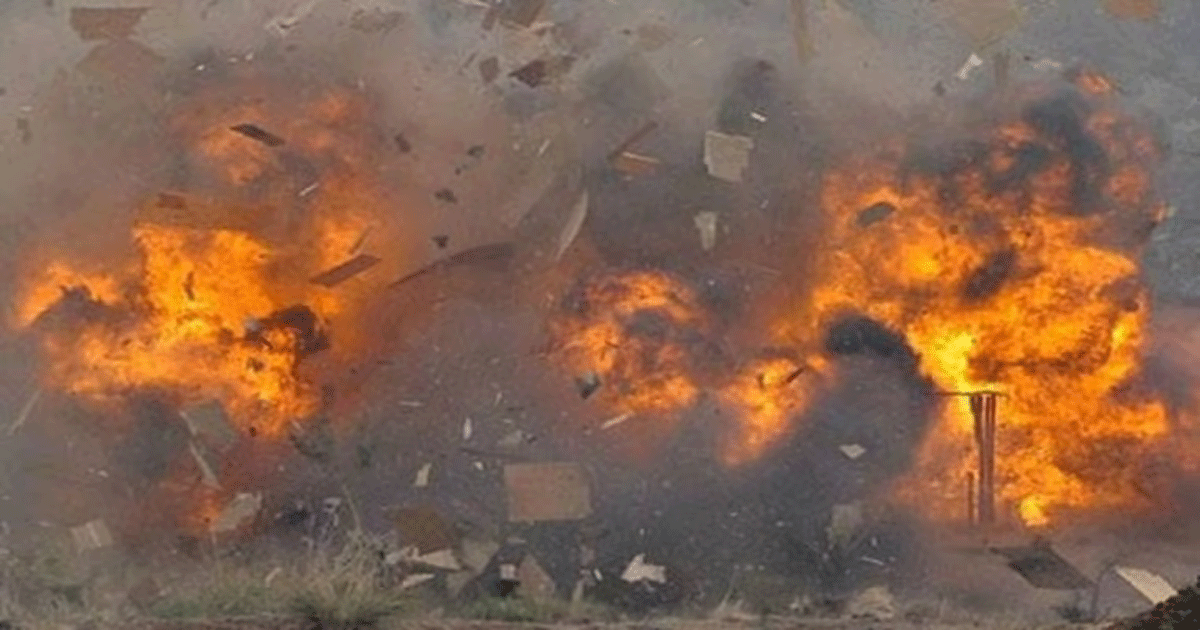
Bijapur: A Central Reserve Police Force (CRPF) jawan has been injured as improvised explosive device (IED) laid down by the Naxalites exploded in Chhattisgarh’s Bijapur district on Saturday, officials said.
About The Incident
This happened after a team of CRPF from 196 Battalion Mahadev Ghat had left for the forest to carry out area domination in the morning. During the operations, one jawan was injured due to an IED blast.
The injured jawan has been admitted to the District Hospital Bijapur for treatment.
Officials Recover Bodies of 3 Naxals & Several Weapons From An Encounter
Earlier, the bodies of three Naxals and several weapons have been recovered from the encounter that took place in the Sukma-Bijapur border in Chhattisgarh, an official said.
“Bodies of three Naxals and weapons recovered. The search operation is still underway,” said SP Sukma Kiran Chavan.
About The Encounter
The encounter between security forces and Naxals broke out in the forest at the Sukma-Bijapur border in Chhattisgarh on Thursday.
Superintendent of Police of Sukma, Kiran Chavan, said the District Reserve Guard (DRG), Special Task Force (STF) and the Central Reserve Police Force’s jungle warfare unit (CoBRA) teams are involved in the encounter.
Chhattisgarh Deputy CM Vijay Sharma reacted to the encounter and informed that the search operation is still underway.”Security forces have had success in their operations in Sukma. Today, the bodies of 3 Naxals have been recovered from there. The search operation is continuing there,” he said.
This comes after eight jawans were killed in an IED blast by Maoists earlier. The security personnel carried out demining exercises to prevent such incidents from happening in the incident.
About The Demining Exercises
The demining exercise focuses on removing the unexploded land mines that may pose a threat to civilians as well.
The forces have deployed personnel in heavy numbers at the location of the incident. The blast was so powerful that it created a huge hole and cracks in the concrete road. Similarly, the remains of the vehicle were scattered for several meters.
Eight jawans from the District Reserve Guards (DRG) and one civilian driver were killed in an IED blast triggered by the Naxalites in Chhattisgarh’s Bijapur district on Monday, an official said.
According to Bastar Inspector General (IG) Sundarraj P, the jawans were returning from a joint operation of Dantewada, Narayanpur and Bijapur police when the blast occurred.
Union Home Minister Expresses Deep Sorrow Over The Loss Of Lives Of DRG Personnel In Bijapur IED Blast
Meanwhile, expressing deep sorrow over the loss of lives of District Reserve Guard (DRG) personnel in Chhattisgarh’s Bijapur IED blast earlier on Monday, Union Home Minister Amit Shah reaffirmed the Central government’s commitment to assuring that the sacrifices of these soldiers will not go in vain and Naxalism will be eradicated from Indian soil by March 2026.
Shah took to X to extend his condolences to the bereaved families after the news circulated about the tragic incident in which eight personnel of the DRG and their civilian driver lost their lives when Naxalites detonated an improvised explosive device (IED) targeting their vehicle on the Kutru-Bedre road in Bijapur district.
“I am deeply saddened by the news of losing DRG personnel in the IED blast in Bijapur (Chhattisgarh). I extend my heartfelt condolences to the families of the brave soldiers. It is impossible to express this grief in words, but I assure you that the sacrifices of our soldiers will not go in vain. We will eradicate Naxalism from Indian soil by March 2026,” Shah said.
The attack occurred as the DRG team was returning from an anti-Naxal operation. The powerful explosion destroyed the vehicle, leading to the immediate deaths of all nine occupants. This marks one of the deadliest attacks on security forces in the region in recent times.


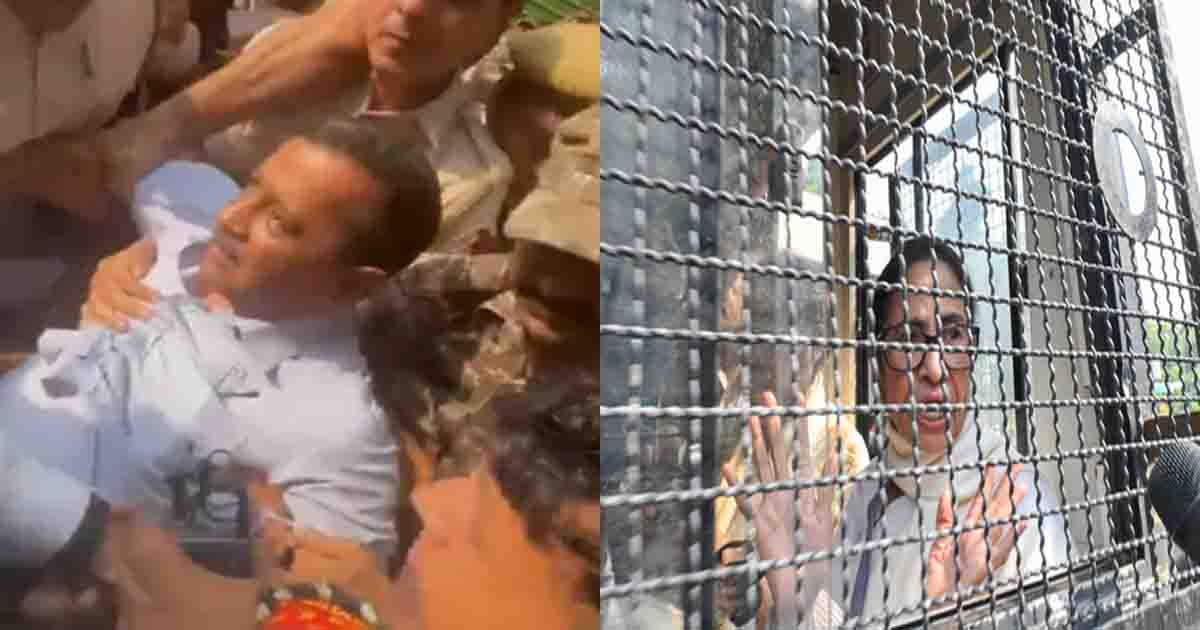
New Delhi, Oct 10: Several opposition leaders, including former West Bengal Chief Minister Mamata Banerjee, AAP national convener and former Delhi CM Arvind Kejriwal and former Kerala CM Pinarayi Vijayan, were on Saturday detained by the police while attempting to join the protest, called by the Cockroach Janta Party (CJP) in the national capital, against Chief Election Commissioner (CEC) Gyanesh Kumar.
Mamata Banerjee was detained along with several MPs of the All India Trinamool Congress (Mamata faction) from South Avenue in central Delhi, where she sat in protest at a bus stand after being stopped by police.
Banerjee and five of her party MPs, including Derek O’Brien and Dola Sen, were detained and taken away in a police bus. The former West Bengal CM sat with a band-aid on her mouth during the protest.
“The government is misbehaving with us,” Banerjee said in a video statement from inside the police bus, adding, “We, the INDIA bloc, will continue to fight to strengthen people’s voice.”
Arvind Kejriwal, whose residence had been surrounded by Delhi Police since morning, was also detained as soon as he tried to step out to join the protest.
Speaking to reporters before being detained, Kejriwal said, “…There are police personnel and paramilitary forces everywhere. People are not being allowed to leave their homes…The police are picking people up as they walk on the streets. No one is being allowed to go anywhere. They have created an atmosphere of authoritarianism across the country. Why?… They want to suppress this issue of ‘vote chori’ and continue doing it. But the people of this country will not allow this to happen.”
“The youth of the country have risen. Today, CJP leaders Abhijeet Dipke, Ashutosh Ranka and Saurabh Das, along with Dhruv Rathee, Ratna Singh and others, have been detained. The youth of the country are very angry. I request people to come to Delhi however they can to stop this vote chori; otherwise this country and this democracy won’t be saved.”
Former Kerala CM Pinarayi Vijayan and CPI-M MP John Brittas were among those detained by police and taken to the detention centre at Chhatrasal Stadium.
CPI-M General Secretary M.A. Baby was also detained.
Earlier in the day, CJP leaders Abhijeet Dipke, Saurav Das and Ashutosh Ranka were detained by the police from Indira Gandhi International Airport in Delhi while on their way to Jantar Mantar to stage a protest, demanding CEC Gyanesh Kumar’s resignation over alleged irregularities in the conduct of the Special Intensive Revision (SIR) of electoral rolls.
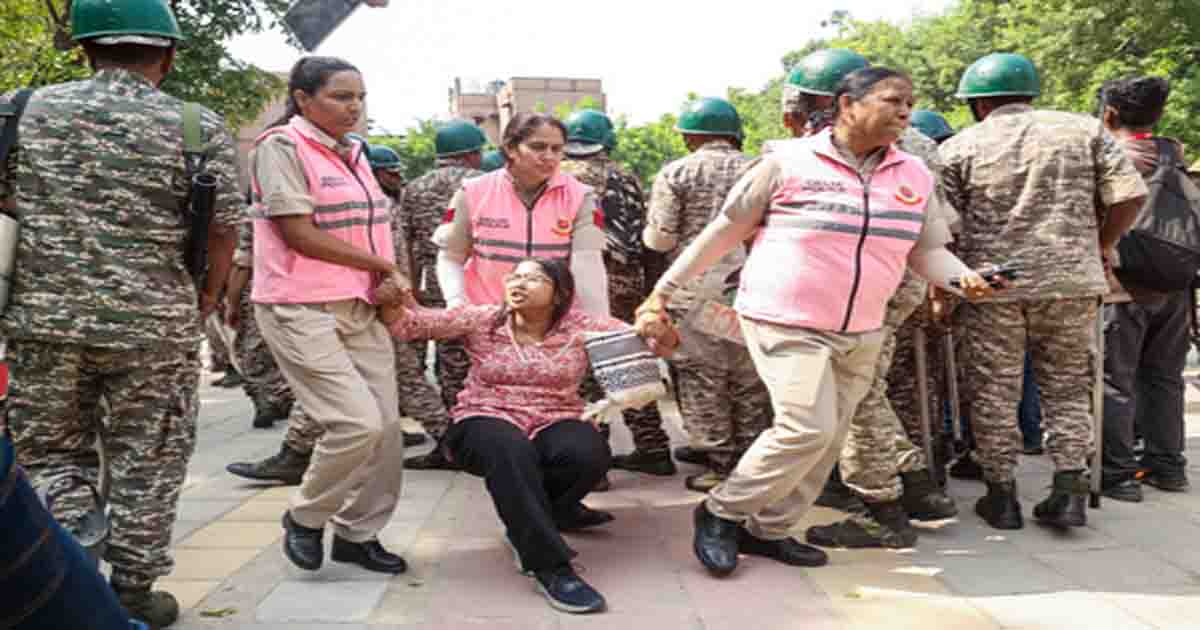
New Delhi, Oct 10: Around 1,000 protesters were detained across the national Capital on Saturday while on their way to take part in the Cockroach Janta Party (CJP)-led agitation against Chief Election Commissioner (CEC) Gyanesh Kumar, police said.
Security has been beefed up across the National Capital Region (NCR), including border areas, in view of the protests.
Indian Railways cancelled and rescheduled several trains that were set to arrive in New Delhi, while the DMRC has shut the entry and exit of 45 Metro stations amid measures taken by the Delhi Police to stop agitators from reaching the protest venue at Jantar Mantar.
The police had said on Friday that permission for the CJP’s protest has been denied due to the organisers’ failure to comply with legal directions and their own undertakings during an earlier protest
Earlier on Saturday, CJP leaders Abhijeet Dipke, Saurav Das and Ashutosh Ranka were detained by the police from Indira Gandhi International Airport in Delhi while on their way to Jantar Mantar to stage a protest, demanding CEC Gyanesh Kumar’s resignation over alleged irregularities in the conduct of the Special Intensive Revision (SIR) of electoral rolls.
Delhi Police personnel entered the aircraft carrying Dipke after it landed at IGI Airport.
Dipke posted the video showing the Delhi Police team entering the flight as he, along with other CJP members, Saurav Das and Ashutosh Ranka, were detained from the flight itself.
In a video posted on his social media handle, Dipke was heard telling the police, “…I have come here to be arrested; arrest me.”
The CJP announced the detentions in a post on its social media handle, stating: “Abhijeet Dipke DETAINED! Saurav Das DETAINED! Ashutosh Ranka DETAINED!”
Social media influencer Dhruv Rathee was also detained at his residence in Gurugram.
According to a post on the X handle of the CJP, around 50 police personnel in plain clothes reached Rathee’s residence in Gurugram at around 8 a.m. and took him into preventive custody.
Meanwhile, several Opposition leaders including AAP chief Arvind Kejriwal, party leader Gopal Rai and former West Bengal Chief Minister Mamata Banerjee were also detained while staging protests against the CEC over alleged irregularities in the conduct of the SIR of electoral rolls.
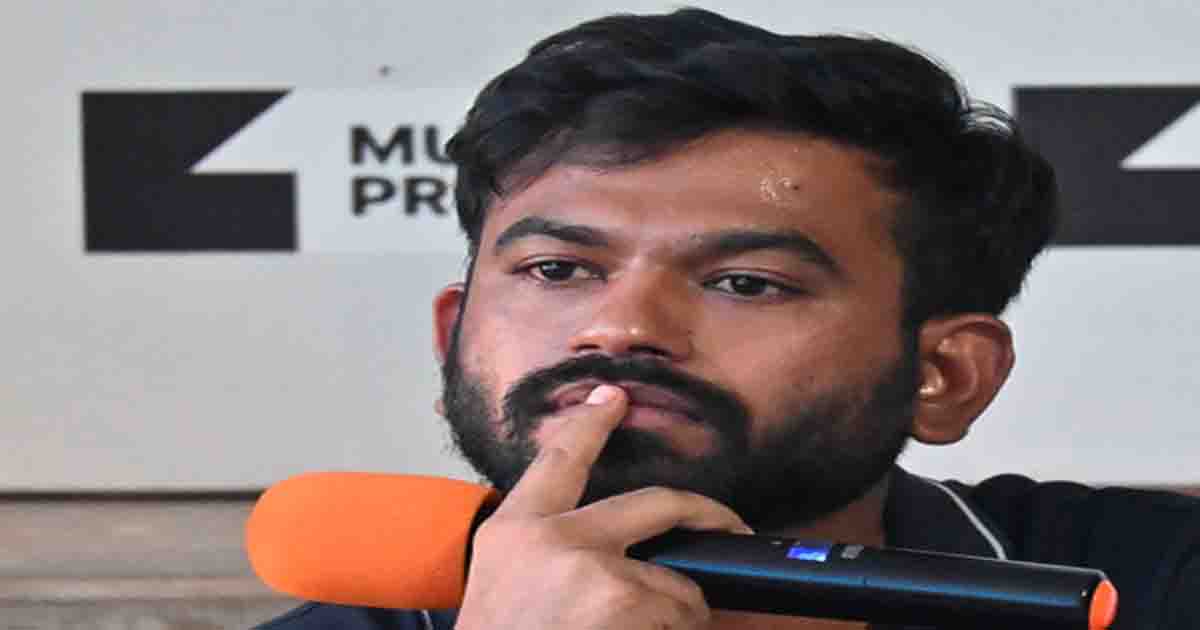
Hingoli, Oct 10: The paternal grandmother of Cockroach Janata Party founder Abhijeet Dipke passed away on Saturday in Santuk Pimpri village of Maharashtra Hingoli district.
She had been unwell for the past few days due to a prolonged illness and age-related ailments.
At the time of her death, Abhijeet was in Delhi. He had left Mumbai on Saturday morning to participate in a protest demanding the resignation of Chief Election Commissioner Gyanesh Kumar. However, he was detained by the police at Delhi airport.
Meanwhile, Dipke’s parents, Anita and Bhagwan Dipke, are currently in Chhatrapati Sambhajinagar, where police personnel have been deployed outside their residence. Following the news of the death, they are expected to leave for Hingoli immediately to attend the last rites.
After learning about his grandmother’s demise, attention has turned to whether Delhi Police will allow Abhijeet Dipke to travel to Chhatrapati Sambhajinagar or Hingoli to be with his family during this difficult time.
Further details regarding his release or travel arrangements were not immediately available.
Earlier in the day, Abhijeet Dipke and other CJP members, Saurav Das and Ashutosh Ranka, were detained at Delhi’s Indira Gandhi International Airport (IGIA) as they arrived ahead of the announced protest at Jantar Mantar, police said on Saturday.
Delhi Police personnel entered the aircraft carrying Dipke after it landed at IGI Airport.
Dipke posted the video showing the Delhi Police team entering the flight as he, along with other CJP members, Saurav Das and Ashutosh Ranka, were detained from the flight itself.
In a video posted on his social media handle, Dipke was heard telling the police, “…I have come here to be arrested; arrest me.”
The CJP announced the detentions in a post on its social media handle, stating: “Abhijeet Dipke DETAINED! Saurav Das DETAINED! Ashutosh Ranka DETAINED!”
They were detained ahead of the CJP’s proposed protest at Jantar Mantar later in the day against Chief Election Commissioner (CEC) Gyanesh Kumar over alleged irregularities in the Special Intensive Revision (SIR) of electoral rolls in the country.

Mamata, Kejriwal among Oppn leaders detained amid protests against CEC

CJP stir: Around 1,000 detained across Delhi

CJP founder Abhijeet Dipke grandmother passes away in Maharashtra

Shehnaaz Gill recalls Mahhi Vij giving her clothes during tough times, calls her ‘pure and clean-hearted’

Sanjay Raut predicts ‘major political upheaval’, says Centre fears protesters

Gift to President Putin part of PM Modi bid to globally display India’s heritage

PM Modi’s warm camaraderie with Putin, Xi on full display at BRICS Summit

INDIA bloc begins protest march against ECI

Complaint against Netflix & Mukesh Chhabra for inappropriate language on ‘India’s Got Latent 2’

Maha Congress stages agitation against Gyanesh Kumar
-

 Crime4 years ago
Class 10 student jumps to death in Jaipur
-

 Maharashtra2 years ago
Mumbai Local Train Update: Central Railway’s New Timetable Comes Into Effect; Check Full List Of Revised Timings & Stations
-

 Maharashtra2 years ago
Mumbai To Go Toll-Free Tonight! Maharashtra Govt Announces Complete Toll Waiver For Light Motor Vehicles At All 5 Entry Points Of City
-

 Maharashtra2 years ago
False photo of Imtiaz Jaleel’s rally, exposing the fooling conspiracy
-

 National News2 years ago
Ministry of Railways rolls out Special Drive 4.0 with focus on digitisation, cleanliness, inclusiveness and grievance redressal
-

 Maharashtra2 years ago
Maharashtra Elections 2024: Mumbai Metro & BEST Services Extended Till Midnight On Voting Day
-

 National News2 years ago
J&K: 4 Jawans Killed, 28 Injured After Bus Carrying BSF Personnel For Poll Duty Falls Into Gorge In Budgam; Terrifying Visuals Surface
-

 Crime2 years ago
Baba Siddique Murder: Mumbai Police Unable To Get Lawrence Bishnoi Custody Due To Home Ministry Order, Says Report