
National News
Centre to hold meeting with farmers in Chandigarh today

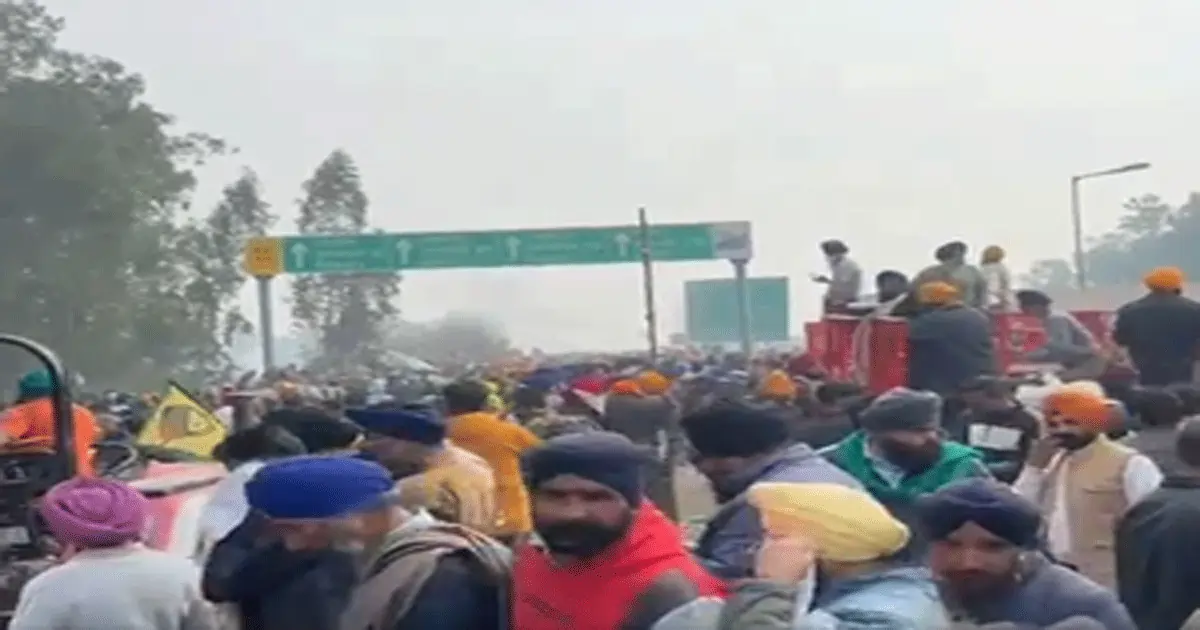
Chandigarh, Feb 14: The Centre will hold a meeting with protesting farmers late Friday afternoon in Chandigarh to discuss their long-pending demands, including a legal guarantee on minimum support price (MSP) for crops.
The farmers have been staging a sit-in protest for a year at Shambhu, the border point between Punjab and Haryana.
Farmer leader Sarwan Singh Pandher told the media at Shambhu, where a Mahapanchayat was held on Thursday to mark one year of the agitation, that they would make efforts to convince the Centre to fulfil the demands of the farmers.
Farm leader Jagjit Singh Dallewal, who has been on an indefinite fast at the Khanauri border since November 26 last year, will participate in the meeting with top functionaries of the Union government. Dallewal, the convener of the Samyukta Kisan Morcha (Non-Political), will be taken by ambulance from the protest site Khanauri to Chandigarh for the talks. He agreed to accept medical aid after the Centre invited farmers for talks.
Friday’s talks were earlier scheduled at 5 p.m., but with the insistence of farmers, they will now start at 4 p.m.
Dallewal-led Bharatiya Kisan Union (Sidhupur) and Pandher-led Kisan Mazdoor Sangarsh Committee (KMSC), under the banner of Sanyukt Kisan Morcha (non-political), have been camping at the Shambhu and Khanauri borders since February 13 last year after security forces foiled their attempt to march to Delhi to press for their demands.
A delegation of senior officials from the Union Agriculture Ministry, led by joint secretary Priya Ranjan, on January 19 met farm leaders and invited representatives of Samyukta Kisan Morcha (Non-Political) and Kisan Mazdoor Morcha for a meeting to discuss their demands on February 14.
Farmer leader Pandher last month announced the postponement of the January 21 foot march, by 101 farmers to Delhi, urging the Central government to hold talks soon over their demands.
“It’s not a condition but a request,” the convener of the Kisan Mazdoor Morcha, has told the media at Shambhu, urging the Centre to hold a meeting in Delhi before February 14, instead of Chandigarh, as initially proposed. But the meeting was not held.
Earlier, security forces had used tear gas shells as protesting farmers thrice attempted to march towards Delhi at the Shambhu border.
Shambhu, the crossing point near Ambala on National Highway-1, became the flashpoint of the farmers’ protest for a year. Earlier, the 13-month-long agitation of farmers, mostly from Punjab, Haryana and western Uttar Pradesh, at Delhi borders ended after Prime Minister Narendra Modi in his televised address to the nation on November 19, 2021, announced the government had decided to repeal the three controversial farm laws passed. Thousands of farmers had been camping at the Delhi border points demanding a repeal of three farm laws, besides demanding a legal guarantee on the MSP for their crops.

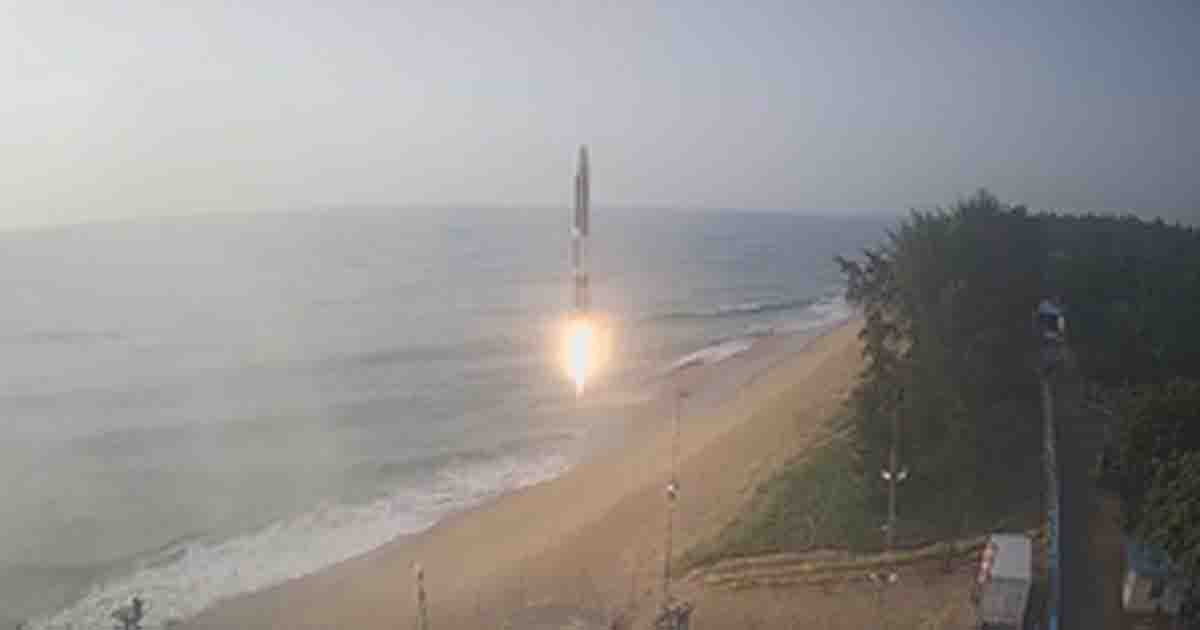
New Delhi, Oct 10: Zoho’s Chief Scientist and Co‑founder Sridhar Vembu on Saturday said that Indian startups are making major advances in low-cost rockets in threat to SpaceX.
“Directly due to Prime Minister Narendra Modi’s government policy, Indian startups are making major advances in low-cost rockets and that poses a threat to SpaceX in the same way the Chinese EVs threaten Tesla,” Vembu posted on X responding to a post by Starlink Founder Elon Musk.
Further, the tech leader also said medicine prices in India are among the lowest globally and pointed to the Unified Payments Interface (UPI) as an example of low‑cost payment infrastructure.
“India has among the lowest drug prices in the world (and is still going lower). People who visit India buy medicines to take home quite regularly now,” the X post said.
“Prime Minister Narendra Modi has worked hard to create a competitive economy where the benefits flow to the average Indian,” Vembu wrote, adding that the Indian government does not tolerate monopolies.
“He has also actively promoted and encouraged a massive surge in startups, and that is the best signal of a highly competitive economy,” the post said.
Vembu supported India’s economic and digital policies, hailing the country’s low data costs and competitive markets.
He said Indians routinely use dual‑SIM phones with large data plans because they are affordable.
“India has among the lowest data prices in the world. It is so good that I don’t even bother to connect to local Wi-Fi when I travel in India and just tether my phone to work on my computer,” he said.
In a separate post on Friday, Vembu said Indians have made major contributions to US technology prowess but warned that many on US visas face the prospect of uprooting lives built through hard work.
“A big part of America no longer wants us,” the Zoho Co-founder said.
National News
Rahul Gandhi has right to meet President, but should not comment on what she said: NDA

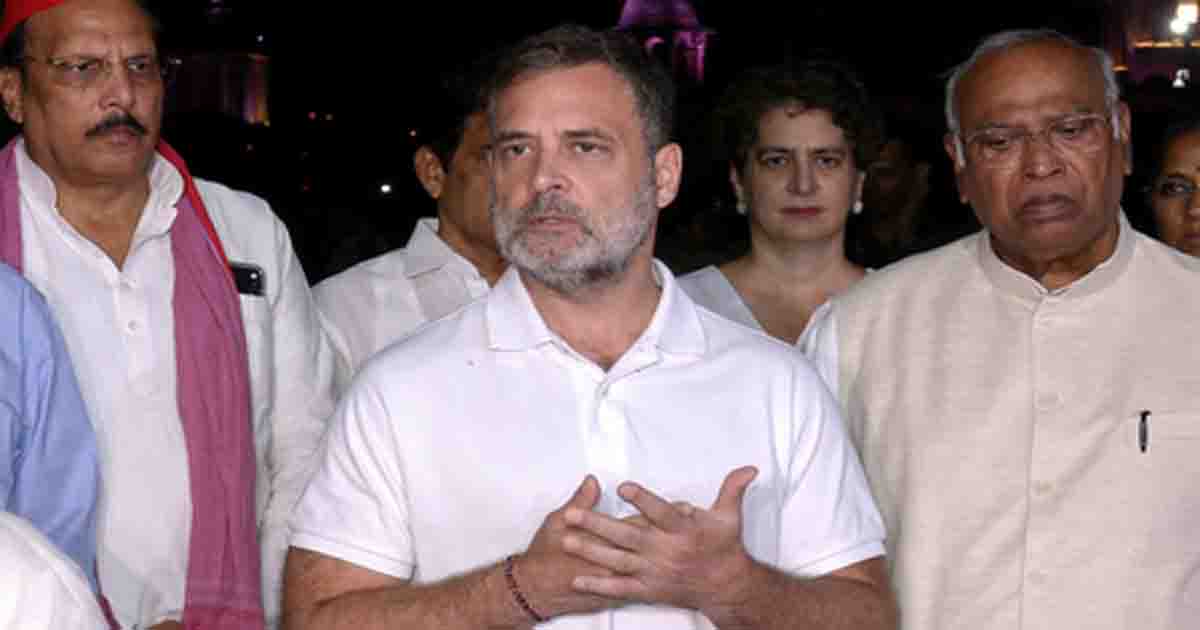
New Delhi, Oct 10: The National Democratic Alliance (NDA) on Saturday questioned the veracity of the claims made by Lok Sabha Leader of Opposition (LoP) Rahul Gandhi following the INDIA Bloc’s meeting with President Droupadi Murmu.
This came as a delegation of INDIA Bloc MPs, including Congress President Mallikarjun Kharge and Rahul Gandhi, met the President at Rashtrapati Bhavan on Friday and submitted a memorandum alleging electoral irregularities by Chief Election Commissioner Gyanesh Kumar and an attempt to undermine Indian democracy.
LoP Gandhi said President Droupadi Murmu had asked the Opposition delegation to provide evidence to substantiate its allegations of ‘vote chori (vote theft)’ following a meeting over the controversy surrounding CEC Gyanesh Kumar.
Reacting to LoP Gandhi’s remarks, BJP MP Rajiv Pratap Rudy questioned the propriety of publicly disclosing details of a conversation with the President, arguing that such statements could raise concerns about the dignity of the constitutional office.
“When you meet a person holding the country’s highest constitutional office and then disclose what was discussed, it raises serious questions about propriety. Neither you nor I can go and ask the President what she said. Rahul Gandhi’s claims may even be untrue. However, as the Leader of the Opposition, he has the right to meet the President, but he does not have the right to comment on what the President said,” Rudy said.
Bihar BJP President Sanjay Saraogi also questioned the Opposition’s allegations, stating that although meeting the President was a constitutional right, the INDIA Bloc should have presented evidence to support its claims regarding the electoral roll revision exercise.
“Meeting the President is everyone’s constitutional right, but did you present any evidence? No evidence was provided regarding the SIR. The SIR process takes around 150 days, during which draft publications are shared with district presidents and a one-month period is given for objections. Across the country, around 20 lakh names have been deleted, and even ordinary citizens can fill Form 7,” Saraogi told media.
Janata Dal (United) National Spokesperson Rajiv Ranjan, speaking to media, said that political parties in a democracy were free to express their views but argued that the Opposition should also reflect on its political standing and its relationship with voters.
“In a democracy, no political party is barred from expressing its views. However, Opposition parties must understand that they reap what they sow. You have consistently ignored the people. Gyanesh Kumar’s tenure may be short-lived, but there are several states where the Congress was once a mainstream party and has been unable to regain that status,” Ranjan said.
The other members of the delegation were Mamata All India Trinamool Congress Chairperson Mamata Banerjee, J&K Chief Minister and National Conference Vice-President Omar Abdullah, NCP-SP MP Supriya Sule, CPI-M General Secretary M.A. Baby, RJD Rajya Sabha member Prof Manoj Kumar Jha, CPI General Secretary D. Raja, Samajwadi Party MP Rajeev Rai, and VCK President and MP Dr Thirumaavalavan Tholkappiyan.
The meeting took place after several days of protests by Opposition leaders against the Election Commission, the Special Intensive Revision (SIR) of electoral rolls and alleged irregularities in the electoral process. The Opposition has also been demanding Gyanesh Kumar’s resignation.
National News
‘Mobocracy got a reply from democracy’, says BJP amid party’s resounding victory in bypolls
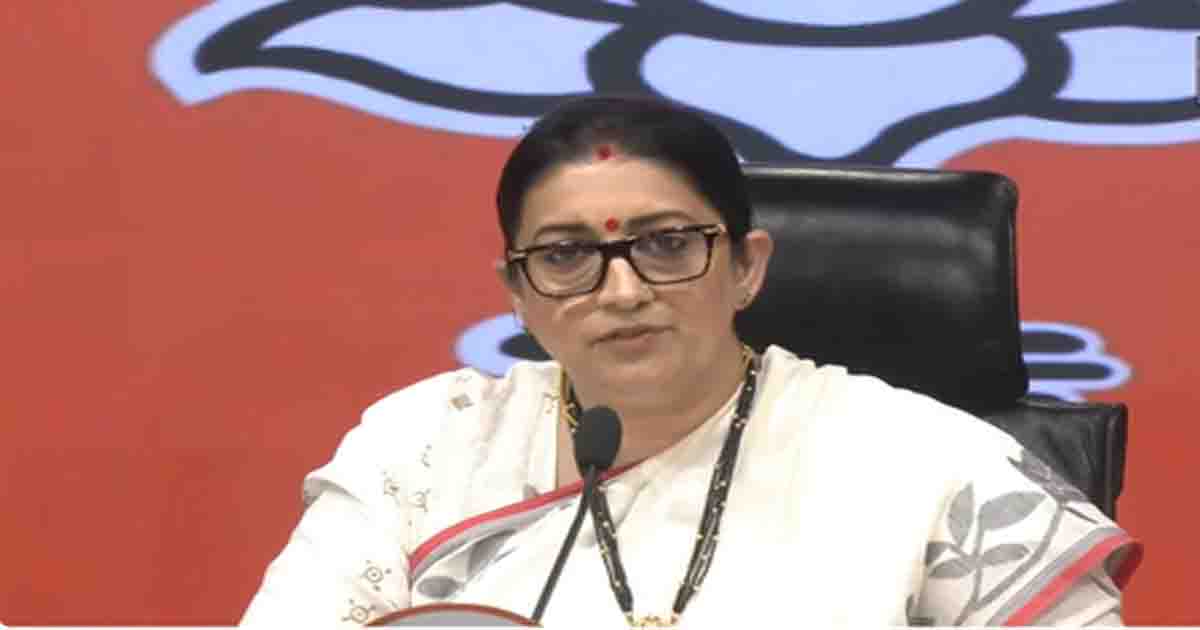
New Delhi, Oct 9: The overwhelming positive results for the Bharatiya Janata Party (BJP) in the recently held bye-elections in Assam, West Bengal and Puducherry shows that ‘mobocracy’ has got a fitting reply from India’s robust democracy, BJP National spokesperson Smriti Irani said on Friday.
Addressing the media, after party’s landslide victory in West Bengal’s Nandigram, Smriti Irani took a jibe at Congress party’s ‘street politics’ and denounced its call to ‘hurt’ the Indian state, on pretext of fighting off the ‘tyrannical’ BJP.
“On January 15, 2025, the former Congress President (Rahul Gandhi) had said with open heart that he was fighting battle not against the BJP but against the Indian State, signalling that the constitutional and democratic institutions will come under attack from them,” the BJP leader said.
She added that never in the history of India, has any elected leader chosen or dared to inflict harm upon the country’s constitutional fabric.
Welcoming the resounding mandate across multiple states, Smriti Irani said, “Today, democracy has given a reply to mobocracy. In Uttar Pradesh, the election of BJP candidates to the Rajya Sabha is a matter of great joy for us. In Puducherry, we heartily welcome the victory of NDA candidate. From West Bengal, we are receiving overwhelming joyous news in Nandigram and Rejinagar,” Smriti Irani said.
“Nandigram was the bastion of Left-wing ideology, violence against the public. Today, the mandate for BJP shows victory for good governance. In Rejinagar, where nearly 71 per cent of voters belong to the minority community, the BJP is moving towards victory,” she added.
The BJP spokesperson also called out Congress MP Rahul Gandhi’s recent appeal for “Smashing the Patriarchy”, highlighting how the “hollow claims” got exposed very soon.
Citing the example of Congress MP, also noted professor of a reputed university in the national capital, Smriti Irani said that the women students had lodged complaint against him accusing him of sexually harassing them in return for marks.
“Former Congress President who brags about smashing the patriarchy never acted against him, leave aside taking cognisance of the offence,” she added.
“The same professor has now been found guilty of harassing female students in the university’s inquiry report. I ask the Congress leadership why it didn’t initiate any political action against the indicted professor,” Smriti Irani asked.
Without taking name, she also targeted Rahul Gandhi’s alleged misbehaviour with woman policeman during the recent Jantar Mantar protest and demanded that he walks the talk on what he preaches.

Indian startups making key advances in low-cost rockets in threat to SpaceX: Sridhar Vembu

Rahul Gandhi has right to meet President, but should not comment on what she said: NDA

Democracy on the edge: Shiv Sena (UBT) attacks Centre over CEC row, crackdown on dissent

‘Mobocracy got a reply from democracy’, says BJP amid party’s resounding victory in bypolls

‘No one can stop the youth’: Chirag Paswan on train cancellations for CJP protest

Gift to President Putin part of PM Modi bid to globally display India’s heritage

PM Modi’s warm camaraderie with Putin, Xi on full display at BRICS Summit

INDIA bloc begins protest march against ECI

Complaint against Netflix & Mukesh Chhabra for inappropriate language on ‘India’s Got Latent 2’

Maha Congress stages agitation against Gyanesh Kumar
-

 Crime4 years ago
Class 10 student jumps to death in Jaipur
-

 Maharashtra2 years ago
Mumbai Local Train Update: Central Railway’s New Timetable Comes Into Effect; Check Full List Of Revised Timings & Stations
-

 Maharashtra2 years ago
Mumbai To Go Toll-Free Tonight! Maharashtra Govt Announces Complete Toll Waiver For Light Motor Vehicles At All 5 Entry Points Of City
-

 Maharashtra2 years ago
False photo of Imtiaz Jaleel’s rally, exposing the fooling conspiracy
-

 National News2 years ago
Ministry of Railways rolls out Special Drive 4.0 with focus on digitisation, cleanliness, inclusiveness and grievance redressal
-

 Maharashtra2 years ago
Maharashtra Elections 2024: Mumbai Metro & BEST Services Extended Till Midnight On Voting Day
-

 National News2 years ago
J&K: 4 Jawans Killed, 28 Injured After Bus Carrying BSF Personnel For Poll Duty Falls Into Gorge In Budgam; Terrifying Visuals Surface
-

 Crime2 years ago
Baba Siddique Murder: Mumbai Police Unable To Get Lawrence Bishnoi Custody Due To Home Ministry Order, Says Report