
Business
CCI fines Amazon Rs 202 cr, suspends approval for deal with Future Coupons

The Competition Commission of India (CCI) has imposed a penalty of Rs 202 crore on Amazon and suspended its approval for the e-tailer’s deal with Future Coupons seeking more information.
In an order on Friday, the CCI said Amazon ought to have notified the combination and Future Retail (FRL)shareholding agreement for the purpose of acquisition of strategic rights over FRL through FCPL shareholders’ agreement (SHA); and commercial agreements between Amazon and Future groups, for the purpose of establishing strategic alignment and partnership between Amazon Group and FRL as well as have a ‘foot-in-the-door’ in the India retail sector.
Amazon failed to notify FRL SHA and the commercial arrangements, as part of the combination between the parties, and supressed the actual purpose and particulars of the combination, as discussed above, in contravention of the obligation contained in sub-section (2) of Section 6 of the Companies Act read with Regulation 5 and sub-regulations (4) and (5) of Regulation 9 of the Combination Regulations, the CCI said.
Given that the combination is between players who are known in the online marketplace and offline retailing, and they have contemplated strategic alignment between their businesses, the Commission considers it necessary to examine the combination afresh based on a notice to be given with true, correct and complete information, as required therein.
Accordingly, in exercise of the powers conferred under sub-section (2) of Section 45 of the Act, the Commission directed Amazon to give notice in Form II within a period of 60 days from the receipt of the order, and, till disposal of such notice, the approval granted vide order dated November 28, 2019, in Combination Registration shall remain in abeyance, the CCI said.
As regards failure to notify combination in terms of the obligation cast under Section 6(2) of the Act, Section 43A of the Act enables the Commission to impose a penalty, which may extend to 1 per cent of the total turnover or the assets, whichever is higher, of such a combination.
Accordingly, for the above mentioned reasons, the Commission imposed a penalty of Rs 200 crore upon Amazon. Another penalty of Rs 2 crore has also been imposed as all the contraventions arise from a deliberate design on the part of Amazon to suppress the actual scope and purpose of the Combination.
Traders body CAIt said the order of the CCI penalising Amazon and suspending the approval for the Future deal is a landmark order and Amazon stands fully exposed for its mal-practices, and bunch of lies at all levels together with continued violation of laws and rules of the land.
The trading community of India under the flag of the Confederation of All India Traders ( CAIT) stands vindicated, it said.
The CAIT has also demanded Union Conmerce Minister Piyush Goyal to order immediate suspension of the Amazon portal in India.
CAIT Secretary General Praveen Khandelwal said that the vicious bid of Amazon to control Indian companies has been foiled by the CCI.


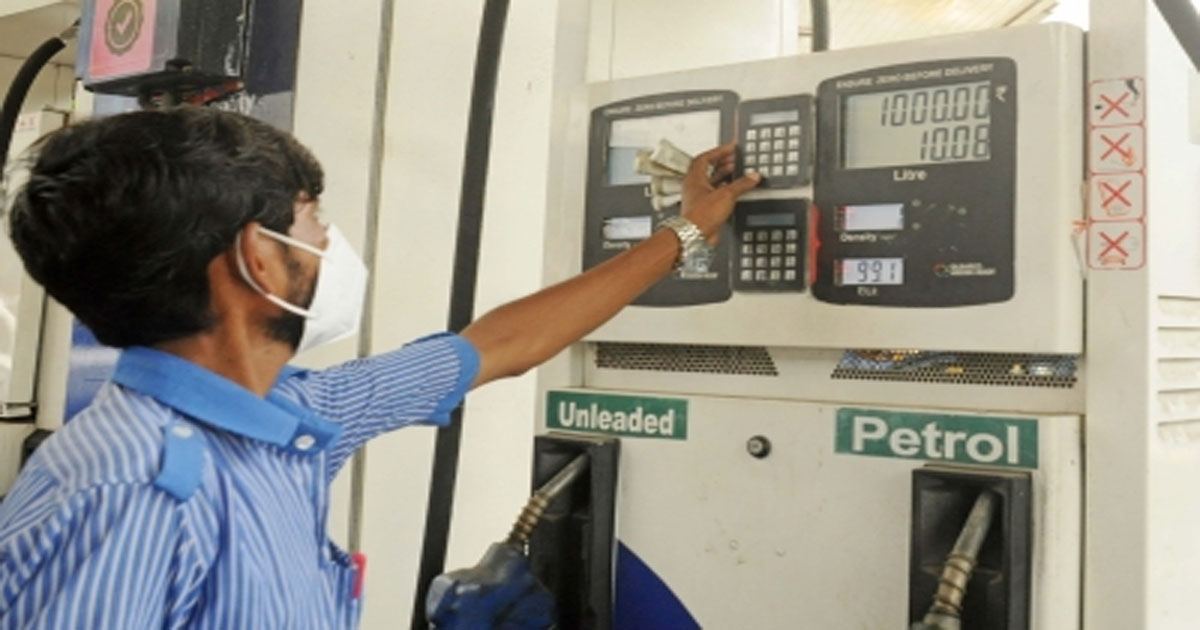
New Delhi, March 27: The government on Friday said retail pump prices of petrol and diesel will not change, and the excise reduction is not being passed on as a price cut at the pump.
Instead, it directly reduces the under-recoveries being absorbed by public sector oil marketing companies (OMCs) — Indian Oil Corporation, Bharat Petroleum Corporation and Hindustan Petroleum Corporation — who have continued to supply fuel to Indian consumers at prices well below their cost of supply, the Petroleum Ministry said.
At current international crude prices, under-recoveries stand at approximately Rs 26 per litre on petrol and Rs 81.90 per litre on diesel.
The combined daily under-recovery being absorbed by OMCs is approximately Rs 2,400 crore.
The excise reduction offsets Rs 10 per litre of these losses, ensuring OMCs can continue to supply fuel without disruption while keeping retail prices unchanged, said the ministry.
The government has reduced excise duty by Rs 10 per litre on both petrol and diesel with immediate effect.
“This decision has been taken in response to the steep and rapid rise in international crude oil prices, which have surged from approximately $70 per barrel to around $122 per barrel over the past month — an increase of nearly 75 per cent in under four weeks, driven by the ongoing conflict in West Asia and associated disruptions to global energy supply chains,” the ministry said.
The contrast with global fuel markets is instructive. Fuel prices have risen by 30 to 50 per cent across South and South-East Asian countries, 30 per cent in North America, and 20 per cent in Europe since the onset of the current crisis. India has held the line. That stability carries a fiscal cost, and the government has chosen to bear it.
Earlier in the day, Minister for Petroleum and Natural Gas, Hardeep Singh Puri, said that Prime Minister Narendra Modi decided to take a hit on government finances to safeguard the Indian citizen.
“The government has taken a substantial impact on its taxation revenues to reduce the high losses being faced by oil marketing companies at this time of sky-high international prices,” he mentioned.
Alongside the excise reduction, the government has simultaneously introduced an export levy on diesel. At a time when international diesel prices have surged sharply, the levy is designed to disincentivise exports and ensure that refinery output is directed first towards meeting domestic demand.
Keeping Indian pumps fully supplied takes precedence over export opportunities, however commercially attractive those may be at current global prices. The government will continue to monitor the evolving global energy situation and take all measures necessary to maintain supply stability and price protection for Indian consumers.
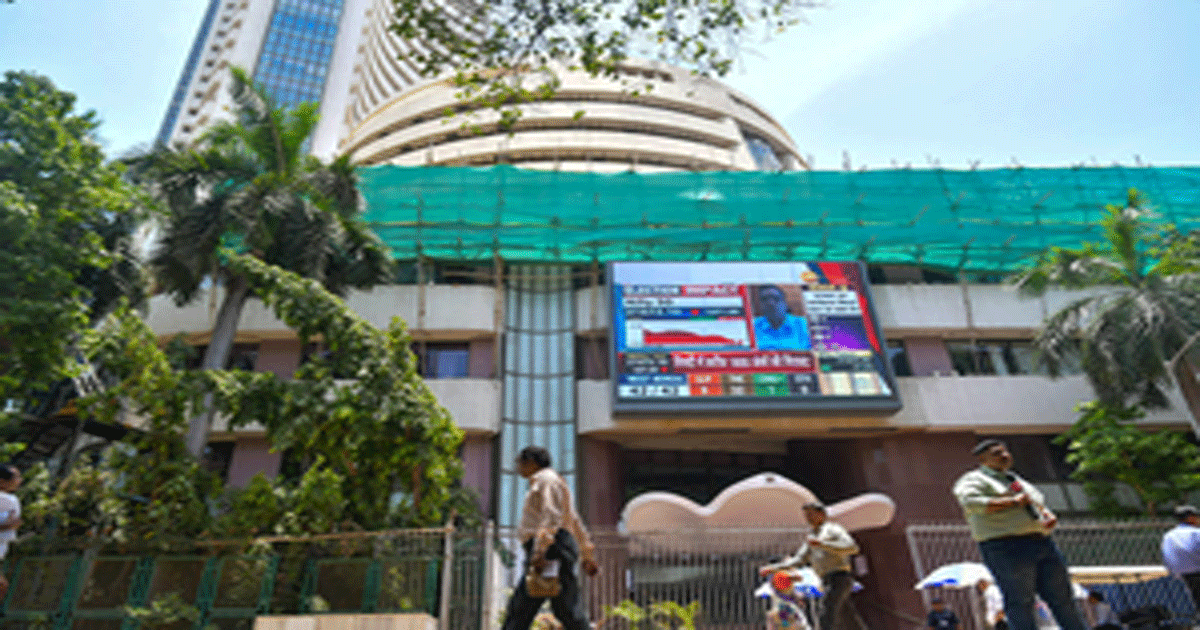
Mumbai, Domestic equity benchmarks opened sharply lower on Friday, tracking weak global cues and elevated Brent crude prices amid fading hopes of a resolution to the Iran conflict.
Nifty opened at 23,173.55, down 132.90 points or 0.57 per cent, while the Sensex fell around 400 points to 74,883.79 in early trade.
Broader markets also remained under pressure, with midcap and smallcap indices traded lower.
Sectorally, most indices traded in the red, led by realty, metal, PSU banks and auto stocks, which fell up to 1 per cent. Financials and consumer durables also witnessed selling pressure.
However, IT and oil and gas stocks bucked the trend and posted modest gains.
Among heavyweights, stocks such as HDFC Bank and Bajaj Finance were among the top laggards.
Market sentiment remained cautious amid ongoing geopolitical tensions. US President Donald Trump said the pause on attacks on Iran’s energy infrastructure would be extended, though uncertainty persists after Iran termed a US proposal “one-sided”.
Global markets also reflected a risk-off mood. US indices ended sharply lower, with the S&P 500 down 1.74 per cent and Nasdaq falling 2.38 per cent. Asian markets followed suit, with Japan’s Nikkei declining over 1 per cent and South Korea’s Kospi dropping around 3 per cent.
Crude oil prices remained volatile, although they eased slightly, with Brent crude falling 2.29 per cent to $105.53 per barrel, while WTI crude declined 2.54 per cent to $92.08.
According to analysts, markets are likely to remain volatile amid global uncertainties. Immediate support for Nifty is seen in the 23,050–23,000 zone, while resistance is placed around 23,450–23,500.
Foreign institutional investors (FIIs) continued to remain net sellers, while domestic institutional investors (DIIs) provided support to the market.
Notably, Indian markets resumed trading on Friday after a holiday on Thursday on account of Ram Navami.
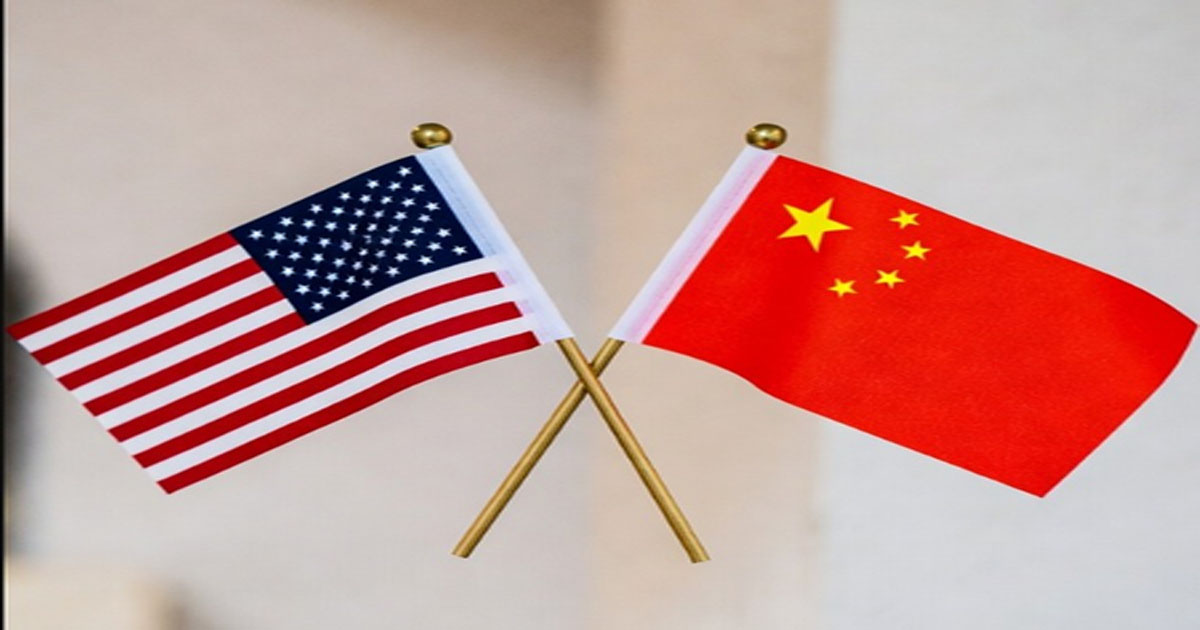
Washington, March 25: Top American lawmakers and experts have warned that the country’s heavy reliance on foreign critical minerals, especially those from China, poses a direct threat to national security, and called for urgent steps to build resilient domestic supply chains.
At a House subcommittee hearing on Wednesday, Congressman Paul Gosar said the “very security of our nation relies heavily on a steady input” of minerals essential for defence systems, electronics and advanced technologies. He pointed to copper, rare earths and lithium as key inputs for fighter jets, missiles and batteries.
Gosar warned that the US remains heavily reliant on imports. “We import half of our supply of 20 of the 60 minerals… and we are entirely reliant on the importation of 13,” he said, adding that China dominates global processing and refining capacity.
Lawmakers from both parties agreed that the supply chain vulnerability has strategic implications. Representative Jared Huffman said the issue was not just about resources but governance, alleging that billions in federal investments lacked transparency and oversight.
Expert witnesses told the panel that China has effectively “weaponised” mineral supply chains. Gracelin Baskaran said the key question was no longer whether China controls critical minerals, but how quickly the US can build alternative supply chains.
“The question is what the United States does about it,” she said, calling for coordinated industrial policy and stronger alliances to secure supply.
Geologist Simon Jowitt said the US has “huge unrealised mineral potential” but remains underexplored due to limited geoscientific data and slow permitting. He stressed that exploration is the foundation of any supply chain and can deliver significant economic returns.
Jowitt also underscored the need for a full domestic ecosystem. “There’s no point in just having mineral deposits without having an entirety of a supply chain,” he said, arguing that processing and refining must accompany mining to ensure security.
National security expert Abigail Hunter highlighted structural challenges, noting that supply chains take years to build while disruptions can occur “overnight”. She said China’s control over processing creates a “choke point” that allows it to influence global markets rapidly.
“Capacity must be built in advance,” Hunter said, warning that relying on imports during crises could leave US defence systems vulnerable.
At the same time, watchdog groups raised concerns about government investment strategies. Faith Williams said federal equity stakes in mining firms could create conflicts of interest and reduce transparency.
“Corruption or the appearance thereof is bad for business,” she said, cautioning that unclear rules could distort markets and increase costs for taxpayers.
Despite political divisions, there was broad agreement that critical minerals underpin both economic growth and military capability. Lawmakers cited their role in everything from semiconductors and smartphones to advanced weapons systems.
The hearing also highlighted the economic stakes. Mining contributes billions to the US GDP and supports nearly two million jobs, with wages significantly above the national average.
Experts said solutions would require a combination of domestic production, allied cooperation and demand-side policies. Baskaran urged creating a “market of 2.6 billion consumers” among US allies to counterbalance China’s dominance.
The issue has gained urgency amid rising geopolitical tensions and growing demand for minerals driven by clean energy, defence modernisation and digital infrastructure, placing supply chain resilience at the centre of US strategic planning.

Afzal Shaikh arrested for abusing a doctor at Kurla Bhabha Hospital

Mumbai: 55-Year-Old Priest Killed On Spot After Accident With BEST Bus On SCLR

Retail petrol and diesel prices won’t change, excise cut to offset oil firms’ losses: Govt

Mumbai Local Train Update: Technical Glitch At Borivali Disrupts WR Services; CR Commuters Report Delay Due To Cancellations

Human rights group calls Pakistani airstrikes on Kabul rehab centre ‘unlawful’, flags possible war crime

Married Mumbai Woman Mocked In Andheri Society Over ‘Lift Kissing’ CCTV Video, Files Police Complaint

Mumbai: JBCN International School In Borivali Gets Bomb Threat, Search Reveals Hoax, Students Safe

Mahayoti’s big gift to the people of Mumbai… Now there is no tax for houses up to 500 square feet, the Municipal Corporation has increased this limit to 700 square feet.

LPG Crisis In Maharashtra: Cyber Crime On Rise Amid Shortage, 2 Women Lose ₹4 Lakh In ‘Gas Update’ Online Scam In Kalyan-Dombivli

Rashmika Mandanna-Vijay Deverakonda Wedding: Virosh Turn Modern Day Prince & Princess For Their Dreamy Sangeet Ceremony
-

 Crime4 years ago
Class 10 student jumps to death in Jaipur
-

 Maharashtra1 year ago
Mumbai Local Train Update: Central Railway’s New Timetable Comes Into Effect; Check Full List Of Revised Timings & Stations
-

 Maharashtra1 year ago
Mumbai To Go Toll-Free Tonight! Maharashtra Govt Announces Complete Toll Waiver For Light Motor Vehicles At All 5 Entry Points Of City
-

 Maharashtra2 years ago
False photo of Imtiaz Jaleel’s rally, exposing the fooling conspiracy
-

 National News1 year ago
Ministry of Railways rolls out Special Drive 4.0 with focus on digitisation, cleanliness, inclusiveness and grievance redressal
-

 Maharashtra1 year ago
Maharashtra Elections 2024: Mumbai Metro & BEST Services Extended Till Midnight On Voting Day
-

 National News2 years ago
J&K: 4 Jawans Killed, 28 Injured After Bus Carrying BSF Personnel For Poll Duty Falls Into Gorge In Budgam; Terrifying Visuals Surface
-

 Crime1 year ago
Baba Siddique Murder: Mumbai Police Unable To Get Lawrence Bishnoi Custody Due To Home Ministry Order, Says Report