
Crime
CBI to submit RG Kar case diary in Calcutta HC today


Kolkata, March 28: The Central Bureau of Investigation (CBI), on Friday, will submit the case diary in the RG Kar rape and murder case at the Calcutta High Court’s single-judge bench of Justice Tirthankar Ghosh.
The court is conducting a fresh hearing in the matter following a clearance from the Supreme Court earlier this month.
This will be the second day of the fresh hearing at Justice Ghosh’s bench and all eyes and ears will be on the proceedings to see whether the CBI counsel gives some clarification on question asked by the court during the previous hearing — whether it was a case of “rape” or “gang-rape.”
On the first day of the fresh hearing on March 24, Justice Ghosh had directed the central agency to clarify its observation on this “rape versus gang-rape” theory.
At the same time, besides seeking the case diary in the matter, Justice Ghosh directed the CBI to give some clarification on whether the second round of investigation was about just “evidence tampering and altering”, or whether there were more accused in the main crime of rape and murder other than the already convicted civic volunteer, Sanjay Roy.
Recently, a special court in Kolkata convicted Sanjay Roy, so far as the sole convict in the crime of rape and murder, and sentenced him to life imprisonment. However, the CBI has already approached the Calcutta High Court, challenging the special court order and demanding life imprisonment for Roy.
On the first day of the fresh hearing at Justice Ghosh’s bench on March 24, the West Bengal government counsel and four-time Trinamool Congress Lok Sabha member Kalyan Banerjee took a “tactically balanced stand” in the matter.
While making a submission that the state government was not opposed to any fresh investigation, Banerjee also raised a question on the legal tenability of such a fresh probe after the special court had already pronounced the sentence for Sanjay Roy.
To recall, with the Supreme Court, earlier this month, permitting a parallel hearing in the case at Calcutta High Court, the counsels of the victim’s parents approached Justice Ghosh’s bench with a fresh petition.
The matter was admitted by Justice Ghosh, and accordingly, March 24 was fixed as the first day of the fresh hearing.
Earlier, when the victim’s parents approached Justice Ghosh’s bench, the latter was not agreeable to hearing the matter since it was already being heard at the apex court. However, after the apex court’s approval parallel hearings can happen both at the apex court and the high court, besides the one already continuing at a special court in Kolkata.
The body of the junior woman doctor was recovered from a seminar hall within the premises of R.G. Kar Medical College and Hospital on the morning of August 9 last year.
The initial probe was being conducted by a special investigation team of Kolkata Police, whose members also arrested the sole convict in the case and civic volunteer Sanjay Roy. However, later, the probe was handed over to the CBI following an order of the Calcutta High Court.

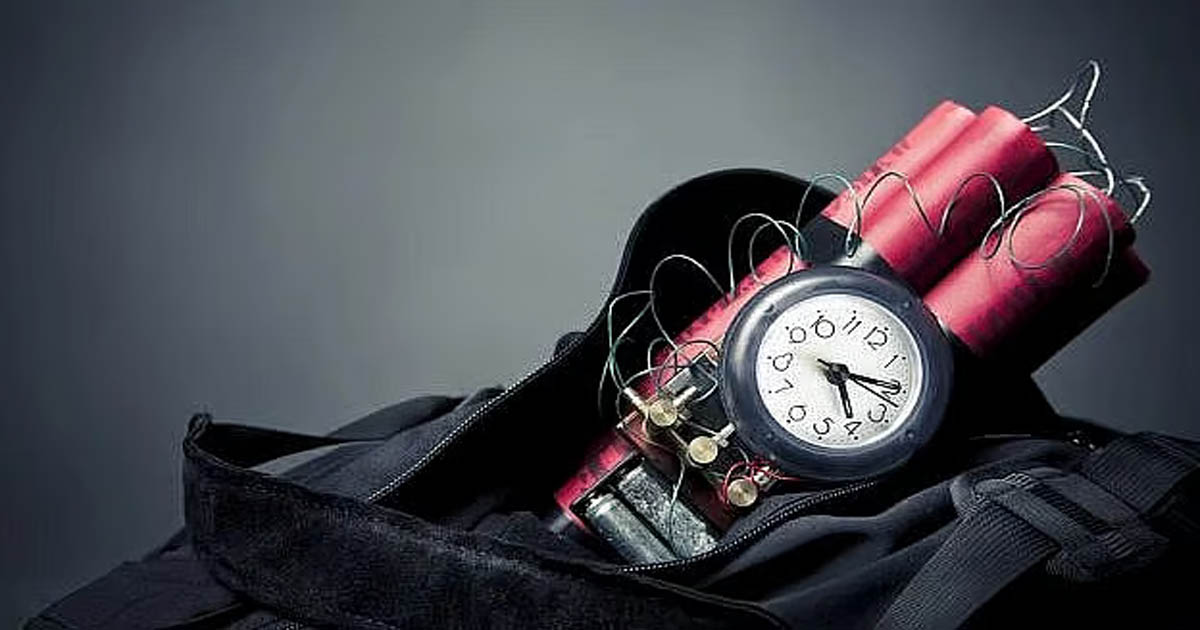
Mumbai: St Xavier’s College in Mahim, Mumbai, received a bomb threat on Tuesday, said the official.
According to the Mumbai police, St Xavier’s College in Mahim, Mumbai, received a bomb threat. Nothing suspicious was found by the police, and they believe this is primarily a hoax threat.
The police are taking appropriate action and investigating.
More details awaited.
This comes after a series of bomb threats earlier this week caused panic across the city.
On Wednesday, threat emails were received at multiple locations, including the Bombay Stock Exchange (BSE), Vidhan Bhawan, and the High Court.
Police, including the Bomb Disposal Squad (BDS) team, are present on the scene, officials said on Wednesday.
According to the Mumbai police, threat mail has been received at BSE, Vidhan Bhawan and the High Court this morning.
“Adequate security measures have been taken and are in place. Necessary legal action is being taken at the respective police stations,” Mumbai Police said.
On March 8, a hospital in Mumbai received a bomb threat via email, claiming that an “LED blast” would be carried out on the premises.
The email sparked significant panic among patients and staff.
In response, the Mumbai Police’s Bomb Detection and Disposal Squad (BDDS) conducted a thorough inspection of the hospital.
Crime
Mumbai Shocker: Husband Pushes Wife To Death In Front Of Running Local Train At Mulund Station; Arrested

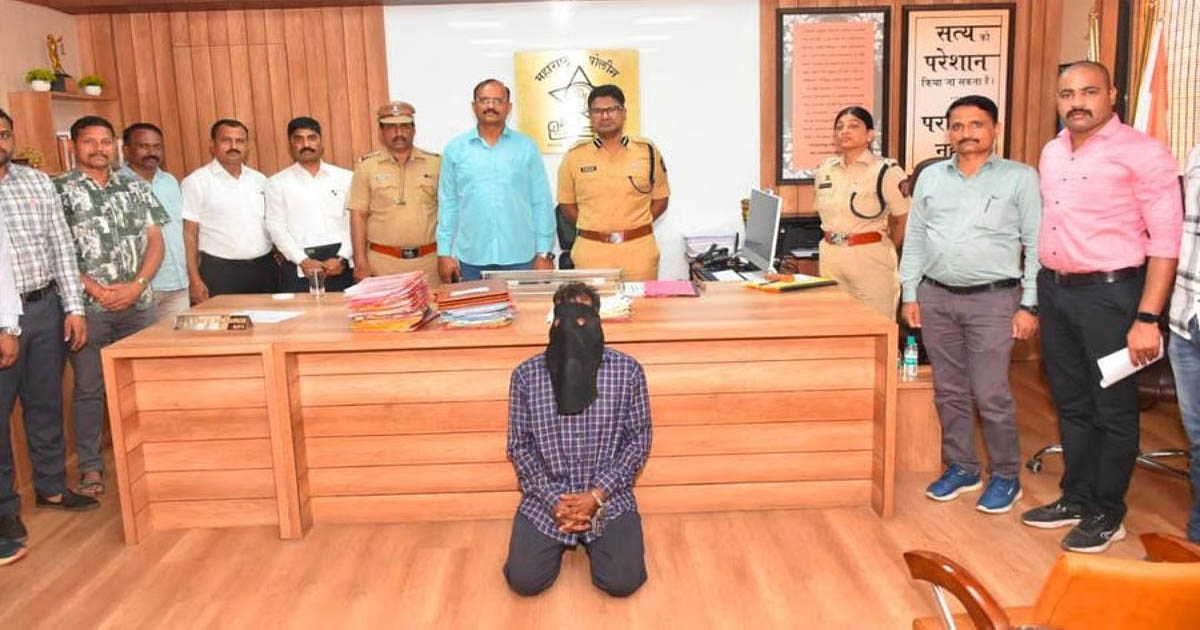
Mumbai: A 42-year-old man, who was captured on CCTV, while pushing his wife before a running local train owing to marital discord, has been arrested in Surat. The accused, Rajukumar Gupta, an electrician, went absconding with his younger son after pushing Pushpa, 36, to her death on the morning of March 14. Hours before the incident, the victim had even lodged a police complaint.
According to victim’s brother Kamlesh Kumar Gupta, 30, who is a soldier, the couple had frequent quarrels and hence he had come to take his sister and his elder nephew, 15, back to their UP native. In his complaint to the Kurla GRP, Kamlesh, who lives in UP, said that on March 14, when they were set to go to UP, Rajukumar and Pushpa again had an argument, prompting the latter to approach the police. Kamlesh said that subsequently, he, Pushpa and her 15-year-old son reached the Mulund station.
However, he realised that he had forgotten his Army ID card at Rajukumar’s house. Hence, he along with his nephew went back, however, an enraged Rajukumar locked the duo inside the house. The accused then arrived at the Mulund station, where he saw his wife standing on platform 1. He pushed her in front of a running local train and fled, said the FIR.
Commuters alerted the station master, following which the railway authorities rushed Pushpa to a government hospital, where she was declared dead. Kamlesh said that he somehow managed to alert neighbours, who helped open the door.
Police said the CCTV footage from the station has captured the incident. Based on the complaint, the Kurla GRP has registered an FIR against Rajukumar under section 103 (punishment for murder) of Bharatiya Nyaya Sanhita.
Crime
Mira Bhayandar Hospital Shocker: 89-Year-Old Patient On Ventilator Bitten By Rat, Sparking Outrage Over Safety Lapses
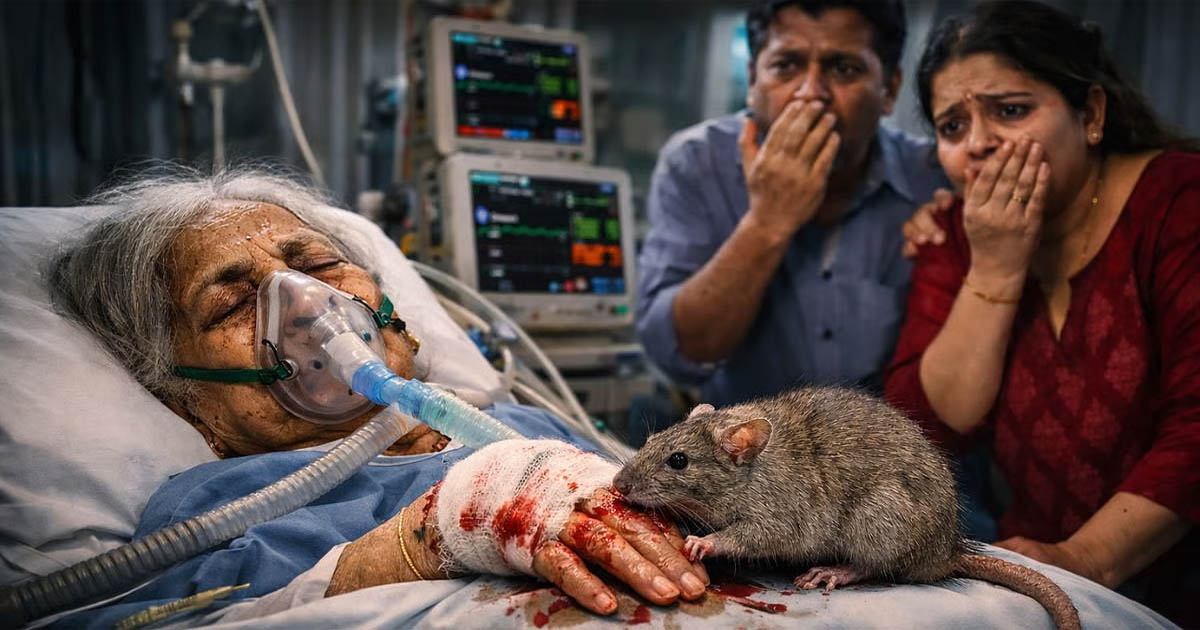
Mira Bhayandar: A shocking and infuriating incident has come to light at the Pandit Bhimsen Joshi Hospital in Mira Bhayandar, where an elderly woman in the Intensive Care Unit (ICU) was reportedly bitten by a rat. The incident has raised serious questions regarding the lack of hygiene and security within the hospital’s most critical department.
The victim, 89-year-old Suhasini Mathekar, was admitted to the hospital on March 12 following health complaints. Due to her critical condition, she was placed on a ventilator in the ICU located on the fourth floor of the facility.
On the morning of March 13, family members visiting the ICU were horrified to discover that a rat had bitten the elderly woman’s hand. According to the family, the rodent scurried away only after they intervened.
The victim’s family has leveled serious allegations against the hospital staff. They have questioned how the doctors and nurses on night duty failed to notice the presence of a rat or the distress of a patient in such a sensitive environment.
“It is shocking that such an incident could occur in a supposedly sterile and highly monitored zone like the ICU,” a family member stated. Public outrage is mounting over the perceived administrative apathy, with many calling for a high-level inquiry into the hospital’s management.
The presence of rodents in an ICU points to a complete breakdown of sanitation and safety protocols. Such lapses not only affect individual patients but also pose a significant infection risk to everyone in the ward.
The family has officially demanded A thorough investigation into the conduct of the staff on duty. An immediate audit of the hospital’s cleanliness and pest control measures. And Strict action against those responsible for the lapse to ensure such a traumatic event never recurs.

Kurla: Clash between Hindu community and street vendors, atmosphere deteriorated due to beatings during BMC operation, two suspects in custody, police alert

Pune Lab Lake: Violence against Muslim youth, strict action against attackers, Abu Asim Azmi demands registration of case against culprits

Aditya Dhar requests ‘Please don’t share spoilers’ ahead of Dhurandhar 2 release

Pep Guardiola Sparks Tension With Antonio Rudiger After Manchester City’s Shocking Champions League Defeat Against Real Madrid

Operation Sindoor impact: ISI moves from ideology to cash, eyes pan-India logistics network

Salim Khan hospitalised following complaints of swelling

Married Mumbai Woman Mocked In Andheri Society Over ‘Lift Kissing’ CCTV Video, Files Police Complaint

Mumbai: JBCN International School In Borivali Gets Bomb Threat, Search Reveals Hoax, Students Safe

Former Arsenal Star Mesut Ozil’s Convoy Gets Involved In Road Accident During Bangladesh Visit

Gold and silver surge on safe haven demand, margin cut
-

 Crime4 years ago
Class 10 student jumps to death in Jaipur
-

 Maharashtra1 year ago
Mumbai Local Train Update: Central Railway’s New Timetable Comes Into Effect; Check Full List Of Revised Timings & Stations
-

 Maharashtra1 year ago
Mumbai To Go Toll-Free Tonight! Maharashtra Govt Announces Complete Toll Waiver For Light Motor Vehicles At All 5 Entry Points Of City
-

 Maharashtra1 year ago
False photo of Imtiaz Jaleel’s rally, exposing the fooling conspiracy
-

 National News1 year ago
Ministry of Railways rolls out Special Drive 4.0 with focus on digitisation, cleanliness, inclusiveness and grievance redressal
-

 Maharashtra1 year ago
Maharashtra Elections 2024: Mumbai Metro & BEST Services Extended Till Midnight On Voting Day
-

 National News1 year ago
J&K: 4 Jawans Killed, 28 Injured After Bus Carrying BSF Personnel For Poll Duty Falls Into Gorge In Budgam; Terrifying Visuals Surface
-

 Crime1 year ago
Baba Siddique Murder: Mumbai Police Unable To Get Lawrence Bishnoi Custody Due To Home Ministry Order, Says Report