
National News
‘Can’t bulldoze govt authority by judicial orders’, SC on land allotment for lawyers’ chambers

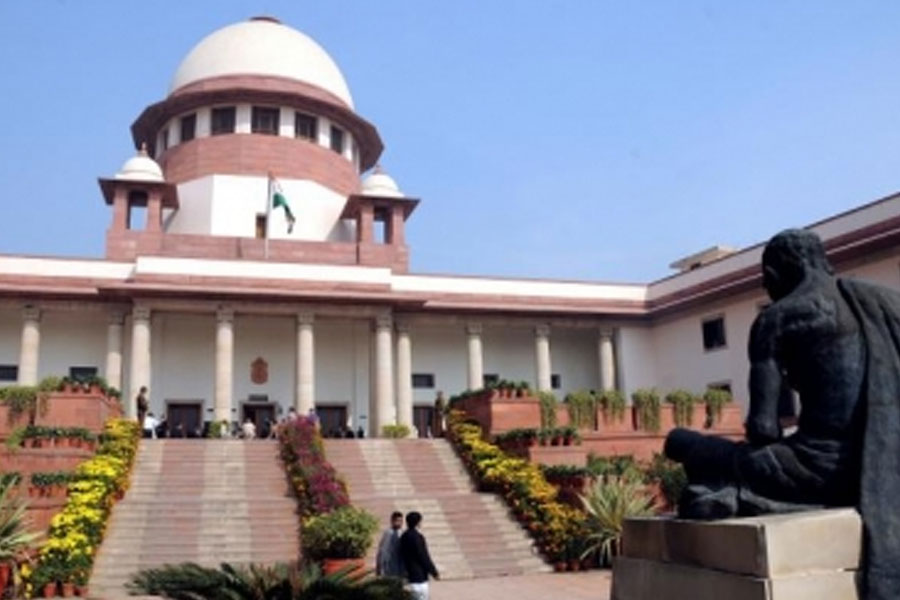
The Supreme Court on Friday observed that a signal must not go to the government that the court can bulldoze its authority by passing judicial orders, while hearing a plea moved by the Supreme Court Bar Association (SCBA) to convert a land measuring 1.33 acres allotted to the top court for the construction of lawyers’ chambers.
A bench headed by Chief Justice of India D.Y. Chandrachud and comprising Justices S.K. Kaul and P.S. Narasimha, said it would take up the land allotment issue for lawyers’ chambers with the government.
The bench queried senior advocate and SCBA president Vikas Singh, how could the court pass an order to take over the land for allotment of chambers? Lawyers are part of us, but can we use our own judicial powers to safeguard our own people?
The bench added it would appear that the apex court is exercising its own judicial powers to meet its own needs.
Singh said the apex court is surrounded by roads on all sides, there is no way to grow except within the campus, and futuristic planning is required for the court campus and urged the court to issue notice on the plea, so that a discussion can start. It was pointed out that a building close to the court has received eviction orders, and they have got another land.
The bench asked how it could take over all the buildings judicially, and added that the court did not doubt the requirement of the lawyers, but under Article 32, how can it take over these buildings? “We must trust the court to take it up on the administrative side with the government. A signal must not go to the government that we can bulldoze their authority by passing judicial orders”, said the bench.
Singh pressed for issuing notice in the matter and added that the Delhi High Court expansion land was taken over. The bench replied that it was done administratively. Expressing his reservation, Singh said the bar and other stakeholders will not be a part of such administrative consultation.
The bench further added that for the e-courts project, the government allotted Rs 7,000 crore because they said that we need it, and the government engages with the top court on the administrative side and the lawyers’ chambers issue can be put to it.
Thanking the bench on behalf of the entire bar, Singh said that the entire bar is with the institution and “we will not do anything to undermine the majesty of the institution irrespective of whatever happens in this case”.
Counsel for Bar Council of India contended that there is a need for space for the bar body and also Supreme Court Advocate on Record Association (SCAORA) sought to be a part of the proceedings and intervene in the issue.
Attorney General R. Venkataramani submitted that flexibility of the administrative side would certainly be helpful to resolve the matter. After hearing detailed submissions, the apex court reserved its order.


Mumbai, May 4: Gold and silver prices declined up to 1 per cent on Monday amid signs of easing geopolitical tensions between the US and Iran, following remarks by US President Donald Trump.
On the Multi Commodity Exchange (MCX), gold contracts for June 5 opened at Rs 1,51,150, down Rs 382 or 0.25 per cent from the previous close of Rs 1,51,532.
At around 11.30 a.m., gold was trading at Rs 1,50,623, lower by Rs 729 or 0.48 per cent. The yellow metal touched an intraday low of Rs 1,50,400, a decline of 0.62 per cent or Rs 952, and an intraday high of Rs 1,51,347.
On the other hand, silver contracts for July 3 opened at Rs 2,50,699, down Rs 238 or 0.09 per cent compared to the previous close of Rs 2,50,937. The white metal was trading at Rs 2,49,600, down Rs 1,337 or 0.53 per cent.
So far in the session, silver futures hit a low of Rs 2,49,600, a decrease of 1.05 per cent or Rs 2,599, and a high of Rs 2,51,231.
Meanwhile, in the international market, both precious metals remained under pressure. COMEX gold was down 0.55 per cent at $4,619 per ounce, while silver declined 0.48 per cent to $76.065 per ounce.
A commodity market expert said gold prices extended last week’s decline, hovering near one-month lows, as a stronger dollar and elevated crude oil prices weighed on sentiment.
The expert further noted that while easing US-Iran tensions reduced some safe-haven demand, supply risks in the Strait of Hormuz continued to fuel inflation concerns, prompting a cautiously hawkish stance from major central banks, which also weighed on bullion.
US President Donald Trump said the United States would initiate efforts to help vessels stranded in the Strait of Hormuz, describing the move as a humanitarian gesture aimed at assisting neutral countries not involved in the ongoing US-Iran conflict.
According to Trump, Washington would launch ‘Project Freedom’ to guide the stranded ships and their crews safely through the route.
However, he warned that Iran would face a strong response if any threat emerged.
In addition, crude oil prices declined sharply.
Brent crude fell 0.61 per cent to $107.51 per barrel, while US West Texas Intermediate (WTI) dropped 2.77 per cent to $99.11 a barrel.
National News
By-Election Results 2026: BJP Leads Across States; NCP’s Sunetra Pawar Dominates Baramati

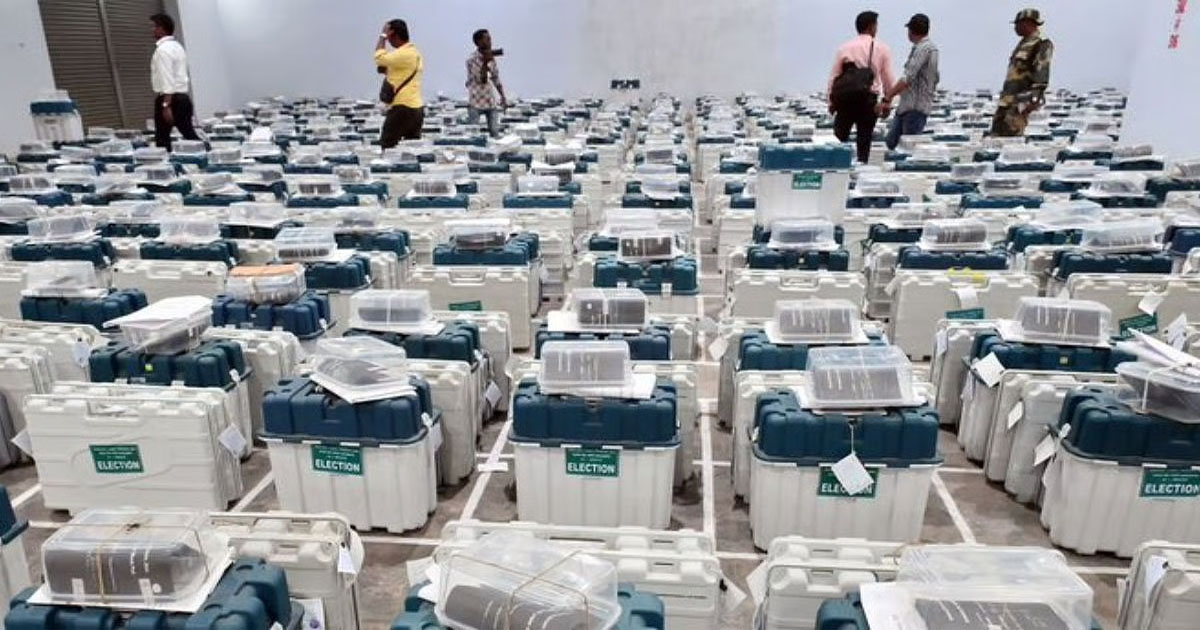
New Delhi: Counting of votes for Assembly by-elections across five states is underway, with the Bharatiya Janata Party (BJP) leading in multiple constituencies, while the Indian National Congress and Nationalist Congress Party (NCP) are ahead in key seats.
The bypolls were held on April 9 in seven constituencies across Karnataka, Maharashtra, Gujarat, Nagaland and Tripura following the demise of sitting MLAs. Meanwhile, the bypoll in Goa’s Ponda constituency was declared null and void by the Bombay High Court.
In Maharashtra’s high-profile Baramati seat, NCP candidate and Maharashtra Deputy CM Sunetra Pawar has taken a commanding lead. After five rounds of counting, she has secured 53,478 votes, leading by over 53,250 votes against her nearest rival, R.Y. Ghutukade.
In another key contest in Rahuri, BJP candidate Akshay Shivajirao Kardile is leading with a margin exceeding 46,000 votes, firmly ahead of NCP (Sharad Pawar faction) candidate Mokate Govind Khandu.
In Karnataka, Congress candidate Umesh Hullappa Meti is ahead in Bagalkot by nearly 10,000 votes, while BJP’s Shrinivasa T. Dasakariyappa is leading in Davanagere South. The contest is viewed as a prestige battle for the ruling Congress and the opposition BJP, with the latter aiming to capture the seat and deal a blow to the Siddaramaiah-led party amid reports of an internal power struggle.
In Gujarat’s Umreth seat, BJP’s Harshadbhai Govindbhai Parmar has established a strong lead of over 20,000 votes against Congress candidate Bhrugurajsingh Chauhan. In Nagaland’s Koridang constituency, BJP candidate Daochier I. Imchen is ahead, maintaining a steady margin as counting nears completion.
Early trends indicate BJP’s strong performance across multiple states, while Congress and NCP remain competitive in select constituencies. These bypolls, though limited in scale, are being closely watched as indicators of regional political sentiment and shifting voter preferences ahead of future electoral battles.
National News
Mamata Banerjee has ‘panicked’ before poll results: BJP MPs on Bengal CM’s strong room visit
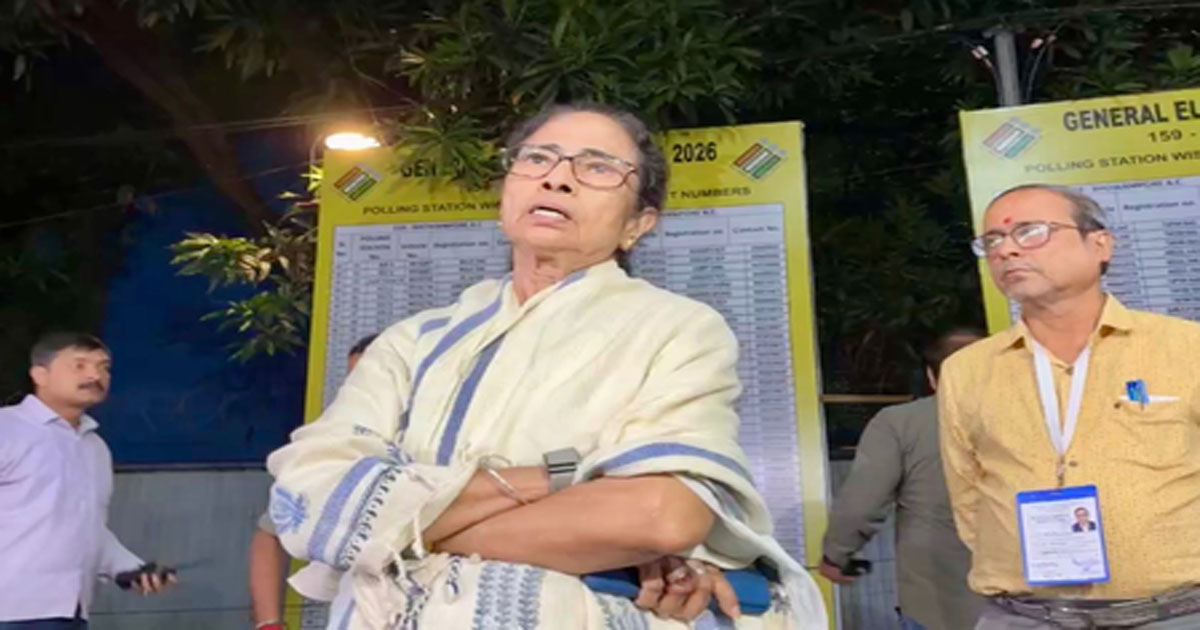
New Delhi, May 1: Bharatiya Janata Party (BJP) MPs on Friday claimed that West Bengal Chief Minister Mamata Banerjee has “panicked” before the Assembly election results on May 4 and is looking for an “excuse” for defeat.
The response came after the Bengal CM, on Thursday night, stormed the Sakhawat Memorial Government Girls High School, the venue for a strong-room storing the Electronic Voting Machine (EVM) for the Bhabanipur Assembly constituency in South Kolkata and stayed there past midnight, alleging EVM tampering.
BJP national spokesperson Syed Shahnawaz Hussain remarked that the Trinamool Congress is “panicking” due to the fear of defeat.
“In panic and confusion, they are going to the strong room. The public has already made its decision. The Bharatiya Janata Party is going to come with full strength,” he told media.
He mentioned that the exit polls too have given an edge to the BJP.
Hussain also echoed: “Trinamool Congress is looking for an excuse. It wants to blame the Election Commission for its defeat.”
BJP spokesperson Shehzad Poonawalla called the Trinamool Congress members as “people belonging to mafia culture”.
He said, “Trinamool has adopted the triple D approach. Denial, Diversion and Drama. They are even threatening people now. The party leaders also abuse the Constitutional establishments like the Election Commission.
Poonawalla referred to a viral video in which Trinamool MP Kalyan Banerjee is purportedly heard making objectionable remarks against Union Home Minister Amit Shah.
He said, “More than the exit polls, his statement is proof that Trinamool is going to exit.”
Bihar BJP President Sanjay Saraogi termed Banerjee’s visit to the strong room as her “frustration”.
“It is coming across as if she (Banerjee) is also losing from Bhabanipur. The kind of activity she is doing, even the law does not approve of that. Panic is clearly visible on her face. People used to call Bihar as ‘Jungle Raj’, but for the past 15 years, there has been ‘Maha Jungle Raj’ in Bengal. People are fed up there,” he said.
About the exit polls, he said: “Most of them have given the BJP an edge, which is why she is more panicked.”
BJP leader Dilip Ghosh said that the losing side seems to have no other “excuse left”.
“After ruling for 15 years, if a party is now doing politics over SIR and strong rooms, what does that indicate? It suggests the party has already accepted defeat and is now searching for some excuse,” he told reporters.
BJP MP Sanjay Jaiswal accused CM Banerjee of not taking responsibility for her actions.
“She (Banerjee) has lost the election, and the people have shown her the way out of Bengal, so she is blaming EVMs,” he said.

Massive Uproar At Virar Railway Station, Commuters Block Tracks, Mumbai Local Trains Disrupted – What Exactly Happened?

Gold and silver prices slide as Trump signals easing US-Iran tensions

By-Election Results 2026: BJP Leads Across States; NCP’s Sunetra Pawar Dominates Baramati

₹10 Lakh Education Scam: Mumbai Police Arrest One As Kandivali Consultancy Dupes Family; Others On The Run

Mumbai Traffic Alert! Bike Skids On Western Express Highway Near Airport Due to Oil Spill, Heavy Jam Reported

‘Son Falsely Implicated, We Are Well-Educated’: Father Of Accused Tausif Attar Defends Son After Skullcap, Namaz Coercion Allegations Rock TCS Nashik

Mumbai: Pan-India Hawala Trail Exposes Chilling Conspiracy Behind Rohit Shetty House Firing Case

Asha Bhosle’s son says last respects to be paid at residence in Lower Parel, followed by last rites at Shivaji Park

Mumbai: 15th arrest in Rohit Shetty shooting case, shooter identified, arrested, more arrests possible

Crude oil prices tank up to 20 pc over Iran ceasefire announcement
-

 Crime4 years ago
Class 10 student jumps to death in Jaipur
-

 Maharashtra2 years ago
Mumbai Local Train Update: Central Railway’s New Timetable Comes Into Effect; Check Full List Of Revised Timings & Stations
-

 Maharashtra2 years ago
Mumbai To Go Toll-Free Tonight! Maharashtra Govt Announces Complete Toll Waiver For Light Motor Vehicles At All 5 Entry Points Of City
-

 Maharashtra2 years ago
False photo of Imtiaz Jaleel’s rally, exposing the fooling conspiracy
-

 National News2 years ago
Ministry of Railways rolls out Special Drive 4.0 with focus on digitisation, cleanliness, inclusiveness and grievance redressal
-

 Maharashtra1 year ago
Maharashtra Elections 2024: Mumbai Metro & BEST Services Extended Till Midnight On Voting Day
-

 National News2 years ago
J&K: 4 Jawans Killed, 28 Injured After Bus Carrying BSF Personnel For Poll Duty Falls Into Gorge In Budgam; Terrifying Visuals Surface
-

 Crime2 years ago
Baba Siddique Murder: Mumbai Police Unable To Get Lawrence Bishnoi Custody Due To Home Ministry Order, Says Report