
International News
Border disengagement happening at slower pace: Jaishankar tells Wang

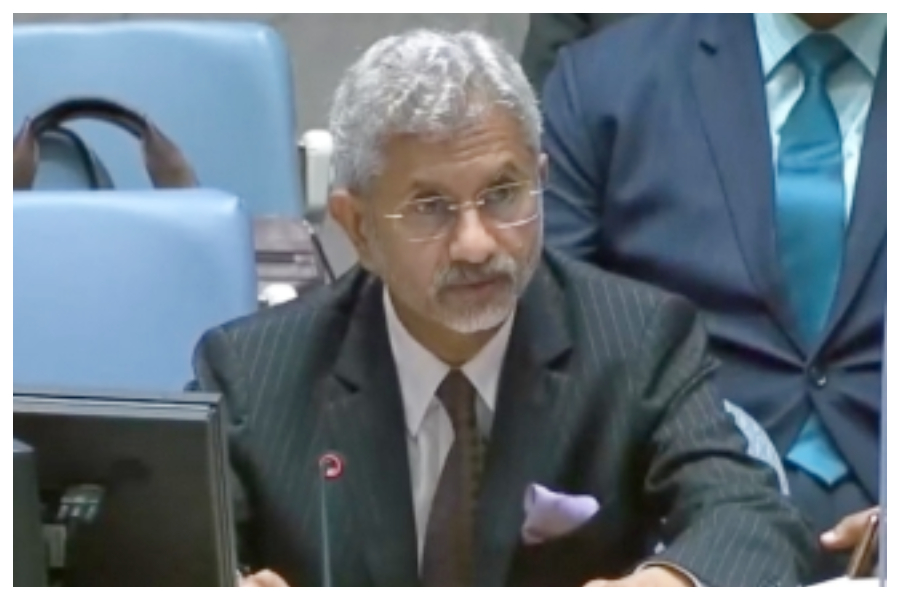
External Affairs Minister S. Jaishankar said on Friday that during his meeting with visiting Chinese Foreign Minister Wang Yi, he told the latter that the disengagement of troops at the LAC in Eastern Ladakh is a “work in progress”, but is happening at a “slower pace” than desired.
Addressing the media after the meeting, Jaishankar said: “My talks with Foreign Minister Wang Yi have just concluded. We met for about three hours and addressed a broad and substantive agenda in an open and candid manner. We discussed our bilateral relations that have been disturbed as a result of Chinese actions in April 2020.
“So long as there are very large deployments, the border situation is not normal. We still have ongoing friction areas and have made progress in resolving some friction areas, including Pangong Tso. Our discussion today was how to take this forward. There have been 15 rounds of talks.
“If you ask me if our relationship today is normal, then my answer is no, it is not normal. Our effort today is to sort out the issue in its entirety.”
China’s People’s Liberation Army made an aggressive move at the Line of Actual Control in Eastern Ladakh in April 2020 leading to the border dispute between India and China.
The dispute is yet to be resolved even after over two years.
Jaishankar further said that he told Wang the current situation is a “work in progress, obviously, at a slower pace than desirable”.
“This needs to be taken forward since completion of the disengagement at LAC is necessary.”
Jaishankar also said that he raised the issue of Indian students studying in China who have not been allowed to return and resume their education due to Covid-19 restrictions
“I also took up strongly the predicament of Indian students studying in China who haven’t been allowed to return citing Covid restrictions. We hope China will take a non-discriminatory approach since it involves future of many young people.”
Before his talks with Jaishankar, Wang met National Security Advisor Ajit Doval in his office in South Block and extended an invitation to visit China.
Replying to the invitation, Doval said he could visit after the immediate issues were resolved successfully, according to sources.
Doval also discussed the need to take forward early and complete disengagement in remaining areas and remove impediments to allow the bilateral relationship to take its natural course.
He also conveyed to Wang that restoration of peace and tranquility will help build mutual trust and create enabling environment for progress in relations
Wang’s visit marks the first trip by a high-level Chinese official since the border dispute erupted.

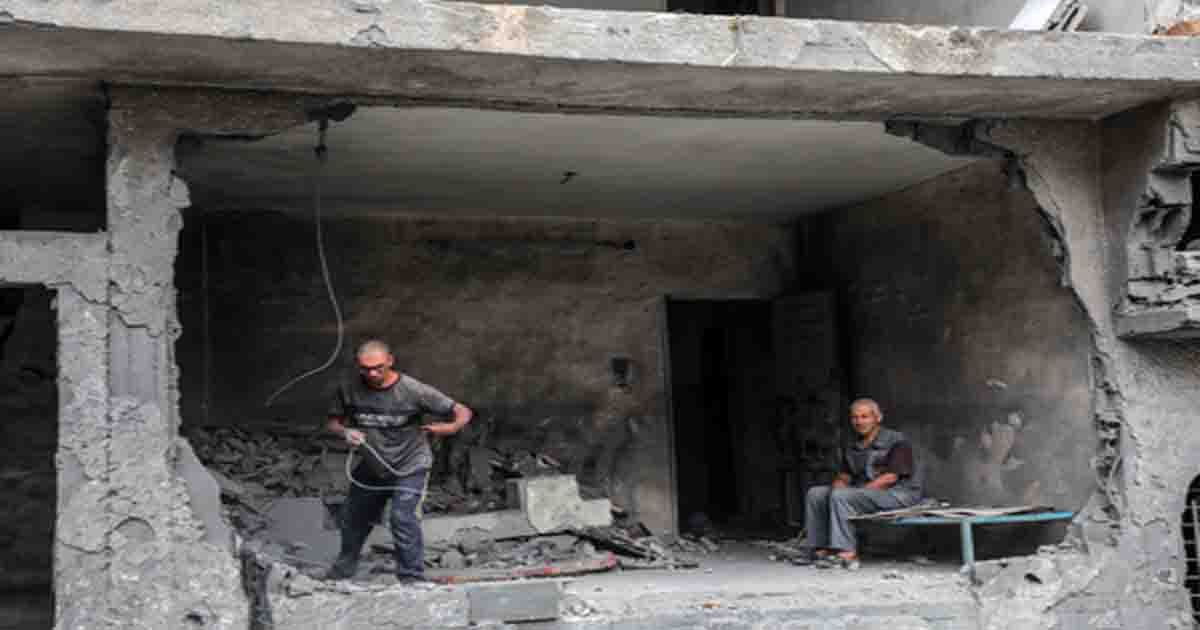
Jerusalem, Oct 14: The Israel Defence Forces (IDF) said in a statement on Wednesday that it had killed a Hamas commander in an airstrike in Gaza City.
The commander, identified as Momen Ahmad Salameh Ay, allegedly held Israeli hostages in Hamas captivity in Gaza City and served as an aide to commanders of Hamas’s Gaza Brigade.
According to the Israeli military, he had recently advanced attacks against Israeli soldiers and civilians and attempted to restore Hamas’s capabilities.
The IDF said it had taken steps to minimize civilian casualties ahead of the airstrike, which was carried out Tuesday, Xinhua news agency reported.
In a separate statement, the IDF said infantry soldiers operating in the village of Kfar Shouba in southern Lebanon had located a ready-to-detonate explosive device, a Hezbollah position, and additional weapons used by the group.
On Friday, the IDF said in a statement that it had killed three militants in Gaza City.
The IDF said two of the men were identified as Hassam Walid Hassan Abu Al-Ata, allegedly a commander in the rocket unit of the Palestinian Islamic Jihad’s military wing, and Magdi Moein Yousef Al-Ayoubi, also a member of the group’s military wing.
The third was identified as Muhammad Aja, a company commander in Hamas’ military wing, it added.
According to the IDF, the militants, killed in aerial strikes on Thursday, had recently advanced attacks against Israeli soldiers and worked to restore the capabilities of the two groups.
In a separate statement, the IDF and the Shin Bet domestic security agency said they had dismantled four weapons storage facilities belonging to Hamas and Islamic Jihad across the Gaza Strip.
The facilities contained dozens of weapons and other military equipment, including rockets, explosive devices, mortars, and Kalashnikov rifles, the statement said.
International News
Yemen’s Houthis claim large-scale missile, drone attack on Saudi airport, oil facilities

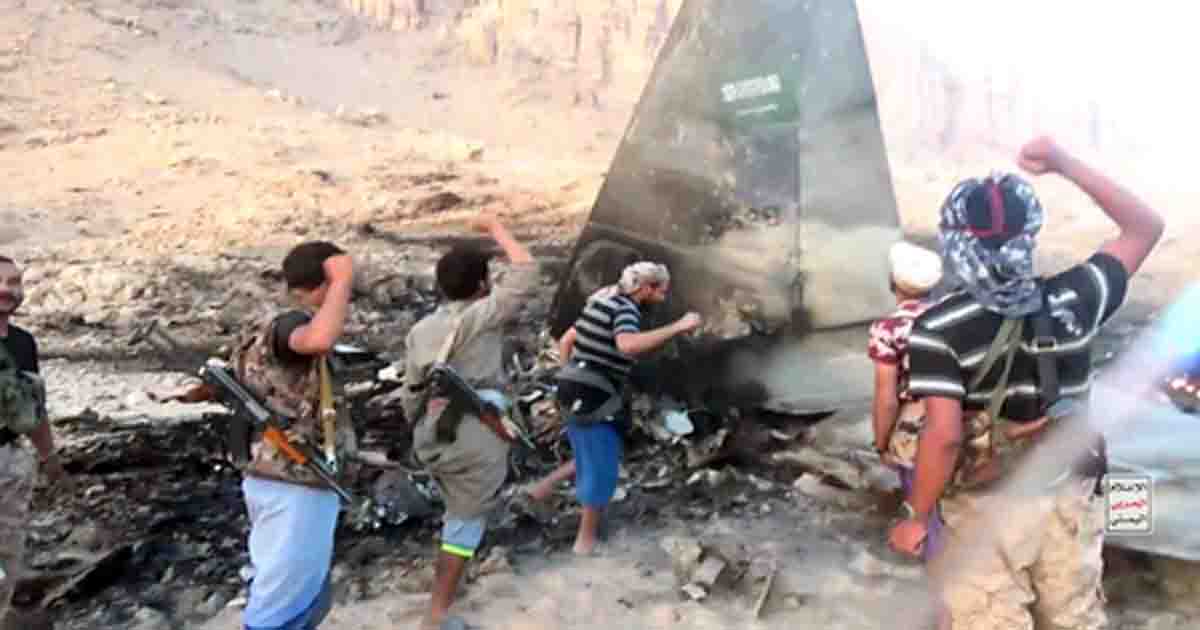
Sanaa, Oct 14: Yemen’s Houthi group said Wednesday it had launched a large-scale missile and drone attack targeting an airport and oil facilities in Saudi Arabia, vowing to continue strikes against Saudi targets in the coming days.
In a statement broadcast by Houthi-run al-Masirah TV, Houthi military spokesperson Yahya Sarea said the group targeted Saudi energy giant Aramco in Dhahran in the Eastern Province, as well as King Khalid International Airport and an Aramco refinery in Riyadh.
According to Sarea, the operation involved “a large number of ballistic and cruise missiles and drones,” which accurately hit their targets, causing damage and fires.
The Houthi spokesperson said the operation was carried out in retaliation for Saudi Arabia-led strikes on the Houthi-held capital of Sanaa and other areas under the group’s control. He said Saudi-led forces had carried out 2,281 air and missile strikes since the latest escalation began, Xinhua news agency reported.
Sarea vowed that the group’s attacks “deep inside Saudi Arabia” would continue in the coming days, targeting airports and oil facilities. He also renewed a warning to international airlines, civilians and employees to stay away from airports and oil facilities in Saudi Arabia that the group had designated as targets.
The Houthi claim came after the Saudi-led coalition in Yemen said it intercepted six Houthi missiles and three drones heading towards Saudi Arabia on Tuesday. An Aramco administrative building in Dhahran was targeted Tuesday evening, sparking a limited fire, while debris from two cruise missiles intercepted over Riyadh injured four people and damaged 15 homes, Saudi authorities said Wednesday.
The latest Houthi operations followed a series of Saudi-led coalition strikes on Tuesday targeting the Yemen Petroleum Company’s Al-Sabaha fuel storage and distribution facility west of Sanaa, as well as fuel facilities in the Red Sea province of Hodeidah.
Cross-border hostilities have intensified sharply in recent days. A Houthi attack on a passenger terminal at King Khalid International Airport in Riyadh on Saturday killed 12 people and injured 309 others, according to the Saudi General Authority of Civil Aviation. The Saudi-led coalition subsequently vowed a firm response to the attack.
Yemen has been mired in conflict since late 2014, when the Houthis seized Sanaa and much of northern Yemen. A Saudi-led coalition intervened in 2015 in support of the internationally recognized Yemeni government. Major hostilities had largely subsided following a UN-brokered truce in 2022, before the latest fighting led to a sharp escalation in ground battles and cross-border missile, drone and air attacks.
disaster
Landslide triggering Budhi Gandaki River floods in Nepal unleashed energy equivalent to 3.5-magnitude quake: Report
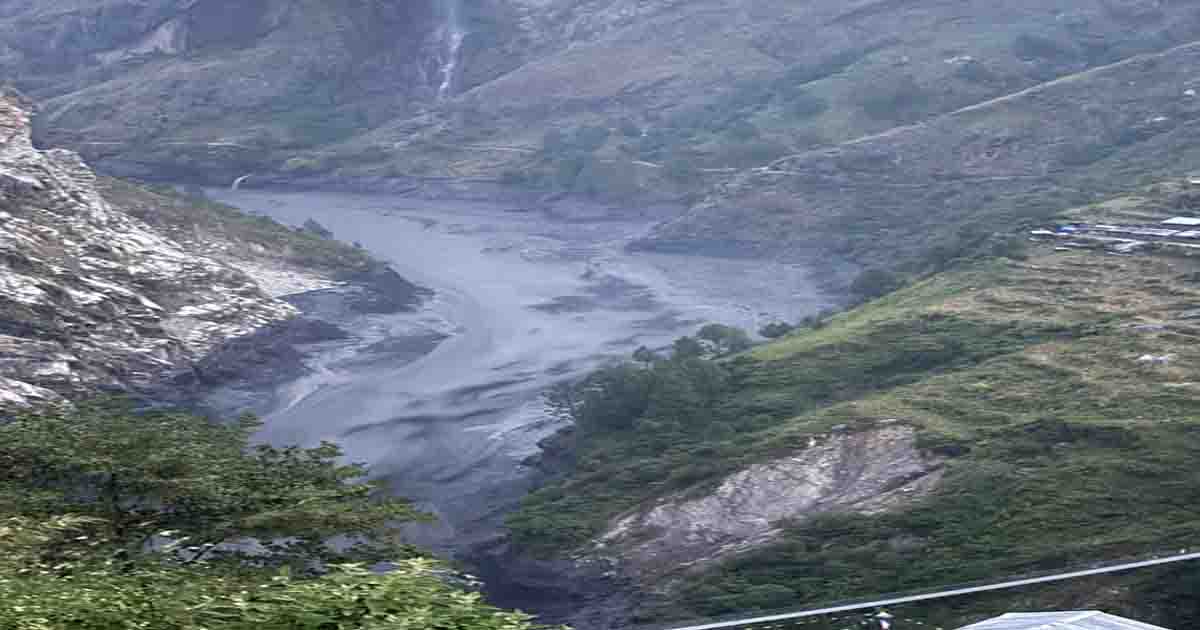
Kathamandu, Oct 14: A massive landslide in the high Himalayas of Nepal Gorkha district on October 11, which triggered devastating floods in the Budhi Gandaki River, generated energy equivalent to that of a 3.5-magnitude earthquake, according to a preliminary assessment by the Department of Mines and Geology.
The landslide occurred in the upper reaches of the Ungdilung Khola, a tributary of the Budhi Gandaki River, triggering destructive flood surges after a large volume of debris blocked and subsequently released river flows, the technical report said.
The report provides an initial explanation of how the high-altitude landslide and the repeated blockage and release of river flows contributed to the flooding downstream.
The National Disaster Risk Reduction and Management Authority (NDRRMA) said in a social media post, citing the department’s report, that the Budhi Gandaki River experienced repeated flood surges in a single day following the massive landslide involving snow, water and glacial debris in the high Himalayas.
The latest disaster left at least five people missing and destroyed several hydropower projects, roads and bridges, according to the NDRRMA.
The October 11 flooding was the second major flooding disaster, which occurred around one and a half months after devastating floods struck the Bhote Koshi and Trishuli rivers on August 26, which killed nearly 1,500 people and left more than 5,000 missing while devastating communities, houses, hydropower plants, roads and bridges along the affected rivers, the authority said.
Citing the department’s technical report, the NDRRMA said the largest of the repeated flood surges reached an estimated height of 20 to 25 metres.
The incident occurred at around 4:20 a.m. in the upper reaches of the Ungdilung Khola, between Chamar Himal and Syerangi Himal, in Chumnubri Rural Municipality, which borders China.
According to the report, an avalanche originated at an altitude of approximately 6,000 metres in the Tibetan Tethys Himalaya, an area characterised by relatively weak rock formations, and a landslide occurred at around 5,500 metres.
“The massive landslide, comprising a mixture of snow, water and debris, flowed southward along the Ungdilung Khola, depositing a large volume of debris at the narrow confluence of the Ungdilung Khola and Syar Khola, another tributary of the Budhi Gandaki River, at an altitude of around 2,000 metres,” the authority said in its social media post.
The debris repeatedly blocked and released the flow of the Syar Khola, potentially generating successive flood surges. A similar process may also have occurred at the confluence of the Syar Khola and the Budhi Gandaki River, contributing to repeated flooding downstream, it said.
However, the report suggests that the enormous volume of debris carried by the Ungdilung Khola played a more significant role in generating the largest flood surge than the water accumulated behind the blockage of the Syar Khola.
The first mud-laden flood reached the Salleri area at around 4:30 a.m., where a camp for the 341-MW Budhi Gandaki Hydroelectric Project was located.
“The largest surge arrived at the hydropower camp in Salleri at around 6:30 a.m., reaching an estimated height of 20 to 25 metres before sweeping away the camp,” the report said.
The powerful surge caused major damage downstream, particularly in the Jagat area along the Budhi Gandaki River, where several buildings were affected. Permanent bridges over the Soti Khola and the Budhi Gandaki River were also among the damaged structures, the report said.
Field observations further indicated that the flow of the Syar Khola had stopped following the landslide approximately one hour before the largest flood surge arrived.
“Water had accumulated over a stretch of around 1.5 kilometres in the upper reaches of the river. Smaller flood surges continued even after the largest surge had passed,” the report said.

Hyderabad Police cautions citizens against digital arrest fraud

Delhi court summons Dhruv Rathee in 2018 defamation case

Fake RTO app used to hack phone, siphon Rs 24.40 lakh; Gujarat Police nab account provider in Bengal

Drugs worth Rs 1 crore seized in Greater Noida, three arrested

Israeli military says killed Hamas Commander in Gaza City

INDIA bloc begins protest march against ECI

Maha Congress stages agitation against Gyanesh Kumar

Complaint against Netflix & Mukesh Chhabra for inappropriate language on ‘India’s Got Latent 2’

Delhi court grants three-week interim bail to influencer Swatantra Bhardwaj

Bombay HC warns Vijay Mallya against posting court documents on social media
-

 Crime4 years ago
Class 10 student jumps to death in Jaipur
-

 Maharashtra2 years ago
Mumbai Local Train Update: Central Railway’s New Timetable Comes Into Effect; Check Full List Of Revised Timings & Stations
-

 Maharashtra2 years ago
Mumbai To Go Toll-Free Tonight! Maharashtra Govt Announces Complete Toll Waiver For Light Motor Vehicles At All 5 Entry Points Of City
-

 Maharashtra2 years ago
False photo of Imtiaz Jaleel’s rally, exposing the fooling conspiracy
-

 National News2 years ago
Ministry of Railways rolls out Special Drive 4.0 with focus on digitisation, cleanliness, inclusiveness and grievance redressal
-

 Maharashtra2 years ago
Maharashtra Elections 2024: Mumbai Metro & BEST Services Extended Till Midnight On Voting Day
-

 National News2 years ago
J&K: 4 Jawans Killed, 28 Injured After Bus Carrying BSF Personnel For Poll Duty Falls Into Gorge In Budgam; Terrifying Visuals Surface
-

 Crime2 years ago
Baba Siddique Murder: Mumbai Police Unable To Get Lawrence Bishnoi Custody Due To Home Ministry Order, Says Report