
Business
Blacklist erring builders, penalise auditors: MahaRERA told by residents’ association

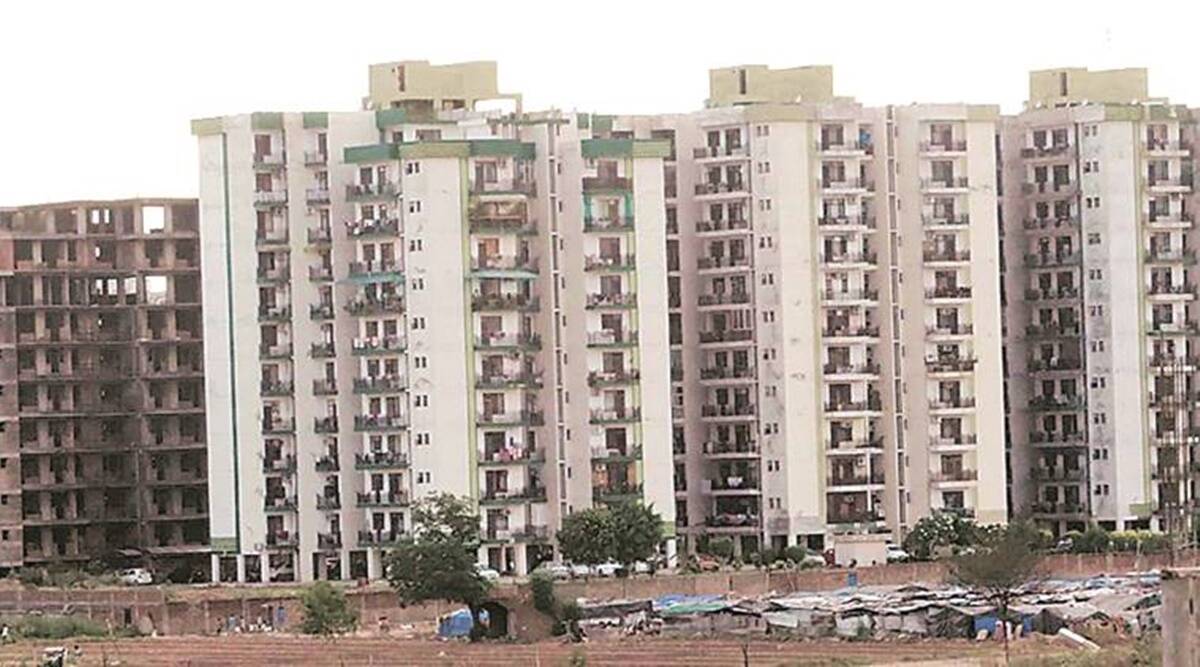
According to the association, the regulator also ensures that the brand image of the erring developers remains unaffected by not revealing their names, which puts homebuyers at risk.
Mumbai: The Cooperative Societies Residents Users and Welfare Association (CSRUWA) has raised a flag against Maharashtra Real Estate Regulatory Authority (MahaRERA) stating that the regulator is going soft on thousands of errant builders who repeatedly are violating various rules.
According to the association, the regulator also ensures that the brand image of the erring developers remains unaffected by not revealing their names, which puts homebuyers at risk.
Purchasers shaken by flouting of laws and blatant violations of MahaRERA
President CSRUWA Advocate Vinod C Sampat said, “Faith of thousands of flat purchasers is shaken in view of flouting of laws and blatant violations of MahaRERA, specifically with regards to the investment of funds in separate bank accounts of 1,781 developers.”
The law stipulates that the developer has to maintain an escrow account to deposit 70% of the amount received from the buyers, without creating any third-party rights on it. Yet 1,781 realtors have not complied with the law.
Secondly, over 5,700 projects worth Rs1,13,023 crore in Maharashtra have lapsed. In these projects, 4,08,350 apartments were booked, putting the home buyers in a quandary.
16,000 show-cause notices sent to developers
This month over 16,000 show-cause notices have been sent for the second time to the developers who did not respond to the one sent in January. Of the around 19,500 developers only about 18% or 3,500 acted on the legal communication issued by MahaRERA.
There are also 261 projects wherein less than 40% of work has been achieved and the promoters are about to run out of money or have given unrealistic possession deadlines of December 2023.
In another instance, 14 builders had advertised their projects without the mandatory MahaRERA registration number.
The association demands that such law-violating promoters, developers, as well as auditors, should be blacklisted and they should be penalised 5% of the project cost.
Crores of rupees of buyers at stake
“Several crores of Rupees of buyers is at stake in the realty projects. The flat purchasers look upon MahaRERA authorities to protect their interest. Unfortunately, the faith of the flat purchaser is shaken in view of the builder’s lobby openly flouting the laws, particularly laws related to MahaRERA,” added advocate Sampat.
Moreover, even the orders in favour of the home purchasers given by MahaRERA are often not honoured by the developers.
In view of such gross violations that continue to occur even six years since its establishment, MahaRERA is also referred to as a toothless tiger.


Leading industry chamber CII on Sunday called for 15 priority reforms across banking, non-banking finance, capital markets, insurance and financial technology, ahead of the Union Budget 2027-28 and help build a $26.5 trillion economy in 2047.
These include a standing, rule-based liquidity window for well-governed NBFCs, a recalibrated priority sector lending framework, a wider investor base for lower-rated corporate bonds, parity for NBFCs in loan recovery, and a national catastrophe and climate risk pool.
CII’s analysis estimates that a $26.5 trillion economy in 2047 will need close to $106 trillion of financial assets, against about $7 trillion today.
Banking assets will need to grow 3.0 to 3.5 percentage points faster than nominal GDP, taking the bank assets-to-GDP ratio from about 1.0 times towards 1.5 times.
Insurance and pension assets together are around 10 per cent of GDP, and the corporate bond market at about 15 per cent of GDP compares with 36 per cent in China and over 80 per cent in South Korea, according to the CII document.
“The financial sector enters this phase from a position of strength, with healthy bank and NBFC balance sheets and a series of important measures by the Government and regulators over the past year. The task now is to build a system that can finance an economy several times its present size by 2047,” said Chandrajit Banerjee, Director General, CII.
That requires deeper and longer-tenor pools of capital, credit that reaches the sectors that will drive growth, and regulation that keeps pace with how finance is delivered. Our recommendations are intended to take the current reform effort to its next stage,” Banerjee noted.
The CII recommends raising the priority sector limit for renewable energy from Rs 35 crore to Rs 80-100 crore per borrower, so that medium-sized projects qualify, and bringing circular economy activities such as recycling and battery reuse within the framework.
The 2 per cent of credit cap on incremental export credit should be replaced by a dedicated export sub-target, with eligibility extended to factoring, export receivables and supply-chain finance. Within the safeguards the RBI has put in place for the foreign exchange market, pooled hedging facilities and small-ticket forward cover would help MSME exporters manage currency volatility, according to the CII paper.
Building on the Budget’s TReDS and credit guarantee measures, insurance cover against fire, flood, machinery breakdown and business interruption should be a standard feature of government-guaranteed MSME loans, reducing both NPA risk and guarantee invocation.
Guarantee fees and claim settlement timelines should also be reviewed so that cover reaches first-time and small borrowers. CII estimates the MSME credit gap at Rs 25-30 lakh crore.
CII proposes a regulatory pathway for video-based customer identification in which identity and liveness checks are carried out by certified automated systems, with audit trails and fraud safeguards retained, in place of an official’s presence in every session. This would lower onboarding costs in underserved areas.
IRDAI’s July 2026 amendments allow insurers to invest in the debt of operational infrastructure SPVs for refinancing, up to 20 per cent of the issue. CII recommends the next step: linking investment limits to the investor’s assets under management or net worth rather than to the size of the investee, harmonising norms for bonds backed by partial credit enhancement across IRDAI, EPFO and PFRDA, and developing a framework for collateralised loan obligations on infrastructure loan pools to recycle bank capital.
To complement the market-making framework and the new credit derivatives directions, CII recommends that pension funds, insurers and provident funds be allowed calibrated exposure to bonds rated below AA and to longer tenors.
On climate finance taxonomy, the draft framework released in May 2025 should be finalised with sector-specific quantitative thresholds and clear definitions of transition activities, followed by an adaptation and resilience taxonomy, said the CII.
NBFCs account for about 23 per cent of credit, and about 45 per cent of their borrowings come from banks. The RBI has opened the term money market to NBFCs. The CII proposes, in addition, a permanent, rule-based liquidity and refinance window, with access linked to compliance status, collateral standards and eligibility filters, so that rollover pressure during market stress does not lead to a contraction in credit to MSMEs and retail borrowers.
As the Government considers amendments to the SARFAESI Act, the threshold for NBFCs should be reduced from Rs 20 lakh to the Rs 1 lakh that applies to banks and HFCs. Regulated NBFCs should have access to Debt Recovery Tribunals, to the Central Repository of Information on Large Credits with appropriate safeguards, and to central fraud registries with reciprocal data-sharing obligations.
The CII also recommends a formal mechanism for informal guidance at the RBI, modelled on SEBI’s 2003 scheme, offering time-bound and binding responses on novel structures; tiered licensing with a green channel for base-layer NBFCs, building on the recent exemptions for Type I NBFCs; and a single reporting portal in place of multiple platforms.
The exemption of individual health and life insurance from GST from September 2025 has improved affordability, and the GST Council has since allowed employers credit on group cover.
The CII recommends that individual policies be zero-rated rather than exempt so that insurers can claim input tax credit, and that tax computation for insurers be aligned with IRDAI-prescribed reserves as the sector moves to Ind AS (Indian Accounting Standards).
As the government examines a national parametric insurance scheme, CII proposes a pool with mandatory cession from primary insurers, catastrophe bonds issued through GIFT IFSC, a sovereign reinsurance backstop and a parametric programme for climate events, so that disaster losses are pre-funded rather than absorbed by public finances after the event.
Exposure limits for insurers, banks and financial institutions in AIFs should be raised in a calibrated manner, with prudential treatment differentiated between single-investor and diversified pooled funds, and mutual funds, pension funds and EPFO permitted to participate.
The CII also recommends a blended finance fund-of-funds within the AIF framework, early enactment of the proposed amendments that ease the use of limited liability partnerships for AIFs, and capital-call and NAV-based financing within prudent limits.
The CII recommends aligning voting rights in private banks with economic ownership by raising the 26 per cent cap to up to 49 per cent with governance safeguards, and early approval of the proposal to raise the foreign investment limit in public sector banks from 20 per cent to 49 per cent so that they can raise capital for growth.
Business
Stock market outlook: FII flows, US inflation, crude oil among top factors to watch next week

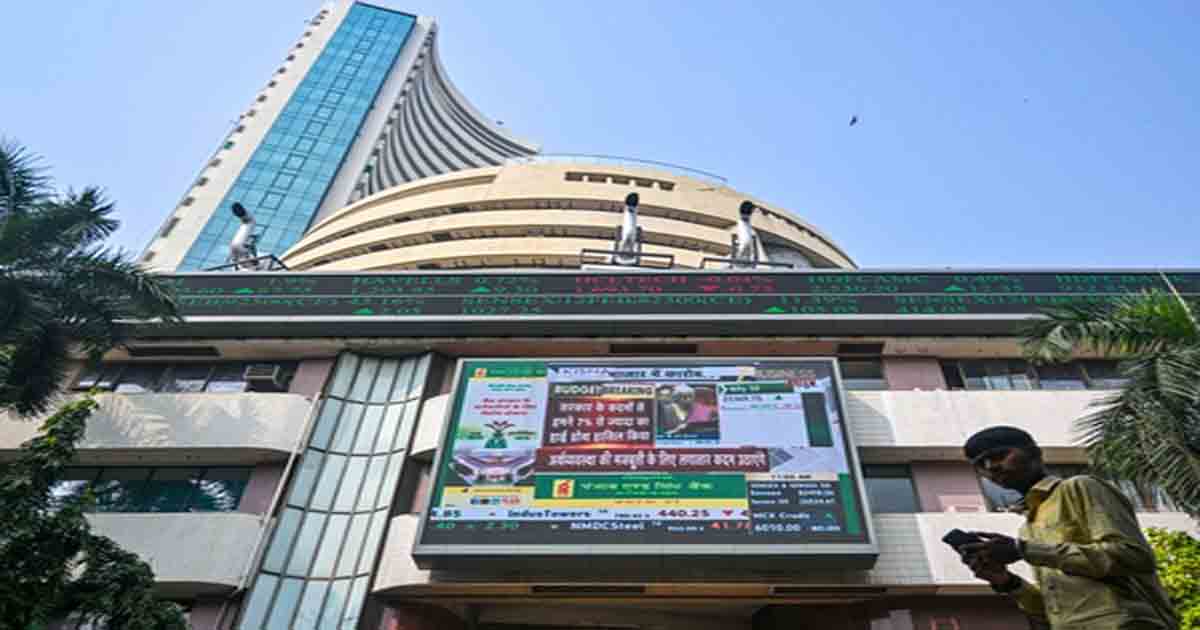
Foreign investor activity, domestic inflation data, rupee movement and global economic cues are likely to dictate market direction as the Nifty approaches the crucial 26,000 mark after a fourth consecutive week of gains.
In the previous week, the Nifty gained 2.61 per cent during the week, while the Sensex advanced 2.85 per cent. Markets also demonstrated resilience on Friday, recovering sharply from a weak opening amid continued foreign institutional buying and domestic investor support, even as global equities faced selling pressure, particularly in technology and AI-linked stocks.
Foreign institutional investor (FII) flows are likely to remain one of the biggest drivers of market sentiment. FIIs have recorded cumulative net inflows of approximately Rs 1,11,950 crore so far this month.
In contrast, domestic institutional investors (DIIs) registered net outflows of around Rs 61,787 crore. Investors will watch whether foreign buying momentum continues and provides further support to benchmark indices.
Domestic inflation and the Reserve Bank of India’s interest rate outlook will also remain in focus. India’s October consumer price index (CPI) inflation rose to 6.09 per cent, crossing the RBI’s upper tolerance limit, while food inflation stood at 8.94 per cent.
Movements in crude oil prices and the rupee will be another important factor influencing the market’s direction. Crude oil prices have moderated towards the $81-84 per barrel range, offering some relief to India’s import bill and inflation outlook.
Global economic developments will also be closely tracked, particularly amid the ongoing sell-off in technology and AI-linked stocks.
Concerns over elevated valuations, returns on artificial intelligence investments and rising capital expenditure have weighed on global technology shares.
Any further weakness in global markets could influence Asian equities and spill over into India’s IT sector. Investors will also monitor key US economic releases, including PCE inflation data, the second estimate of US Q3 GDP and flash November PMI readings, for clues about the global economic outlook and the US Federal Reserve’s policy trajectory.
On the domestic front, banking stocks and the broader corporate earnings outlook will remain important market drivers.
Banking shares have played a significant role in supporting the recent rally, and their ability to sustain momentum could determine whether the Nifty manages to move beyond the 26,000 mark.

Action-adventure video game Grand Theft Auto VI has generated $3.79 billion in global sales within 24 hours of launch, ranking as the biggest entertainment release ever and breaking the previous benchmark held by its predecessor, “Grand Theft Auto V”.
Developer Rockstar Games said the title sold 32.5 million units through pre-release and launch-day purchases after the game was received with massive fanfare and critical acclaim globally.
GTA VI’s launch-day haul is nearly five times the estimated $800 million its predecessor—GTA V—made on its launch day in 2013.
The new launch has also crossed the lifetime worldwide box-office earnings of “Avengers: Endgame”, which grossed about $2.94 billion globally.
GTA VI follows criminal protagonists Lucia and Jason Blitz in the fictional Vice City and Rockstar Games founder and president Sam Houser described the launch as the beginning of a ‘new chapter’ for the studio.
Take-Two Interactive, Rockstar Games’ parent company, is also the publisher behind other hits such as the “Red Dead Redemption” franchise and the “NBA 2K” basketball series.
Gamers worldwide have reportedly taken paid time off from work and even signed “contracts” with their partners to get uninterrupted game time.
Take-Two has spent nearly $1 billion in production costs for GTA VI, making it one of the most expensive entertainment projects and the game began pre-orders in June but has remained secretive about the sales numbers.
The game’s promotional trailer, “GTA VI: An Extended Look”, released in August, drove a sixfold jump in pre-orders, according to multiple reports.
Investors are keen on details on a PC version and the rollout of GTA Online for the new title, with some industry analysts forecasting both in 2027. The online, multiplayer component of the videogame is key to creating recurring revenue from the acclaimed title.

Sanjay Raut levels ‘horse-trading’ charges to pass Delimitation Bill, BJP says ‘stop spreading fake news’

Sachin Tendulkar believes Ranveer Singh would make a good cricketer

HM Shah: 40 villages along India-China border see reverse migration after development under VVP

Akhilesh Yadav lacks ‘Sanatan’ knowledge: UP Deputy CMs hit out at SP chief’s ‘Radhe Radhe’ remark

Hema Malini calls Esha Deol’s ‘Pratap’ co-star Amit Sadh ‘sincere’

Congress trying to protect 3 crore Bangladeshi infiltrators in voter list: HM Shah

Red Fort car blast probe exposes blueprint for spread of terror modules across India

Trump flags Iran targets as talks continue

‘Conspiracy, not accident’: NCP on Ajit Pawar death

BJP, Shiv Sena slam Mallikarjun Kharge for terming Diwali ‘Khushiyon ka Eid’
-

 Crime4 years ago
Class 10 student jumps to death in Jaipur
-

 Maharashtra2 years ago
Mumbai Local Train Update: Central Railway’s New Timetable Comes Into Effect; Check Full List Of Revised Timings & Stations
-

 Maharashtra2 years ago
Mumbai To Go Toll-Free Tonight! Maharashtra Govt Announces Complete Toll Waiver For Light Motor Vehicles At All 5 Entry Points Of City
-

 Maharashtra2 years ago
False photo of Imtiaz Jaleel’s rally, exposing the fooling conspiracy
-

 National News2 years ago
Ministry of Railways rolls out Special Drive 4.0 with focus on digitisation, cleanliness, inclusiveness and grievance redressal
-

 Maharashtra2 years ago
Maharashtra Elections 2024: Mumbai Metro & BEST Services Extended Till Midnight On Voting Day
-

 National News2 years ago
J&K: 4 Jawans Killed, 28 Injured After Bus Carrying BSF Personnel For Poll Duty Falls Into Gorge In Budgam; Terrifying Visuals Surface
-

 Crime2 years ago
Baba Siddique Murder: Mumbai Police Unable To Get Lawrence Bishnoi Custody Due To Home Ministry Order, Says Report