
Politics
BJP, Congress in MP take credit as Supreme Court allows OBC reservation in civic polls

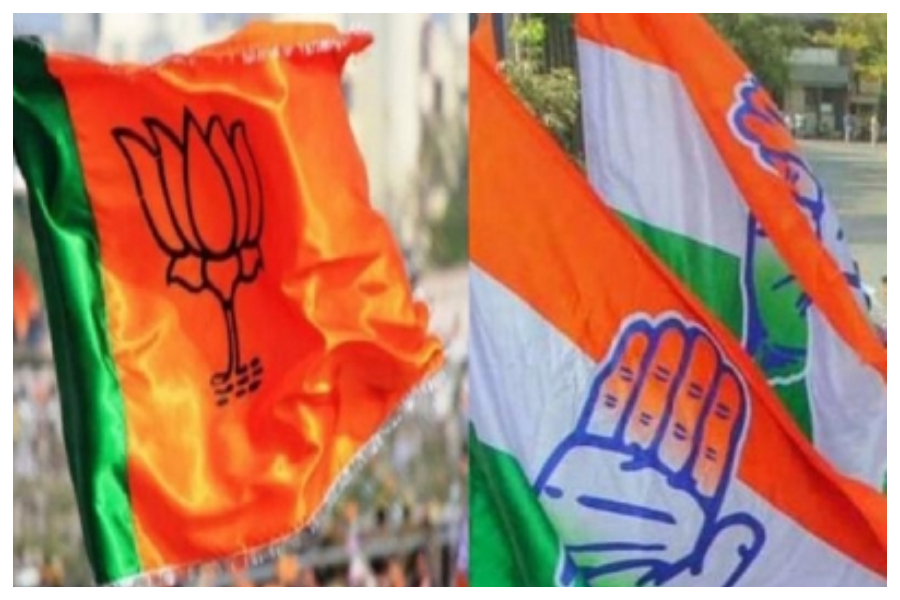
As the Supreme Court on Wednesday allowed an OBC quota in the local body elections in Madhya Pradesh, the ruling BJP and the opposition Congress started taking the credit for it. Both the parties also traded barbs over the issue.
Senior leaders of the BJP and the Congress in Madhya Pradesh welcomed the SC’s decision saying, “justice prevailed”, claiming that the initiative for providing reservation for OBCs was taken by their parties and accused each other of being anti-OBC.
Soon after a bench headed by Justice A.M. Khanwilkar pronounced the order granting permission to conduct local body polls with OBC reservation and directed the Madhya Pradesh State Election Commission (MP-SEC) to notify the elections in one week, the state BJP headquarters celebrated the decision calling it a win for the party.
Chief Minister Shivraj Singh Chouhan was greeted by state home minister Narottam Mishra and urban development minister Bhupendra Singh. The trio had visited New Delhi last week to file a review petition for seeking modification in the SC’s order of May 10, in which the court had directed the state election body to conduct elections without OBC reservation.
Expressing happiness over the SC’s decision, Chouhan said, “We had made our intentions clear on this issue. We wanted the local body elections to be held with OBC reservation and all preparations were made for this purpose. The election dates were announced, but the Congress went to the court and the process was stayed. The Congress committed a sin for political gains, but today justice prevailed and the truth won.”
Chouhan said that his government made all possible efforts to provide reservation to the OBCs. “An OBC commission was set up and a survey was conducted across the state to collect facts regarding the same. When the SC demanded more clarity on reports, we submitted the second report and the court trusted the commission’s report. Subsequently the decision to allow elections with OBC quota was pronounced,” Chouhan added.
He alleged that the Congress was in celebration mode after the SC’s order of May 10. He said that the Congress was not interested in the OBC reservation issue but was attacking the BJP for political gains.
On the other hand, the Congress maintained that it wanted local body elections with OBC reservation and for that the party fought strongly. “We were saying from day one that elections to Panchayat and urban bodies should not be held in Madhya Pradesh without OBC reservation. We had also fought regarding OBC reservation and after that the resolution was passed unanimously in the House,” said Kamal Nath, former chief minister and Madhya Pradesh Congress chief.
Nath said that the Supreme Court has given a decision to provide relief in the matter of OBC reservation. He claimed, “The OBC category will still not get the full benefit of OBC reservation increased from 14 per cent to 27 per cent by our government because the SC’s decision mentioned that the reservation should not be more than 50 per cent.”
He said that if the state government had followed the entire procedure of the triple test on time, then this unpleasant situation would never have happened but the Shivraj government woke up after snatching the rights of the OBC class.


The Maharashtra Anti-Terrorism Squad (ATS) has arrested a 33-year-old man suspected of having links with the banned terrorist organisation Jaish-e-Mohammed (JeM) from Mumbai Mahim area, officials said.
The accused, identified as Mohammad Hasan Abu Sarmad Akhtar, was apprehended by the Kalachowki unit of the Maharashtra ATS near Mahim Metro station following a tip-off.
According to the investigating agency, the accused used his work as a Rapido rider and perfume seller as a cover while propagating radical ideology.
The ATS alleged that he was attempting to spread communal hatred and anti-national sentiments through various social media platforms. Investigators also recovered material allegedly linked to such activities from his mobile phone.
According to the agency, the accused operated a Telegram group where he allegedly uploaded inflammatory audio speeches by Jaish-e-Mohammed chief Maulana Masood Azhar on the Babri Masjid and other issues on June 1. The ATS also claimed that he was an active member of a Pakistan-backed extremist Telegram channel called ‘IBN-e-Qasim’.
The arrest comes months after the Gujarat ATS detained five people in July during an investigation into an alleged terror module linked to JeM.
The five accused were identified as Bilal Abidbhai Shera, Mohammad Ayub Kadiwala, Mohammad Palanpuri alias Khali Ayub Sunsara, Shafia Rais Mukhti and Mohammad Hasan Kardia. They were arrested from Khadiyal village in Siddhpur taluka of Gujarat’s Patan district.
Officials said the five suspects came under the scanner during the investigation into eight alleged JeM operatives arrested earlier that month.
The accused were produced before Judicial Magistrate R.M. Bhatia in Kadi town of Mehsana district, who remanded them to ATS custody until July 24.
Public Prosecutor P.R. Dantani told the court that custodial interrogation was necessary to investigate the alleged activities of the accused. He had claimed that one of them had attempted to make a time bomb and that investigators were yet to recover bomb-making materials and Urdu literature linked to the JeM.
Speaking to reporters, Dantani had said the names of the five accused had emerged during the investigation. He added that the ATS wanted to determine the source of the alleged bomb-making materials, where they had been concealed, and how the accused obtained jihadi literature associated with the banned outfit.
Investigators were also seeking information about where the literature had been stored.
Entertainment
Tiger Shroff firing case: Shooters received real-time updates from handler, monitored TV news


The investigation into the firing incident targeting Bollywood actor Tiger Shroff has revealed that the shooters were in constant contact with their handler through phone calls and messages. Investigators suspect that the accused were also receiving real-time updates about the police investigation, including information broadcast on television news channels.
According to sources, the shooters remained in touch with their handler during and after the October 18 attack. They were provided with updates about developments in the case and the police operation to identify and apprehend them.
Sources said that after information about the shooters’ identities and appearances began emerging, the handler instructed them to leave the area. The accused were also reportedly kept informed about news coverage of the incident.
Investigators suspect that someone was monitoring television news channels and passing relevant information to the accused.
When footage of the shooting and images of the suspects, captured in videos recorded by vloggers, were broadcast, one of the accused, Rehan Ansari, received messages instructing him to leave.
However, the identity of the person who monitored television coverage and relayed information to the shooters remains unknown. The police are investigating the communication network used by the accused and their associates.
According to police sources, investigators suspect that Anil Pandit, who is believed to be in the US, or Ankit Khattak and Sameer Khatri, who were recently arrested in Sonipat, may have been involved in directing Rehan through Internet-based communication applications.
The police have reportedly recovered photographs, videos and details of conversations from the accused. The investigation has also revealed that the suspects allegedly changed their travel plans and modes of transport in response to information about police movements.
After the firing at Tiger Shroff’s car on October 18, the three alleged shooters fled on motorcycles before travelling to different locations by train and cab. They relied on Internet-based calls instead of conventional mobile networks, making it difficult for investigators to trace their communications.
A routine phone conversation between one of the accused and a cab driver reportedly provided the police with an important lead. Acting on information shared by the Mumbai Police, the three suspects were subsequently arrested from a train in Kota, Rajasthan.
So far, 10 people have been arrested in connection with the case. The three alleged shooters Phool Singh (18), Rehan Rahimuddin Ansari (18) and Hrithik Mahato (22) remain in police custody until October 31.
According to sources in the Mumbai Crime Branch, Randeep Malik, associate of the Lawrence Bishnoi gang, reportedly connected Rehan with Anil Pandit. Another accused, Kunal, is also suspected of having come into contact with Pandit through Malik.
Investigators further suspect that individuals who conducted reconnaissance in Mumbai sent photographs of locations associated with the actor to Pandit and Malik. These reportedly included Tiger Shroff’s football ground and several locations in the Juhu and Bandra areas.
Sources said that the accused allegedly discussed testing the firearm before carrying out the attack. Hrithik reportedly suggested the forests of Aarey Colony for this purpose, as his experience working as a Rapido rider in Mumbai had made him familiar with the area.
During interrogation, the accused claimed that Tiger Shroff’s praise for actor Salman Khan at an event was among the reasons behind the decision to target him.
Sources said investigators were examining these claims. The Crime Branch has not yet established the motive conclusively.
Meanwhile, Tiger Shroff is said to have been deeply disturbed by the incident. An officer said the actor told the police during preliminary discussions that he was shocked by the firing and had never imagined that his car would be targeted.
The actor reportedly told investigators that he had no personal enmity with anyone and did not know who the attackers were or why they had opened fire.
A Crime Branch officer said the actor’s statement has not yet been formally recorded because he was distressed following the incident. The police are expected to record his statement soon as the investigation continues.
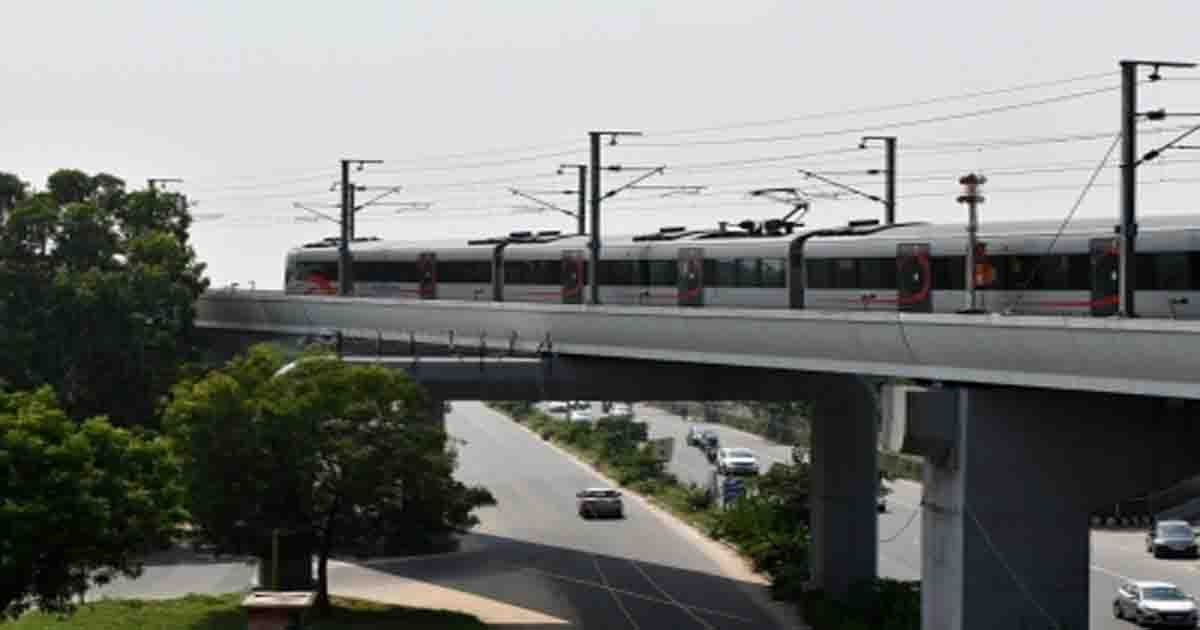
An FIR has been registered against unidentified persons after two posters against the government were found pasted inside a train on the Delhi Metro’s Airport Express Line, police said on Saturday.
The FIR was registered under Sections of the Delhi Prevention of Defacement of Public Property Act, 2007, and the Metro Railway (Operations and Maintenance) Act, 2002.
“The black-and-white posters raised various issues and listed nine claims about changes in the country over recent years. They also carried a QR code inviting people to join an online group,” police said.
Officials said that police seized the posters, and the Special Cell is also involved in the investigation.
This comes amid the anti-Election Commission of India (ECI) protests in the National Capital over the alleged irregularities in the Special Intensive Review (SIR) of electoral rolls.
Several Opposition parties, student activists, as well as the Cockroach Janata Party (CJP) organised protests across the city demanding a rollback of the SIR protest and resignation of Chief Election Commissioner (CEC) Gyanesh Kumar.
Meanwhile, the INDIA Bloc has scheduled a mega rally against ‘vote chori’ on November 1 in New Delhi.
All India Congress Committee General Secretary, K.C. Venugopal on Friday said the party held high-level meetings with senior leaders from Uttar Pradesh and Haryana to intensify mobilisation for the rally.
In a post on X, Venugopal said that he, along with Congress leader Priyanka Gandhi Vadra, met AICC in-charge for Uttar Pradesh Rajendra Pal Gautam, UP PCC president Aradhana Misra Mona and other senior leaders from the state to discuss strategies for building large-scale participation in the rally.
The November 1 rally is being projected as one of the largest mobilisations by the Opposition alliance in recent times, with a special focus on drawing participation from northern states.
The Congress has appealed to supporters and citizens concerned about democratic processes to join the march and the Ramleela Maidan gathering in large numbers.

Maharashtra ATS arrests suspected Jaish-e-Mohammed associate in Mumbai Mahim area

‘Bigg Boss 20’: Rohit Shetty questions Lovepreet Gill, Scout’s closeness

Indian equities extend losses this week as Brent crude oil rises to 6-month high

Tiger Shroff firing case: Shooters received real-time updates from handler, monitored TV news

FIR registered after posters questioning govt performance found pasted inside Delhi Metro

Rahul, Cong ecosystem want to force regime change: BJP after Neha Bora praises B’desh Gen-Z protest

BJP pays tribute to ex-President Abdul Kalam, recalls his enduring influence on generations of India’s youth

Attack on democratic rights: INDIA Bloc leaders on detentions of anti-ECI protestors

INDIA bloc begins protest march against ECI

Maha Congress stages agitation against Gyanesh Kumar
-

 Crime4 years ago
Class 10 student jumps to death in Jaipur
-

 Maharashtra2 years ago
Mumbai Local Train Update: Central Railway’s New Timetable Comes Into Effect; Check Full List Of Revised Timings & Stations
-

 Maharashtra2 years ago
Mumbai To Go Toll-Free Tonight! Maharashtra Govt Announces Complete Toll Waiver For Light Motor Vehicles At All 5 Entry Points Of City
-

 Maharashtra2 years ago
False photo of Imtiaz Jaleel’s rally, exposing the fooling conspiracy
-

 National News2 years ago
Ministry of Railways rolls out Special Drive 4.0 with focus on digitisation, cleanliness, inclusiveness and grievance redressal
-

 Maharashtra2 years ago
Maharashtra Elections 2024: Mumbai Metro & BEST Services Extended Till Midnight On Voting Day
-

 National News2 years ago
J&K: 4 Jawans Killed, 28 Injured After Bus Carrying BSF Personnel For Poll Duty Falls Into Gorge In Budgam; Terrifying Visuals Surface
-

 Crime2 years ago
Baba Siddique Murder: Mumbai Police Unable To Get Lawrence Bishnoi Custody Due To Home Ministry Order, Says Report