
Politics
BJP censors Dilip Ghosh, bars him from speaking to media


The BJP central leadership has censored Bengal MP Dilip Ghosh from speaking against a section of party leaders or making statement on any public forum against any of his party colleagues, be it in West Bengal or anywhere else.
BJP’s national general secretary and headquarters in-charge, Arun Singh, in a letter to Ghosh pointed out that certain statements and outbursts by the latter have not only angered the state party leaders, but also embarrassed the central leadership.
“This was pointed out to you on several occasions by the party leadership in the fond hope that you will take note,” read Singh’s letter
Such comments by Ghosh, who is also the party’s national vice-president, might create dissatisfaction, unrest and alienation among party ranks, which is unacceptable, Singh said.
Singh said that he is writing the letter following instructions from the party’s national President J.P. Nadda.
“On the instructions of J.P. Nadda Ji, I wish to convey to you the party’s deep anguish and concern at issuance of such statements and advise you to always refrain from going to the media or any public forum, about your own colleagues either in the state of West Bengal or anywhere else,” the letter quoted Singh as saying.
On May 20, Ghosh was relieved of the party’s organisational responsibilities in his home state West Bengal, and entrusted with the task of expanding the party’s base in Bihar, Jharkhand, Odisha, Andaman & Nicobar Islands, Manipur, Meghalaya, Assam, and Tripura.
Singh will get back after concluding the work he is involved in.
However, Ghosh said that he is yet to personally receive the letter, adding that whenever he receives the same, he will surely reply to it.
Ghosh was removed as West Bengal BJP president soon after the 2021 Assembly polls, and was replaced by party MP Sukanta Majumdar.
Soon after that, Ghosh had claimed that his successor is “less experienced”.


National News
In her memoir, Sonia Gandhi recalls palmist prediction that Rajiv, not Sanjay, would be PM

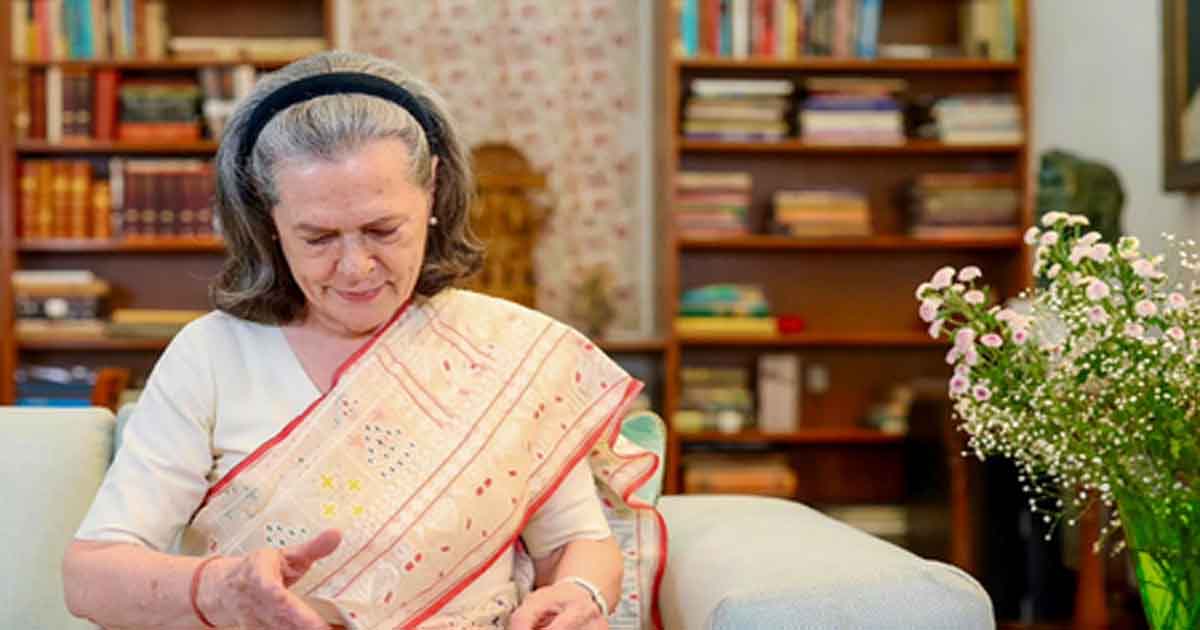
A strange encounter with a palmist at the Gandhi family’s erstwhile residence in Delhi decades ago, which initially appeared amusing, later acquired an unsettling significance in the wake of a series of political tragedies. The incident, recalled by Congress Parliamentary Party Chairperson Sonia Gandhi in her memoir ‘Belonging: A Journey of Love’, revolved around a prediction that her husband, Rajiv Gandhi, would one day become the Prime Minister instead of his younger brother, Sanjay Gandhi.
The memoir, released on November 10, recounts the incident from the late 1970s, when the Gandhi family was living at Bungalow Number 12 on Willingdon Crescent in Delhi, a period Sonia Gandhi refers to as the “Baara Number days”.
Late Prime Minister Indira Gandhi had shifted to the four-bedroom residence with her family after losing power in 1977. The house had been vacated for her by family friend Mohammad Yunus. At the time, Rajiv Gandhi was working as a commercial pilot and had little inclination towards politics, while Sanjay Gandhi was widely regarded as his mother’s political successor.
Recalling one of the unusual incidents at the residence, Sonia writes, “Of all the bizarre happenings and unusual characters in 12 Willingdon Crescent, there’s one that stands out in my memory.”
She describes how a palmist entered their portion of the house without permission and attempted to persuade her to let him read her future.
“One day, a fat man dressed in white forced his way onto our side of the house and began calling out to me, brandishing a paper with the imprint of a palm…I didn’t believe in astrology, I told him. I asked him politely to leave — I had no time to waste, I had work to do, I knew my past, and I was not interested in knowing my future,” she writes.
However, the man refused to leave despite her objections. Sonia recalls that when she ‘flew angrily at him to chase him off’, he turned around and shouted a prediction while making his escape.
“Nahi, nahi, Sanjay nahi — aapke pati Rajivji ek din pradhan mantri banenge! (No, no, not Sanjay, your husband Rajiv will become prime minister one day!)”
The incident became even more amusing when Sonia discovered that Rajiv had already interacted with the palmist.
“Then I saw Rajiv, laughing heartily, with the imprint of the palmist’s ink on his palm. He’d been waylaid by the astrologer and humoured him, thinking it was a great joke. I rushed to my room and tried to calm down, but burst out crying instead,” she writes.
The prediction eventually took on a different meaning following a succession of tragedies. Sanjay Gandhi died in a plane crash in June 1980. Four years later, Indira Gandhi was assassinated in October 1984, following which Rajiv Gandhi was sworn in as the Prime Minister within hours. According to the memoir, he accepted the responsibility despite Sonia’s tearful appeals against his entry into politics. He told her, “They will kill me anyway.”
Although Sonia maintains that she was not superstitious, the memoir also describes instances when events made her wonder whether certain occurrences carried a deeper meaning.
One such incident took place during Rajiv Gandhi’s 41st birthday celebrations in August 1985. During dinner, the family received news that Akali leader Harchand Singh Longowal had been shot dead in Punjab.
“I couldn’t share what was going through my mind, that this was a tragedy but also a bad omen,” she writes. “Why on Rajiv’s birthday — was that just a coincidence, I wondered, or a warning?”
The memoir also revisits the couple’s decision to move into 10 Janpath on February 5, 1990, where Sonia Gandhi continues to reside. Several of Rajiv Gandhi’s colleagues had reportedly advised him against choosing the residence, describing it as “inauspicious”.
Behind the property’s rear gate was a mound believed to contain an elephant’s grave, while the grave of a Sufi pir was located opposite it. However, Rajiv and Sonia dismissed the concerns.
“Neither he nor I were superstitious and laughed it away,” she writes.
Rajiv Gandhi was assassinated 15 months after moving into the residence, in May 1991, adding another tragic dimension to the memories recounted in the memoir.
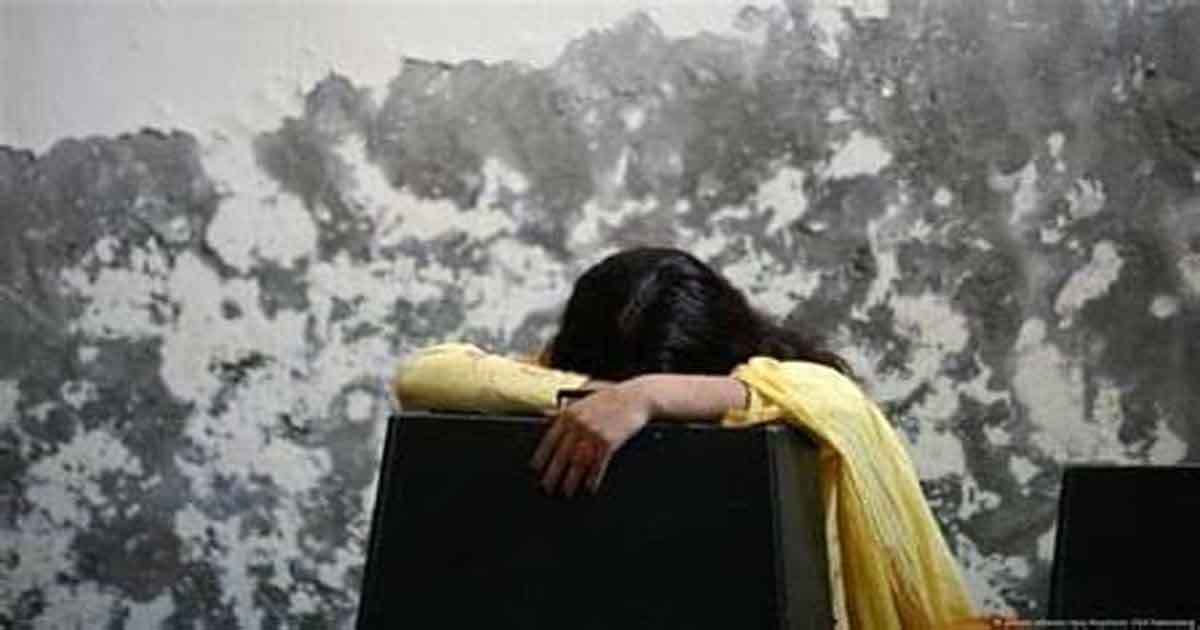
A serious case of alleged sexual exploitation of minor girls has come to light in Mumbai’s Samta Nagar area, where three accused have been arrested for allegedly raping a 14-year-old girl, recording obscene videos of her and threatening to make them viral. Two other accused are still absconding.
The case involves a minor girl residing in the Hanuman Nagar area under the jurisdiction of Samta Nagar police station. According to preliminary information, the accused allegedly sexually exploited the girl by threatening to circulate her objectionable videos on social media.
During the investigation, police recovered more than 15 objectionable videos involving minor girls from the mobile phones seized from the accused. The recovery has raised concerns about the possibility of other girls being victimised and prompted police to widen the scope of their investigation.
Police are now examining the videos to establish the identities of the girls involved and determine whether more minors were subjected to similar exploitation. Investigators are also trying to ascertain whether the accused were operating as part of a larger network.
According to the preliminary investigation, the accused allegedly recorded objectionable videos of the 14-year-old girl and repeatedly threatened to make them public. They allegedly used these threats to continue exploiting the victim.
A total of five people have been identified in connection with the case. Of these, three have been arrested, while efforts are underway to trace and apprehend the remaining two accused.
The matter also triggered protests by Bajrang Dal activists, following which the Samta Nagar police initiated action.
Police registered a case under the Protection of Children from Sexual Offences (POCSO) Act and arrested three accused. Further investigation is underway to establish the full extent of the alleged exploitation and identify other possible victims.
The recovery of more than 15 objectionable videos from the accused’s mobile phones has added a serious dimension to the investigation.
The case has raised concerns over the safety of minor girls in Mumbai, with attention now focused on the police investigation, identification of other potential victims and the arrest of the two absconding accused.

A 71-year-old man from Pune was cheated of Rs 22 lakh by cyber fraudsters posing as senior Karnataka police officials and Central Bureau of Investigation (CBI) officers, who threatened him with digital arrest, police said on Thursday.
The incident took place between October 5 and 15. The complainant, Chandraram Balanna Kuttapelli (71), a resident of Alandi Road, received a call from an unidentified mobile number. The caller allegedly introduced himself as a senior police official from Karnataka and later posed as a CBI officer.
The accused told the elderly man that his SIM card had been misused in a child trafficking case. To make the allegations appear genuine, they asked him to transfer money as a security deposit, claiming that the amount would be digitally verified.
The fraudsters subsequently threatened the complainant with digital arrest and allegedly coerced him into transferring a total of Rs 22 lakh to bank accounts provided by them.
Following the complaint, Vishrantwadi police registered a case on November 11 under Sections 319(2) and 318(4) of the Bharatiya Nyaya Sanhita (BNS) and Section 66D of the Information Technology Act.
No arrests have been made in the case so far.
In a similar incident reported earlier on July 18, cyber fraudsters posing as CBI officials had threatened a 73-year-old Rahatani resident with prosecution in a money laundering case. They had forced him to transfer Rs 22 lakh to what they described as the ‘Supreme Court’s Secret Supervision Account’ for verification purposes. The fraud took place between June 29 and July 3.
The elderly man subsequently lodged a complaint with the cybercrime cell, following which Wakad police registered a case.
According to the complaint, an officer from Wakad police said the fraudsters contacted the victim while posing as IPS and CBI officers. They claimed that his Aadhaar card had been used to purchase a mobile phone and that a complaint had been filed against him.

In her memoir, Sonia Gandhi recalls palmist prediction that Rajiv, not Sanjay, would be PM

Mumbai: Three arrested for exploiting minor girl; objectionable videos found on phones

Pune man loses Rs 22 Lakh to cyber fraudsters posing as Karnataka Police, CBI officers

Mumbai: Four arrested for attacking family over Diwali firecracker dispute in Andheri

Hindu outfit backs actor after Kareena gets legal notice over Quranic verse on 200-year-old heirloom pendant

Rahul, Cong ecosystem want to force regime change: BJP after Neha Bora praises B’desh Gen-Z protest

BJP pays tribute to ex-President Abdul Kalam, recalls his enduring influence on generations of India’s youth

Attack on democratic rights: INDIA Bloc leaders on detentions of anti-ECI protestors

Congress trying to protect 3 crore Bangladeshi infiltrators in voter list: HM Shah

Online betting: ED conducts searches at 20 premises in Mumbai, Pune, Hyderabad
-

 Crime4 years ago
Class 10 student jumps to death in Jaipur
-

 Maharashtra2 years ago
Mumbai Local Train Update: Central Railway’s New Timetable Comes Into Effect; Check Full List Of Revised Timings & Stations
-

 Maharashtra2 years ago
Mumbai To Go Toll-Free Tonight! Maharashtra Govt Announces Complete Toll Waiver For Light Motor Vehicles At All 5 Entry Points Of City
-

 Maharashtra2 years ago
False photo of Imtiaz Jaleel’s rally, exposing the fooling conspiracy
-

 National News2 years ago
Ministry of Railways rolls out Special Drive 4.0 with focus on digitisation, cleanliness, inclusiveness and grievance redressal
-

 Maharashtra2 years ago
Maharashtra Elections 2024: Mumbai Metro & BEST Services Extended Till Midnight On Voting Day
-

 National News2 years ago
J&K: 4 Jawans Killed, 28 Injured After Bus Carrying BSF Personnel For Poll Duty Falls Into Gorge In Budgam; Terrifying Visuals Surface
-

 Crime2 years ago
Baba Siddique Murder: Mumbai Police Unable To Get Lawrence Bishnoi Custody Due To Home Ministry Order, Says Report