
International News
Biden calls for ‘wartime trial’ over Bucha killings

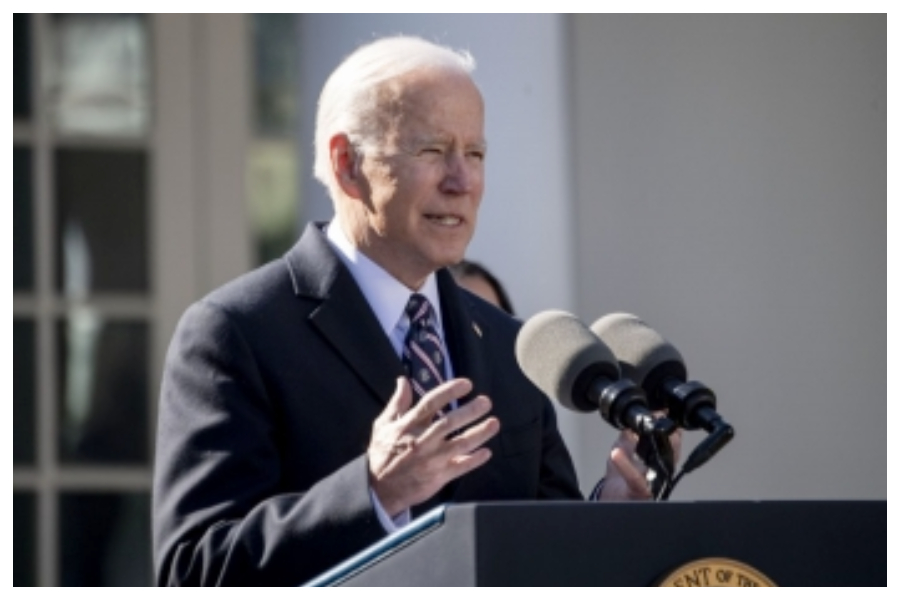
US President Joe Biden has called for a “wartime trial” against Russia over the alleged civilian killings in the Ukrainian city of Bucha, where a mass grave has been found with more than 300 bodies.
Addressing the media on Monday, Biden said: “I got criticised for calling (Russian President Vladimir) Putin a war criminal. Well, the truth of the matter — you saw what happened in Bucha. This warrants him — he is a war criminal.
“But we have to gather the information, we have to continue to provide Ukraine with the weapons they need to continue the fight, and we have to get all the detail so this can be an actual — have a wartime trial.”
The American President went on to call Putin “brutal”, adding that the incident in Bucha was “outrageous”.
When asked if he agreed the alleged Bucha killings was a genocide, Biden said: “No, I think it is a war crime.”
The President added that he was seeking more sanctions against Putin, but did not provide any further details.
The city of Bucha, along with Monastyrskyi, Irpin, Hostomel, Borodyanka, Makariv, Kopyliv, Motyzhyn, all in the Kiev region, were liberated from Russian forces on April 2.
Later that day, Bucha Mayor Anatoliy Fedoruk announced that a mass grave was discovered in the city where almost 300 people were buried.
Ukraine’s Prosecutor General Iryna Venediktova said there was “crucial evidence of brutal war crimes perpetrated by the Russian Federation in the liberated territories of the Kiev region”.
Russia has however denied the allegation, saying that the photos and videos published of the carnage in Bucha had been faked by the Kiev government.
The developments in Bucha have received widespread condemnation.
While Ukrainian President Volodymyr Zelensky has termed the killings as “genocide”, UK Prime Minister Boris Johnson accused Russia of “despicable attacks” and US Secretary of State Antony Blinken called it a “punch to the gut”.
Head of the European Commission, Ursula von der Leyen, said an independent investigation was urgently needed.
German Chancellor Olaf Scholz condemned it as a “terrible war crime” and French President Emmanuel Macron called pictures from the scene “unbearable”.


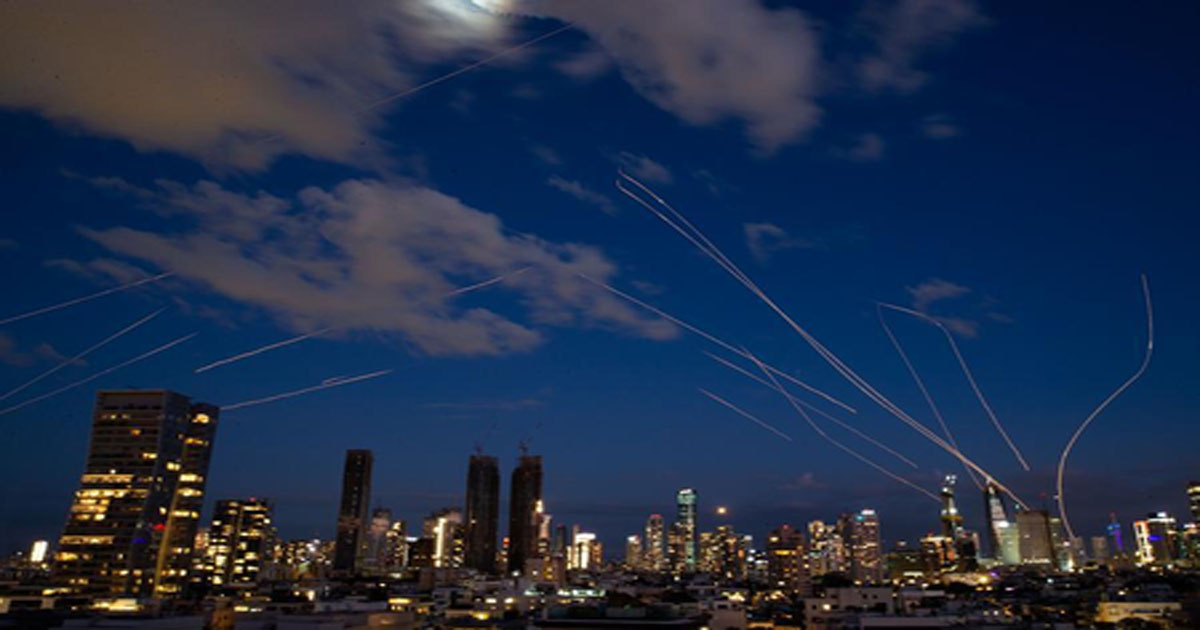
Canberra, March 25: Only 26 per cent of Australians approve of the US and Israel’s strikes on Iran and half the population would oppose the deployment of Australian troops, a poll has found.
The latest edition of The Essential Report, a monthly poll on social and political issues conducted by independent firm Essential Research, found that 10 per cent of Australians strongly approve and 16 per cent approve of the US and Israel’s decision to initiate strikes on Iran, Xinhua news agency reported.
By comparison, 27 per cent of respondents said they strongly disapprove of the war and 15 per cent said they disapprove, with the remaining participants either neutral or unsure.
Asked about Australia’s involvement in the ongoing conflict, 50 per cent of participants in the poll said they would oppose sending troops to support US-Israeli ground operations in Iran, compared to 21 per cent who said they would support such a move.
Respondents were also more likely to oppose than support Australia sending weapons and equipment to support third-party nations impacted by Iranian retaliatory strikes, such as the United Arab Emirates.
A clear majority of respondents, 60 per cent, were supportive of Australia working with international organizations to help peace talks and prevent further escalation.
In terms of diplomatic and trade relationships, 34 per cent of participants in the poll said that Australia should be working less closely with the United States, up from 14 per cent in 2021.
The poll of 1,008 people last week found 43 per cent disapproved of the US and Israeli bombardment of Iran, while just 26 per cent backed the move. Some 31 per cent were unsure or responded “don’t know”.
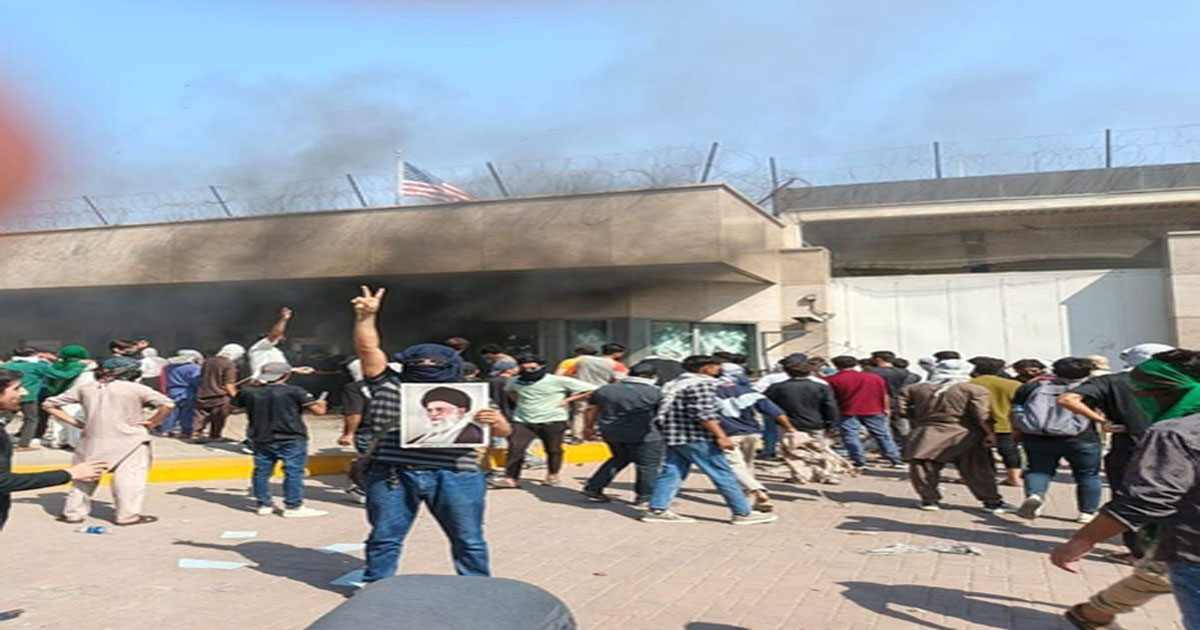
New Delhi, March 25: For Pakistan’s Army Chief Field Marshal Asim Munir, countering the pro-Iran Shia mobilisation in the country is increasingly becoming a headache. For Pakistan, countering this mobilisation is important as it is threatening to become bigger. However, the dilemma the establishment faces is that it cannot use its official machinery to take on the mobilisation of the Shias.
Pakistan has chosen to mediate between Iran and the United States, and hence it needs to remain neutral. Any direct action against the Shia mobilisation would infuriate Iran, and this is something that Islamabad wants to avoid.
An official said that Pakistan has now brought back its proxies to take on this problem. The Pakistan Army chief has ordered hardline Sunni elements and leaders from the Sipah-e-Sabah (SeS) and Jamaat-ud-Dawah (JuD) to take on the Shias who are mobilising in large numbers in support of Iran. These groups have, in the past, come to the rescue of the Pakistan establishment. When it comes to countering protesters who were seeking justice for jailed former Pakistan Prime Minister Imran Khan, it was these elements who took to the streets.
The members of the SeS and JuD have the backing of the army and ISI and have been given a free hand to indulge in street violence against those who are questioning the establishment, an official said.
The SeS is a banned Sunni Deobandi Islamist organisation and a former political party that was founded in 1985. This outfit came into existence only to oppose Shia influence in Pakistan. The SeS has a history of being involved in sectarian conflicts, including violence with the Shia organisation, Shipah-e-Muhammad, Pakistan.
The JuD, on the other hand, is the charity wing of the Lashkar-e-Taiba. The JuD follows the Ahl-i Hadith interpretation of Islam, which is similar to Wahhabism and Salafism.
An Intelligence Bureau official said that by involving the SeS and JuD, the Pakistan army chief would look to put down the mobilisation of the Shia. Since these groups have no accountability, the violence would not be blamed on the state, but on two individual organisations. This helps in the deniability factor, when Pakistan speaks with Iran, the official added.
Such violence will no doubt be scrutinised internationally and by foreign Intelligence agencies. The establishment would, however, try to get away by putting the blame on the SeS and JuD, while stating that it has nothing to do with them.
Another official said that both groups have been given immunity by the establishment. This means that they can choose to act the way they please.
Another official said that with such a plan in place, one could anticipate street violence and bloody clashes with the Shias in Pakistan.
By trying to mediate between Iran and the US, Pakistan wants to place itself in a position of power. Pakistan also wants to claim geopolitical relevance by offering to mediate between the two warring nations.
Field Marshal Asim Munir has taken this task upon himself and has been engaging directly with Iranian President Masood Pezeshkian. He has also been leveraging his relations with some of the Gulf nations and the US.
With Pakistan wanting geopolitical relevance, it cannot afford to officially crush the mobilisation that is taking place in support of Iran. If Pakistan ends up angering Iran at this juncture, then Tehran may not come to the table. This would hurt Pakistan’s ambitions of playing mediator and reclaiming geopolitical importance, another official said.
The JuD and the SeS have readily accepted what the Pakistan army chief has said, as they have done in the past. Officials say that both these outfits have had an agenda against the Shias for a long time, and hence the offer made by Field Marshal Munir is more than welcome for them.
Washington, March 24: A series of backchannel talks helped shape President Donald Trump’s decision to pause planned strikes on Iran, according to US media reports.
The Wall Street Journal reported that officials from Egypt, Saudi Arabia, Turkey, and Pakistan were involved in closed-door discussions to find a way out of the conflict.
The White House, however, refrained from giving any details. “These are sensitive diplomatic discussions and the United States will not negotiate through the news media,” White House Press Secretary Karoline Leavitt told media.
These efforts came as Trump’s 48-hour deadline for Iran to reopen the Strait of Hormuz was about to expire. The ultimatum had raised fears of strikes on Iranian power infrastructure.
According to the media report, Arab officials worked to find contacts within Iran’s leadership. They explored options for a temporary halt in fighting to allow further talks.
Egyptian intelligence officials opened a channel with Iran’s Islamic Revolutionary Guard Corps, which plays a key role in Tehran’s decisions.
At the same time, Oman was also trying to ease tensions. Oman’s foreign minister said the country was “working intensively to put in place safe passage arrangements for the Strait of Hormuz.”
The New York Times reported that the United States and Iran were exchanging messages through intermediaries. But there was no sign of direct talks. Iranian officials denied that negotiations were underway.
The push for diplomacy reflects growing concern in the region. Gulf countries face the risk of wider attacks. They are pressing for de-escalation.
Still, major differences remain. The Wall Street Journal said mediators were sceptical about a quick deal. The two sides are far apart on key issues, including Iran’s nuclear programme and security guarantees.
There have also been early discussions about possible meetings in neutral countries such as Pakistan or Turkey. No meeting has been confirmed.
US envoys Steve Witkoff and Jared Kushner are leading the outreach, according to reports.

Rumours Debunked: Palghar District Administration Clarifies No Shortage Of Petrol And Diesel Despite Prevailing Global Tensions

Abu Asim Azmi expresses concern over incidents of hate speech-related crimes in Maharashtra, demands strict action in the House of Assembly

Black magic was performed at Ajit Pawar’s house, Rohit Pawar’s sensational summary, demand for investigation

Amin Patel strongly demands that the Kamatipura Rehabilitation project be completed as soon as possible, and assures to start the work.

Impostor Baba Ashok Kharat declared as incarnation of Shankar, Chief Minister Fadnavis claims in the Assembly, details presented

Married Mumbai Woman Mocked In Andheri Society Over ‘Lift Kissing’ CCTV Video, Files Police Complaint

Mumbai: JBCN International School In Borivali Gets Bomb Threat, Search Reveals Hoax, Students Safe

Mahayoti’s big gift to the people of Mumbai… Now there is no tax for houses up to 500 square feet, the Municipal Corporation has increased this limit to 700 square feet.

LPG Crisis In Maharashtra: Cyber Crime On Rise Amid Shortage, 2 Women Lose ₹4 Lakh In ‘Gas Update’ Online Scam In Kalyan-Dombivli

Rashmika Mandanna-Vijay Deverakonda Wedding: Virosh Turn Modern Day Prince & Princess For Their Dreamy Sangeet Ceremony
-

 Crime4 years ago
Class 10 student jumps to death in Jaipur
-

 Maharashtra1 year ago
Mumbai Local Train Update: Central Railway’s New Timetable Comes Into Effect; Check Full List Of Revised Timings & Stations
-

 Maharashtra1 year ago
Mumbai To Go Toll-Free Tonight! Maharashtra Govt Announces Complete Toll Waiver For Light Motor Vehicles At All 5 Entry Points Of City
-

 Maharashtra1 year ago
False photo of Imtiaz Jaleel’s rally, exposing the fooling conspiracy
-

 National News1 year ago
Ministry of Railways rolls out Special Drive 4.0 with focus on digitisation, cleanliness, inclusiveness and grievance redressal
-

 Maharashtra1 year ago
Maharashtra Elections 2024: Mumbai Metro & BEST Services Extended Till Midnight On Voting Day
-

 National News2 years ago
J&K: 4 Jawans Killed, 28 Injured After Bus Carrying BSF Personnel For Poll Duty Falls Into Gorge In Budgam; Terrifying Visuals Surface
-

 Crime1 year ago
Baba Siddique Murder: Mumbai Police Unable To Get Lawrence Bishnoi Custody Due To Home Ministry Order, Says Report