
National News
Bengal presents Rs 3.89 lakh crore budget; DA enhanced, housing scheme gets higher allocation


Kolkata, Feb 12: Amid the crucial Assembly polls due next year in West Bengal, Minister of State for Finance Chandrima Bhattacharya, on Wednesday, presented a Rs 3,89,194.09 crore budget for the financial year 2005-26 at the floor of the state Assembly with enhanced dearness allowance and higher budgetary allocation for the state’s own affordable housing scheme for the poor being the main attractions of the budget proposals.
The budget size was Rs 3,66,116 crore.
Bhattacharya announced an increase in the dearness allowance for the state government employees by four percentage points to 18 per cent from the current rate of 14 per cent. The new rate will be applicable from April 1, 2025.
However, the enhancement has not made the state government employees happy considering that even after the increase, the gap with the dearness allowance enjoyed by the central government employees remains quite high at 35 per cent.
The Union government employees are currently receiving a dearness allowance at the rate of 53 per cent. This is the last full state budget before the Assembly election due next year.
However, what has come as a surprise for many is that, although largely expected, even in the last full budget before the Assembly elections, there was no proposal for an increase in the amount paid under Lakshmir Bhandar, the monthly dole scheme for women in the state.
The amount paid under the scheme will remain the same — Rs 1,000 for women in the general category and Rs 1,200 for the women under the reserved category.
The main sectors where the budgetary allocations had been substantially increased include housing, road infrastructure, health and education.
Under ‘Banglar Bari’ (Bengal’s House), the state government’s own affordable housing scheme for the poor, a proposal was mooted to construct 16 lakh additional houses and hence an additional Rs 9,600 crore has been allocated for the scheme.
For the development of road infrastructure under the ‘Pathashree’ scheme, an additional allocation of Rs 1,500 crore has been made in the budget proposals.
For higher education, budgetary allocation for 2025-26 has been earmarked at Rs 6,593.58 crore, while an amount of Rs 41,153 crore has been set aside for school education.
The budgetary allocation for the health sector has been announced at Rs 21,355 crore for 2025.26. The allocation for the fiscal under review for rural development and panchayat affairs has been fixed at 44,000 crore.
On Wednesday, Bhattacharya announced that the state government will provide smartphones to 70,000 accredited social health activists (ASHA) workers.
She also announced a new scheme christened ‘Nadi Bandhan’, aimed at the prevention of river banks at different river banks and allocated Rs 2000 crore for that project. An amount of Rs 500 crore was allocated for the construction of a new bridge at Sagar Islands, the venue for the annual Gangasagar Mela.

International News
Netanyahu speaks with PM Modi, invites him for Israel’s Independence Day along with heroic Indian pilot

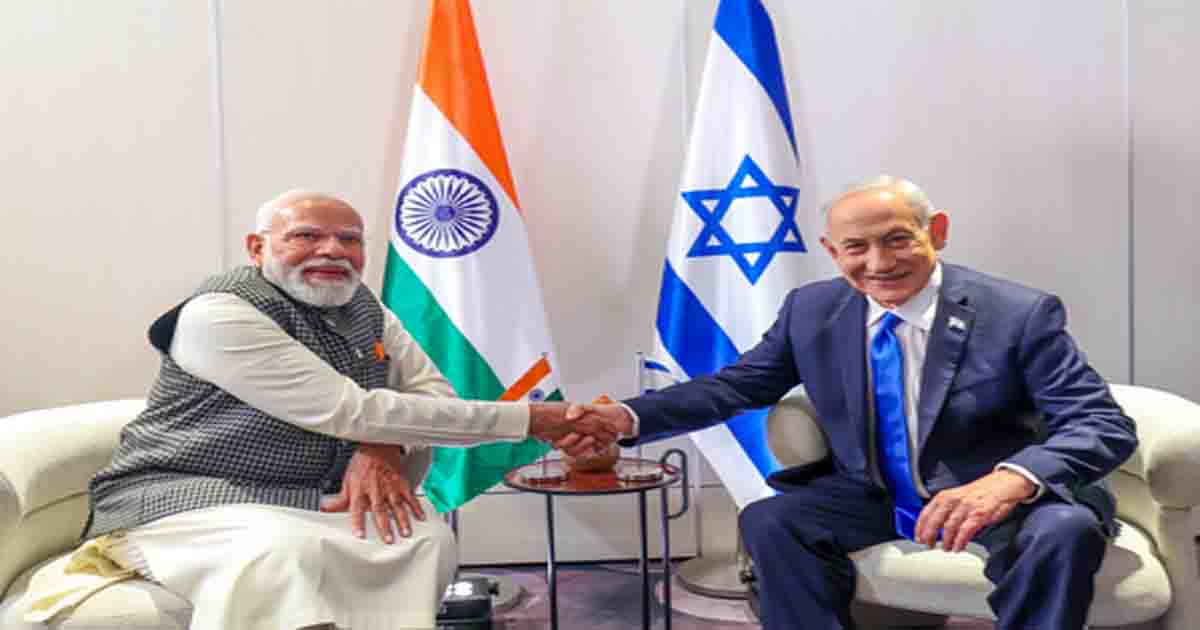
Israel Prime Minister Benjamin Netanyahu held a telephonic conversation with Prime Minister Narendra Modi on Thursday and invited him to light a torch along with “heroic Indian pilot” Captain Smit Machchhar on the country’s Independence Day.
During the phone call, PM Modi and Netanyahu also reviewed the sustained momentum in bilateral ties and reaffirmed their commitment to further strengthen the partnership between both countries.
“Received a phone call from Israeli Prime Minister Benjamin Netanyahu. We reviewed the sustained momentum in our bilateral ties and reaffirmed our commitment to further strengthening our partnership. We also exchanged views on recent developments in West Asia and underscored the urgent need to restore peace and stability in the region,” PM Modi wrote on X after the phone call.
Netanyahu said that PM Modi thanked him for the invitation and expressed India’s readiness to cooperate with Israel in fighting terrorism.
“I spoke with my friend, Indian Prime Minister Narendra Modi, and invited him to light a torch together with the heroic Indian pilot on the Independence Day of the State of Israel. Modi thanked me for the invitation and said that on the ground and in the air, India and Israel fight terrorism together. He expressed his appreciation for the courageous and long-standing relationship between us,” Netanyahu posted on X.
Machchhar sustained severe injuries during an attack by the Omani co-pilot on a Tel Aviv-bound flydubai flight on September 30. The co-pilot allegedly attempted to take control of the aircraft, following which Machchhar fought him off and managed to unlock the cockpit door.
The move allowed crew members and passengers to enter the cockpit and restrain the attacker, averting what could have been a major disaster. The flight was carrying more than 170 people.
On October 3, Netanyahu held a telephonic conversation with Captain Smit Machchhar and hailed him as a “true hero” of the people of India, Israel and the whole world. He invited Captain Smit Machchhar and PM Modi to light a celebratory flame on Israel’s Independence Day.
“Captain, I want to invite you and my dear friend, Prime Minister Narendra Modi, to light a celebratory flame on our next Independence Day. You are a true hero of the brave peoples of India and Israel, and you’re a hero of the entire world,” Netanyahu told the Captain Machchhar.
“I wish you a very speedy and complete recovery,” he added.
The Israeli Prime Minister said the honour was usually reserved for his country’s own citizens. However, he added, “But I think here in this case, all the citizens of Israel will embrace you. They do now and they will then too.”
Netanyahu, who was told by the pilot how the attack unfolded in the cockpit, said he was amazed by his conduct.
“I’m amazed at your courage, at your coolness of judgment under impossible conditions,” the Israeli Prime Minister said, adding that what the Captain did was remarkable and that it bordered on the miraculous.
Netanyahu said the pilot had saved more than the lives of those on board.
“You saved so many souls. I think you saved something bigger. You saved the spirit of the world to realise that a brave pilot and brave passengers can overcome this evil, however threatening, however violent. It’s something that is being justly hailed around the world,” Netanyahu said.
“You’re a hero of Israel. You’re a hero of India. You’re a hero of the entire world,” he added.
Inviting the Captain again towards the end of the conversation, Netanyahu said: “So we hope to see you very soon in Israel. I look forward to seeing you here again. But under the circumstances, I think this will be a memorable and historic visit.”
“Thank you for everything you did,” the Israeli Prime Minister told the Indian pilot.

At least 12 members of a Dalit family were injured, including two who suffered stab wounds, in an alleged attack following a dispute during an idol immersion procession in Bihar’s Phulwari Sharif area, police said on Thursday.
The incident took place in the Ishopur locality, where a group of around 25 people, allegedly led by Sanjay Yadav, entered the house of Ramkumar Chaudhary and attacked family members with sticks, clubs and knives.
The condition of Ramkumar Chaudhary and Pankaj Kumar was reported to be critical and both are undergoing treatment at AIIMS, Patna.
The other injured were identified as Aman, Riya Kumari, Bahadur Chaudhary, Lalmuni Devi, Pankaj Chaudhary, Ankit, Aarti Devi, Ajay Chaudhary, Deepak and Anil. They were taken to hospitals for treatment.
A video purportedly showing the assault, including the use of knives on the street, has also surfaced.
However, its authenticity and the complete sequence of events are yet to be established through an investigation.
According to local residents, police personnel from the nearby Ishopur police outpost reached the spot after hearing the commotion and attempted to intervene.
The officers were allegedly attacked by the assailants, leaving several police personnel injured.
Additional police forces were subsequently deployed, and the situation was brought under control.
The victims alleged that the attack stemmed from a longstanding dispute between the two families and claimed that similar incidents had occurred in the past.
However, the precise cause of the dispute and the circumstances leading to Thursday’s violence have not been officially established.
Police have detained two people in connection with the incident, while efforts are underway to trace other suspects.
Investigators are examining the circumstances surrounding the clash, the alleged assault on the family and the reported attack on police personnel.
Tension continued to prevail in the locality following the incident, while the injured remained under medical care and police pursued further legal action.
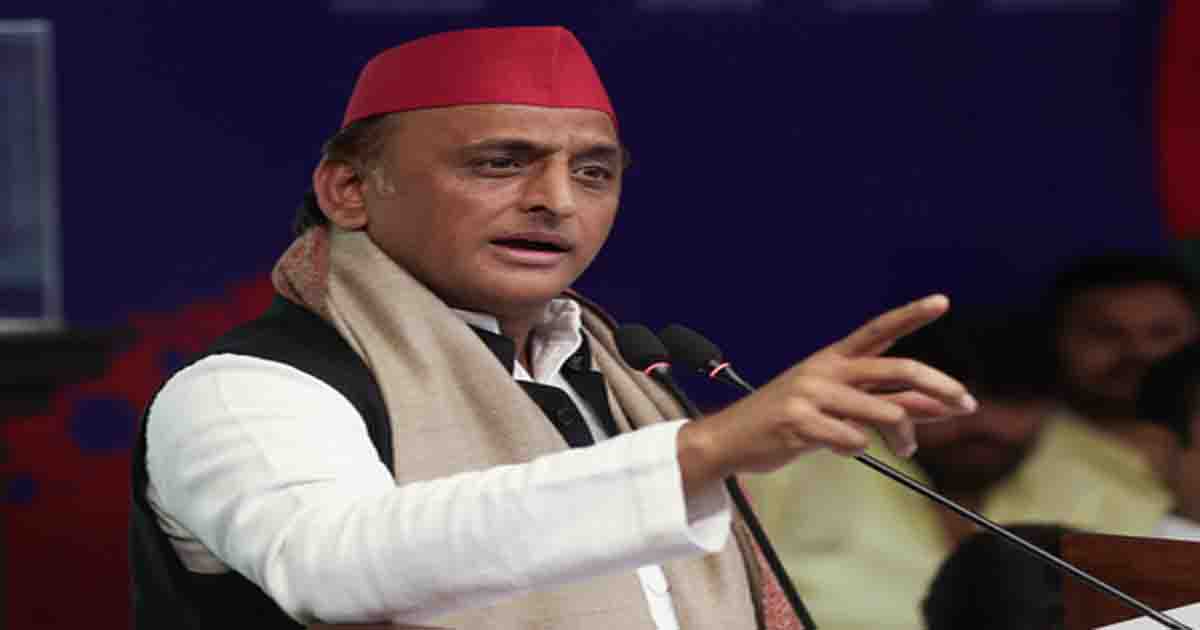
Samajwadi Party (SP) chief Akhilesh Yadav on Thursday met party General Secretary and founding member Azam Khan at Rampur jail and asserted the veteran leader would continue to remain an important figure in the party.
He alleged that no political family had faced as much injustice as Azam Khan’s family and said the meeting also involved discussions on the 2027 Uttar Pradesh Assembly elections.
Speaking to reporters after the meeting, Akhilesh Yadav said, “I am returning after meeting the respected Azam Khan Sahib. Azam was, Azam is, and Azam will remain. No family has faced as much injustice as his family. No political family has faced as much injustice as the family of the respected Azam Khan Sahib.”
Questioning the BJP over the cases against Azam Khan, the SP chief alleged that false cases had been filed against him and that he had spent several years in jail.
“Who is responsible for this injustice? False cases have been filed against him. He has spent so many years in jail. The truth is that the Bharatiya Janata Party has no concern for education or knowledge. It has no interest in education or the universities that shape people’s futures,” he said.
Akhilesh Yadav asserted that false cases could not suppress the truth indefinitely.
“False cases do not have the power to keep someone imprisoned forever. It may take time, and there may be some delay, but false cases do not have the power to keep the truth imprisoned,” he said, adding that the Samajwadi Party’s relationship with the people of Rampur went beyond politics and was rooted in an emotional bond.
Referring to his meeting with Azam Khan, Akhilesh Yadav said the party shared a family-like relationship with its supporters in the region. He also remarked that those extending respect should not be taken advantage of.
Asked about the discussions during the meeting, he said they had held a detailed conversation about the upcoming elections.
“We had a lengthy discussion. A list of our alliance partners regarding the elections has been prepared, and I have brought that list with me after discussing it with him,” he said.
The SP chief also criticised those he accused of conspiring against political opponents, saying they would eventually have to answer to society, the country, and the law when the truth emerged.
Taking aim at the BJP over the situation in Rampur, Akhilesh Yadav said the spirit of Ram Rajya had been undermined in the region.
“Rampur is a place with a name associated with Ram, yet the spirit of Ram Rajya is being strangled and destroyed here. Who would know this better than you?” he said.
Reiterating the Samajwadi Party’s political objective, he said the party was determined to defeat the BJP in the 2027 Assembly elections.
“The Samajwadi Party’s goal is clear: to defeat the BJP. Every Samajwadi Party worker is ready to work towards this objective. The BJP leaders will have to face the consequences of their actions. The people of Uttar Pradesh will erase the Bharatiya Janata Party from the state’s political landscape once and for all,” he said.
Akhilesh Yadav further accused the BJP of being disconnected from education and knowledge and alleged that its leaders had joined hands with corrupt officials. He also accused them of being involved in vote theft, intensifying his attack on the ruling party ahead of the next Assembly elections.

Netanyahu speaks with PM Modi, invites him for Israel’s Independence Day along with heroic Indian pilot

Aasif Khan’s wife reveals actor suffered major heart attack, calls out Qazi Touqeer for mocking him

Four more arrested in Tiger Shroff firing case; two women accused of supplying weapons, accused remanded to police custody till October 26.

Swiggy’s Q2 net loss widens sequentially to Rs 922 crore

12 injured in attack on Dalit family in Patna, two critical

Rahul, Cong ecosystem want to force regime change: BJP after Neha Bora praises B’desh Gen-Z protest

Attack on democratic rights: INDIA Bloc leaders on detentions of anti-ECI protestors

BJP pays tribute to ex-President Abdul Kalam, recalls his enduring influence on generations of India’s youth

INDIA bloc begins protest march against ECI

Maha Congress stages agitation against Gyanesh Kumar
-

 Crime4 years ago
Class 10 student jumps to death in Jaipur
-

 Maharashtra2 years ago
Mumbai Local Train Update: Central Railway’s New Timetable Comes Into Effect; Check Full List Of Revised Timings & Stations
-

 Maharashtra2 years ago
Mumbai To Go Toll-Free Tonight! Maharashtra Govt Announces Complete Toll Waiver For Light Motor Vehicles At All 5 Entry Points Of City
-

 Maharashtra2 years ago
False photo of Imtiaz Jaleel’s rally, exposing the fooling conspiracy
-

 National News2 years ago
Ministry of Railways rolls out Special Drive 4.0 with focus on digitisation, cleanliness, inclusiveness and grievance redressal
-

 Maharashtra2 years ago
Maharashtra Elections 2024: Mumbai Metro & BEST Services Extended Till Midnight On Voting Day
-

 National News2 years ago
J&K: 4 Jawans Killed, 28 Injured After Bus Carrying BSF Personnel For Poll Duty Falls Into Gorge In Budgam; Terrifying Visuals Surface
-

 Crime2 years ago
Baba Siddique Murder: Mumbai Police Unable To Get Lawrence Bishnoi Custody Due To Home Ministry Order, Says Report