
International News
Bangladesh-India Partnership: A Bastion of Regional Stability in South Asia

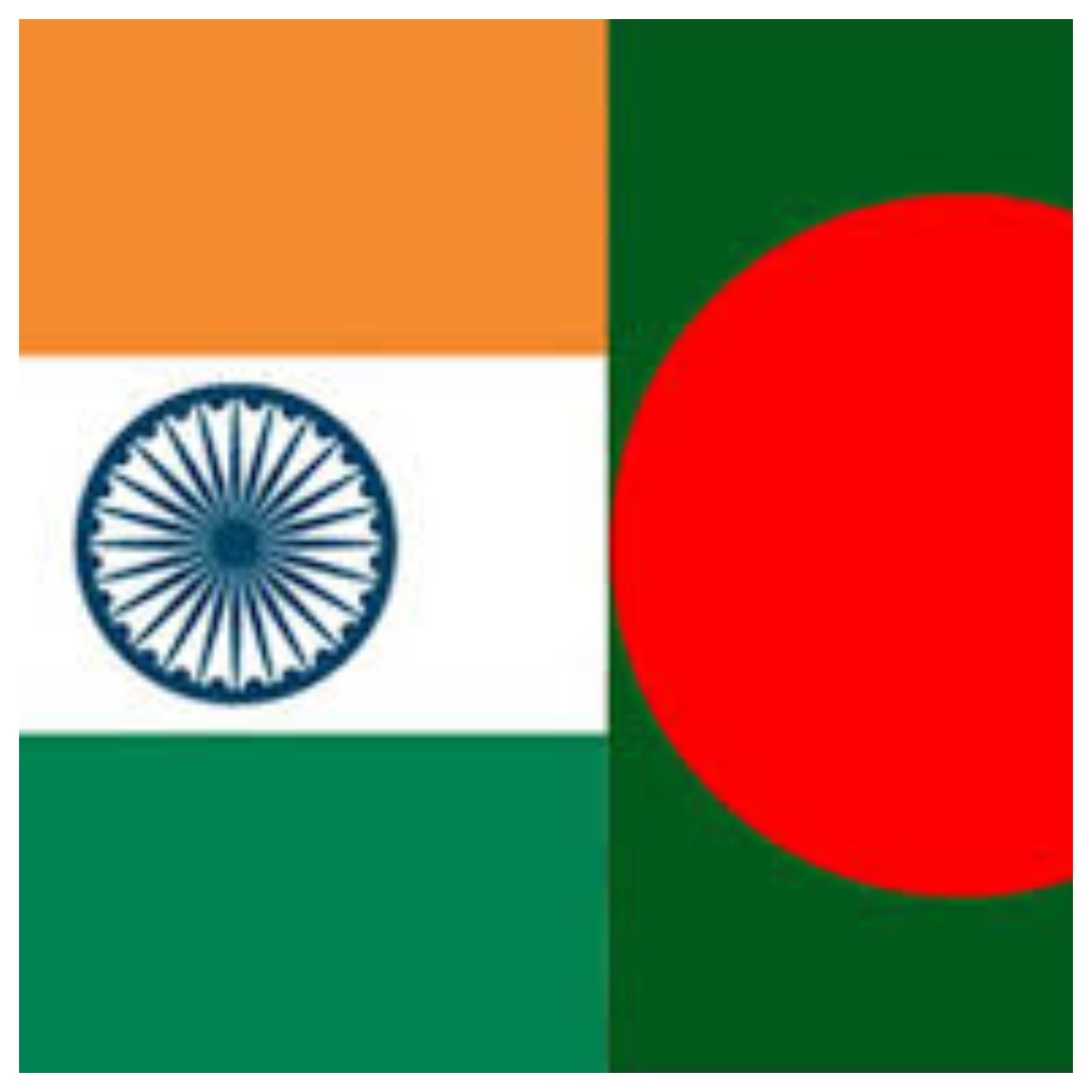
India was one of the first countries to establish bilateral diplomatic ties with Bangladesh. With the recognition of independence of Bangladesh on December 6, 1971, this relation was born out of Bangladesh’s liberation struggle against the oppressive force of Pakistan.
The year 2021 marks the glorious 50th anniversary of diplomatic relations between both states which is also the golden jubilee of Bangladesh’s independence from Pakistan.
Bangladesh and India celebrate their tremendous efforts of being ‘trusted friends’ over the years. Both the countries decided to commemorate December 6 as ‘Maitri Diwas’ (Friendship Day) during the visit of Indian Prime Minister Modi on the occasion of golden jubilee of Bangladesh in March 2021. The bilateral partnership has flourished every aspect of cooperation from trade to energy, security to connectivity. The magnitude of friendship and partnership between Bangladesh India over the past decade has contributed to a paradigm shift in their bilateral relations. Many analysts term the relationship as a model for other countries in South Asia and beyond.
Bangladesh and India share a 4,096 km-long international border, the fifth-longest land border in the world, being the neighbouring state and the liberation wartime ally, Bangladesh considers bond with India is inscribed in blood, which is hard to shake. However, this bond faced strategic changes with the regime change in Bangladesh started from 1975 after the assassination of Father of the Nation, Bangabandhu Sheikh Mujibur Rahman, as the period before that was known as ‘honeymoon period’ (1971-1975) of the relations.
After that, Bangladesh experienced military regimes which ended the honeymoon period. During the period of the Bangladesh Nationalist Party (BNP) in 2001, the relations further took a downturn due to its anti-India posturing. Later, it started to improve when Sheikh Hasina led- Awami League government came to power.
In 2010, Hasina visited New Delhi to build a ‘stable and fruitful relationship’, and both the nations sought to address cross-border terrorism and India’s connectivity with Bangladesh through the northeast region. In a joint communique, the two Prime Ministers shared vision for the future which would include cooperation in water resources, power, transportation, connectivity, tourism, and education. Later on in 2013, a credit line of $800 million was extended by the Manmohan Singh government and ‘Maitreyi express’ was revived between Kolkata and Dhaka that operationalises the bus services in these routes.
In 2017, Sheikh Hasina visited New Delhi and the result was dozens of agreements being signed concerning trade, transport, energy as well as counterterrorism. The bilateral trade of India with Bangladesh steadily improved over the years, as it was about $6 billion in 2015-16 and crossed the landmark $10 billion in 2018-19. Hence, trade relations strengthened between the two nations and Bangladesh is India’s largest trading partner in South Asia with the total bilateral trade between the two nations standing at $9.5 billion in 2019-20.
Not only economic ties, but also India’s shared cooperation with Bangladesh in the areas of security, counter-terrorism, anti-radicalisation, energy, advanced tech, ecology, vaccines would contribute largely in the South Asian regional stability. South Asian region is at cross-roads due to a new geopolitical landscape, looming economic crisis, and security challenges triggered by Afghanistan situation, Pakistan crisis and Sri Lanka crisis. The impact of the Ukraine War, threats of terrorism and radicalization and bilateral conflicts has further caused regional instability in South Asia. In this context, bilateral partnership between Bangladesh and India is critical from a regional perspective.
Bangladesh-India Partnership: An Epitome of Regional Cooperation
Undoubtedly, in South Asia, the partnership that exists between Bangladesh and India is an exemplary one. Starting from the trade partnership to security cooperation, both the countries enjoy the support of each other and can negotiate in areas like land boundary, connectivity, trade deficits, water problem and maritime disputes. Bangladesh and India enjoy benefits from bilateral cooperation in a win-win situation in the areas of economy, security, trade, ports, energy, investment, social links, and transit issues.
Economic Cooperation
Both Bangladesh and India consider each other as one of the vital trading partners. India is the second largest trade partner of Bangladesh. Bangladesh’s share in India’s export increased from 1.4 per cent in 2010 to 3.5 per cent in 2021. India’s share in Bangladesh’s goods exports stood at 3.3 per cent. Being part of South Asian Free Trade Area (SAFTA), both the countries get preferential treatments in case of tariff concessions in their respective markets. Bangladesh is by far the largest trading partner for India in South Asia, which portrays the positive economic cooperation that exists between both states. This cooperation is significant in a region like South Asia to deepen mutual understanding that would develop the region gradually as an integrated, secured and self-sufficient unit.
Security Relations
The security and military ties of the two countries were established in 1971 during the glorious days of Liberation War of Bangladesh when India actively provided its military support. The partnership between the two nations pioneered extraordinary level of security cooperation during the Bangabandhu government, 1972-1975 which discontinued with the tragedy of assassination of Bangabandhu on August 15, 1975. The security cooperation revived based on mutual understand during the Sheikh Hasina government first in 1996-2001 and then 2009-present.
In 2015, during Prime Minister Modi’s visit to Bangladesh, both the countries agreed on joint coast guards in view of combating piracy and enhancing maritime security in the Bay of Bengal region.
Hasina and Modi held a dialogue on “regional security and cooperation in combating international terrorism.” Both countries’ higher officials signed a variety of agreement including cyber security, defence, connectivity, energy, and a civil nuclear cooperation.
The signing of memorandum of understanding (MoU) on defence cooperation during the visit of Prime Minister Sheikh Hasina to New Delhi in 2017 is another milestone in security cooperation. These agreements are not only crucial to maintain bilateral peace but also required for maintaining regional stability in South Asia. As Pakistan in the region is more known to support and breed terrorism, terrorist activities, a stronger Bangladesh-India military cooperation would strengthen their security by countering any military or terrorist threats.
Recent Developments in their Relations
In June 2015, Premiers of both countries implemented the long awaited ‘Land Boundary Agreement’ and settled boundary disputes, hence 50,000 people living in the border enclaves received their identity. This agreement was termed ‘historic milestone’. The disputed land areas were source of human trafficking, illicit migration, smuggling, hubs of terrorists, which were overall a threat for regional stability. With the combined efforts of Bangladesh and India, a proper solution was made.
The maritime boundary dispute in the Bay of Bengal between Bangladesh and India were solved in 2014. The resolution of the dispute was a win-win arrangement for both the countries. Bangladesh is also a part of BBIN (Bangladesh, Bhutan, India, Nepal), a sub-regional initiative that is motivated to improve connectivity and economic development among the member states.
Though the regional initiatives in South Asia gained less traction previously, still India proposed this multilateral initiative with the intention of strategic connection and cooperation where Bangladesh plays a significant role. An agreement in the sector of connectivity would ease channels for carrying trade across these states. India’s core foreign policy focus on the ‘Neighbourhood First’ reminds them to connect neighbouring states, Bangladesh-India relation is an example of this and it leverages the entire region as a whole.
The proposed Comprehensive Economic Partnership Agreement (CEPA) between the two nations is one of the agreements that both the countries are prioritizing. In March 2021, two states agreed to enhance trade under this agreement with a need for the removal of non-tariff barriers, need for predictability of trade policies, regulations and procedures. This is mutually beneficial for a rising economy like Bangladesh and a prospering India, which sets a ‘benchmark of relation’ in South Asia, that overall contributes in a stable regional progress.
Leading to the Regional Stability in South Asia
South Asian region had been more contentious in terms of regional cooperation and stability, than any other regions in the world. A region having two arch-rivals India and Pakistan on one hand and the other smaller economies like Nepal, Bhutan on the other hand makes it difficult for consensus building, policy preparations.
Hence, to succeed initiatives like BBIN and BIMSTEC, bilateral cooperation between Bangladesh and India would strengthen regional integrity in terms of economic, connectivity, security and socio-cultural issues. To revive the historical economic connections, eight Border Haats have been set along Bangladesh’s borders with Meghalaya and Tripura. Indian concern about using Bangladesh territory as a base by the insurgent groups of its North-eastern states, was largely mitigated by the stern actions taken by Sheikh Hasina government in Bangladesh. The Hasina government also increased border monitoring to arrest any smuggling efforts for the insurgents in the Northeastern states of India. With these actions from Bangladesh, terrorism, smuggling, human trafficking, arms trade came to a check across the borders that not only serve these two states but also security concerns of the region. Hence, it’s an example for other neighbouring states to build a win-win advantageous bilateral relations based on trust and collaboration to advance the vision of a stable South Asia.
With such a bonhomie, scholars argue the ‘honeymoon period has returned’ for Bangladesh-India, which is actually a fact. In terms of connectivity, energy sectors, investments in Bangladesh initially in the garments, textiles and telecom sectors and are now expanding steadily into the power and infrastructure, Bangladesh government also allocated a special economic zone in the country for Indian entrepreneurs. These advancements crafted the pathway for deep bilateral engagements, sub-regional progress through BIMSTEC, BBIN which would contribute to the regional stability.
Finally, the relation between Bangladesh and India is time tested, a bond that is built with the struggles and blood. Bangladesh, particularly the current government of Sheikh Hasina is maintaining a deeper tie with their neighbours state India, which now reached a new height in terms of economic, security, energy, connectivity, bilateral and sub-regional cooperation. There are also new sectors of cooperation between the two countries, and they already revived the ‘golden era’ of friendship.
From a South Asian regional perspective, the domino effect of this partnership or relation is positively felt by the other neighbouring states, eventually the whole region marked by stability and peace. This partnership is thus, works more as a bastion of equilibrium, balance and stability in the construction of a peaceful region through negating terrorism, cross-border arms trade, human trafficking, smuggling, and insurgent activities. More the countries learn from the exemplary and celebrated Bangladesh-India partnership in the South Asian region, better they would be able to reciprocate and act on it to create an integrated stable region.



Kathmandu, Oct 11: At least four hydropower projects in the Budhi Gandaki River basin in western Gorkha district have been affected by massive floods that struck early Sunday morning, the Independent Power Producers’ Association, Nepal (IPPAN) said.
The latest floods, reminiscent of the devastating floods in the Bhote Koshi and Trishuli rivers on August 26, swept away parts of several settlements and damaged bridges, roads and infrastructure at hydropower project sites in the Budhi Gandaki River basin and its tributaries.
In a statement, IPPAN, an association of private-sector power developers in Nepal, said four hydropower projects along the Budhi Gandaki River and its tributary streams, with a combined installed capacity of 412.09 MW, had been affected.
According to IPPAN, the main camp area of the 341-MW Budhi Gandaki Hydropower Project was swept away by the floodwaters. Some construction equipment at the project, which is under construction, was also washed away.
Some houses in the camp area of the 24.5-MW Dobhan Khola Hydropower Project were damaged, while a Bailey bridge near the project site was swept away, IPPAN said.
The floods also damaged a Bailey bridge supporting construction work at the 30.59-MW Yaru Khola Hydropower Project, while construction materials and equipment were washed away.
An access road and the bridge connecting the project site of the 16-MW Machha Khola Hydropower Project were also damaged, according to IPPAN.
At a time when Nepal aspires to become a major hydropower exporter in South Asia, the latest disaster highlights the vulnerability of the country’s clean energy infrastructure to sudden floods, landslides and other climate-related hazards.
The devastating floods in the Bhote Koshi and Trishuli rivers on August 26 caused extensive damage to hydropower projects, solar energy facilities, electricity transmission infrastructure and transport networks. The energy sector, particularly hydropower projects, was among the hardest hit.
The August 2026 floods affected 12 hydropower projects and one solar power project, including 281.1 MW of operational capacity and 395.02 MW under construction, according to the World Bank’s Global Rapid Post-Disaster Damage Estimation (GRADE).
Damage to transmission lines and substations also disrupted the transmission of 149.6 MW of electricity to the national grid, bringing the total affected capacity to approximately 430.7 MW, or 10.6 per cent of Nepal’s total installed hydropower and solar capacity at the end of fiscal year 2025-26, which ended in mid-July, according to the report.
The August disaster claimed 1,455 lives, while 5,285 people remained missing, according to the National Disaster Risk Reduction and Management Authority.
Brussels, Oct 10: Pakistan record of blasphemy cases over the past decade, including cases emerging in 2026, highlights the human cost of religious accusations backed by criminal law. Such accusations can begin as whispered allegations and end in imprisonment, death sentences or mobs gathering outside family homes, a report has stated.
It noted that for Christians, Hindus and Ahmadis across Pakistan, the threat extends beyond extremists operating outside the law.
“Pakistan’s legal framework itself contains provisions that criminalise religious expression and, in the case of Ahmadis, restrict how a community can identify and practise its faith. Across the border, India follows a fundamentally different constitutional model. It has no official state religion. Its Constitution describes the country as a secular democratic republic and guarantees freedom of conscience and the right to profess, practise and propagate religion,” a report in the European Times detailed.
It noted that the contrast becomes particularly stark when Pakistan’s blasphemy laws are examined through the experiences of its religious minorities over the past decade.
According to the report, Pakistan’s blasphemy provisions have repeatedly been misused to settle personal scores, property disputes and other forms of social hostility. It highlighted that in 2022, Hindu teacher Notan Lal was sentenced to life imprisonment after a student accused him of insulting Prophet Muhammad. The student later reportedly admitted to fabricating the charge after being reprimanded by the teacher.
In another case that year, Christian bicycle mechanic Ashfaq Masih was sentenced to death over accusations of making blasphemous remarks. Imprisoned since 2017, Masih maintained that personal and financial disputes were behind the accusation, European Times mentioned.
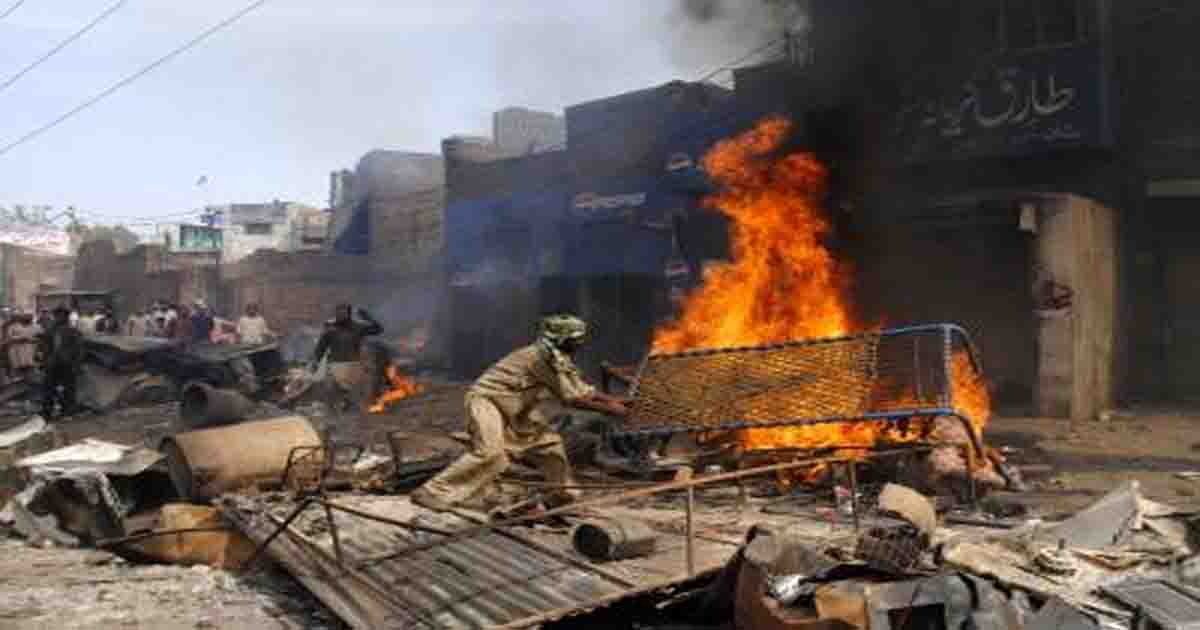
“The consequences extend beyond courtrooms. In February 2023, a mob stormed a police station in Nankana Sahib and lynched a man detained on blasphemy allegations. In August that year, hundreds attacked a Christian settlement in Jaranwala after two Christians were accused of desecrating the Quran. Churches, homes and a cemetery were vandalised or set on fire,” said the report, highlighting the alarming level of violence across Pakistan that followed blasphemy accusations.
The report noted that Pakistan’s constitutional designation of Islam as the state religion coexists with criminal blasphemy laws and explicit restrictions on Ahmadis. Cases involving Christians, Hindus and Ahmadis illustrate how religious accusations can escalate into arrests, imprisonment, death sentences or mob violence.
In contrast, the report said, India’s constitutional framework does not make adherence to one religion a prerequisite for citizenship. It highlighted that religious freedom is enshrined in the country’s secular Constitution, which safeguards freedom of conscience, worship and the right of religious communities to manage their institutions.
“That difference matters most when faith becomes contested. In Pakistan, the blasphemy framework can place the criminal law directly at the centre of a religious accusation, while in India, the constitutional model places religious freedom within a secular legal order in which no faith is designated as the religion of the State,” the report stated.

Washington, Oct 10: Ashley St. Clair, the mother of one of billionaire Elon Musk’s children, has alleged that she was offered a financial arrangement worth nearly $40 million in exchange for remaining silent about their relationship, a claim Musk has publicly denied.
In an interview published by The New York Times on Friday, St. Clair, a former conservative social media influencer, said she rejected a proposed nondisclosure agreement because it would have prevented her from discussing Musk and their relationship indefinitely.
The proposed arrangement included a $15 million lump-sum payment and $100,000 a month for 21 years, according to St. Clair. Together, those amounts would total $40.2 million.
Musk disputed the allegation after an earlier report about the proposed agreement.
“She was never offered that and has a history of making false claims,” Musk wrote on X, according to the newspaper.
St. Clair, who gave birth to a child in 2024, said the proposed confidentiality agreement was sent to her two months after childbirth by Jared Birchall, Musk’s financial manager.
She alleged that the document was transmitted through Signal, an encrypted messaging application, and would have restricted her ability to discuss the relationship even with members of her family.
According to St. Clair, the restrictions would also have extended to her heirs.
She said she rejected the agreement because she considered the proposed conditions unacceptable, particularly where they concerned her children.
The newspaper reported that Musk did not respond to its requests for comment on the interview.
St. Clair’s account comes as she appears in “Musk,” a nearly four-hour documentary directed by Oscar-winning filmmaker Alex Gibney examining the technology entrepreneur’s personal life, business interests and public influence.
The former influencer told the newspaper that her decision to participate in the documentary was partly motivated by concerns about the influence of wealth and power.
She said she had become increasingly uncomfortable with the expectation that people should trust powerful individuals simply because of their financial success.
St. Clair described meeting Musk in 2023 after he contacted her through Twitter, now known as X, where she had developed a following by promoting conservative political positions.
At the time, she was working for the conservative satirical publication The Babylon Bee and raising a child from an earlier relationship.
She said the two began communicating regularly and subsequently developed a personal relationship.
During a trip to St. Barts in January 2024, Musk raised the possibility of having a child together, according to her account.
St. Clair said she initially viewed the relationship positively but became concerned after learning more about Musk’s custody dispute with musician Grimes, with whom he shares three children.
She also described becoming increasingly disillusioned with the political movement surrounding President Donald Trump, which she had previously supported.
In the interview, St. Clair acknowledged having promoted political positions and rhetoric that she now regrets, including commentary concerning race, gender and transgender people.
She said her changing views developed gradually and were not solely the result of her personal dispute with Musk.
Musk has criticised Gibney’s documentary, accusing the filmmaker of assembling accounts from people with grievances against him or little personal knowledge of him.
The allegations surrounding the proposed financial agreement remain disputed, and the interview does not establish that Musk personally authorised the terms described by St. Clair.
Musk is the chief executive of Tesla and SpaceX and the owner of X. His business interests span electric vehicles, space exploration, artificial intelligence and digital communications, giving him a prominent role in American technology and public affairs.

Regime change certain in 2027: Akhilesh lashes out at BJP, Election Commission

Newlywed poisons husband, 3 family members in Maharashtra Jalgaon

Nana Patekar death: Final post-mortem report out, rules out foul play

Gujarat Police nab three more accused in Punjab’s Mad Sandhu murder case

FairPoint: Rahul-Priyanka aggressive street shows in Oppn power game

Gift to President Putin part of PM Modi bid to globally display India’s heritage

PM Modi’s warm camaraderie with Putin, Xi on full display at BRICS Summit

INDIA bloc begins protest march against ECI

Complaint against Netflix & Mukesh Chhabra for inappropriate language on ‘India’s Got Latent 2’

Maha Congress stages agitation against Gyanesh Kumar
-

 Crime4 years ago
Class 10 student jumps to death in Jaipur
-

 Maharashtra2 years ago
Mumbai Local Train Update: Central Railway’s New Timetable Comes Into Effect; Check Full List Of Revised Timings & Stations
-

 Maharashtra2 years ago
Mumbai To Go Toll-Free Tonight! Maharashtra Govt Announces Complete Toll Waiver For Light Motor Vehicles At All 5 Entry Points Of City
-

 Maharashtra2 years ago
False photo of Imtiaz Jaleel’s rally, exposing the fooling conspiracy
-

 National News2 years ago
Ministry of Railways rolls out Special Drive 4.0 with focus on digitisation, cleanliness, inclusiveness and grievance redressal
-

 Maharashtra2 years ago
Maharashtra Elections 2024: Mumbai Metro & BEST Services Extended Till Midnight On Voting Day
-

 National News2 years ago
J&K: 4 Jawans Killed, 28 Injured After Bus Carrying BSF Personnel For Poll Duty Falls Into Gorge In Budgam; Terrifying Visuals Surface
-

 Crime2 years ago
Baba Siddique Murder: Mumbai Police Unable To Get Lawrence Bishnoi Custody Due To Home Ministry Order, Says Report