
Maharashtra
Ban on petrol-diesel vehicles in Mumbai Metropolitan Region? Committee formed to promote CNG and electric vehicles


Mumbai: The government has taken a big step to deal with the problem of increasing traffic jam and pollution in Mumbai. A committee of experts has been formed to ban petrol and diesel vehicles in the Mumbai Metropolitan Region and promote CNG and electric vehicles.
Court’s concern and order
The Mumbai High Court had expressed serious concern over the suo-moto petition filed regarding traffic jam and pollution.
The Court said that the existing measures are inadequate to control the increasing number of vehicles and pollution in Mumbai.
- This problem is not only disturbing the environmental balance but is also having a negative impact on the efficiency, standard of living and health of the citizens.
Committee formation
On the instructions of the court, the state government has formed an expert committee to study this problem and suggest solutions.
Chairman of the Committee: Former IAS officer Sudhirkumar Srivastava.
Committee members:
- State Transport Commissioner.
- Joint Commissioner of Police (Traffic), Maharashtra.
- Managing Director of Mahanagar Gas.
- Project Director of Mahavitaran.
- President of Society of Indian Automobile Manufacturers.
Secretary: Joint Transport Commissioner, Maharashtra.
Objectives of the Committee
- Study of the possibility of banning petrol-diesel vehicles.
- Suggesting concrete steps to promote CNG and electric vehicles.
- Analysis of the environmental and economic effects of this decision.
Time limit for submitting the report
The committee will complete its study within three months and submit the report to the government. The government will take further decision based on this report.
Cause and solution of pollution
Smoke emitted from vehicles is the main reason for increasing pollution in Mumbai.
- The court said that pollution is having a bad effect on the health of citizens along with environmental imbalance.
Objective of the government
The government wants to solve the problem of pollution and traffic jam by promoting CNG and electric vehicles. This is expected to improve the standard of living of Mumbaikars.
Traffic and pollution have become big problems in a metropolis like Mumbai. Banning petrol-diesel vehicles and using eco-friendly vehicles can be a positive step in this direction. However, to make it successful, development of infrastructure and change in the mindset of the public will also be necessary.

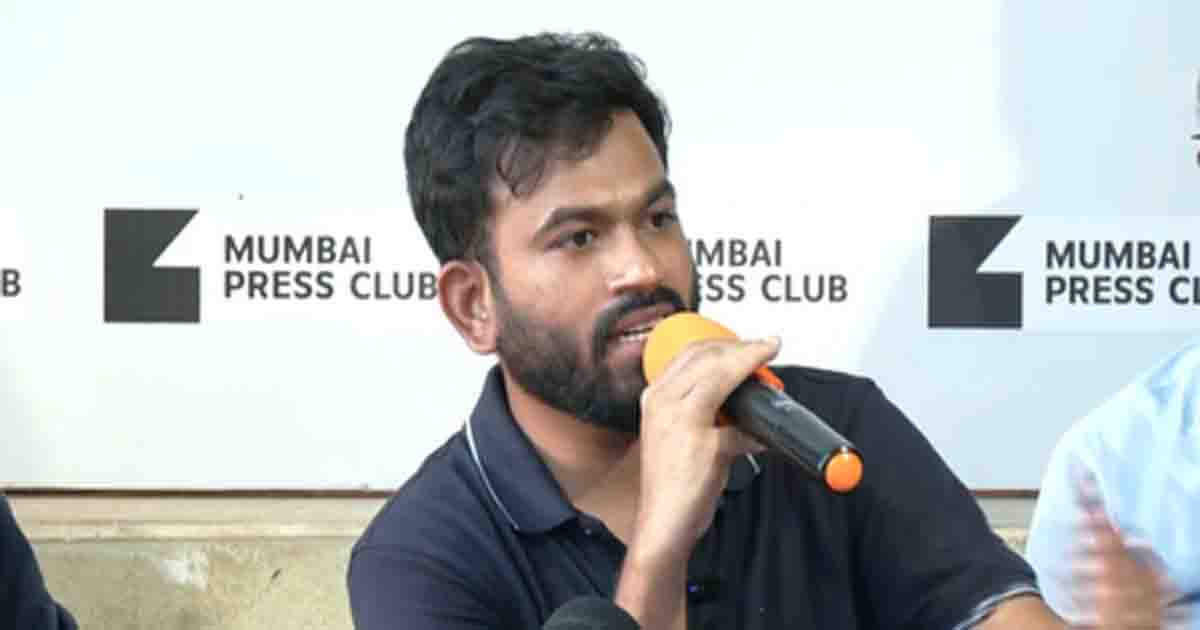
Mumbai, Oct 1: Launching a direct and fiery broadside at Maharashtra Chief Minister and Home Minister Devendra Fadnavis, Cockroach Janta Party (CJP) founder Abhijeet Dipke on Thursday warned the state government against making tactical errors, daring the authorities to arrest him ahead of CJP’s scheduled demonstrations from October 2 in Mumbai.
“Do not repeat the mistake committed on July 20. If you want to arrest us, do it right now,” he declared during a press conference in Mumbai, setting a tense backdrop for his party’s upcoming agitation against Chief Election Commissioner (CEC) Gyanesh Kumar.
Calling Chief Election Commissioner Gyanesh Kumar a “traitor to the nation,” Dipke demanded his immediate resignation over allegations of widespread electoral roll manipulation.
He accused the ruling coalition of engaging in state-sponsored disenfranchisement and using the Election Commission of India (ECI) as a political tool.
“Whoever sits as the Chief Election Commissioner must be transparent. The 13 crore voters whose names were deleted across the country will hit the streets, and when they do, the public will demand the resignation of Gyanesh Kumar’s bosses,” Dipke asserted.
He further demanded that the Election Commission freeze the recent Special Summary Revision (SIR) lists and conduct upcoming elections strictly using the 2005 voter lists.
Addressing questions regarding police authorisation for the demonstrations, Dipke rejected the necessity of official approval, drawing a historical parallel to the Indian freedom struggle.
“Which of our protests was ever granted permission? We are protesting democratically against the ruling power — why would they permit it? Had Mahatma Gandhi asked the British for permission to protest, they would have refused him too. Permission or not, we will march,” he said.
Taking a direct swipe at CM Fadnavis over his recent remarks that protesters face a three-day jail term before securing bail, Dipke scoffed, “Keep me in jail for three months instead of three days… I will return to the streets again and again,” echoing Fadnavis’s famous political slogan.
He also questioned the selective granting of venue permissions: “If Devendra Fadnavis can hold a political rally at Shivaji Park and ask for votes, why are we barred from protesting at the very same site?”
Dipke announced that CJP will extend full support to the opposition’s joint agitation on October 4. While Dipke will be on a nationwide tour, CJP cadres will assemble in force in Mumbai, setting aside party lines to join a larger united front against the ECI.
Looking ahead to future electoral dynamics, Dipke highlighted the power of young voters. He said, “In the 2029 elections, Gen Z will constitute the single largest voter demographic. It is our duty to deliver the kind of country they envision and deserve.”
Addressing recent public criticism of his high-end wardrobe choices during political campaigns, Dipke dismissed the political chatter surrounding his Rs 30,000 shoes. “I wear Rs 30,000 shoes because I can afford them. I am a massive Shah Rukh Khan fan — it was simply a fan moment and a reel,” he clarified.
With opposition parties gearing up for a massive protest outside the ECI headquarters in New Delhi on October 6, CJP’s Mumbai agitation on October 2 marks the start of escalating confrontation between opposition factions and the Election Commission.
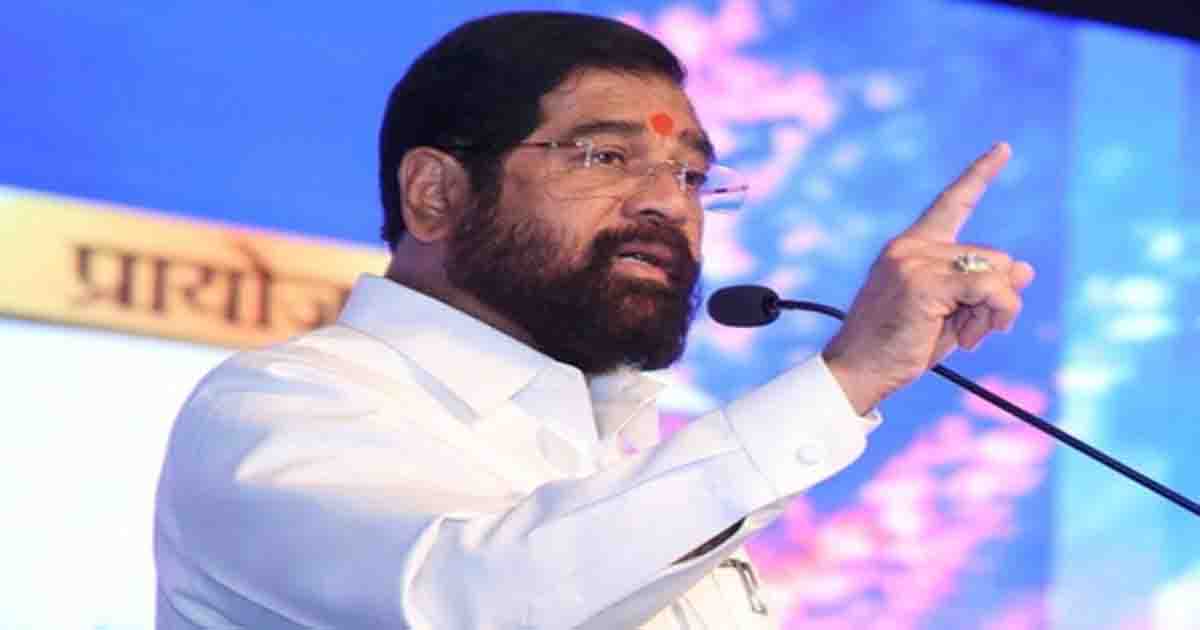
Mumbai, Oct 1: Against the backdrop of the severe drought-like situation prevailing across 265 talukas in Maharashtra, Deputy Chief Minister Eknath Shinde on Thursday appealed to the public to celebrate the upcoming Navratri festival and other religious and cultural events with utmost simplicity to stand firmly by the farmers, the nation’s providers.
He also urged Shiv Sena office-bearers, public festival committees (Ganesh and Navratri mandals), and citizens to contribute the funds saved from festival expenditure directly as relief to drought-affected farmers.
“Forego lavish festival celebrations this season and reallocate event funds towards the relief and rehabilitation of drought-affected farmers across Maharashtra,” he said in a post on X.
This year, due to failed rains in Vidarbha, Marathwada and other parts of the state, a shadow of drought has spread across most regions.
With nature’s fury ruining standing crops, thousands of farmers are left devastated.
Speaking on this critical situation, Deputy Chief Minister Shinde reiterated his stance, stating that “our Baliraja (farmers) have the primary right over the state treasury”.
He emphasised that during such times of crisis, the Mahayuti government and the Shiv Sena stand resolutely behind farmers with full strength.
While official government-level relief measures are actively underway, he noted that it is equally vital for everyone to step forward as a society and contribute during this hour of need.
He said celebrating upcoming festivals with grandeur and fanfare while farmers are in distress and anxiety would be inappropriate.
Therefore, public committees, Shiv Sena office-bearers, social organisations, and citizens should observe festivals. Instead of lavish expenditure on celebrations, the saved funds should be redirected towards direct relief and rehabilitation for drought-affected farmers.
Deputy Chief Minister Shinde expressed confidence that if everyone comes to the aid of food providers during their time of crisis, overcoming this natural disaster would be well within reach.
He noted that if saving festival costs allows society to wipe away the tears of even a single farmer and bring a smile to that person’s face, it would truly be genuine service to Goddess Jagadamba.
Reaffirming the Mahayuti administration’s commitment to the farming sector, Deputy Chief Minister Shinde said the government has prioritized mobilizing resources.
However, he called for a broader collective effort to support farmers battling agrarian distress.
“The first claim on the treasury of this state belongs to our farmers,” he said, adding that when farmers are battling the dire circumstances of drought, it is a collective moral and social responsibility to stand firmly by their side. He further said it would not be appropriate to celebrate upcoming religious or cultural festivals with great pomp and show while farmers remain gripped by anxiety.
With dry spells affecting multiple districts, the state government is actively deploying relief measures.
Deputy Chief Minister Shinde said unified public participation, alongside government assistance, would help the state overcome this natural adversity and restore long-term security to rural Maharashtra.
Maharashtra
Malegaon 2006 Blast Case: Supreme Court Stays Bombay High Court’s Remarks Against Muslim Accused Discharged from the Case

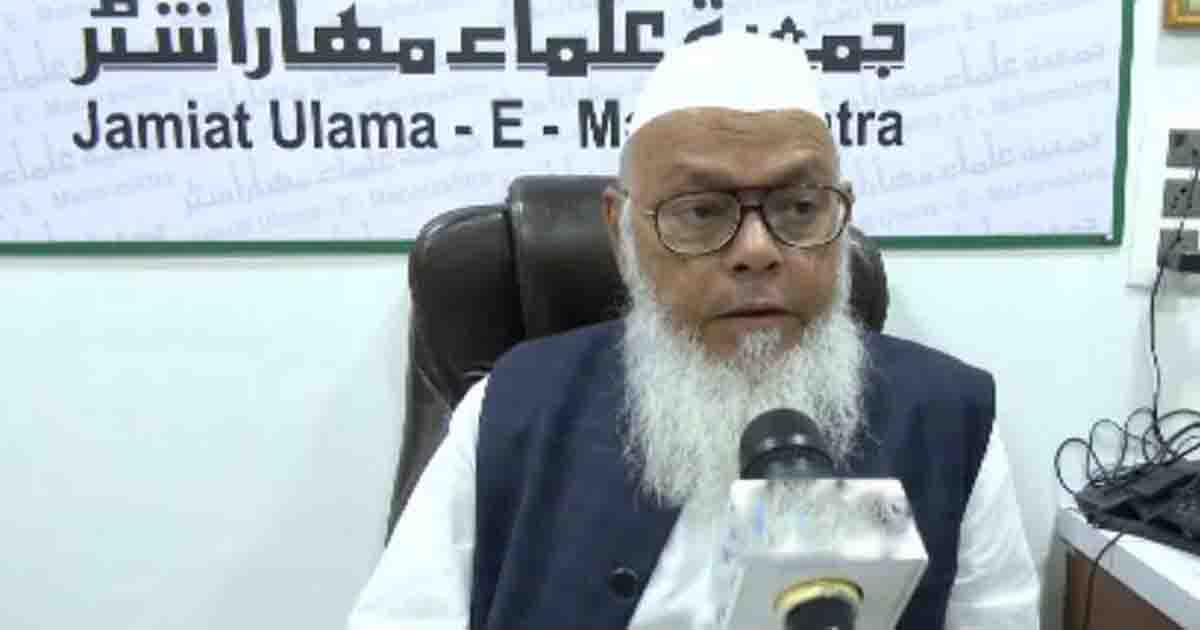
Victims of the 2006 Malegaon bomb blast have filed a petition in the Supreme Court of India against four accused—Rajendra Chaudhary, Manohar Ramsingh Narwaria, Dhan Singh, and Lokesh Sharma—who were discharged from the case last month; a hearing on this matter took place today. Additionally, a petition was filed seeking the expunging of High Court remarks made against the Muslim accused who had been discharged from the case; the Supreme Court granted this request and directed the Bombay High Court to hear the pending appeal concerning the Muslim accused without being influenced by the High Court’s recent observations. Meanwhile, the Maharashtra ATS, along with Dhan Singh and others, has filed a petition in the Bombay High Court against the nine Muslim individuals who were discharged from the case. Senior Advocates Nitya Ramakrishnan and Sadan Farasat presented arguments before the Supreme Court bench comprising Justice Arvind Kumar and Justice Vipul Pancholi. Jamiat Ulama-e-Maharashtra (Arshad Madani) provided legal representation on behalf of the bomb blast victims and the Muslim accused who had been discharged from the case. During today’s hearing, Advocate Sadan Farasat informed the two-judge bench that a division bench led by the Chief Justice of the Bombay High Court had recently discharged four accused persons (Dhan Singh and others) from the case; however, the court’s judgment also included remarks against the Muslim accused. These remarks were made in the absence of the Muslim accused and without affording them an opportunity to present their side; therefore, the court was urged to expunge these observations. Acting on Advocate Sadan Farasat’s request, the bench ordered that the remarks made in the Bombay High Court’s judgment would not prejudice the cases currently pending in the High Court concerning the discharged accused—Noorul Huda and others—and directed the High Court to decide the appeals on their merits. Following the conclusion of Senior Advocate Sadan Farasat’s arguments, Senior Advocate Nitya Ramakrishnan, representing the bomb blast victims, informed the court that the High Court had discharged accused individuals Rajendra Chaudhary, Manohar Ramsingh Narwaria, Dhan Singh, and Lokesh Sharma, even though charges had already been framed against them in the trial court. The bench directed Senior Advocate Nitya Ramakrishnan to present arguments regarding the appeals filed by the bomb blast victims next week and adjourned the hearing. Expressing satisfaction with today’s court proceedings in Mumbai, Maulana Halimullah Qasmi, President of Jamiat Ulama-e-Maharashtra, stated that a partial success had been achieved. Victims of the bomb blast, along with the accused—Noorul Huda, Mohammad Ali Shaikh, Asif Bashir, Mohammad Zahid, and Raees Ahmed (who were discharged from the case in 2016)—had requested the Jamiat Ulama-e-Maharashtra Legal Aid Committee, through Maulana Abdul Qayyum, to challenge the Bombay High Court’s verdict in the Supreme Court of India. Maulana Halimullah Qasmi stated that four petitions (SLPs) were filed in the Supreme Court following consultations with senior lawyers—a matter heard today—and that the services of the country’s renowned criminal lawyers were engaged to ensure effective legal representation, resulting in partial success today. He further noted that, through the efforts of the Jamiat Ulama Legal Aid Committee, nine Muslim youths arrested by the Maharashtra ATS were initially released on bail and subsequently discharged from the case; however, the accused belonging to the majority community and the Maharashtra ATS challenged the discharge order in the Bombay High Court, where proceedings are currently underway. Maulana Halimullah Qasmi added that he considers it highly unlikely the NIA will challenge the Bombay High Court’s decision in the Supreme Court of India, given that the agency has not yet filed an appeal in the High Court against the accused acquitted in the 2008 Malegaon blast case; conversely, victims of the blast have filed an appeal in the Supreme Court, which was heard today. Thirty-one people were killed and 312 injured in the serial bomb blasts that occurred on September 8, 2006, at the Hamidia Mosque, Bada Qabristan, and Mushawarat Chowk.

Iran rejects Britain’s claim of involvement in military base incident

CJP’s Dipke dares Fadnavis govt to arrest him ahead of Mumbai agitation

Maha Dy CM urges simple Navratri celebrations, appeals for aid to drought-hit farmers

Malegaon 2006 Blast Case: Supreme Court Stays Bombay High Court’s Remarks Against Muslim Accused Discharged from the Case

Maha govt announces major loan relief, expanded drought coverage for farmers

Gift to President Putin part of PM Modi bid to globally display India’s heritage

PM Modi’s warm camaraderie with Putin, Xi on full display at BRICS Summit

BMC takes action against Mumbai Central Orchid City Mall; mall shut down.

Nepal PM calls for global response to rising Himalayan climate risks

Corporators of all parties in trouble! Corporators of all major parties including Shiv Sena (UBT), BJP and Congress are facing legal challenges.
-

 Crime4 years ago
Class 10 student jumps to death in Jaipur
-

 Maharashtra2 years ago
Mumbai Local Train Update: Central Railway’s New Timetable Comes Into Effect; Check Full List Of Revised Timings & Stations
-

 Maharashtra2 years ago
Mumbai To Go Toll-Free Tonight! Maharashtra Govt Announces Complete Toll Waiver For Light Motor Vehicles At All 5 Entry Points Of City
-

 Maharashtra2 years ago
False photo of Imtiaz Jaleel’s rally, exposing the fooling conspiracy
-

 National News2 years ago
Ministry of Railways rolls out Special Drive 4.0 with focus on digitisation, cleanliness, inclusiveness and grievance redressal
-

 Maharashtra2 years ago
Maharashtra Elections 2024: Mumbai Metro & BEST Services Extended Till Midnight On Voting Day
-

 National News2 years ago
J&K: 4 Jawans Killed, 28 Injured After Bus Carrying BSF Personnel For Poll Duty Falls Into Gorge In Budgam; Terrifying Visuals Surface
-

 Crime2 years ago
Baba Siddique Murder: Mumbai Police Unable To Get Lawrence Bishnoi Custody Due To Home Ministry Order, Says Report