
Maharashtra
Aurangzeb’s Tomb Cannot Be Demolished By Maharashtra Govt Despite Widespread Protests & Public Demands; Here’s Why

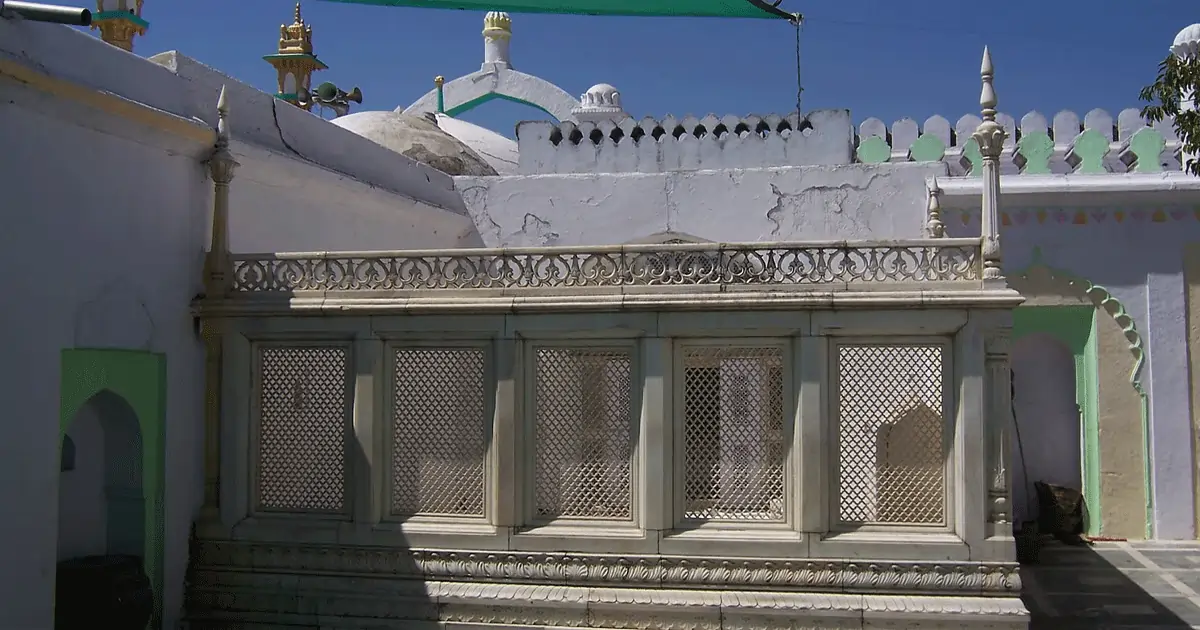
Nagpur: The recent violence in Nagpur, triggered by demands for the demolition of Aurangzeb’s tomb in Maharashtra’s Khuldabad, has intensified debates over the monument’s existence. Clashes erupted on March 17 after protests by Bajrang Dal and VHP, who called for the removal of the tomb, citing Aurangzeb’s oppressive rule. The unrest escalated, leading to violent confrontations, police injuries and curfews in affected areas.
However, despite the growing demand, the Maharashtra government does not have the legal authority to demolish the tomb. The site is protected under the Ancient Monuments and Archaeological Sites and Remains Act (AMASR Act), 1958, and falls under the jurisdiction of the Archaeological Survey of India (ASI), making its demolition legally impossible without central approval.
What is the AMASR Act, 1958?
The Ancient Monuments and Archaeological Sites and Remains Act, 1958 was enacted to preserve sites of historical and cultural significance. Under this Act, any monument classified as a ‘Monument of National Importance’ is protected from alteration, damage or destruction. The ASI, which functions under the Union Ministry of Culture, is responsible for maintaining these monuments.
Once a monument is notified under this Act, neither state governments nor local authorities can modify or demolish it. Only the Central Government, through a detailed legal and administrative process, can decide to de-notify such sites.
Why Is Aurangzeb’s Tomb A Protected Monument?
Aurangzeb, the sixth Mughal emperor, died in 1707 in Ahmednagar (now Ahilya Nagar) and was buried in Khuldabad near the dargah of Sheikh Zainuddin, his spiritual guide. His tomb is considered historically and culturally significant for several reasons:
– Historical Importance – Aurangzeb ruled for nearly 50 years, shaping India’s political and cultural history. His burial site remains part of India’s historical heritage.
– Architectural Value – Unlike grand Mughal tombs, Aurangzeb’s simple resting place reflects his lifestyle and is an example of minimalist Mughal architecture.
– Cultural Significance – The tomb is part of the larger Khuldabad complex, which houses several important Sufi shrines and historical figures’ graves.
– Preservation of Heritage – The ASI protects such sites to maintain historical integrity and prevent the destruction of India’s cultural legacy.
Can the Maharashtra Government Order Its Demolition?
No, the Maharashtra government cannot order the demolition of Aurangzeb’s tomb because:
1. It is a National Monument – The site is classified under the AMASR Act, making it a Monument of National Importance.
2. Only the Central Government Has Authority – The state government has no jurisdiction to alter or de-notify the tomb. Any such decision lies with the Union Ministry of Culture.
3. Legal Consequences – Any attempt to demolish the tomb would be unlawful and could lead to legal action against the state government.
4. International Reputation – Destroying a protected historical site could damage India’s global image as a country that values its diverse heritage.
What Has The Maharashtra Government Said?
During the inauguration of Maharashtra’s first Shivaji Maharaj temple earlier this month, Chief Minister Devendra Fadnavis acknowledged public sentiments against Aurangzeb but stated that legal constraints prevent any action against the tomb. “It is protected by the ASI, and we must follow the law,” he said. However, he assured that Maharashtra would only glorify Shivaji Maharaj, not Aurangzeb.
Despite political and public pressure, Aurangzeb’s tomb remains protected under Indian law. The Maharashtra government lacks the authority to demolish it, as it is a Monument of National Importance under the ASI. Any decision regarding its status rests solely with the Central Government. The Nagpur violence has intensified the debate, but legally, the demand remains unfeasible under current heritage laws.

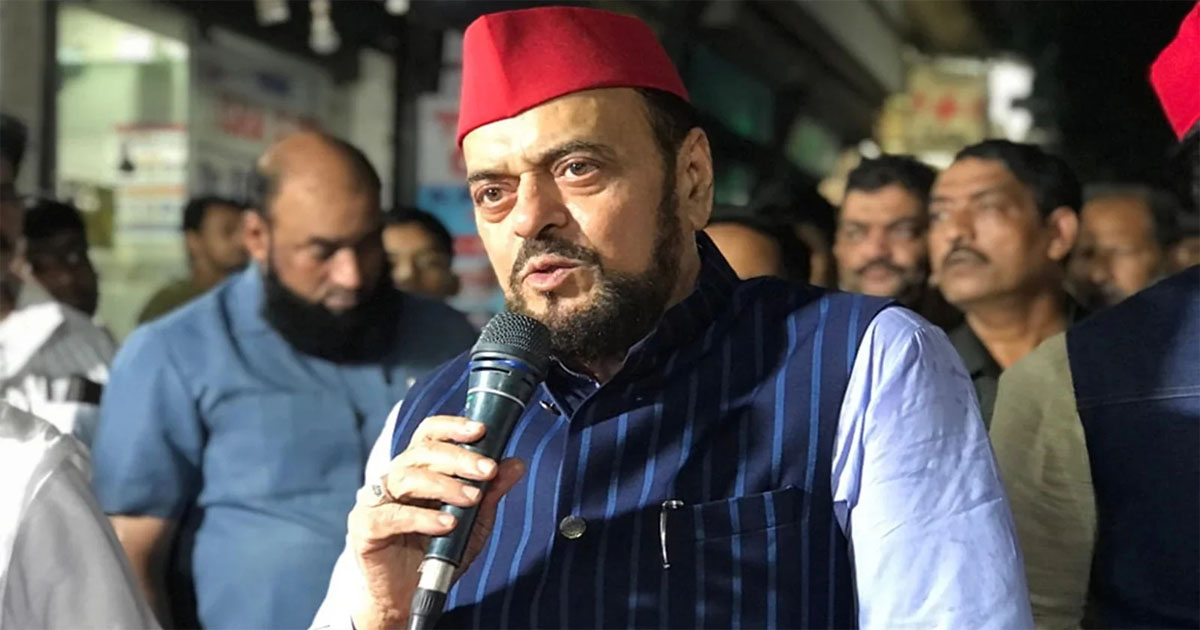
Mumbai: The Constitution has given its rights to the oppressed and Muslims. Through reservation, Dr. Babasaheb Ambedkar has eliminated the difference between the weak and the strong. He has given equal rights to everyone in the Constitution. Today, efforts are being made to abolish the Constitution of Dr. Babasaheb Ambedkar. Such views were expressed by Member of Parliament Abu Asim Azmi today on Ambedkar Jayanti. He said that today, Dr. Babasaheb Ambedkar’s Constitution is the basis on which even the weakest person in the country can raise his voice against the powerful of the country, but attempts are being made to suppress this constitutional right. Whenever there is a problem, a double-edged sword is adopted towards the ruling party and the opposition. This is completely wrong. The Constitution has taught us the lesson of equality and equity. We will continue to fight to the last drop of our blood to ensure the protection and development of the Constitution. He said that Dr. Babasaheb Ambedkar has also given us the skill of upholding the Constitution and democratic values and he has given equal status to everyone. But unfortunately, today the government is plotting to abolish reservation and this is the reason why inequality has arisen in the country. Communalism is on the rise and this is the reason why there is an atmosphere of hatred in the country. The Constitution has never discriminated in the country, but today those in power are trying to weaken the constitutional values.
Maharashtra
Dr. Babasaheb Ambedkar, the creator of modern India, Governor Jashnudevarma’s address at Chetiya Bhoomi in Mumbai, tributes

Mumbai: Dr. Babasaheb Ambedkar’s contribution in the formation of modern India is unparalleled. Bharat Ratna Dr. Babasaheb Ambedkar saw education as the most effective means of freedom. He established colleges that catered to socially and economically backward students and played a very important and influential role in spreading education to the weaker sections of the society.
Even as the Chairman of the Drafting Committee of the Constitution, Bharat Ratna Dr. Babasaheb Ambedkar ensured constitutional provisions like fundamental rights, abolition of untouchability. Dr. Ambedkar was a pioneer of equality. He supported women’s rights, advocated equal opportunities in education, property and personal freedom. Governor Jishnu Dev Verma, while saluting this great man, said that it was because of him that India gave equal voting rights to women from the first day of its Republic.
On this occasion, Governor Jishnu Dev Verma said, “I am happy to know about the progress of construction of a grand memorial dedicated to Bharat Ratna Dr. Babasaheb Ambedkar at Indo Mill Compound.
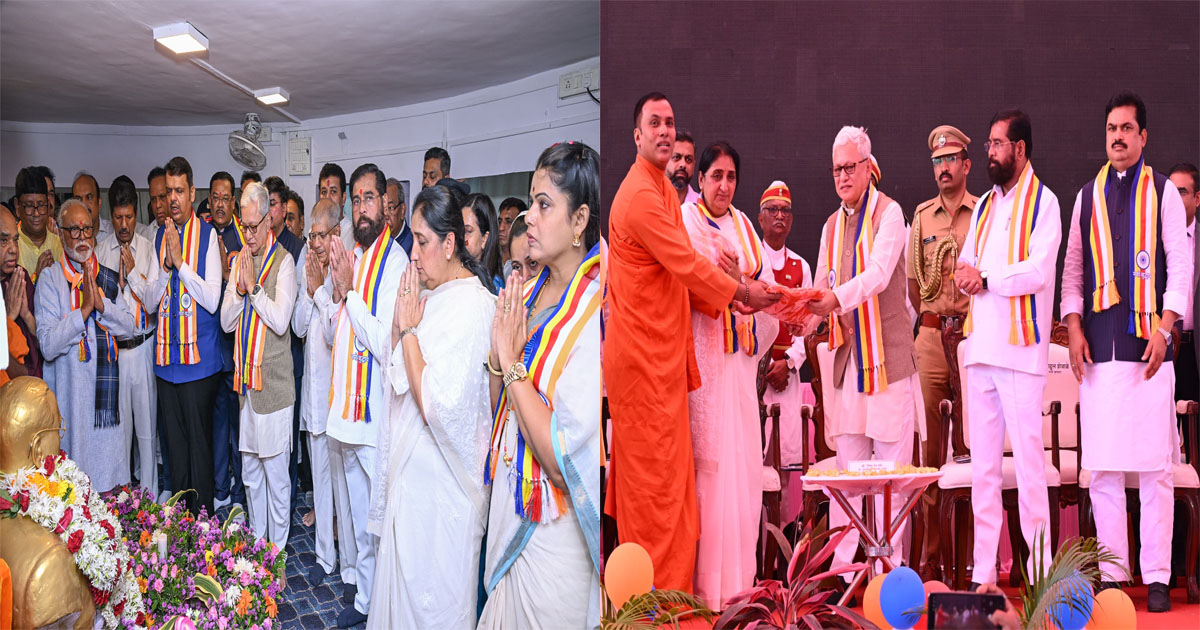
Sunetra Ajit Pawar, Mayor Ritu Tawde, Ministers Prakash Ambedkar Bhim Rao Ambedkar, and other dignitaries today paid floral tributes at the Dr. Babasaheb Ambedkar Chetiya Bhoomi Memorial in Dadar.
Chairman of the Legislative Council Prof. Ram Shinde, Deputy Speaker of the Legislative Assembly Anna Bansude, Minister for Cultural Affairs and Information Technology and Minister in-charge of Mumbai Suburban District Ashish Shelar, Minister for Skill Development, Entrepreneurship and Innovation and Joint Minister in-charge of Mumbai Suburban District Mangal Prabhat Lodha, Minister for Food, Civil Supplies and Consumer Protection Jachgan Bhujbal, Minister for Social Justice Sanjay Sharasat, Minister for Soil and Water Conservation Sanjay Rathore, Former Minister Vijay (Bhai) Girkar, Chief Secretary of the State of Maharashtra Rajesh Agarwal, Principal Secretary, Social Justice Department Dr. Harshdeep Kamble, former MP Rahul Shivale, All India Bhikkhu Sangh President Dr. Rahul Bodhi Mahathru, former Minister Deepak Kesarkar, Municipal Commissioner Ashwini Bhide, Konkan Divisional Commissioner Rubel Agarwal, Director General of Police Dr. Sadanand Datta, Deputy Commissioner (Zone 2) Prashant Sapkale, Assistant Commissioner of G-North Division Vinayak Vijpute, Dr. Babasaheb Ambedkar’s grandson Bhimrao Ambedkar, Dr. Babasaheb Ambedkar Mahapari Nirvana Day Coordination Committee General Secretary Nagasin Kamble, etc. along with dignitaries from all walks of life and followers of Dr. Babasaheb were present in large numbers. Chief Minister Devendra Fadnavis said on the occasion, “The more we salute Dr. Babasaheb Ambedkar, the bigger the change we can bring. Because Bharat Ratna Dr. Babasaheb Ambedkar has shown us how much of a revolution one person can bring about. Bharat Ratna Dr. Babasaheb Ambedkar is such a personality that if the most programs are organized on the occasion of the birth anniversary of any person in the world, then Bharat Ratna Dr. Babasaheb Ambedkar” Ratna Dr. Babasaheb Ambedkar We get to see these programs in every corner of the world and these programs in a way pay tribute to his work.
Bharat Ratna Dr. Babasaheb Ambedkar had mentioned the need for a central bank in India in his article “Issues of the Indian Rupee”. Secondly, he had said that for years our currency (currency) has been running on the silver standard, it should be abolished and made the gold standard. And thirdly, he had said that do not look at the exchange rate, look at the purchasing power of the currency.
The proposal made by Bharat Ratna Dr. Babasaheb Ambedkar in 1923 is becoming the most important in today’s global economy.
Our Constitution has built our economy and that is why we are now the third economy in the world and soon we will be the second and first. We will get a position on the side. Our Constitution is the direction of this development and the author of this Constitution is Bharat Ratna Dr. Babasaheb Ambedkar.
Deputy Chief Minister Eknath Shinde, while interacting with the audience in today’s program, said, “Today, Bhimsagar has flown over the Chetiya Bhoomi. And I salute all this Bhimsagar. Today, we have all gathered to bow down to the Sun of Wisdom, we have gathered to salute it. This is not only Ambedkar’s birth anniversary, but also a celebration of the conscience and self-respect of the entire India. Babasaheb gave self-respect to the country. Babasaheb did the work of showing the direction of equality and humanity. Babasaheb is not only the architect of the Constitution, but he is also the architect of humanity first and foremost.
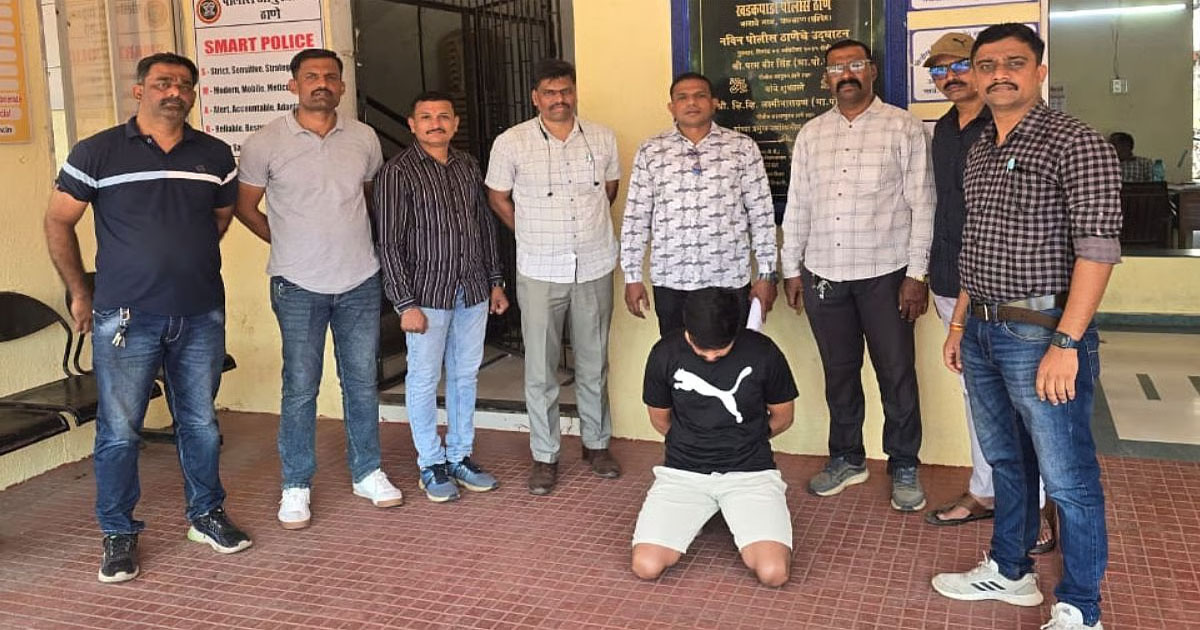
Kalyan, April 14: In a major breakthrough in the high-profile NESCO Centre drugs party case, Mumbai Police have arrested alleged drug supplier Anand Patel, a Kalyan-based businessman, following a late-night raid that turned into a tense hour-long standoff.
According to officials, the operation was carried out with the assistance of Khadakpada Police after Mumbai Police received specific intelligence that Patel was hiding at his residence in Kalyan West. A police team immediately rushed to the location and coordinated with local authorities to execute the arrest.
Senior officers, including Deputy Commissioner of Police (DCP) Atul Zende, were informed about the operation. Subsequently, a joint team led by Senior Police Inspector Amarnath Waghmode, along with officers Bhushan Devre, Kiran Shirke, Sanjay Chavan, Kundan Bhamre, and Suraj Khandale, reached the upscale Mohan Heights residential complex where Patel resides.
At the premises, police first encountered Patel’s father, Lakhan Patel, a businessman, who allegedly tried to mislead the officers by claiming that his son was not in Kalyan and had gone out of town. He also reportedly attempted to evade questioning, which further raised suspicion among the police team.
Acting on strong intelligence inputs, police escorted Lakhan Patel to the eighth-floor apartment. However, despite repeated knocking and instructions, the occupants refused to open the door. The situation soon escalated into a tense standoff, with police waiting outside for nearly an hour.
Officials made it clear that they would not leave without taking Patel into custody. Eventually, after continuous persuasion and intervention by his father, Anand Patel opened the door and was immediately detained by the police. Sources revealed that Patel had celebrated his birthday just two days earlier, and several relatives were present inside the house during the raid.
Following his detention, Khadakpada Police formally handed him over to Mumbai Police for further investigation in the NESCO drugs party case.
Preliminary investigation suggests that Patel, who claims to be a builder, played a key role in supplying drugs at the party. He is believed to have acted as a crucial link between the party organiser and drug suppliers. Police are now probing his wider network and suspect that he may have been involved in drug distribution activities in Kalyan and nearby areas as well.
Officials also stated that Patel’s father, Lakhan Patel, has multiple criminal cases registered against him, and his role, if any, will also be examined as part of the ongoing investigation. Further investigation is underway, and more arrests are likely as the probe deepens.

The Constitution of India has protected the oppressed and the Muslims. Abu Asim Azmi

Dr. Babasaheb Ambedkar, the creator of modern India, Governor Jashnudevarma’s address at Chetiya Bhoomi in Mumbai, tributes

NESCO Drugs Party Crackdown: Kalyan-Based Builder Arrested After Hour-Long Police Standoff

Dawood-linked fake currency syndicate goes local as border routes tighten

Muslim Leaders Meet Mumbai Police Commissioner Deven Bharti, Seek Crackdown On Attackers Of Anti-Drug Campaigner; Demand Probe

Dhurandhar 2 Box Office Collection Day 1: Ranveer Singh Starrer Takes An Exceptional Opening; Crosses ₹100 Crore Mark

Mumbai Police Busts Fake Apple Accessories Racket In Ghatkopar, ₹16.33 Lakh Goods Seized; Six Booked

Dhurandhar 2 Box Office Collection Day 9: Ranveer Singh Starrer Earns ₹41.55 Crore On Its Second Friday; Enters ₹700 Crore Club

Mumbai: 28-Year-Old Ghatkopar Woman Killed By Speeding Tanker While Crossing Road, Driver Arrested

Bharti Airtel Receives ₹1,74,000 Penalty Notice From DoT For Subscriber Verification Lapses
-

 Crime4 years ago
Class 10 student jumps to death in Jaipur
-

 Maharashtra2 years ago
Mumbai Local Train Update: Central Railway’s New Timetable Comes Into Effect; Check Full List Of Revised Timings & Stations
-

 Maharashtra2 years ago
Mumbai To Go Toll-Free Tonight! Maharashtra Govt Announces Complete Toll Waiver For Light Motor Vehicles At All 5 Entry Points Of City
-

 Maharashtra2 years ago
False photo of Imtiaz Jaleel’s rally, exposing the fooling conspiracy
-

 National News2 years ago
Ministry of Railways rolls out Special Drive 4.0 with focus on digitisation, cleanliness, inclusiveness and grievance redressal
-

 Maharashtra1 year ago
Maharashtra Elections 2024: Mumbai Metro & BEST Services Extended Till Midnight On Voting Day
-

 National News2 years ago
J&K: 4 Jawans Killed, 28 Injured After Bus Carrying BSF Personnel For Poll Duty Falls Into Gorge In Budgam; Terrifying Visuals Surface
-

 Crime2 years ago
Baba Siddique Murder: Mumbai Police Unable To Get Lawrence Bishnoi Custody Due To Home Ministry Order, Says Report