
Maharashtra
As Maharashtra govt employees continue stir for OPS, state-run hospitals begin to feel the pinch


Patients at the State-run hospitals will be majorly affected if the strike by state government employees, which includes hospital staff, lingers, fears the medical fraternity.
These fears were voiced after doctors, nurses, technicians, clerical and the cleaning staff joined the ongoing indefinite strike which started on March 14 in solidarity with the demand for return of the Old Pension Scheme (OPS). One of the State-run hospitals, Sir Jamshedji Jeejeebhoy (JJ) hospital in Mumbai, is taking precautions to minimise the impact on patients.
“The hospital has deployed senior doctors, resident doctors and interns along with nursing students to ensure that all surgeries and outdoor patient departments run smoothly.
Moreover, help of nursing staff from civic-run medical colleges is also being taken,” said an official. The hospital is also planning to deploy cleaning employees on a contractual basis until the strike is over.
According to hospital officials, on an average, around 90 to 100 surgeries are performed every day at JJ hospital. On Tuesday and Wednesday, most of the scheduled surgeries were performed, and very few non-emergency surgeries were postponed.
“We held OPD and performed surgeries like on routine days. I took assistance from the BMC and we also asked for nursing support. We have contractual people for cleaning and sweeping, too,” JJ Hospital Dean Dr Pallavi Saple said.


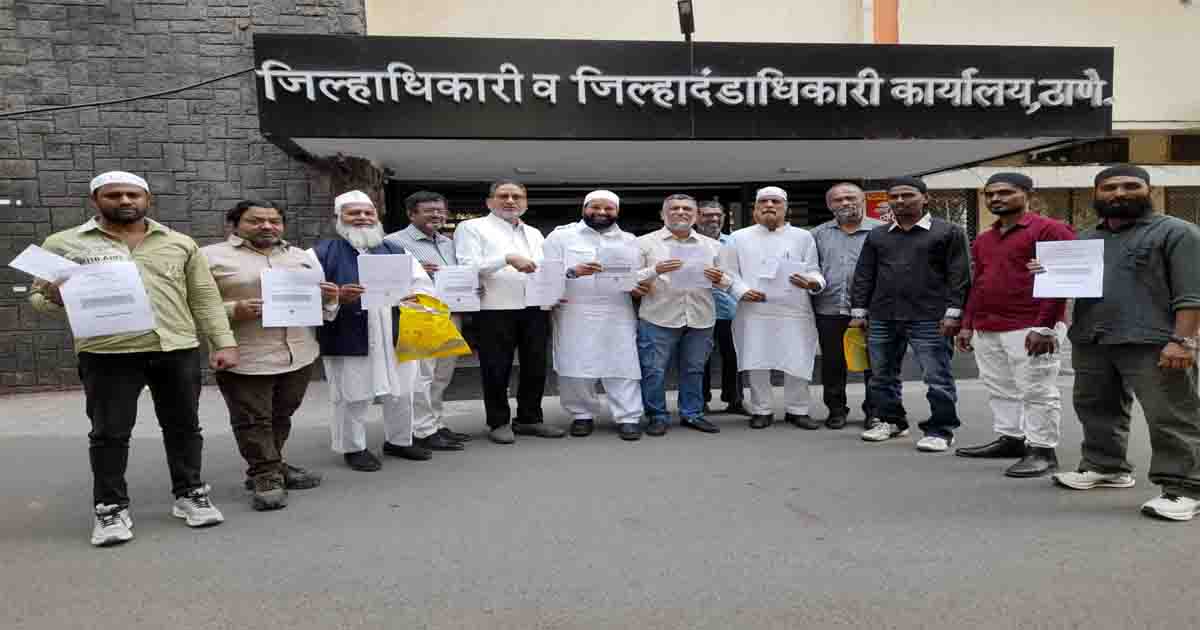
Thane: A public hearing regarding the proposed Uniform Civil Code (UCC) in Maharashtra was held for the residents of Thane district, drawing participants from various walks of life, including representatives from diverse social and community organizations. During the session, objections and opposition were raised against several provisions of the proposed UCC. In particular, the government’s attempt to impose uniformity—specifically concerning live-in relationships, divorce, and inheritance—drew sharp criticism.
A delegation from Bhiwandi, comprising individuals such as Maulana Ehsan Falahi, Mr. Fazil Ansari, and Mr. Abu Bhai, arrived in Thane. Also present were Mr. Anjum Ali Bape (representing the ‘All-Party Federation’ of Thane city), Mr. Syed Hussain (from ‘Wahdat-e-Islami’), and Mr. Sabir Baig (from ‘Jamaat-e-Islami’).
The hearing was organized in a conference room located on the fifth floor of the Collector’s Office. At precisely 11:30 AM, the Resident Deputy Collector, Mr. Sandeep Mane, commenced the proceedings. The first 15 minutes were dedicated to explaining the hearing process and the Standard Operating Procedures (SOPs).
Subsequently, members of the UCC Committee were stationed at Konkan Bhavan, where various delegations presented their suggestions, objections, and concerns via online channels. A delegation consisting of five members from the LGBT community also participated in the hearing. Furthermore, individuals from various communities—hailing from Thane’s Naupada area and other localities—arrived to register their objections regarding the proposed UCC.
The proceedings continued until approximately 1:30 PM. During the proceedings, various representatives and participants expressed strong opposition to several aspects of the proposed Uniform Civil Code (UCC). In particular, the government’s intention to impose uniformity—specifically regarding live-in relationships, divorce, and inheritance—drew sharp criticism.
Muslim representatives stated clearly that the Muslim community has neither demanded such a Uniform Civil Code nor does it have any need for such a new law. They voiced their objections regarding the proposed legislation, viewing it as an interference in the religious and Sharia-based affairs of the Muslim community.
The process of conducting hearings and recording objections concluded at approximately 1:30 PM. This was followed by a group photo session involving all the delegations. Finally, the representatives parted ways, with a mutual commitment to meet again in the future and continue discussions on this matter.

The Mumbai Azad Maidan Police claim to have arrested a group of impostors who posed as police officers to rob foreign nationals. A case has been registered at the Azad Maidan Police Station under Sections 309(4), 299, 290(5), 243, and 3(5) of the Bharatiya Nyaya Sanhita (BNS).
According to the details, on the night of November 20, a foreign national named Darshila—residing in Malawi, Africa—was traveling toward Colaba in a taxi with a foreign friend upon her arrival in Mumbai. During the journey, the taxi was intercepted by individuals on a motorcycle who claimed to be police officers. Near Metro Cinema, they stopped the vehicle, posed as police, intimidated the occupants, robbed them of cash and other belongings, forcibly snatched their bags, and fled the scene. A case was subsequently registered by the police. Under the guidance of the Additional Commissioner of Police and DCP Manish Kalwaniya, a specialized team was formed to investigate the incident.
An investigation was launched to track down the unidentified suspects. Based on evidence gathered and technical analysis, the team conducted searches in Chembur, Wadala, Thane, and Ahilya Nagar. Within 48 hours, they successfully uncovered the gang responsible for the robbery and recovered the stolen property and cash.
The Azad Maidan Police took the suspects into custody and recovered 100% of the stolen items.
This operation was carried out under the supervision of Additional Commissioner Shailesh Balkawade, DCP Manish Kalwaniya, and the Azad Maidan Police team.
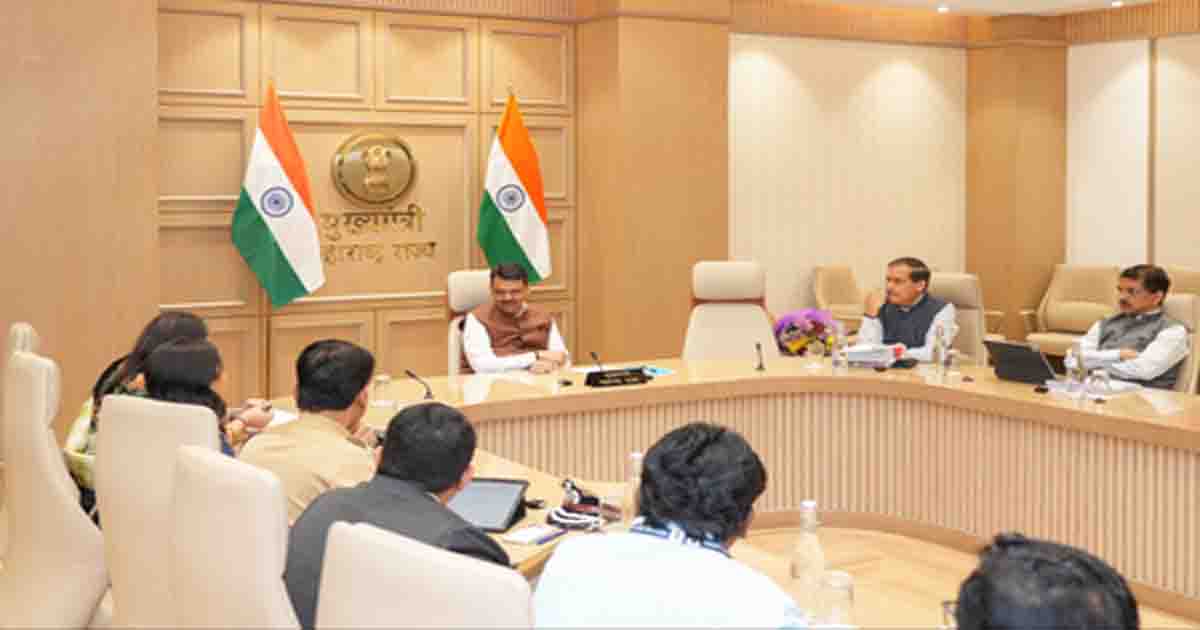
Concerned over the steady decline in the number of cooperative sugar factories across Maharashtra, the state government on Monday constituted a 13-member special committee to chart out a comprehensive revival and financial empowerment plan for the sector.
The state cooperation department today released the Government Resolution (GR), citing that two decades ago, Maharashtra boasted over 200 operational cooperative sugar mills.
However, over the past 25 years, financial distress, liquidation proceedings, and closures have brought the number of actively crushing cooperative mills down to under 100.
Currently, 30 to 32 of these mills are operated by private management on a lease or partnership basis, leaving only about 75 cooperative factories running independently on their own financial strength.
To address this crisis, the Cooperation Department and the Maharashtra State Cooperative Development Bank will conduct a joint study to formulate a new sustainability model.
Headed by the Sugar Commissioner, the newly formed committee has been directed to submit its detailed report and recommendations to the government within two months.
According to a Government Resolution (GR), even though 33 cooperative sugar mills received financial assistance through the National Cooperative Development Corporation (NCDC) on state government guarantees over the last two years, their financial health has yet to fully stabilise.
Recognising the need for long-term structural reforms, the government has tasked the panel with evaluating debt burdens, crushing capacities, production costs, and the independent financial viability of each mill.
The panel will also recommend policies regarding seasonal cash credit accounts, escrow mechanisms, loan recovery, and a dedicated revival and rehabilitation fund.
“Consequently, the number of cooperative mills crushing on their own has dropped to around 75. The GR states that without financial assistance routed through NCDC with state government guarantees for 33 cooperative factories over the past two years, the number would have fallen even further—though financial viability remains incomplete,” said the GR.
A key focus of the committee will be reducing the mills’ sole dependence on sugar production by exploring an integrated biorefinery model.
To boost revenue streams, the panel will study the feasibility of producing 10 value-added byproducts, including ethanol, compressed biogas (CBG), co-generation of power, solar energy, green hydrogen, sustainable aviation fuel (SAF), and biochemicals.
For these diversification projects, the committee will assess a proposed funding structure comprising a 20% contribution from the Central Government, 10% from the State Government, and 70% from the sugar mills themselves.

Public hearing on proposed UCC in Thane; Muslim delegations strongly protest.

Mumbai self-styled police arrested for duping foreign nationals

Man arrested in Bengal’s Habra for alleged sexual assault of minor daughter

Maha govt forms special panel to revive cooperative sugar mills

Ukraine sank Russian corvette off Libya coast using naval drones: Zelensky

Congress trying to protect 3 crore Bangladeshi infiltrators in voter list: HM Shah

Red Fort car blast probe exposes blueprint for spread of terror modules across India

Trump flags Iran targets as talks continue

‘Conspiracy, not accident’: NCP on Ajit Pawar death

BJP, Shiv Sena slam Mallikarjun Kharge for terming Diwali ‘Khushiyon ka Eid’
-

 Crime4 years ago
Class 10 student jumps to death in Jaipur
-

 Maharashtra2 years ago
Mumbai Local Train Update: Central Railway’s New Timetable Comes Into Effect; Check Full List Of Revised Timings & Stations
-

 Maharashtra2 years ago
Mumbai To Go Toll-Free Tonight! Maharashtra Govt Announces Complete Toll Waiver For Light Motor Vehicles At All 5 Entry Points Of City
-

 Maharashtra2 years ago
False photo of Imtiaz Jaleel’s rally, exposing the fooling conspiracy
-

 National News2 years ago
Ministry of Railways rolls out Special Drive 4.0 with focus on digitisation, cleanliness, inclusiveness and grievance redressal
-

 Maharashtra2 years ago
Maharashtra Elections 2024: Mumbai Metro & BEST Services Extended Till Midnight On Voting Day
-

 National News2 years ago
J&K: 4 Jawans Killed, 28 Injured After Bus Carrying BSF Personnel For Poll Duty Falls Into Gorge In Budgam; Terrifying Visuals Surface
-

 Crime2 years ago
Baba Siddique Murder: Mumbai Police Unable To Get Lawrence Bishnoi Custody Due To Home Ministry Order, Says Report