
Crime
Arrests of facilitators have opened Pandora’s Box


A series of arrests, made by the Uttar Pradesh Anti-Terrorist Squad (UP-ATS) and Kolkata Special Task Force (STF) from different parts of the state in the last three months, have opened up the Pandora’s Box. After interrogating the arrested people, mainly facilitators, the investigators have traced mammoth financial transactions to accounts of the human trafficking syndicate, which smuggled Bangladeshis and members of the ethnic Muslim Rohingya community into India through the porous West Bengal border and then packed them off abroad with forged passports and Hindu identities.
In the last three months, the UP-ATS in close collaboration with the Kolkata STF, have arrested 21 people, including four facilitators, six conduits and the mastermind Mithun Mandal. Mandal along with Shaon Ahmed, Mominur Islam and Mahendi Hasan were arrested from the Deen Dayal Upadhya Railway Station, Mughalsarai, in October.
According to sources in the UP-ATS, Mandla who is now on transit remand in Lucknow lived life kingsize with lavish spending, five-star stays and foreign jaunts, but did not make assets to avoid taxman’s glare. Expensive apparels pegged at lakhs of rupees, five-star hotel bills and passports with stamped visas of exotic European and Southeast Asian destinations were seized.
“They don’t stay at one place and keep traveling in Southeast Asian countries and stay in rented apartments,” said one officer.
The UP-ATS that busted the network with international linkages, found over Rs 10 crore transactions in accounts of facilitators, middlemen and kingpins in a one-year span.
An informed senior ATS officer said, multiple bank accounts of Mandal, show a money trail of crores of rupees, adding that if total funds flow to the syndicate was calculated, it crossed Rs 10 crore in less than 12 months.
The facilitators included Ratan Mandal, Sameer Mandal, Noor Alam and Mohammad Jameel – all arrested from several places in West Bengal.
Explaining their modus operandi, sources in the Kolkata STF said kingpin Mithun Mandal used to operate a travel agency named European Tour and Travels in Bardhaman district of West Bengal.
His aide, Mahfuzur, used WhatsApp to communicate with clients in Bangladesh and Myanmar, who were interested in going abroad. He created a WhatsApp group (‘Only Bro’) and operated it under the name, Tony.
“Those ready to infiltrate and move abroad were asked to cough up Rs 5-7 lakh, depending on the country of their choice,” an STF officer said.
Once smuggled into India, the syndicate would provide them with fake Hindu identities and forged documents. Then they would be put across to middlemen in Gulf, South Africa and the UK. The gang would pocket the fee after spending just Rs 50,000-70,000 on forging documents.
Though the investigators are yet to connect the illegal immigration with any kind of terror design but what is keeping the investigators and the agencies on the tenterhooks is the growing trend of infiltrating into the country might be used effectively to push in terrorists into the Indian soil. The investigators are of opinion that the Covid-induced lockdowns and the subsequent unemployment which is making the work of these terror groups easier.
Taking advantage of the porous border with Bangladesh and unemployment, international terror groups like JMB, Ansarullah Faction and even the Islamic State are trying to spread their network in West Bengal.
The aim is to make the state the headquarters of the terror activities in entire eastern India.
Sometimes via direct interaction and at times through online, they are targeting smart but unemployed young boys and girls in the state.
The National Investigation Agency (NIA) and the Kolkata Police have secured this information from the three JMB terrorists who were arrested by the STF sleuths recently from a colony in the southern outskirts of Kolkata.


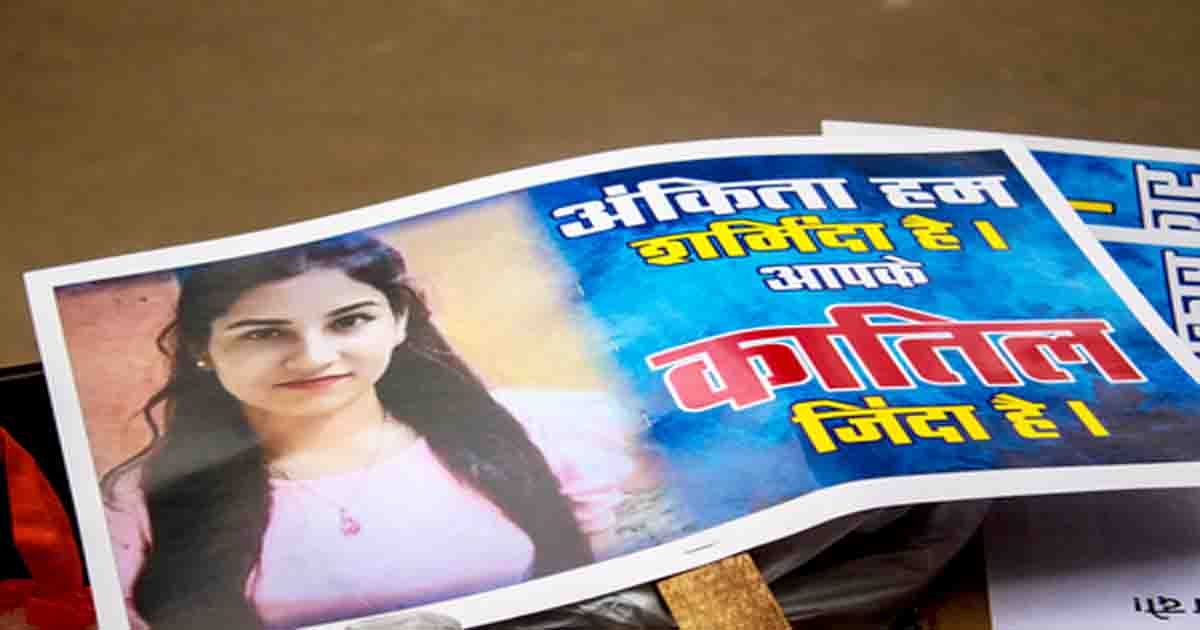
The Central Bureau of Investigation (CBI) team investigating the Ankita Bhandari murder case reached the residence of Urmila Sanawar, the alleged wife of former BJP MLA Suresh Rathore, in Uttar Pradesh’s Saharanpur on Sunday.
A four-member CBI team, including a woman officer, reached Sanawar’s residence to question her regarding the high-profile case.
Earlier this week, Sanawar had participated in a press conference in New Delhi, alongside Bhandari’s parents.
Sanawar, through a video message, had also demanded that the CBI must interrogate her in the presence of the media since the investigation is not happening under the watch of a sitting Supreme Court judge.
This comes a day after the CBI questioned former BJP MLA Rathore at the Shivalik Guest House in Uttarakhand’s Haridwar.
The CBI took over the probe into the Ankita Bhandari murder case in February this year. Its Delhi-based Special Crime Branch had registered a case against an “unknown VIP” in connection with the matter.
The case had returned to the spotlight early this year after viral audio clips and videos surfaced involving Sanawar.
During a Facebook Live session, Sanawar made references to the alleged involvement of a VIP in the murder, triggering fresh controversy and public debate.
These developments led to heightened political tensions, with Opposition parties and several organisations renewing demands for a CBI enquiry into the case.
Responding to the growing pressure and to address public concerns, the Uttarakhand government moved swiftly to ensure transparency. On January 9, Chief Minister Pushkar Singh Dhami formally recommended a CBI investigation.
The murder of Bhandari, a 19-year-old receptionist, sparked widespread outrage across Uttarakhand in 2022. She was working as a receptionist at the Vanantra Resort when she was murdered on September 18, 2022. Her body was dumped in the Chilla Shakti Canal and recovered nearly a week later.
Following an extensive investigation by a Special Investigation Team, a 500-page charge sheet was filed in the case, naming 97 witnesses, out of whom 47 testified before the court.
The prime accused, Pulkit Arya, the owner of Vanantra Resort, along with co-accused Saurabh Bhaskar and Ankit Gupta, were convicted and sentenced to life imprisonment. Arya was found guilty on multiple serious charges, including murder, tampering with evidence, harassment, and immoral trafficking.
Meanwhile, several activists and the Congress have been organising protests in Uttarakhand and Delhi over the appointment of BJP leader Dushyant Gautam as the Governor of Sikkim.
Earlier this week, Bhandari’s parents staged a sit-in at India Gate, demanding a stop to Gautam’s appointment as Governor. Later, along with Garhwal BJP MP Anil Baluni, they met the CBI officials.
Bhandari’s parents have also demanded that the government put the appointment on hold till the CBI probe is underway. They have urged the government to work towards ensuring that all those guilty of their daughter’s murder face strict punishment.
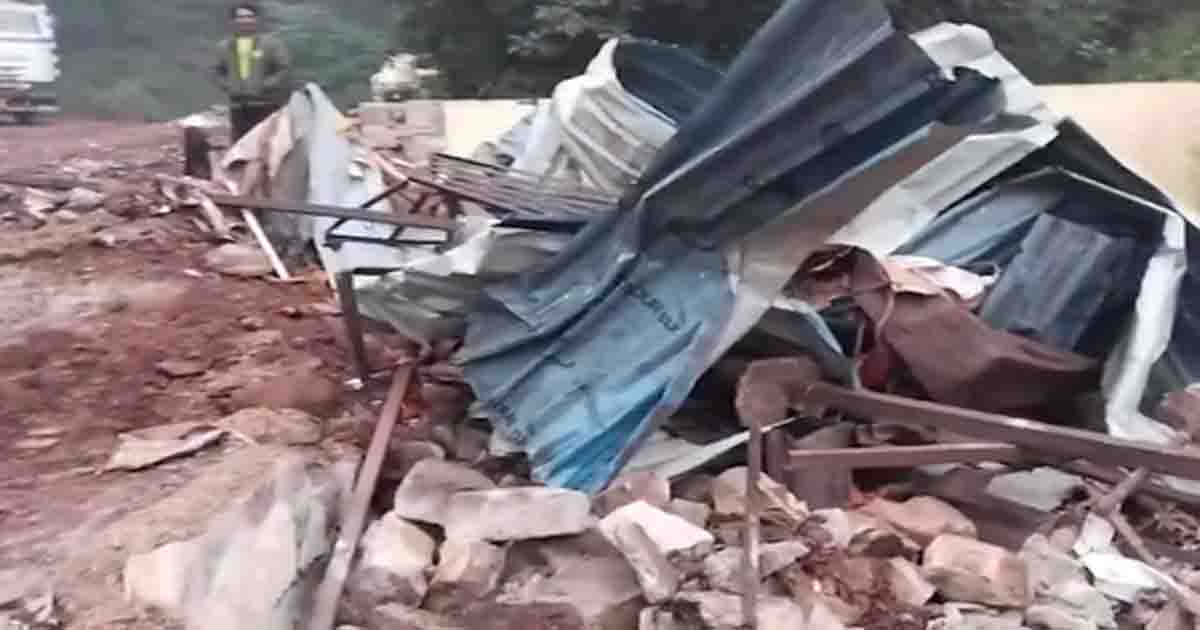
Twelve people were killed, while over 25 were injured after a truck rammed into shops near Shitla Mata Temple in Madhya Pradesh’s Gwalior early on Sunday, officials said.
The incident occurred at around 1:30 a.m. on Sunday when the truck lost control while descending a slope near the historic Shitla Mata Temple, located 18 kilometres from the district headquarters.
“Approximately 50 people were struck by the vehicle, resulting in at least 12 deaths. More than 25 others, including two police personnel and several children, have sustained injuries,” an official said.
According to eyewitnesses, the truck was loaded with sacks of paddy and lost control while descending a hill and crashed into shops near the temple.
“The truck, approaching from the direction of Chinor, went out of control while descending the slope near the main outer gate of the temple and ploughed into the shops situated around the gate. The impact caused significant damage to several shops and destroyed multiple two-wheeled vehicles,” an eyewitness told media.
Upon receiving news of the accident, police teams arrived at the scene and transported the injured to the hospital. About five individuals remain in critical condition. The bodies of the deceased have been taken to the Jaya Arogya Hospital in Gwalior.
Speaking to media, a local said, “When I looked around, there was utter chaos and distress. People were screaming and frantically searching for their loved ones. It was heartbreaking to see people trapped beneath the truck. As for negligence, this is a result of gross negligence by the Gwalior administration. It is a major lapse that led to this tragedy at the Shitla Mata Temple.”
“Our faith has been deeply shaken. People hold an unwavering belief in this temple, a place where neither a coconut is broken nor a lemon is cut, yet such a tragedy has occurred. It is heartbreaking. I demand that the government and Chief Minister Mohan Yadav, who frequently speak about Sanatan Dharma, come to Gwalior today. Compensation must be provided to the families of those who lost their lives, and the injured should receive free medical treatment,” he said.
A shopkeeper, Bablu Prajapati, said, “I had a shop here, which was being managed by my father. Two relatives were also visiting. In total, four people who were at the shop have been injured; they are all currently undergoing treatment in the hospital.”
The tragedy occurred during the auspicious festival of Navratri, when hundreds of thousands of devotees visit the historic Shitla Mata Temple. Typically, the route passing by the temple is closed to large vehicles during this period; hence, an investigation is underway to determine who allowed the truck to enter.
Officials have stated that they are probing who authorised the truck’s entry and whose negligence led to this incident.
An investigation is underway, and further details are awaited.
Four accused have been named in a supplementary chargesheet filed before a National Investigation Agency (NIA) Special Court in Haryana’s Panchkula in connection with a grenade attack carried out near a Women Police Station in Sirsa in 2025, officials said.
The NIA filed a supplementary chargesheet before the NIA Special Court on Saturday against four accused, namely Rajbir Singh alias Fouji, Ved Parkash alias Pamma, Jiwanjot Singh Grewal alias Jyoti and Chirag Thakral, in connection with the grenade attack near a Women Police Station in Sirsa on November 25, 2025 (RC-24/2025/NIA/DLI), according to the officials.
The case, originally registered as FIR No. 710/2025 dated November 26, 2025, at Police Station Civil Line in Sirsa, was re-registered by NIA on December 30, 2025, as RC-24/2025/NIA/DLI.
Earlier on May 24 this year, the investigating agency had filed a chargesheet in the case before the NIA Special Court in Panchkula, against nine accused, including Pakistani nationals Shahzad Bhatti and Sohail Ahmad alias Sohail Baloch, officials said.
“The supplementary chargesheet details the conspiracy and the individual roles of the 4 accused, along with the supporting evidence collected during further investigation. It charges them under sections 61(2) r/w 109 and 238 of the Bharatiya Nyaya Sanhita, 2023, sections 5 and 6 of the Explosive Substances Act, 1908, and sections 18, 18B and 20 of the UA (P) Act, 1967,” the NIA said in a statement.
The investigators revealed that Rajbir Singh alias Fouji acted as the India-based coordinator of the cross-border network, working in coordination with foreign-based handlers for the collection and movement of weapons/hand grenades and narcotics in India.
Additionally, Chirag Thakral, Jiwanjot Singh Grewal alias Jyoti and Ved Parkash alias Pamma used to work under the directions of Rajbir Singh and played a key role in facilitating the movement of explosives used in the grenade attack at the Women Police Station in Sirsa, officials said.
“The attack was carried out by members of the Shahzad Bhatti network, acting pursuant to an organised conspiracy, with the intention of causing harm to police personnel and of creating terror and fear among the general public. NIA’s investigation has traced the conspiracy in the case to foreign-based handlers operating a cross-border terror network,” the NIA said.
It mentioned that further investigation in the case is continuing to identify and apprehend the other persons involved in the conspiracy and to unearth the complete cross-border terror network behind the attack.

FairPoint: The protests are loud, but where is the money coming from?

Elephant seriously injures mahout, creates panic in Varanasi Ramnagar; over 200 police personnel deployed

CM Adhikari to meet families of Kolkata stampede victims on October 20-21

CBI questions Urmila Sanawar in connection with Ankita Bhandari murder case

Akshay Kumar meets Uttarakhand CM Pushkar Singh Dhami, talk about film Policy in the state

Rahul, Cong ecosystem want to force regime change: BJP after Neha Bora praises B’desh Gen-Z protest

BJP pays tribute to ex-President Abdul Kalam, recalls his enduring influence on generations of India’s youth

Attack on democratic rights: INDIA Bloc leaders on detentions of anti-ECI protestors

INDIA bloc begins protest march against ECI

Maha Congress stages agitation against Gyanesh Kumar
-

 Crime4 years ago
Class 10 student jumps to death in Jaipur
-

 Maharashtra2 years ago
Mumbai Local Train Update: Central Railway’s New Timetable Comes Into Effect; Check Full List Of Revised Timings & Stations
-

 Maharashtra2 years ago
Mumbai To Go Toll-Free Tonight! Maharashtra Govt Announces Complete Toll Waiver For Light Motor Vehicles At All 5 Entry Points Of City
-

 Maharashtra2 years ago
False photo of Imtiaz Jaleel’s rally, exposing the fooling conspiracy
-

 National News2 years ago
Ministry of Railways rolls out Special Drive 4.0 with focus on digitisation, cleanliness, inclusiveness and grievance redressal
-

 Maharashtra2 years ago
Maharashtra Elections 2024: Mumbai Metro & BEST Services Extended Till Midnight On Voting Day
-

 National News2 years ago
J&K: 4 Jawans Killed, 28 Injured After Bus Carrying BSF Personnel For Poll Duty Falls Into Gorge In Budgam; Terrifying Visuals Surface
-

 Crime2 years ago
Baba Siddique Murder: Mumbai Police Unable To Get Lawrence Bishnoi Custody Due To Home Ministry Order, Says Report