
Maharashtra
Animal markets will remain open for sacrifice, Gauseva Aayog withdraws controversial order

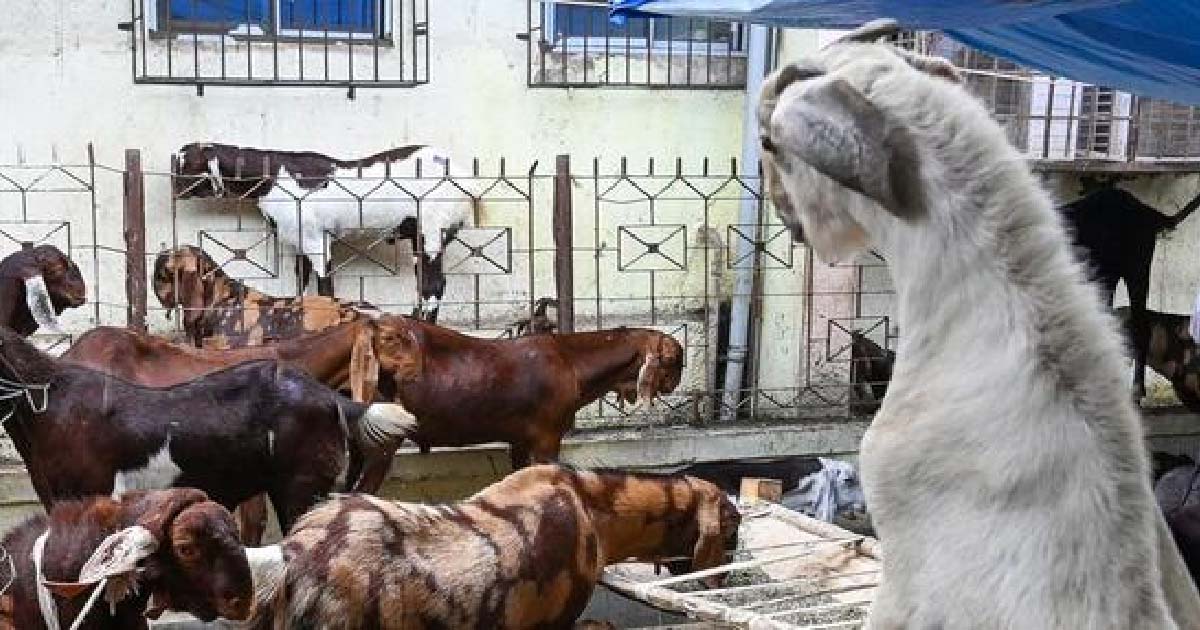
Mumbai: The Mumbai GauSeva Ayog has withdrawn its controversial order to keep cattle markets closed from June 3 to June 8 until Eid-ul-Adha. It has only said that it should be ensured that there is no slaughter of prohibited animals during the sacrifice. After a meeting of Muslim representatives along with Maharashtra Chief Minister Devendra Fadnavis, the Chief Minister had issued an order to withdraw the circular, after which the Gau Seva Ayog has withdrawn its controversial circular and order. This circular had said that animal markets in all districts of the state should be closed till June 8 to prohibit cow slaughter on Eid-ul-Adha. Muslims opposed this and during the meeting of Muslim representatives, the Chief Minister had announced the withdrawal of this order. Therefore, the GauSeva Ayog has officially withdrawn the circular and instead issued a new circular, which has lifted the ban on animal markets. Along with this, strict implementation of the cow slaughter law has also been demanded.
The state government is responsible for implementing the cow slaughter law and the police and administration are ready for it, but after the GauSeva Aayog issued such a controversial circular, Samajwadi Party leader and MLA Rais Sheikh had declared it illegal and said that the circular issued is completely illegal and controversial, while the Aayog has no authority to issue orders, it can only make recommendations. In such a situation, after the order of the Chief Minister, now animal markets will continue during the sacrifice period and there is no ban on the market of buffaloes including goats, therefore Muslims have been appealed not to pay attention to rumors.
Deonar Slaughterhouse General Manager Kaleem Pathan also said that the Deonar Goat Market will continue and the order issued by the Gau Seva Aayog has been withdrawn, so the public should not pay attention to rumors about the Deonar Goat Market. He said that along with the facilities in the Goat Market in Deonar, arrangements have been made for the convenience of buyers. Along with stalls, other facilities are also available here. He said that more than 150,000 goats have arrived in the Deonar Goat Market and along with this, more than 80,000 goats are left.

Maharashtra
Gas crisis in Maharashtra! But people need not worry, Chhagan Bhujbal claims in the House… Supply of kerosene is also possible

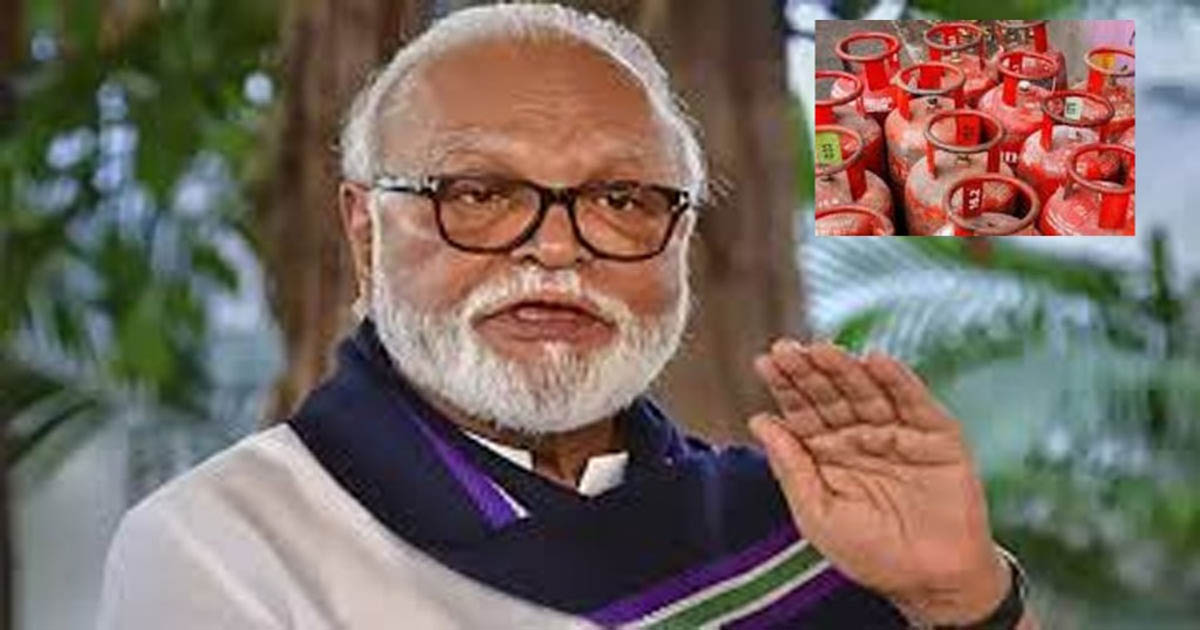
Mumbai: The black market and shortage of fuel and gas cylinders have now become common in the Maharashtra Legislative Assembly. The people are worried about the critical condition of fuel due to the Iran-Israel-America war. In the Legislative Assembly, Minister for Food and Civil Supplies Chhagan Bhujbal made it clear that there is no need to worry about the gas crisis and shortage because the Central Government has claimed that it has gas and fuel stocks available with it, so no one needs to stand in queues or buy fuel or gas from black marketing. The government is strict on the black market of gas and action is also underway. The state is currently facing fuel shortage, there is a shortage of cylinders. Speaking in this context, Food and Civil Supplies Minister Chhagan Bhujbal gave important information in the legislature. Gas supply is a central issue, and the Center has said that they have sufficient stocks of LPG and PNG. Therefore, there is no reason to worry. Therefore, there is no reason to be worried, do not stand in queues anywhere and do not black market gas. Committees of each district collector, SP and other officers have been appointed. 2129 checks have been done so far. 1208 gas cylinders have been seized through these operations so far. Goods worth Rs 33,66,411 have been seized so far. A total of 23 cases have been registered in this matter and 18 people have been arrested. Bhujbal said that last month the price of a gas cylinder was Rs 852.50. Now it has increased to Rs 912.50. Commercial cylinders have increased from Rs 1720.50 to Rs 1835. This morning I spoke to representatives of major gas distribution companies, DPCL, HPCL, IOCL, some of which are big companies. They said that the daily production of LPG has been increased from 9,000 metric tons to 11,000 metric tons. If there is any problem, work is also underway to remove them. Companies have orders from the central government, and some institutions have been given priority for gas supply, in which hospitals have been given 100 percent priority.
Educational institutions and public services have also been given 100 percent priority. Bhujbal has said that 70 percent priority has been given to gift shops related to railways, aviation and defense sectors, and if gas remains, 50 percent gas will be provided to the pharmaceutical industry and 50 percent to seed processing. Meanwhile, the state is currently facing gas shortage, and the government has now decided on a way to resolve it. As an alternative to gas cylinders and fuel, Bhujbal said that one way is kerosene. We have kerosene reserves available. A few years ago, the Nagpur High Court had said that if you have the Ujjala Gas Scheme, you will not need kerosene. Therefore, despite having kerosene, we were not providing it. But now we have told the High Court that the current situation is difficult, so it is necessary to provide kerosene for public consumption. This kerosene will now be provided to kerosene dealers for distribution. We will also provide kerosene at the pumps of IOCL, BPCL, HPCL companies.
Crime
Mira Bhayandar Hospital Shocker: 89-Year-Old Patient On Ventilator Bitten By Rat, Sparking Outrage Over Safety Lapses
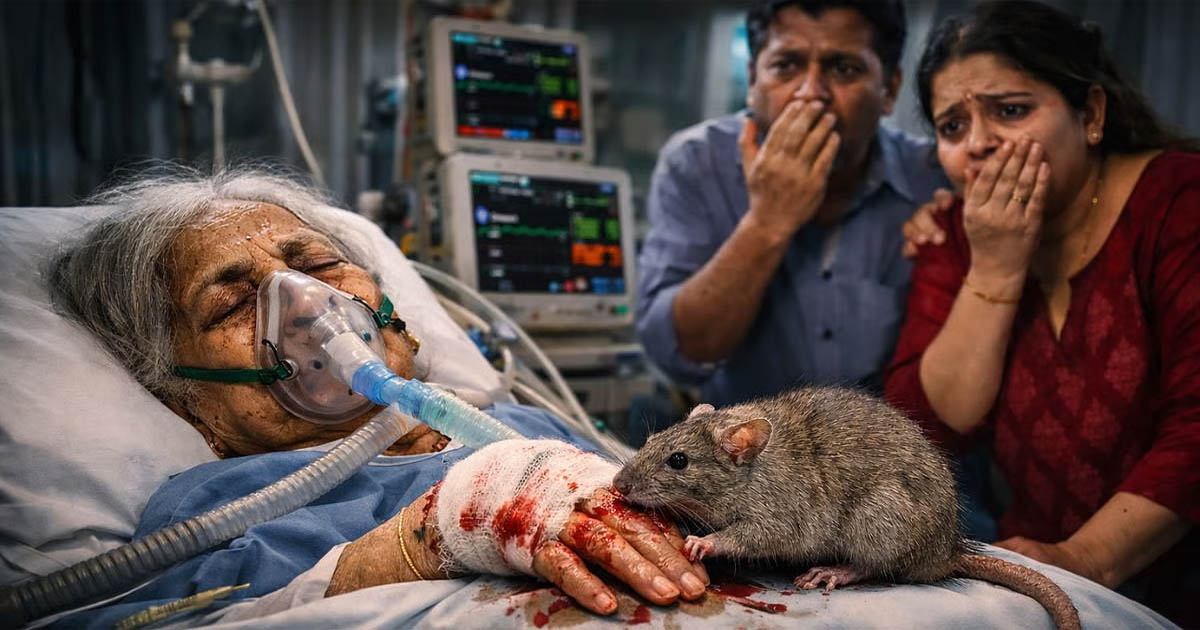
Mira Bhayandar: A shocking and infuriating incident has come to light at the Pandit Bhimsen Joshi Hospital in Mira Bhayandar, where an elderly woman in the Intensive Care Unit (ICU) was reportedly bitten by a rat. The incident has raised serious questions regarding the lack of hygiene and security within the hospital’s most critical department.
The victim, 89-year-old Suhasini Mathekar, was admitted to the hospital on March 12 following health complaints. Due to her critical condition, she was placed on a ventilator in the ICU located on the fourth floor of the facility.
On the morning of March 13, family members visiting the ICU were horrified to discover that a rat had bitten the elderly woman’s hand. According to the family, the rodent scurried away only after they intervened.
The victim’s family has leveled serious allegations against the hospital staff. They have questioned how the doctors and nurses on night duty failed to notice the presence of a rat or the distress of a patient in such a sensitive environment.
“It is shocking that such an incident could occur in a supposedly sterile and highly monitored zone like the ICU,” a family member stated. Public outrage is mounting over the perceived administrative apathy, with many calling for a high-level inquiry into the hospital’s management.
The presence of rodents in an ICU points to a complete breakdown of sanitation and safety protocols. Such lapses not only affect individual patients but also pose a significant infection risk to everyone in the ward.
The family has officially demanded A thorough investigation into the conduct of the staff on duty. An immediate audit of the hospital’s cleanliness and pest control measures. And Strict action against those responsible for the lapse to ensure such a traumatic event never recurs.
Maharashtra
Palghar: 864 Families Receive New Homes Under Naigaon BDD Chawl Redevelopment Project In Naigaon
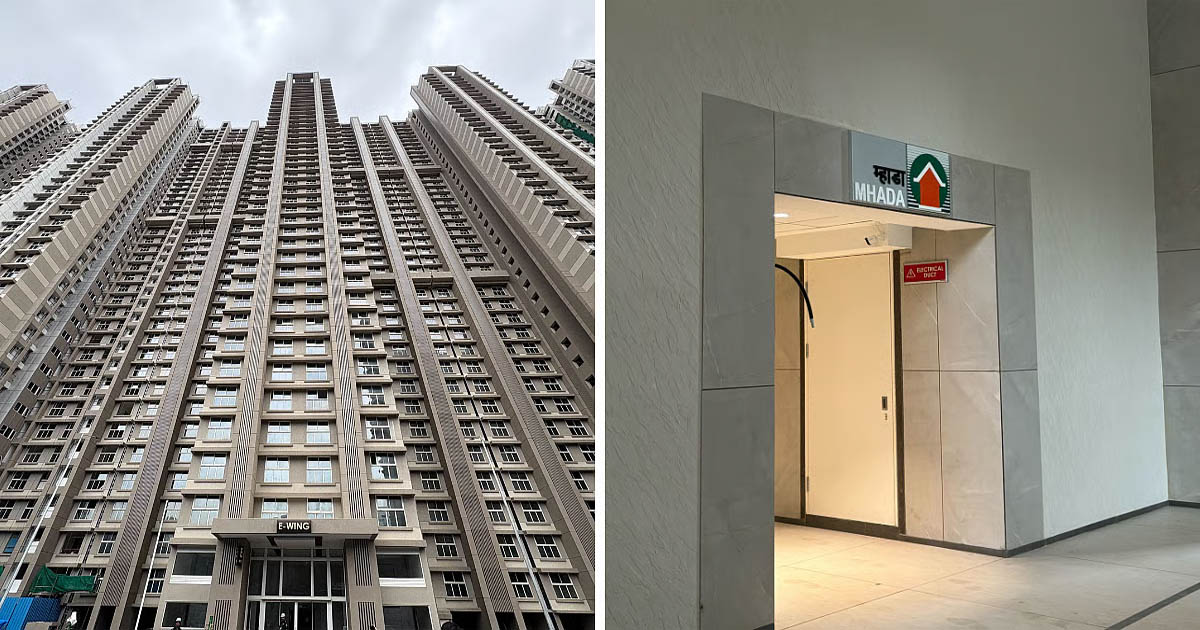
A significant milestone in Mumbai’s large scale housing redevelopment effort was achieved as 864 families received keys to their new homes at the Dr Babasaheb Ambedkar BDD Sankul in Naigaon. The handover forms part of the ongoing BDD Chawl Redevelopment Project aimed at providing modern housing and improved living conditions to long time residents of the city’s historic chawl settlements.
The moment marked a major step forward for families who have been waiting for upgraded housing through the redevelopment initiative.
The newly constructed homes are part of the Naigaon BDD Chawl redevelopment project and are intended to offer residents a more dignified and secure living environment. The housing complex has been designed with improved infrastructure and facilities to enhance the quality of life for the families moving into the new flats.
Officials stated that the redevelopment project reflects a broader effort to transform ageing residential structures in Mumbai into modern housing spaces while preserving community ties.
The redevelopment of the BDD Chawls has progressed in phases with the Maharashtra Housing and Area Development Authority playing a key role in executing the project. The first phase of the initiative in Worli has already been completed, and the handover in Naigaon marks another important stage in the wider plan.
Authorities aim to provide new homes to all eligible residents under the BDD Chawl Redevelopment Project by the year 2029.
Alongside the BDD project, large scale redevelopment activities are underway across Mumbai. Nearly 1000 acres of redevelopment work is currently in progress in different parts of the city as authorities work to upgrade ageing neighbourhoods and provide better housing infrastructure.
The Naigaon milestone reflects the broader push to reshape residential areas across Mumbai with modern housing, improved facilities and better living conditions for thousands of residents.

Gas crisis in Maharashtra! But people need not worry, Chhagan Bhujbal claims in the House… Supply of kerosene is also possible

Mira Bhayandar Hospital Shocker: 89-Year-Old Patient On Ventilator Bitten By Rat, Sparking Outrage Over Safety Lapses

Palghar: 864 Families Receive New Homes Under Naigaon BDD Chawl Redevelopment Project In Naigaon

West Asia conflict: India advises nationals in Iran against uncoordinated movement toward land borders

US targets Iran’s military positions near Chabahar Free Trade Zone: Report

Salim Khan hospitalised following complaints of swelling

Mumbai: JBCN International School In Borivali Gets Bomb Threat, Search Reveals Hoax, Students Safe

Former Arsenal Star Mesut Ozil’s Convoy Gets Involved In Road Accident During Bangladesh Visit

Gold and silver surge on safe haven demand, margin cut

Mumbai Local Train Update: Mega, Jumbo Blocks Announced On Central, Harbour & Western Lines On February 22; Check Time & Route Here
-

 Crime4 years ago
Class 10 student jumps to death in Jaipur
-

 Maharashtra1 year ago
Mumbai Local Train Update: Central Railway’s New Timetable Comes Into Effect; Check Full List Of Revised Timings & Stations
-

 Maharashtra1 year ago
Mumbai To Go Toll-Free Tonight! Maharashtra Govt Announces Complete Toll Waiver For Light Motor Vehicles At All 5 Entry Points Of City
-

 Maharashtra1 year ago
False photo of Imtiaz Jaleel’s rally, exposing the fooling conspiracy
-

 National News1 year ago
Ministry of Railways rolls out Special Drive 4.0 with focus on digitisation, cleanliness, inclusiveness and grievance redressal
-

 Maharashtra1 year ago
Maharashtra Elections 2024: Mumbai Metro & BEST Services Extended Till Midnight On Voting Day
-

 National News1 year ago
J&K: 4 Jawans Killed, 28 Injured After Bus Carrying BSF Personnel For Poll Duty Falls Into Gorge In Budgam; Terrifying Visuals Surface
-

 Crime1 year ago
Baba Siddique Murder: Mumbai Police Unable To Get Lawrence Bishnoi Custody Due To Home Ministry Order, Says Report