
Politics
Amid Maoist resurgence threat, Mamata to visit Junglemahal


In the backdrop of frequent recovery of Maoist posters and intelligence alerts about the resurgence of the Left-wing extremist (LWE) activities in pockets of West Bengal, Chief Minister Mamata Banerjee will be in Junglemahal for two days from Tuesday.
Although the Junglemahal area is scattered over three districts of West Midnapore, Bankura and Purulia, this time the chief minister will restrict her activities in West Midnapore district only. In the coming days, the chief minister will make similar visits to Purulia and Bankura as well, confirmed sources from the state secretariat of Nabanna.
Sources said that on May 17, the chief minister will first reach the Circuit House in Midnapore town. On the same day, around 3 p.m. she will chair an administrative review meeting, which will be attended by district magistrates and district police superintendents and other senior bureaucrats and police officers from the district.
Next day, she will address a rally of the party workers and leaders in the district at the Midnapore College Grounds.
A member of the state cabinet, who did not wish to be named, told IANS that the chief minister is concerned about the reports of possible resurgence of the Maoist activities in the state.
“She has got reports that a section of the people in the three districts scattered over the Junglemahal area are dissatisfied with the slow progress of the developmental projects. Complaints about rampant corruption have gripped a section of the political and administrative sections in the state. Even there are reports that the BJP is taking that advantage and trying to fuel the grievances of the people on this count. So, the chief minister will review the situation at the administrative review meeting and suggest corrective measures,” the member of the state cabinet said.
On April 26, at a meeting of the Standing Committee of the Eastern Zonal Council that took place at the West Bengal state secretariat of Nabanna, the Union home ministry officials cautioned about the resurgence of Maoist activities in the four eastern Indian states of the West Bengal, Odisha, Jharkhand and Bihar.
During the two-day West Midnapore visit, the chief minister is also expected to review the deployment of the Central Armed Forces there.


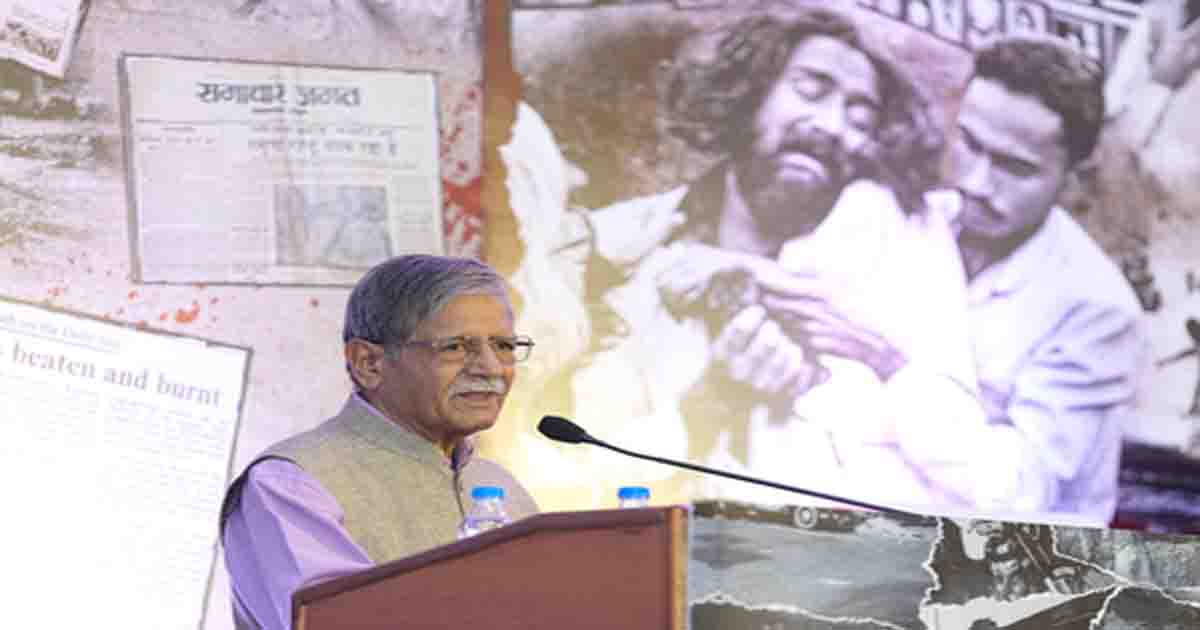
Chandigarh : Laying bare four decades of systemic subversion of the criminal justice system, former Delhi High Court judge Justice Shiv Narain Dhingra has said trials following the 1984 anti-Sikh massacre were conducted like an institutional “fraud” designed to shield influential political patrons.
Speaking at the session, “Murder of Justice”, at the BJP’s ‘Zakhm 84 De’ conclave here this week, Justice Dhingra, who also headed the Supreme Court-mandated Special Investigation Team (SIT) in 2018, gave a chilling account of how the police machinery, procedural technicalities, and political patronage converged to bury accountability.
“No riot takes place on its own; every communal riot is managed and patronised,” Justice Dhingra said.
“In 1984, crowds from resettlement colonies were mobilised, armed, and handed specific lists to target Sikh households. What followed in courtrooms was a mockery of justice,” he said.
Justice Dhingra added, “When our justice delivery system operates with a dismal six per cent conviction rate, does an acquittal after two decades represent justice? If the accused brought before the Bench didn’t commit the murder, then who did? The state had an obligation to find out, but the system simply rolled over.”
Drawing from his tenure as Additional Sessions Judge at the Karkardooma Special Court handling East Delhi cases, Justice Dhingra highlighted the procedural traps deployed by the then-administration.
In the Trilokpuri massacres, police bundled over 200 distinct murders into a single omnibus first information report (FIR). Knowing that criminal procedural law forbids trying more than three offences together, the prosecution let an application to separate the cases languish for years.
Justice Dhingra recalled retrieving the stalled plea, directing independent chargesheets for each murder, and breaking it down into 200 distinct trials, bringing key political figures like H.K.L. Bhagat and local councillors to stand trial.
Successive inquiry panels were rotated between 1984 and 1992 solely to prevent the registration of formal criminal cases.
When FIRs were finally registered eight years later on commission recommendations, state defence lawyers cynically cited the “unexplained eight-year delay” as primary grounds to secure acquittals in trial courts.
Recalling an attempt by the CBI to arrest Congress leader Sajjan Kumar, Justice Dhingra recounted that sleuths arriving at 7 a.m. were forced to wait outside while a mob encircled the residence within 15 minutes. While local police refused to intervene or assist the central agency, Kumar’s lawyers secured anticipatory bail before noon.
Justice Dhingra noted that the CBI subsequently submitted an affidavit on his court record revealing that the official police case file had landed in the physical custody of Kumar’s defence counsel.
National News
Oppn defends democratic protests; BJP hits out at Irfan Ansari over ‘regime change’ remark

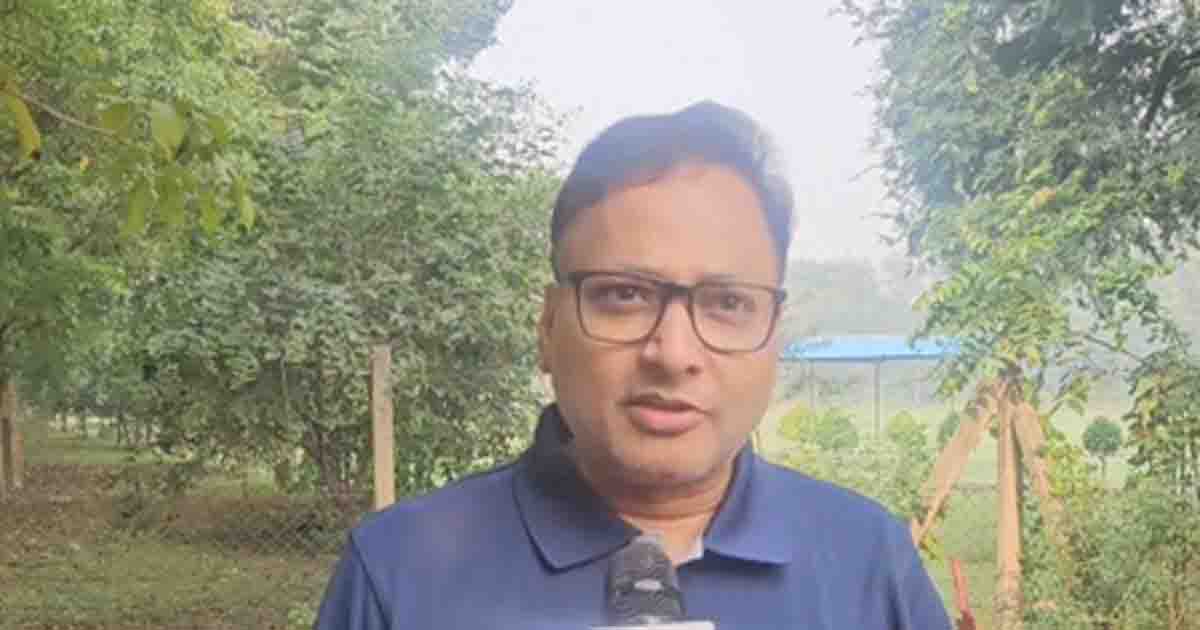
New Delhi : A political controversy has erupted over Jharkhand Health Minister and Congress leader Irfan Ansari’s remarks that around 40 lakh youths were waiting for a signal from Leader of the Opposition (LoP) in the Lok Sabha, Rahul Gandhi, to take to the streets, warning that the situation in India could become worse than in Bangladesh and Nepal. While Opposition leaders have maintained that any change of government must take place through democratic and constitutional means, BJP leaders have accused Ansari of encouraging unrest and attempting to create anarchy. Speaking to Media, Congress leader Udit Raj responded to Ansari’s statement, questioning the minister’s claim about the number of youths and asserting that the Opposition’s approach was rooted in constitutional methods.
“Only Irfan Ansari would know where the 40 lakh youth are. It could be 40 lakh or even 4 crore. Our path of struggle is democratic and constitutional. It is neither the Bangladesh model nor the Nepal model. We believe in democracy. In Nepal, the country’s own heritage was set on fire by its youth, while the situation in Bangladesh was also very disturbing. That is not our path. Our path is one of non-violence,” he said. Congress leader Rakesh Sinha, meanwhile, defended the right of young people to protest and questioned the government’s response to demonstrations. “Protesting is a constitutional right. If the youth put up their demands, will you shoot at them with pellet guns and take away their eyesight? You won’t even file an FIR. If this situation continues, how are the youth going to suppress their emotions? And whenever the youth gets aggressive, there has been regime change, and we assure you that there will be change,” he said.
Samajwadi Party spokesperson Dr Ashutosh Verma said that any change of government in a democratic country like India could happen only through established democratic processes. “The Samajwadi Party is in support of this. We will defeat them the way they have defeated us. The Samajwadi Party is going to form a government with a clear mandate and the trust of people. This is the only way ahead,” he said. Meanwhile, NDA leaders criticised Ansari’s remarks and demanded that he should be sacked. BJP Bihar President Sanjay Saraogi strongly criticised Ansari’s remarks, describing them as an admission of what he alleged was a Congress-backed attempt to create political instability. “This anti-national and poisonous statement by Jharkhand government minister Irfan Ansari is an open admission of Congress’ well-planned anarchic and violent conspiracy. Such anti-national statements, talking about regime change and turning India into Bangladesh or Nepal, will never succeed in a country like India,” Saraogi said. He added that India was a democratic nation with 1.4 billion citizens and alleged that no one would be allowed to create unrest at the behest of foreign powers.
Union Minister Rajiv Ranjan also criticised the minister, saying such statements reflected a lack of understanding of India’s democratic institutions. “First, such leaders should be sent to Kanke, where there is a very good mental health facility. They are unfamiliar with democracy’s power in this country. India is not Bangladesh or Sri Lanka. It is the world’s largest democracy, with a population nearing 150 crore; you cannot repeat what happened in smaller nations here. These statements should not be taken that seriously,” he said. BJP Jharkhand spokesperson Pratul Shah Deo alleged that Ansari’s remarks suggested that the Congress wanted students to confront security personnel. He said students did not want violence and questioned the minister’s references to Bangladesh and Nepal, alleging that political upheaval in those countries had resulted in violence and instability. JD(U) MLA Vinay Chaudhary said Opposition leaders had the opportunity to raise their concerns in Parliament but were not allowing the House to function smoothly.
“Everything is marked in a democracy. If the Prime Minister does not listen to you there, then you can raise your voice. Indian citizens give a due reply in the elections. They show in the elections whom they support and whom they don’t,” he said. The controversy followed Ansari’s remarks during an interaction in Delhi, in which he claimed that 40 lakh young people were ready to take to the streets and were waiting for a signal from Rahul Gandhi. He said the Congress leader had so far held them back. Ansari had also alleged that farmers, workers, the middle class, Dalits, tribals and Muslims were facing difficulties under the BJP-led government and warned that if Prime Minister Narendra Modi did not take note of the situation, the country could witness developments worse than those in Bangladesh and Nepal.
National News
LoP Rahul speaks Constitution in Delhi, works differently in Kerala, claims Rajeev Chandrasekhar
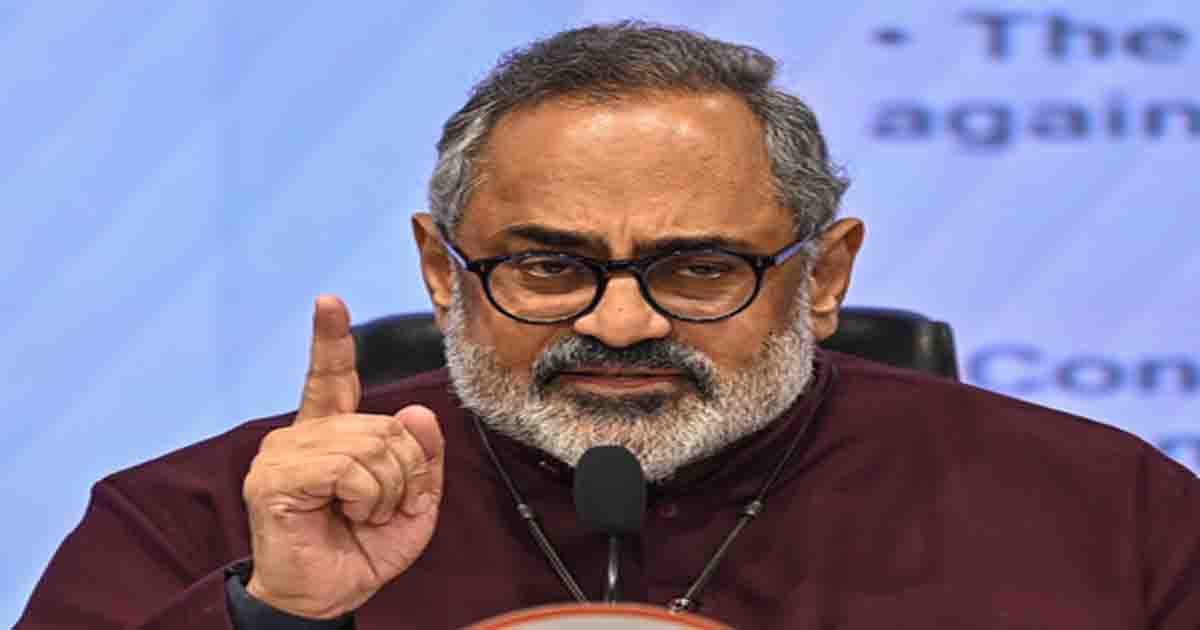
Thiruvananthapuram : BJP state President, Rajeev Chandrasekhar, on Friday accused Congress MP and Leader of the Opposition (LoP) in the Lok Sabha, Rahul Gandhi, of adopting double standards by speaking about the Constitution, democracy and secularism in Delhi while his party follows a different political line in Kerala. He said LoP Rahul Gandhi often speaks about constitutional values, democracy, secularism and the rights of women and young people at the national level. However, the Congress’ political arrangements in Kerala tell a different story, Chandrasekhar alleged.
Chandrasekhar, who is one of the three BJP MLA’s in the state, accused the Congress of maintaining an open political understanding with Jamaat-e-Islami in Kerala while claiming to champion secularism and constitutional values. He alleged that the organisation was opposed to the Constitution and secular principles and also linked it to the political unrest in Bangladesh. The BJP leader also questioned the Congress’ dependence on the Indian Union Muslim League (IUML), a key UDF ally, alleging that some of its ministers had openly declared that their sole political objective was “religion, religion, religion”. Taking aim at LoP Gandhi’s repeated references to the future of India’s youth, Chandrasekhar said the Congress in Kerala had failed to implement the PM SHRI education scheme, which seeks to improve the quality of education in government schools.
He alleged that the party had yielded to pressure from the Muslim League rather than supporting a programme intended to provide better educational opportunities to children from poor families. The BJP leader also accused LoP Gandhi of maintaining silence over what he described as attempts by his political allies in Kerala to curtail women’s rights and restrict their freedom. He further questioned the Congress’ support for Muslim reservation in Kerala, which he described as unconstitutional, while Rahul Gandhi continued to speak about constitutional principles elsewhere. “Rahul Gandhi speaks one language in Delhi, while his party functions in an entirely different manner in Kerala. What else can this be called if not deceptive politics?” he asked.

1984 anti-Sikh massacre trials conducted like institutional fraud, says former judge

Oppn defends democratic protests; BJP hits out at Irfan Ansari over ‘regime change’ remark

LoP Rahul speaks Constitution in Delhi, works differently in Kerala, claims Rajeev Chandrasekhar

700 arrested, Shahzad Bhatti’s terror network seeks comeback with religious pitch

20 years of harassment, says K’taka cab driver after arrest for killing 7 of wife’s family

Rahul, Cong ecosystem want to force regime change: BJP after Neha Bora praises B’desh Gen-Z protest

BJP pays tribute to ex-President Abdul Kalam, recalls his enduring influence on generations of India’s youth

Attack on democratic rights: INDIA Bloc leaders on detentions of anti-ECI protestors

Congress trying to protect 3 crore Bangladeshi infiltrators in voter list: HM Shah

Online betting: ED conducts searches at 20 premises in Mumbai, Pune, Hyderabad
-

 Crime4 years ago
Class 10 student jumps to death in Jaipur
-

 Maharashtra2 years ago
Mumbai Local Train Update: Central Railway’s New Timetable Comes Into Effect; Check Full List Of Revised Timings & Stations
-

 Maharashtra2 years ago
Mumbai To Go Toll-Free Tonight! Maharashtra Govt Announces Complete Toll Waiver For Light Motor Vehicles At All 5 Entry Points Of City
-

 Maharashtra2 years ago
False photo of Imtiaz Jaleel’s rally, exposing the fooling conspiracy
-

 National News2 years ago
Ministry of Railways rolls out Special Drive 4.0 with focus on digitisation, cleanliness, inclusiveness and grievance redressal
-

 Maharashtra2 years ago
Maharashtra Elections 2024: Mumbai Metro & BEST Services Extended Till Midnight On Voting Day
-

 National News2 years ago
J&K: 4 Jawans Killed, 28 Injured After Bus Carrying BSF Personnel For Poll Duty Falls Into Gorge In Budgam; Terrifying Visuals Surface
-

 Crime2 years ago
Baba Siddique Murder: Mumbai Police Unable To Get Lawrence Bishnoi Custody Due To Home Ministry Order, Says Report