
Business
Adani Green Energy Sales Jump 42% In Q1, Operational RE Capacity Reaches 15.8 GW

Key Highlights:
– Energy sales rose 42 percent YoY to 10,479 million units in Q1 FY26.
– Operational RE capacity reached 15.8 GW, the highest in India.
– EBITDA surged 31 percent to Rs 3,108 crore, backed by new greenfield projects.
Ahmedabad: Adani Green Energy Ltd’s (AGEL) energy sales surged 42 per cent (year-on-year) in the April-June quarter (Q1 FY26) to 10,479 million units, as operational renewable energy (RE) capacity grew 45 per cent to 15.8 GW which continues to be India’s largest, the company said on Monday.
While revenue growth increased by 31 per cent (on-year) to Rs 3,312 crore, EBITDA also went up by 31 per cent to Rs 3,108 crore.
According to the Adani Group company, cash profit surged by 25 per cent (on-year) to Rs 1,744 crore in the quarter.
“During Q1 FY26, we added 1.6 GW of greenfield renewable energy capacity, bringing our total increase to 4.9 GW over the past year — an achievement unmatched in India’s transition toward clean energy,” said Ashish Khanna, CEO of Adani Green Energy.
“Our investments in the massive RE development at Khavda in Gujarat as well as other resource-rich sites are delivering results both in terms of superior operational performance and industry-best EBITDA margins,” he said, adding that the company is on track to achieve its 2030 target of 50 GW RE capacity — with at least 5 GW of hydro pumped storage along with battery storage.
Strong revenue, EBITDA, and cash profit growth are primarily backed by robust greenfield capacity addition, deployment of advanced RE technologies, superior plant performance and deployment of new capacities in resource-rich sites in Khavda (Gujarat) and Rajasthan.
“Further, battery storage is also a key part of our future strategy. We remain committed to supporting national energy transition and security ambitions as well as maintaining our ESG leadership, highlighted by our top rankings in the FTSE Russel ESG assessment and recognition at the Reuters Global Energy Transition Awards 2025,” Khanna noted.
AGEL has consistently generated electricity exceeding the overall annual commitment under the power purchase agreements (PPA). In Q1 FY26, AGEL’s PPA-based electricity generation was 31 per cent of the annual commitment.
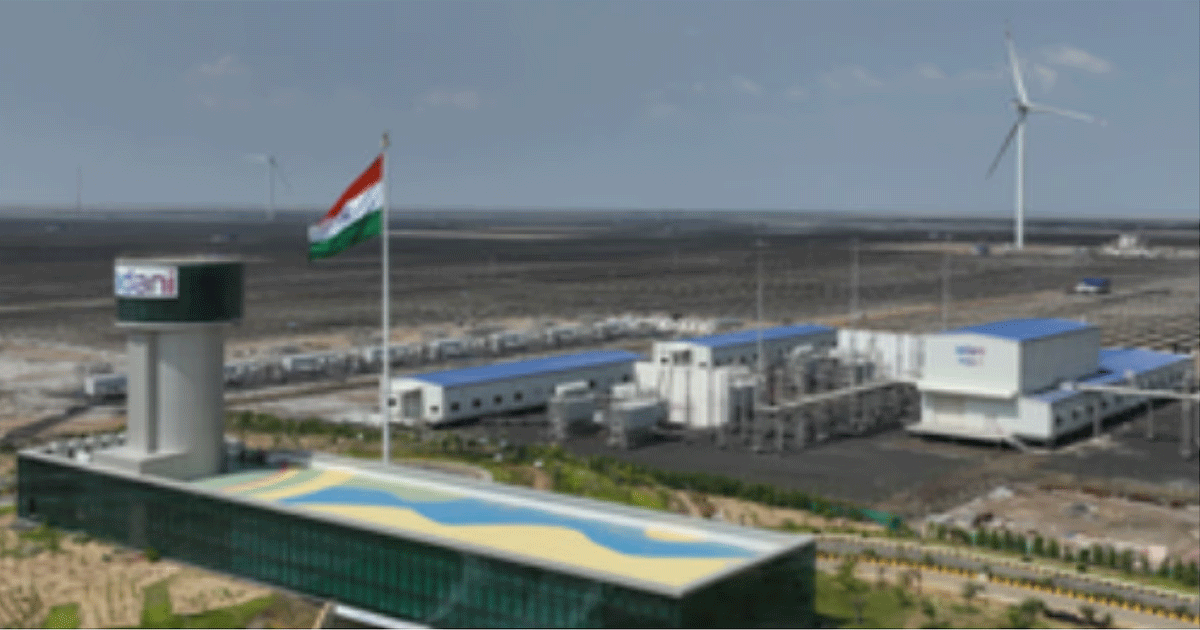
The company is developing a massive 30 GW renewable energy plant at Khavda in Gujarat. This is spread over an area of 538 sq km, almost 5 times the city of Paris.


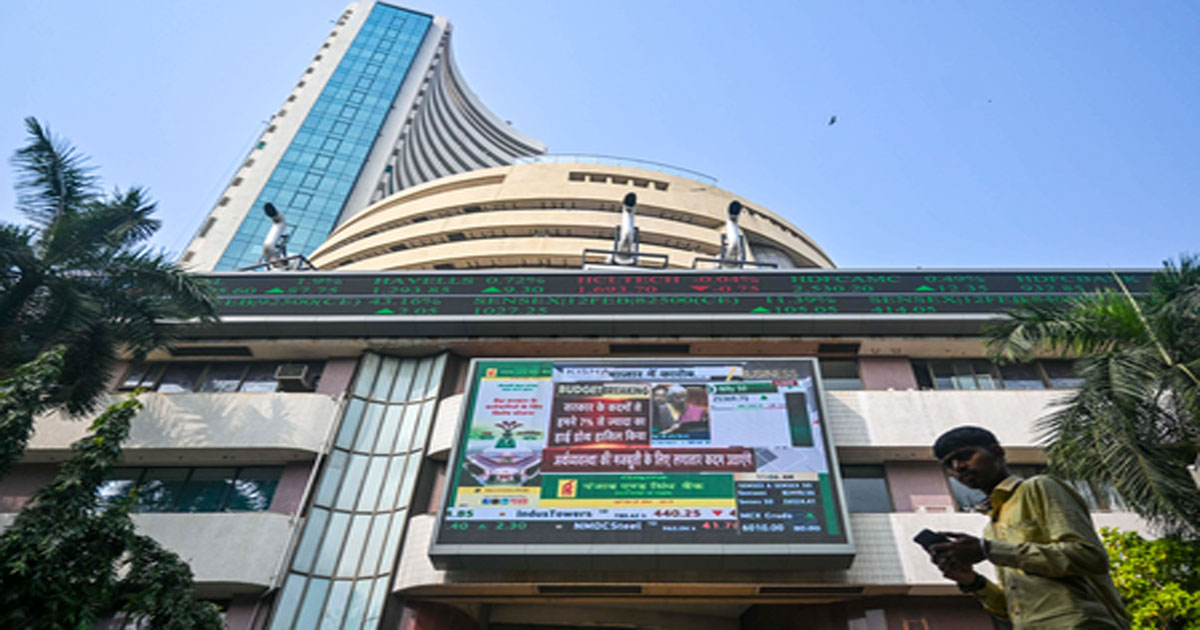
Mumbai, May 22: The Indian equity markets posted mild gains early on Friday tracking positive global cues, over optimism regarding US-Iran peace negotiations.
As of 9.23 am, Sensex added 307 points, or 0.41 per cent, to reach 75,491 and Nifty gained 89 points, or 0.38 per cent to reach 23,744.
Main broad-cap indices showed divergence with the benchmark indices, as the Nifty Midcap 100 added just 0.06 per cent, and the Nifty Smallcap 100 lost 0.02 per cent.
Sectoral indices on NSE traded mixed with gains led by Nifty PSU bank and Nifty private bank up 0.53 per cent and 0.75 per cent, respectively. Nifty media and realty were the top losers down 0.83 per cent and 0.75 per cent, respectively.
Immediate support for Nifty is placed around the 23,500–23,550 zone, while resistance is seen near the 23,850–23,900 range, market participants said. Immediate support for Bank Nifty is placed around the 53,300–53,500 zone, while resistance is seen near the 54,400–54,500 range.
Analysts noted that market activity is majorly marked by buying on dips and selling on rallies, probably led by institutional activity.
Brent crude declining to below $105 and rupee appreciating to 96.20 from 96.96 level are positive developments, they added.
Broader market activity shows an optimistic trend due to positive quarterly earnings from small and midcaps.
Asia-Pacific markets traded higher Friday over investor optimism regarding diplomatic efforts in reaching a peace deal in the Middle East.
Tehran said it remains committed to keeping enriched uranium stockpiles within the country, according to reports, which could pose challenges in concluding a deal with Washington, as US President Donald Trump continues to claim dismantling Iran’s nuclear programme as his central military objective.
In Asian markets, China’s Shanghai index gained 0.33 per cent, and Shenzhen added 1.2 per cent, Japan’s Nikkei advanced 2.29 per cent, and Hong Kong’s Hang Seng Index inched up 0.9 per cent. South Korea’s Kospi added 0.17 per cent.
The US markets ended in green overnight as Nasdaq gained 0.09 per cent. The S&P 500 advanced 0.17 per cent, and the Dow Jones added 0.55 per cent.
On May 21, foreign institutional investors (FIIs) net sold equities worth Rs 1,891 crore, while domestic institutional investors (DIIs) net bought equities worth Rs 2,492 crore.
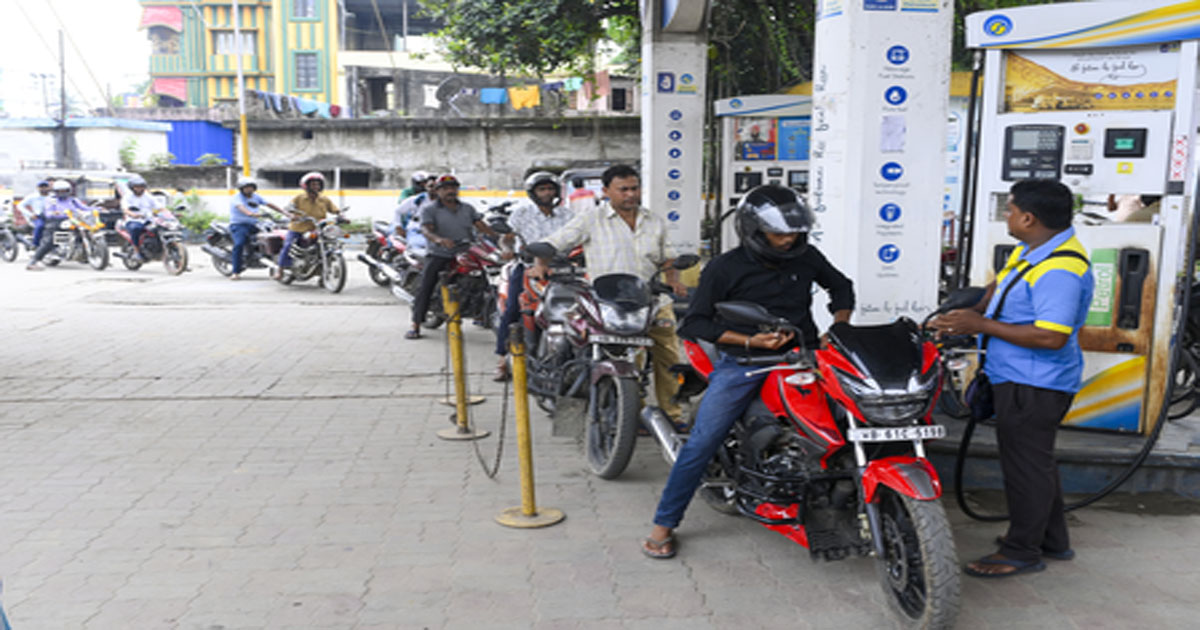
New Delhi, May 21: There is no shortage of petrol, diesel or LPG in the country and petrol pumps that are not giving fuel or giving fuel in reduced quantities are being pulled up, according to senior government officials on Thursday.
The government is receiving feedback about petrol pumps across India and full supply of fuels is being maintained to all retail outlets. There has also been no reduction in oil imports coming from Russia in order to ensure adequate crude supplies to the refineries of oil marketing companies, the officials pointed out.
There has been an increase in sales at some pumps because of the higher demand for diesel due to the harvesting season. There has also been a shift in customers from private oil marketing companies, who have started charging higher prices, to retail filling stations belonging to public sector oil companies.
Besides, institutional or commercial sales, which are priced around Rs 20 higher as per actual international price, have also shifted to petrol pumps, they added.
The officials also pointed out that India’s increase of Rs 3.91 per litre in the prices of petrol and diesel announced this week, works out to 4.4 per cent, which is the smallest hike of any major economy outside the directly subsidising Gulf producers such as Saudi Arabia, according to figures compiled by GlobalPetrolPrices.com.
An IndianOil official pointed out that the Rs 3.91 increase, which restores only part of the rise of cost in crude, has been undertaken after 76 days of complete absorption of costs by the public sector oil companies. In sharp contrast, the rest of the world has been adjusting price for the rise in crude costs through increases ranging from 10 to 90 per cent in the retail prices of the two fuels.
The pass-through has been steepest in liberalised emerging markets directly exposed to West Asian supply and freight, where governments do not absorb volatility. The Pakistani consumer is paying about 55 per cent more for petrol today than three months ago, the Malaysian about 56 per cent more, and the Emirati consumers about 52 per cent higher prices, the figures show.
In the advanced economies, the increases are smaller in percentage terms but still substantial. American petrol prices, which respond quickly to crude because federal and state excise loadings are modest, have risen by close to 45 per cent and diesel by 48 per cent.
In Europe, where excise duties dampen the swing, the United Kingdom is up about 19 per cent on petrol and 34 per cent on diesel, Germany about 14 per cent on petrol and 20 per cent on diesel, France about 21 per cent and 30 per cent, respectively.
In the case of Japan, South Korea and Singapore, the hike in petrol prices has been held below 20 per cent and the price of diesel has risen considerably faster, with Singapore registering a 65 per cent jump in the price of diesel.

Mumbai, May 21: Indian equity markets traded higher on Thursday in early deals amid hopes of easing tensions in West Asia after Iran said it was reviewing latest proposal to end the conflict.
In the morning trade, Sensex jumped as much as 0.83 per cent or 627 points to hit an intraday high of 75,945, while Nifty traded 0.84 per cent or 200 points higher at 23,859.
On the sectoral front, realty stocks led the gains, with the Nifty Realty index rising 1.5 per cent. Nifty Cement advanced 1 per cent, while chemicals, auto and media indices also traded higher. PSU Bank and metal stocks too remained in positive territory during the session, with all sectoral indices trading in the green.
Meanwhile, from the 50-share benchmark pack, Infosys, Nestle India, Trent, SBI Life Insurance, Sun Pharma, Tata Consumer Products and ONGC were among the top laggards.
Category-wise, smallcap and midcap shares outperformed the benchmarks in early trade. The Nifty Microcap 250 climbed over 1 per cent, while the Nifty Smallcap 500 and Nifty Midcap 150 indices gained up to 1 per cent.
Meanwhile, India VIX declined over 4 per cent to around 18, signalling easing volatility.
Analysts said the recent momentum suggests investors are continuing to adopt a “buy on dips” strategy, supported by easing volatility and improving sentiment around foreign fund flows.
According to market experts, concerns over elevated valuations in AI-linked stocks in South Korean and Taiwanese markets could potentially divert foreign investor interest towards India, where valuations are seen as relatively fair in several pockets.
They added that the trajectory of crude oil prices and rupee stability would remain key factors driving near-term market direction.
Experts further noted that while fourth-quarter earnings have remained largely healthy so far, the impact of higher energy prices may become visible from the first quarter of FY27.
Moreover, market sentiment improved after Iran said it was reviewing Washington’s latest proposal to end the conflict, raising hopes of easing geopolitical tensions in West Asia.
The remarks came after US President Donald Trump indicated that Washington was willing to wait a few days for Tehran’s response, while also warning of renewed attacks if negotiations failed.
In the commodities market, international benchmark Brent crude rose 1.32 per cent to $106.41 per barrel, while US WTI crude jumped nearly 2 per cent to $100.11 per barrel.
Global market sentiment also remained positive. Asian stocks traded in the green, with Japan’s Nikkei rising over 3 per cent, South Korea’s KOSPI surging more than 7 per cent, and Hong Kong’s Hang Seng trading marginally higher.
In the US, Wall Street ended on a bullish note, with the S&P 500 closing 1 per cent higher and the Nasdaq settling 1.54 per cent up.

Correction made by the Municipal Corporation in the application form for fire safety approval, important decision of the Additional Municipal Commissioner

‘Bangladeshis & Rohingyas Ahould Pack Their Bags’: BJP Minister Nitesh Rane Warns Action Against All Illegal Encroachments In Mumbai

Mumbai NC Inter-state ganja smuggling network exposed, 702 kg ganja seized from Gondia, Maharashtra and 02 arrested

‘…Is Transforming Every Aspect Of Our Lives’: Maharashtra CM Devendra Fadnavis On AI, Says Technology Can Drive Social And Economic Development

Mumbai NCB achieves major success in convicting D Company and Pathan gang leader Chinko Pathan. Five accused in the case were sentenced to death and fined.

Maharashtra Shock: 22-Year-Old Arrested For Exploiting & Blackmailing Multiple Women In Kolhapur; Love Jihad Angle Suspected

Google to invest up to $40 billion in Anthropic amid global AI race

27 Years After Gangster Sadiq Kalia’s Encounter By Daya Nayak, His Nephew Arrested For Alleged Revenge Killing In Mumbai

Chembur Police Arrest Four For Trying To Sell Elephant Tusks Worth ₹3.5 Crore; Forest Department Confirms Seizure

India, New Zealand set to sign FTA for improved market access on April 27
-

 Crime4 years ago
Class 10 student jumps to death in Jaipur
-

 Maharashtra2 years ago
Mumbai Local Train Update: Central Railway’s New Timetable Comes Into Effect; Check Full List Of Revised Timings & Stations
-

 Maharashtra2 years ago
Mumbai To Go Toll-Free Tonight! Maharashtra Govt Announces Complete Toll Waiver For Light Motor Vehicles At All 5 Entry Points Of City
-

 Maharashtra2 years ago
False photo of Imtiaz Jaleel’s rally, exposing the fooling conspiracy
-

 National News2 years ago
Ministry of Railways rolls out Special Drive 4.0 with focus on digitisation, cleanliness, inclusiveness and grievance redressal
-

 Maharashtra2 years ago
Maharashtra Elections 2024: Mumbai Metro & BEST Services Extended Till Midnight On Voting Day
-

 National News2 years ago
J&K: 4 Jawans Killed, 28 Injured After Bus Carrying BSF Personnel For Poll Duty Falls Into Gorge In Budgam; Terrifying Visuals Surface
-

 Crime2 years ago
Baba Siddique Murder: Mumbai Police Unable To Get Lawrence Bishnoi Custody Due To Home Ministry Order, Says Report