
Business
Adani Electricity cuts AT&C losses with crackdown on power theft

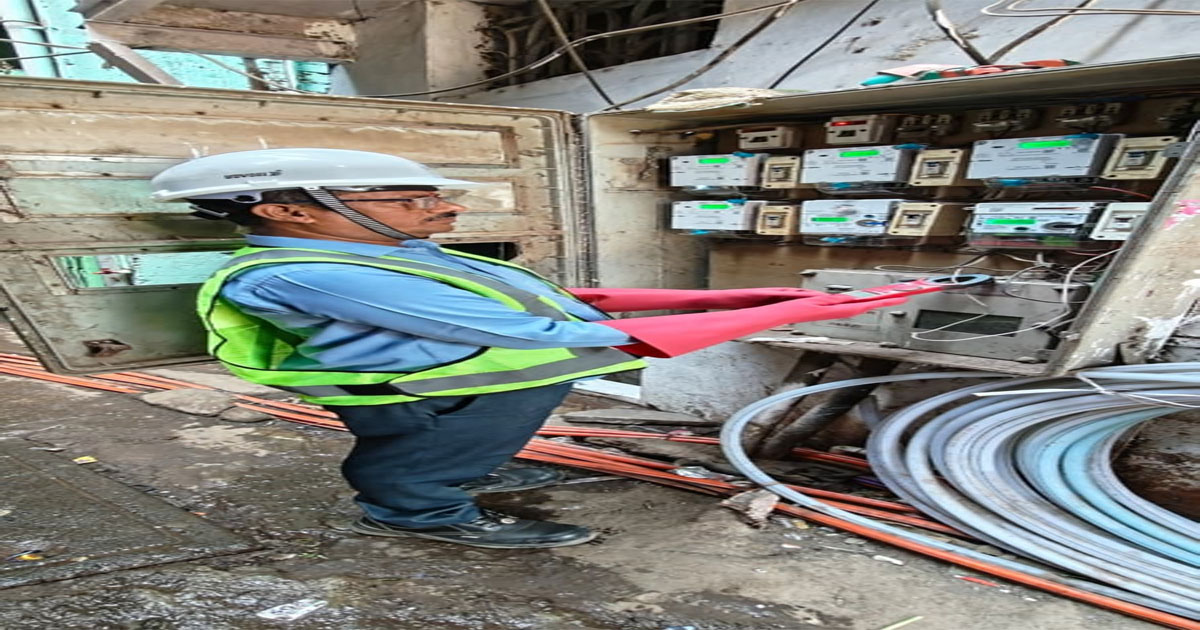
Mumbai, July 14: Adani Electricity’s anti-theft drive has succeeded in significantly reducing its Aggregate Technical and Commercial (AT&C) losses to 4.46 per cent in FY 2025-26 from 4.7 per cent in the previous year, which positions it among the Discoms with the lowest AT&C losses nationwide, according to a company statement issued on Tuesday.
This significant reduction of 0.24 per cent in AT&C losses across Adani Electricity’s extensive network will lower the burden on honest, paying consumers, the statement said.
Adani Electricity conducted 36,720 mass raids during the financial year 2025-2026 and registered 486 First Information Reports (FIRs) against perpetrators of power theft. This intensified vigilance also reflects a 40 per cent increase in odd-timing raids which include early morning, late evening and holidays.
Additionally, 5897 power theft cases were booked. During raids, 79.25 tons of illegal wires were recovered. A total theft of 19.82 million units — amounting to Rs 43.39 crore — was assessed, according to the statement.
The important cases include the successful detection and booking of a high-value electricity theft case of Rs 1.63 crore involving direct supply for moulding activity at Swastik Compound, Chincholi Bandar Road, Malad (West) on 7th November 2025, by the company’s vigilance team.
Similarly, on 4th July 2025 another high-value electricity theft case of Rs 80 lacs was booked involving direct supply for moulding activity at Motilal Nagar, Goregaon (West).
Besides, a case involving electricity theft to the tune of Rs 48.73 lakh was booked in June involving direct supply for moulding activity at Malad (East).
Stealing electricity is a non-bailable offence. Under Section 135 of the Electricity Act 2003, an offender can be punished with a fine, a jail term of up to three years, or both, once proven guilty.
Adani Electricity actively collaborates with police authorities to conduct regular mass raids, apprehend offenders, and confiscate equipment used for power theft. During FY 2025-26, a significant amount of 79.25 tons of unauthorized wires and other equipment were seized, the statement said.
Power theft in high-demand areas like slum clusters, where new network development is challenging due to space constraints, severely overloads the existing infrastructure.
This strain increases maintenance costs due to more frequent cable and transformer failures.
An Adani Electricity spokesperson said, “Power theft unfairly burdens honest, paying consumers. Adani Electricity is committed to eliminating the menace of power theft. By combating such unlawful activities, we safeguard the interests of our customers. We will intensify our efforts in specific areas to further reduce AT&C losses this year.”
“The significant reduction in AT&C losses this year is a direct result of our intensified efforts against power theft. This not only safeguards our infrastructure but also alleviates the financial burden on our honest, paying consumers by enabling us to maintain competitive tariffs,” he added.



New Delhi, Oct 11: Crude oil prices above $100 a barrel, key inflation data in India and the US, movements in the rupee, global bond yields and a pickup in corporate earnings are likely to determine the trajectory of Indian equities in the coming week, as investors assess whether the recent rebound can sustain after eight consecutive weeks of losses.
Domestic benchmark indices staged a sharp recovery on Friday, with buying across information technology (IT), fast-moving consumer goods (FMCG), automobile and financial stocks lifting market sentiment. The Nifty rose 288.65 points, or 1.30 per cent, to close at 22,520.45, while the Sensex advanced 879.09 points, or 1.23 per cent, to settle at 72,472.33.
The gains helped both benchmark indices break their eight-week losing streak. However, persistent foreign investor outflows, elevated crude oil prices, a weakening rupee and concerns over tighter monetary policy continue to pose challenges for the market.
With important macroeconomic indicators due in India and the US, alongside a busy corporate earnings calendar, investors will closely track developments across domestic and global markets to gauge the sustainability of the recovery.
One of the biggest factors likely to influence Dalal Street will be crude oil prices. Brent crude is trading above the $100-per-barrel mark, while West Texas Intermediate (WTI) remains above $90. Uncertainty surrounding Iran, the Strait of Hormuz and regional energy infrastructure has heightened concerns over possible supply disruptions.
Inflation data and movements in US bond yields will also be closely watched. In the US, the September Consumer Price Index (CPI) report, scheduled for release on Wednesday, will provide fresh insight into price pressures and help investors assess the Federal Reserve’s next policy move. US retail sales data will also be in focus, as stronger-than-expected readings could keep Treasury yields and the dollar elevated, potentially weighing on emerging-market equities.
In India, September CPI and wholesale price index (WPI) inflation figures will offer important clues about domestic price trends and their implications for monetary policy. Any indication of persistent inflation could influence expectations around interest rates and investor sentiment, while movements in the rupee will remain an important indicator of pressure from elevated oil prices and foreign capital outflows.
Corporate earnings will be another key driver as the results season gathers pace. Investors will assess companies’ revenue growth, profit margins, management commentary and demand outlook to determine whether earnings can support market valuations amid a challenging economic environment. Results from Indian companies, alongside major corporate announcements in the US, could influence sector-specific movements and broader market direction.
Global monetary policy expectations and bond-market movements will remain important throughout the week.

New Delhi, Oct 10: Zoho’s Chief Scientist and Co‑founder Sridhar Vembu on Saturday said that Indian startups are making major advances in low-cost rockets in threat to SpaceX.
“Directly due to Prime Minister Narendra Modi’s government policy, Indian startups are making major advances in low-cost rockets and that poses a threat to SpaceX in the same way the Chinese EVs threaten Tesla,” Vembu posted on X responding to a post by Starlink Founder Elon Musk.
Further, the tech leader also said medicine prices in India are among the lowest globally and pointed to the Unified Payments Interface (UPI) as an example of low‑cost payment infrastructure.
“India has among the lowest drug prices in the world (and is still going lower). People who visit India buy medicines to take home quite regularly now,” the X post said.
“Prime Minister Narendra Modi has worked hard to create a competitive economy where the benefits flow to the average Indian,” Vembu wrote, adding that the Indian government does not tolerate monopolies.
“He has also actively promoted and encouraged a massive surge in startups, and that is the best signal of a highly competitive economy,” the post said.
Vembu supported India’s economic and digital policies, hailing the country’s low data costs and competitive markets.
He said Indians routinely use dual‑SIM phones with large data plans because they are affordable.
“India has among the lowest data prices in the world. It is so good that I don’t even bother to connect to local Wi-Fi when I travel in India and just tether my phone to work on my computer,” he said.
In a separate post on Friday, Vembu said Indians have made major contributions to US technology prowess but warned that many on US visas face the prospect of uprooting lives built through hard work.
“A big part of America no longer wants us,” the Zoho Co-founder said.

New Delhi, Oct 9: India has disconnected over 82 lakh fraudulent mobile connections through the Artificial Intelligence and Facial Recognition powered Telecom SIM Subscriber Verification (ASTR) tool, Union Minister of State for Communications and Rural Development Dr Chandra Sekhar Pemmasani said on Friday.
Addressing the International Telecommunication Union (ITU) Roundtable on “Implementing ITU Standards to Combat Fraudulent Communications” on the sidelines of the India Mobile Congress (IMC) 2026 here, the minister said the country has built a robust and layered defence mechanism against telecom-related fraud and cybercrime.
He noted that organised fraud networks are becoming increasingly sophisticated, with scams involving impersonation, so-called digital arrests, AI-generated voice cloning and deepfakes posing significant challenges. According to the minister, Indians lost more than Rs 22,800 crore to such fraud in 2024.
Dr Pemmasani said India has adopted a five-layered approach to tackle fraudulent communications. This includes real-time blocking of spoofed international calls, identification and disconnection of suspicious mobile connections through the ASTR platform, citizen participation via the Sanchar Saathi initiative, intelligence sharing through the Digital Intelligence Platform (DIP), and targeted action against emerging fraud channels.
Highlighting the impact of these initiatives, he said the Sanchar Saathi app has been downloaded around 25 million times, enabling citizens to actively participate in reporting suspected fraud and misuse of telecom resources.
The minister added that the Digital Intelligence Platform currently connects more than 1,600 organisations, including telecom service providers, banks and law-enforcement agencies, facilitating real-time information sharing to detect and prevent fraudulent activities.
He further said that the Financial Fraud Risk Indicator has helped avert suspected financial losses exceeding Rs 5,000 crore over the past 15 months by enabling timely intervention against fraudulent transactions.
Emphasising the need for international collaboration, Dr Pemmasani said fraud has become a global problem that requires coordinated global solutions.
He underscored the importance of adopting international standards for digital verification of caller identities across networks to curb cross-border fraud.
Welcoming the ITU’s proposal for joint trials among governments, regulators, telecom operators and technology companies, he said India is ready to participate and contribute to the development of global frameworks for trusted communications.

Crude oil, inflation data among top factors to drive stock market next week

696 kg of poppy husk worth Rs 1.04 crore seized from truck carrying steel coils in Gujarat

JNU sexual crime: Delhi BJP women ask Congress to expel its MP-cum-professor

Pakistan blasphemy laws under scrutiny over relentless minority persecution

Amitabh Bachchan gets emotional listening to late mother Teji Bachchan’s voice ahead of 84th birthday

Gift to President Putin part of PM Modi bid to globally display India’s heritage

PM Modi’s warm camaraderie with Putin, Xi on full display at BRICS Summit

INDIA bloc begins protest march against ECI

Complaint against Netflix & Mukesh Chhabra for inappropriate language on ‘India’s Got Latent 2’

Maha Congress stages agitation against Gyanesh Kumar
-

 Crime4 years ago
Class 10 student jumps to death in Jaipur
-

 Maharashtra2 years ago
Mumbai Local Train Update: Central Railway’s New Timetable Comes Into Effect; Check Full List Of Revised Timings & Stations
-

 Maharashtra2 years ago
Mumbai To Go Toll-Free Tonight! Maharashtra Govt Announces Complete Toll Waiver For Light Motor Vehicles At All 5 Entry Points Of City
-

 Maharashtra2 years ago
False photo of Imtiaz Jaleel’s rally, exposing the fooling conspiracy
-

 National News2 years ago
Ministry of Railways rolls out Special Drive 4.0 with focus on digitisation, cleanliness, inclusiveness and grievance redressal
-

 Maharashtra2 years ago
Maharashtra Elections 2024: Mumbai Metro & BEST Services Extended Till Midnight On Voting Day
-

 National News2 years ago
J&K: 4 Jawans Killed, 28 Injured After Bus Carrying BSF Personnel For Poll Duty Falls Into Gorge In Budgam; Terrifying Visuals Surface
-

 Crime2 years ago
Baba Siddique Murder: Mumbai Police Unable To Get Lawrence Bishnoi Custody Due To Home Ministry Order, Says Report