
Business
Explained: EPFO overhauls withdrawal rules to boost transparency, ease access for 30 crore members

New Delhi, Oct 14: The Employees’ Provident Fund Organisation (EPFO) has restructured its partial withdrawal regulations, combining 13 distinct clauses into three main categories: Essential Needs, Housing Needs, and Special Circumstances. This change aims to make it easier to access provident fund savings.
For the nearly 30 crore members who collectively own a corpus of about Rs 30 lakh crore, the reform aims to make the withdrawal process quicker, simpler, and more transparent.
The revised framework, referred to as EPFO 3.0, has standardised withdrawal limits.
Depending on the goal, members can now access up to 100 per cent of their eligible provident fund balance, which includes employer and employee contributions. However, at least 25 per cent of the EPF balance needs to stay in the account in order to maintain a safety net for retirement.
This implies that members can keep the required balance while withdrawing up to 75 per cent of their total corpus.
Additionally, the new regulations standardise the requirements for services. In the past, there were specific requirements for each type of withdrawal, such as five years of service for housing purposes and seven years for marriage-related withdrawals.
All partial withdrawals are now subject to a single 12-month minimum service period, which streamlines the procedure and removes any ambiguity.
Members will no longer need to provide documentation of their withdrawals under the “Special Circumstances” category, which is a significant relaxation. In the past, withdrawals under this heading required proof of emergencies, such as natural disasters or job loss.
The new clause, which permits members to leave without giving a reason, is anticipated to reduce red tape and expedite approvals.
The EPFO has also increased the withdrawal limits for marriage and education-related withdrawals. Instead of the previous cap of three combined withdrawals, members can now make up to 10 withdrawals for education and five for marriage.
Stricter guidelines for final settlements are also introduced by the reforms, though. In contrast to the previous two-month eligibility window, members can now only apply for an early final settlement 12 months after quitting their job and for pension withdrawal 36 months later.
In the event of a job loss, the 25 per cent minimum balance requirement only applies to partial withdrawals; it does not apply to full settlements.
While it is anticipated that the simplified framework will increase efficiency and transparency, workers who are laid off or have experienced extended periods of unemployment may find it difficult to obtain their provident fund savings immediately during a time when they may need it most, due to the revised settlement timelines.

Business
IndiGo Crisis Day 7: Mumbai Feels The Heat As Week-Long Flight Issues Deepen Nationwide; 32 Cancellations Reported Today

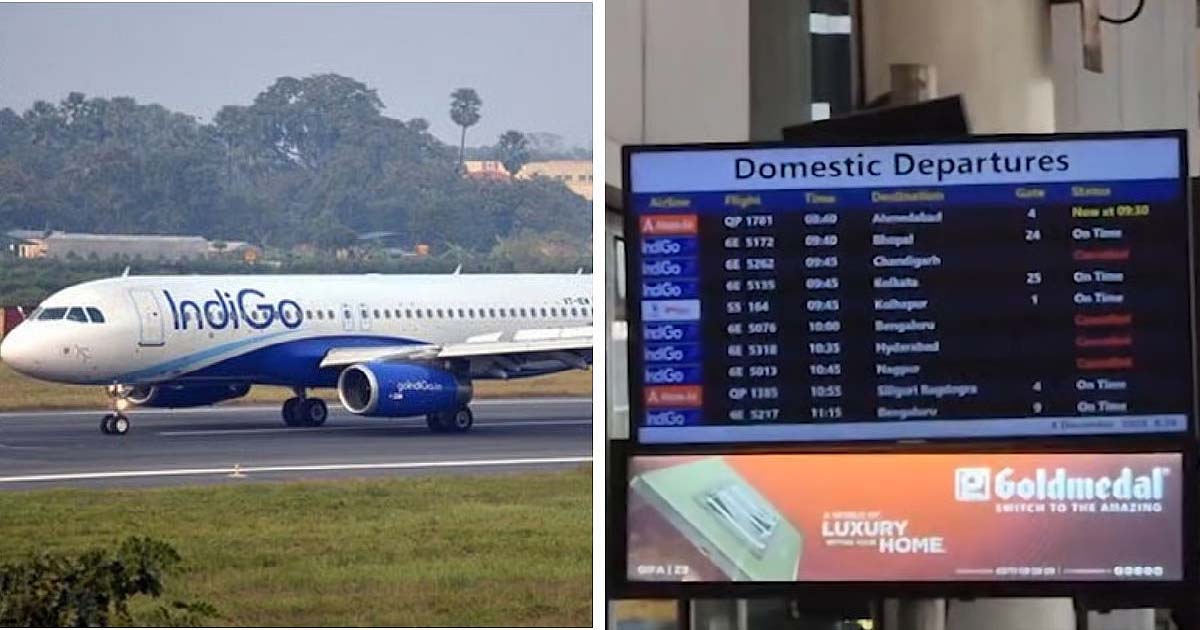
Mumbai: air travel schedule remained heavily disrupted on Monday as IndiGo’s nationwide operational meltdown stretched into its seventh straight day, causing widespread cancellations across major Indian airports. While the crisis has affected passengers throughout the country, Mumbai, one of IndiGo’s busiest hubs, continued to witness major cancellations that derailed travel plans from early morning.
By 7 am, Mumbai’s Chhatrapati Shivaji Maharaj International Airport had recorded 32 IndiGo cancellations, 10 arrivals and 22 departures, impacting key routes to Chandigarh, Nagpur, Bengaluru, Hyderabad, Goa, Darbhanga, Kolkata and Bhubaneswar. Airport officials said the ripple effect of the disruptions was expected to continue through the day, adding to the nationwide tally of 309 flights impacted by Monday morning.
Across India, more than 224 cancellations were pre-planned and communicated to passengers, officials confirmed, as the airline attempted to manage the crisis strategically. IndiGo had reportedly begun processing 100 per cent refunds for passengers booked up to December 6, even as fresh cancellations continued to pile up.
Delhi’s Indira Gandhi International Airport reported the highest number of disruptions, with 134 IndiGo flights cancelled, 75 departures and 59 arrivals, making it the epicentre of the crisis. In response, the airport issued a public advisory urging passengers to check real-time flight status before heading out. Authorities said they were coordinating with airline teams to minimise chaos inside terminals.
Bengaluru’s Kempegowda International Airport confirmed 127 cancellations, 65 arrivals and 62 departures. Officials said the next status update would be provided later in the evening. Hyderabad’s Rajiv Gandhi International Airport recorded 77 disruptions, splitting between 38 arrivals and 39 departures.
At Srinagar Airport, 16 flights (8 arrivals and 8 departures) were cancelled, while Ahmedabad reported 18 cancellations by 8 am. Passenger crowds were also reported at terminals in Chennai, Jaipur and Mumbai, where many travellers waited for updates amid confusion.
Amid the escalating crisis, aviation regulator DGCA granted IndiGo CEO Pieter Elbers and COO Isidro Porqueras a one-time extension until 6 pm Monday to respond to the show-cause notice issued on December 6. The airline sought extra time citing “operational constraints linked to the scale of nationwide disruptions.” The DGCA, however, warned that no further extension will be granted, and said it would proceed ex parte if the reply is not submitted on time.
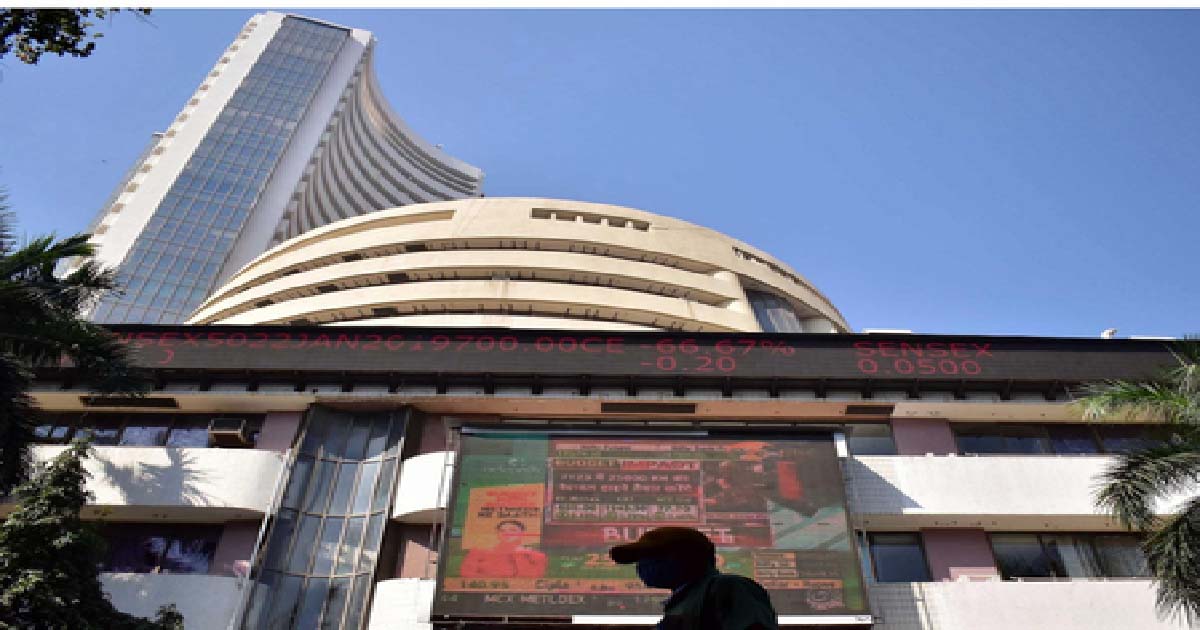
Mumbai, Dec 8: Indian stock markets started the week on a weak note on Monday as benchmark indices opened lower in the absence of strong domestic cues.
The Sensex slipped by 93 points, or 0.11 per cent, to trade around 85,619. The Nifty also drifted lower and was seen at 26,137, down 50 points or 0.19 per cent.
Analysts said that Nifty is expected to trade within a defined range today, with near-term resistance placed around 26,300-26,350, where profit-booking may emerge.
“On the downside, support is seen around 26,000-26,050, a zone that has held firm through recent consolidation,” experts said.
Several heavyweight stocks dragged the indices in early trade. Shares of Bajaj Finance, BEL, NTPC, Asian Paints, Power Grid, Trent, Sun Pharma, and ICICI Bank were among the biggest losers on the Sensex.
At the same time, some major technology and auto names helped limit the downside. Eternal, Tech Mahindra, TCS, Tata Motors PV, Infosys, HCL Tech and Tata Steel were the top gainers.
The broader market also showed signs of pressure. The Nifty MidCap index slipped 0.12 per cent, while the Nifty SmallCap index fell more sharply, declining 0.40 per cent.
Sector-wise, real estate, public sector banks, and pharmaceutical stocks were under the most selling pressure, with the Nifty Realty, PSU Bank, and Pharma indices falling between 0.3 per cent and 0.5 per cent.
On the other hand, the Nifty IT index managed to rise 0.5 per cent, supported by gains in large tech stocks. The Nifty Metal index also inched up by 0.2 per cent.
Analysts said that the market mood remained cautious in early trading as investors awaited fresh triggers to set the direction for the day.
“Given the prevailing conditions, a buy-on-dips strategy remains appropriate. Traders may consider adding long positions if Nifty pulls back toward 26,000-26,050 or if Bank Nifty finds stability above 59,400,” market watchers added.
Business
Nescafé Premix Qualifies As ‘Instant Coffee’, Attracts Lower 8 Per Cent Sales Tax: Bombay HC
Mumbai: In a significant ruling on product classification under the Bombay Sales Tax Act, 1959, the Bombay High Court has held that Nescafé Premix must be taxed at 8% as “coffee / instant coffee,” and not at the higher rate of 16% applicable to general beverage powders.
A bench of Justices M. S. Sonak and Advait Sethna reiterated the cardinal principle that specific tax entries must prevail over general ones. Applying the common parlance test, the court concluded that Nescafé Premix, as marketed and consumed, had created a clear perception of “instant coffee”.
The case arose from a dispute between Nestlé India Ltd. and the Sales Tax Department regarding whether Nescafé Premix — containing 8.5% soluble coffee powder, 54% sucrose, 37% partially skimmed milk powder and 0.5% maltodextrin — should be classified under Schedule Entry C-II-3 (8%) or Entry C-II-18(2) (16%).
The Commissioner of Sales Tax had earlier ruled in 1998 that the product fell under the higher-taxed general entry for powders used in non-alcoholic beverages, emphasising that the coffee content was “minuscule 8.5%”.
The Maharashtra Sales Tax Tribunal reversed this decision in 2001, holding that ingredient percentage was not decisive — relying on Supreme Court precedent that even small quantities, like salt in food, do not alter the essential character of the final product.
Upholding the Tribunal’s order, the HC stressed that the product’s actual use and consumer understanding were crucial. “Ultimately, in all such matters, we must go by the common parlance test,” the bench said.
It noted that the premix was expressly marketed as Nescafé Premix and used to dispense Nescafé from vending machines simply by adding hot water. “The resultant product, in common parlance, was nothing but Nescafé,” the Court observed.
Rejecting the Department’s argument that low coffee content disqualified it from being considered instant coffee, the Court agreed with the Tribunal that removing coffee powder altogether would fundamentally change the product’s identity — demonstrating that the coffee component, though proportionally small, was determinative of classification.
The bench also emphasised that Entry C-II-3, covering “coffee” and “instant coffee”, was a specific entry and therefore prevailed over the general entry for beverage powders under C-II-18(2). “The concept of instant coffee must conform to modern development and modern perceptions,” the Court added.

The Great Indian Kapil Show Season 4: Will Virat Kohli Be The Next Guest? Kapil Sharma Responds To Fan Requests

Palghar Crime: 40-Year-Old Constable Arrested For Allegedly Raping Woman Inside Kasa Police Station

Thane To Face 30% Water Cut From December 9 After Major Pipeline Break At Kalyan Phata; Check If Your Area Is Affected

PM Modi recalls how Vande Mataram defied British oppression, stood ‘like a rock’

Bhojpuri actor Pawan Singh faces threat, complaint filed in Crime Branch after Lawrence Bishnoi’s threat

Kalyan College Namaz Controversy: SIO Demands Action Against Perpetrators

A powerful explosion near Delhi’s Red Fort… High alert across Delhi after the blast; 8 people killed; forensic team arrives at the scene.

Dharmendra’s Fan, An Auto-Rickshaw Driver, Breaks Down Outside Actor’s Mumbai Home After His Discharge, Says ‘Admired Him Since Childhood

SS Rajamouli Faces FIR For ‘Hurting’ Religious Sentiments Over Controversial Lord Hanuman Remark At Varanasi Event In Hyderabad

Mumbai Local Train Update: Megablock On Central, Harbour, Trans-Harbour & Western Railway Lines On Nov 16; Check Details
-

 Crime3 years ago
Class 10 student jumps to death in Jaipur
-
 Maharashtra1 year ago
Mumbai Local Train Update: Central Railway’s New Timetable Comes Into Effect; Check Full List Of Revised Timings & Stations
-
 Maharashtra1 year ago
Mumbai To Go Toll-Free Tonight! Maharashtra Govt Announces Complete Toll Waiver For Light Motor Vehicles At All 5 Entry Points Of City
-

 Maharashtra1 year ago
False photo of Imtiaz Jaleel’s rally, exposing the fooling conspiracy
-
 National News1 year ago
Ministry of Railways rolls out Special Drive 4.0 with focus on digitisation, cleanliness, inclusiveness and grievance redressal
-
 Maharashtra1 year ago
Maharashtra Elections 2024: Mumbai Metro & BEST Services Extended Till Midnight On Voting Day
-

 National News1 year ago
J&K: 4 Jawans Killed, 28 Injured After Bus Carrying BSF Personnel For Poll Duty Falls Into Gorge In Budgam; Terrifying Visuals Surface
-

 Crime1 year ago
Baba Siddique Murder: Mumbai Police Unable To Get Lawrence Bishnoi Custody Due To Home Ministry Order, Says Report