
Business
India’s CPI inflation declines to 8-year low of 1.54 pc in September


New Delhi, Oct 13: India’s inflation rate based on the Consumer Price Index (CPI) declined to an over 8-year low of 1.54 per cent in September this year, compared to the same month of the previous year, as prices of food items and fuels turned cheaper during the month, according to figures released by the Ministry of Statistics on Monday.
This is the lowest year-on-year inflation after June 2017, and is also lower than the inflation rate of 2.05 per cent for August.
Food inflation continued in the negative zone for the fourth consecutive month and was recorded at -2.28 per cent during September, the figures showed.
“The decline in headline inflation and food inflation during September is mainly attributed to a favourable base effect and the decline in inflation of vegetables, edible oils, fruits, pulses, cereals and egg. Besides, fuels also turned cheaper during the month,” the official statement said.
The inflation outlook for 2025-26 has become more benign due to large favourable base effects combined with the good southwest monsoon, healthy kharif sowing, adequate reservoir levels and comfortable buffer stocks of foodgrains. The GST rate cuts, which kicked in on September 22, are bringing down prices across goods which will result in reducing inflation further in the coming months.
The decline in the inflation rate gives the RBI more headroom to continue with a soft money policy by cutting interest rates and injecting more money into the economy to spur growth.
The RBI’s monetary policy committee (MPC) on October 1 slashed its forecast for India’s inflation rate for the financial year 2025-26 to 2.6 per cent from 3.1 per cent in August primarily on account of the GST rate cuts and benign food prices.
RBI Governor Sanjay Malhotra said, “The recently implemented GST rate rationalisation would lead to a reduction in prices of several items in the CPI basket. Overall, the inflation outcome is likely to be softer than what was projected in the August monetary policy committee resolution, primarily on account of the GST rate cuts and benign food prices.”
Addressing journalists after the MPC meeting, Malhotra said that the “overall inflation outlook has turned even more benign in the last few months.”
The RBI Governor pointed out that headline CPI inflation declined to its eight-year low of 1.6 per cent year-on-year in July 2025 before rising to 2.1 per cent in August – its first increase after nine months. Benign inflation conditions during 2025-26 so far have been primarily driven by a sharp decline in food inflation from its peak of October 2024.
Inflation within the fuel group moved in a narrow range of 2.4-2.7 per cent during June-August. Core inflation remained largely contained at 4.2 per cent in August. Excluding precious metals, core inflation was at 3.0 per cent in August.
The RBI Governor further stated that the current macroeconomic conditions and the outlook has opened up policy space for further supporting growth.

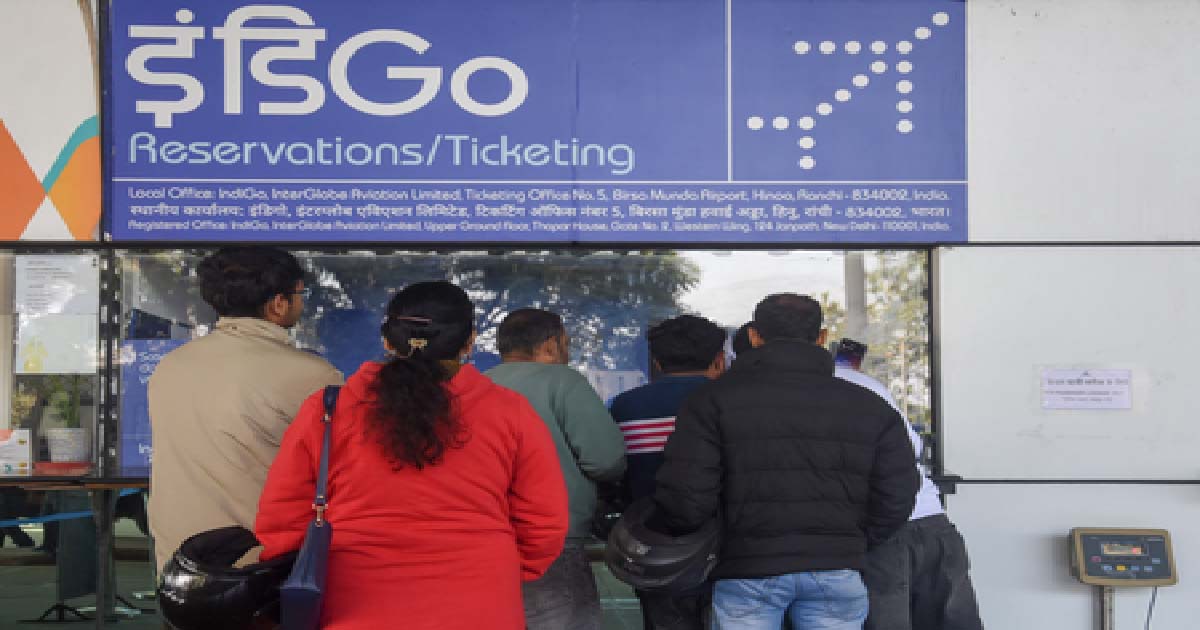
New Delhi, Dec 8: Widespread flight disruptions at IndiGo are credit negative, and refunds and compensation could cause it “significant financial damage”, credit rating agency Moody’s warned on Monday.
In a note, Moody’s said that regulatory penalties from the Directorate General of Civil Aviation (DGCA) remain possible as the airline failed to plan for aviation rules communicated over a year earlier.
The crisis struck as the airlines entered their peak winter schedule, with “significant lapses in planning, oversight and resource management” as the Phase 2 of the Flight Duty Time Limitation (FDTL) rules were introduced on November 1, 2025, after being communicated more than a year earlier, it noted.
The rules reclassified midnight–6 a.m. duties as night duty and cut permissible landings in 24 hours from six to two or three. The agency said that IndiGo’s lean operating model lacked resilience to integrate the change, forcing a system‑wide schedule reset.
Over 1,600 flights were cancelled on December 5, and over 1,200 were grounded in November, with cancellations beginning on December 2. Moody’s said IndiGo is yet to fully restore normal operations.
IndiGo said it was set to operate over 1,800 flights on Monday, up from 1,650 on Sunday, adding that more than 4,500 bags have been delivered to respective customers, and “we are on track to deliver the rest in the next 36 hours”.
The airline said it expects a return to full schedules by mid-December, adding that it is working “round the clock” to normalise operations.
It has so far refunded Rs 827 crore to affected passengers, and the rest is under process for cancellations up to December 15.
Union Civil Aviation Minister K. Rammohan Naidu said in the Parliament on Monday that the government has initiated a thorough inquiry into the matter.
“IndiGo was supposed to manage the crew and roster…We will take strict action. We will set an example for every airline. If there is any non-compliance, we will take action,” he said on the floor of the Rajya Sabha.
Business
IndiGo Crisis Day 7: Mumbai Feels The Heat As Week-Long Flight Issues Deepen Nationwide; 32 Cancellations Reported Today

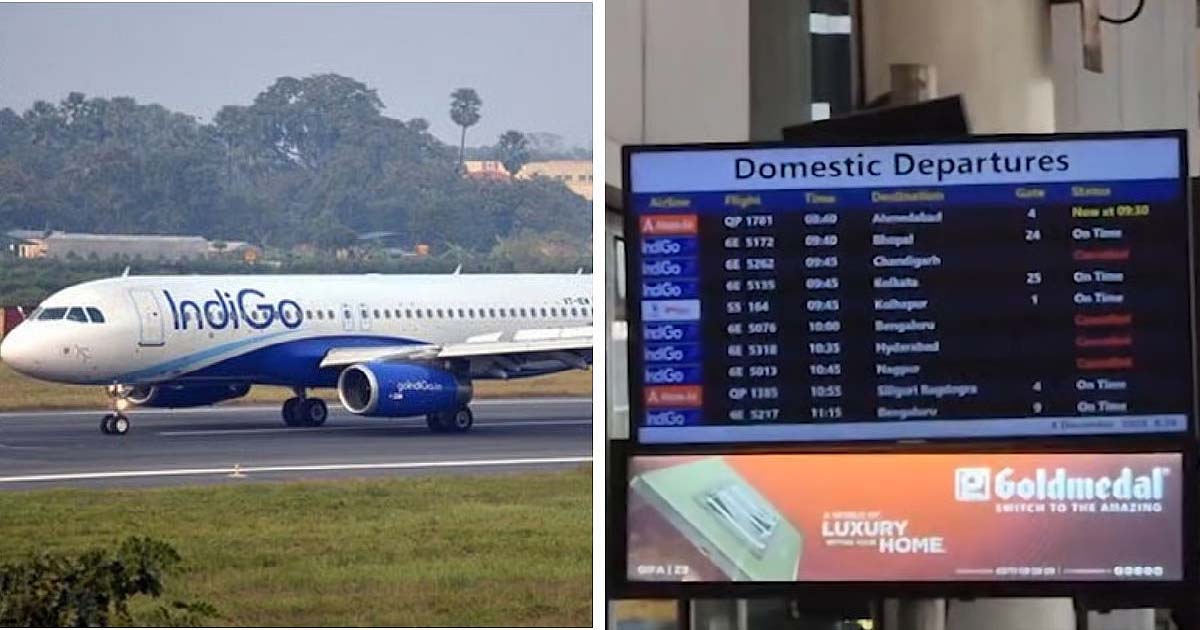
Mumbai: air travel schedule remained heavily disrupted on Monday as IndiGo’s nationwide operational meltdown stretched into its seventh straight day, causing widespread cancellations across major Indian airports. While the crisis has affected passengers throughout the country, Mumbai, one of IndiGo’s busiest hubs, continued to witness major cancellations that derailed travel plans from early morning.
By 7 am, Mumbai’s Chhatrapati Shivaji Maharaj International Airport had recorded 32 IndiGo cancellations, 10 arrivals and 22 departures, impacting key routes to Chandigarh, Nagpur, Bengaluru, Hyderabad, Goa, Darbhanga, Kolkata and Bhubaneswar. Airport officials said the ripple effect of the disruptions was expected to continue through the day, adding to the nationwide tally of 309 flights impacted by Monday morning.
Across India, more than 224 cancellations were pre-planned and communicated to passengers, officials confirmed, as the airline attempted to manage the crisis strategically. IndiGo had reportedly begun processing 100 per cent refunds for passengers booked up to December 6, even as fresh cancellations continued to pile up.
Delhi’s Indira Gandhi International Airport reported the highest number of disruptions, with 134 IndiGo flights cancelled, 75 departures and 59 arrivals, making it the epicentre of the crisis. In response, the airport issued a public advisory urging passengers to check real-time flight status before heading out. Authorities said they were coordinating with airline teams to minimise chaos inside terminals.
Bengaluru’s Kempegowda International Airport confirmed 127 cancellations, 65 arrivals and 62 departures. Officials said the next status update would be provided later in the evening. Hyderabad’s Rajiv Gandhi International Airport recorded 77 disruptions, splitting between 38 arrivals and 39 departures.
At Srinagar Airport, 16 flights (8 arrivals and 8 departures) were cancelled, while Ahmedabad reported 18 cancellations by 8 am. Passenger crowds were also reported at terminals in Chennai, Jaipur and Mumbai, where many travellers waited for updates amid confusion.
Amid the escalating crisis, aviation regulator DGCA granted IndiGo CEO Pieter Elbers and COO Isidro Porqueras a one-time extension until 6 pm Monday to respond to the show-cause notice issued on December 6. The airline sought extra time citing “operational constraints linked to the scale of nationwide disruptions.” The DGCA, however, warned that no further extension will be granted, and said it would proceed ex parte if the reply is not submitted on time.
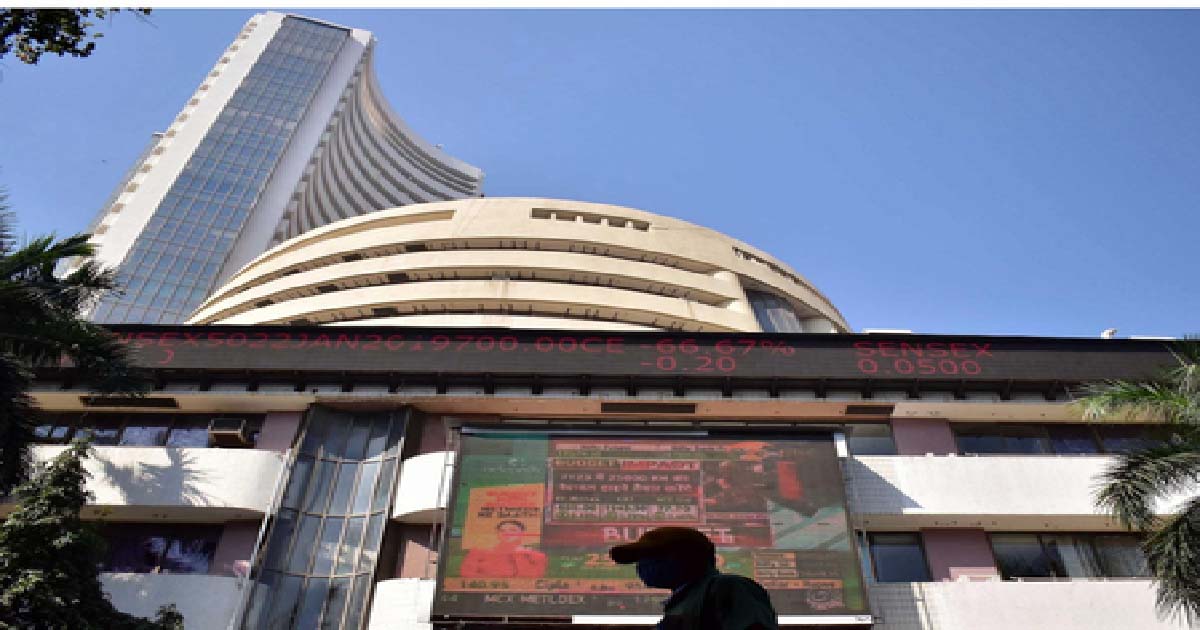
Mumbai, Dec 8: Indian stock markets started the week on a weak note on Monday as benchmark indices opened lower in the absence of strong domestic cues.
The Sensex slipped by 93 points, or 0.11 per cent, to trade around 85,619. The Nifty also drifted lower and was seen at 26,137, down 50 points or 0.19 per cent.
Analysts said that Nifty is expected to trade within a defined range today, with near-term resistance placed around 26,300-26,350, where profit-booking may emerge.
“On the downside, support is seen around 26,000-26,050, a zone that has held firm through recent consolidation,” experts said.
Several heavyweight stocks dragged the indices in early trade. Shares of Bajaj Finance, BEL, NTPC, Asian Paints, Power Grid, Trent, Sun Pharma, and ICICI Bank were among the biggest losers on the Sensex.
At the same time, some major technology and auto names helped limit the downside. Eternal, Tech Mahindra, TCS, Tata Motors PV, Infosys, HCL Tech and Tata Steel were the top gainers.
The broader market also showed signs of pressure. The Nifty MidCap index slipped 0.12 per cent, while the Nifty SmallCap index fell more sharply, declining 0.40 per cent.
Sector-wise, real estate, public sector banks, and pharmaceutical stocks were under the most selling pressure, with the Nifty Realty, PSU Bank, and Pharma indices falling between 0.3 per cent and 0.5 per cent.
On the other hand, the Nifty IT index managed to rise 0.5 per cent, supported by gains in large tech stocks. The Nifty Metal index also inched up by 0.2 per cent.
Analysts said that the market mood remained cautious in early trading as investors awaited fresh triggers to set the direction for the day.
“Given the prevailing conditions, a buy-on-dips strategy remains appropriate. Traders may consider adding long positions if Nifty pulls back toward 26,000-26,050 or if Bank Nifty finds stability above 59,400,” market watchers added.

IndiGo disruptions may cause revenue loss, penalties to company: Report

Sakri Holi riots: Dhule sessions court acquits ten Muslims including two women in the case, Jamiat Ulema Maharashtra takes legal action against Arshad Madani

The Great Indian Kapil Show Season 4: Will Virat Kohli Be The Next Guest? Kapil Sharma Responds To Fan Requests

Palghar Crime: 40-Year-Old Constable Arrested For Allegedly Raping Woman Inside Kasa Police Station

Thane To Face 30% Water Cut From December 9 After Major Pipeline Break At Kalyan Phata; Check If Your Area Is Affected

Kalyan College Namaz Controversy: SIO Demands Action Against Perpetrators

A powerful explosion near Delhi’s Red Fort… High alert across Delhi after the blast; 8 people killed; forensic team arrives at the scene.

Dharmendra’s Fan, An Auto-Rickshaw Driver, Breaks Down Outside Actor’s Mumbai Home After His Discharge, Says ‘Admired Him Since Childhood

SS Rajamouli Faces FIR For ‘Hurting’ Religious Sentiments Over Controversial Lord Hanuman Remark At Varanasi Event In Hyderabad

Mumbai Local Train Update: Megablock On Central, Harbour, Trans-Harbour & Western Railway Lines On Nov 16; Check Details
-

 Crime3 years ago
Class 10 student jumps to death in Jaipur
-
 Maharashtra1 year ago
Mumbai Local Train Update: Central Railway’s New Timetable Comes Into Effect; Check Full List Of Revised Timings & Stations
-
 Maharashtra1 year ago
Mumbai To Go Toll-Free Tonight! Maharashtra Govt Announces Complete Toll Waiver For Light Motor Vehicles At All 5 Entry Points Of City
-

 Maharashtra1 year ago
False photo of Imtiaz Jaleel’s rally, exposing the fooling conspiracy
-
 National News1 year ago
Ministry of Railways rolls out Special Drive 4.0 with focus on digitisation, cleanliness, inclusiveness and grievance redressal
-
 Maharashtra1 year ago
Maharashtra Elections 2024: Mumbai Metro & BEST Services Extended Till Midnight On Voting Day
-

 National News1 year ago
J&K: 4 Jawans Killed, 28 Injured After Bus Carrying BSF Personnel For Poll Duty Falls Into Gorge In Budgam; Terrifying Visuals Surface
-

 Crime1 year ago
Baba Siddique Murder: Mumbai Police Unable To Get Lawrence Bishnoi Custody Due To Home Ministry Order, Says Report