
National News
Mamata Banerjee’s govt must be dismissed: Shiv Sena on Bengal violence

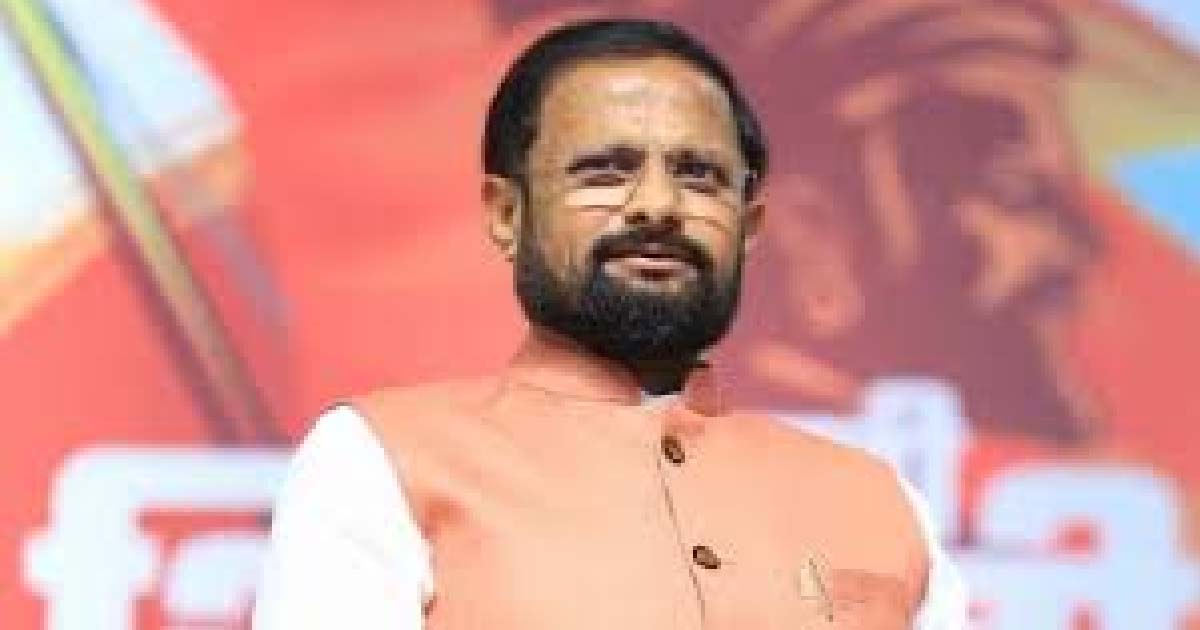
Thane, April 16: Shiv Sena MP and Spokesperson Naresh Mhaske on Wednesday launched a fierce attack against West Bengal Chief Minister Mamata Banerjee’s government, demanding the immediate dismissal of her government over its alleged failure to protect Hindus from repeated communal violence.
At the press conference, Mhaske condemned recent incidents of targeted violence against Hindu families in Bengal, accusing the state administration of wilful negligence and vote-bank appeasement.
“Hindu families are being terrorised and driven out of their homes. After the Centre passed the Waqf Board (Amendment) Bill, elements from a particular community have openly attacked Hindus. In Murshidabad, anti-social mobs invaded a Hindu household, murdered members of the family in front of the police, and torched their property and vehicles,” Mhaske alleged.
He said that it is a state-sponsored failure, adding that Mamata Banerjee has not just turned a blind eye, but is complicit in her silence.
“Her government must be immediately dismissed,” he added.
Mhaske also announced that a Shiv Sena delegation would soon visit West Bengal to meet the affected families and assess the situation firsthand.
Sharpening his attack, he accused Banerjee of prioritising minority appeasement over justice.
“To safeguard her Muslim vote bank, Mamata Banerjee has become helpless. Her silence today is criminal. She’s no different from Tahawwur Rana, one of the masterminds behind the 26/11 Mumbai attacks. From now on, she deserves the name ‘Mamata Rana’,” he alleged.
Mhaske also targeted the Shiv Sena (UBT) chief, questioning his silence over violence in West Bengal.
“He claims to stand for Hindutva, yet he once hosted Mamata Banerjee at Matoshree. Where is his outrage now? Why hasn’t he condemned the atrocities against Hindus in Bengal?” he said.
Recalling past incidents of violence in the state, including the 2018 Ram Navami riots in Raniganj, and violence during Lok Sabha and panchayat elections, Mhaske said the pattern of unrest reflects systemic failure and appeasement by the Bengal government.
“Just like the Kashmiri Pandits were forced to flee their homeland during the Congress rule, Hindus in Bengal are now facing a similar exodus. And yet, leaders of the INDIA alliance remain shamefully silent out of fear of Mamata,” he said.
Meanwhile, Mhaske also took the opportunity to highlight the ideological collapse of the Shiv Sena (UBT), stating: “Eknath Shinde is the true inheritor of Balasaheb Thackeray’s legacy. The public endorsed this in both the Lok Sabha and the Assembly elections. Meanwhile, Uddhav Thackeray’s party has fallen so far that they now rely on AI to make Balasaheb speak. That’s the extent of their identity crisis—their ideology is gone, their minds are broken, and their leadership is hollow.”
He took a jibe at Shiv Sena (UBT) leader Sanjay Raut, saying that he is like a burning ember. “Raut emits smoke once in a while, but there’s no real fire left,” he claimed.


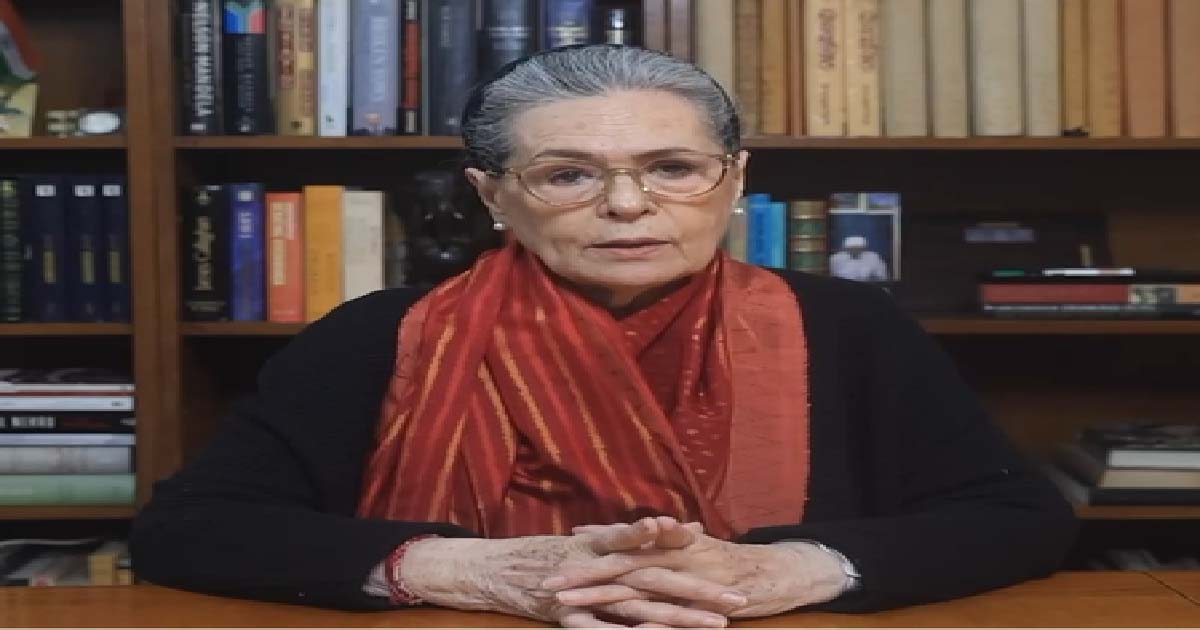
New Delhi, Dec 20: Congress Parliamentary Party (CPP) chairperson Sonia Gandhi on Saturday mounted a sharp attack on the PM Narendra Modi-led government, accusing it of systematically running a “bulldozer” over the Mahatma Gandhi National Rural Employment Guarantee Act (MGNREGA) and undermining the rights of rural poor, farmers and landless workers, terming it an “assault on rural livelihoods”.
This comes two days after the Parliament passed the VB-G RAM G Bill 2025, which escalated into a major political slugfest between the government and the opposition.
In a video message shared by the Congress on X, Gandhi recalled the passage of the landmark employment guarantee law nearly two decades ago during the tenure of former Prime Minister Dr Manmohan Singh.
She said MGNREGA was passed with broad consensus in Parliament and proved to be a “revolutionary step” that provided livelihood security to crores of rural families, particularly the most deprived and marginalised.
“The law stopped distress migration by ensuring employment in one’s own village, strengthened gram panchayats and gave a legal right to work,” Gandhi said, adding that the scheme embodied Mahatma Gandhi’s vision of Gram Swaraj.
She noted that MGNREGA acted as a lifeline for the poor during the COVID-19 pandemic.
However, the Congress leader alleged that over the past 11 years, the Modi government had made repeated attempts to dilute the scheme by ignoring the interests of the rural unemployed and poor.
She expressed “deep anguish” over what she described as recent unilateral changes to the programme.
“Without consultation, discussion or taking the opposition into confidence, the government has altered the very structure of MGNREGA. Even Mahatma Gandhi’s name has been removed,” Sonia Gandhi claimed.
She warned that decisions on who gets work, how much employment is provided and where it is offered are now being taken “from Delhi, far removed from ground realities”.
Emphasising that MGNREGA was never a party-specific initiative, Gandhi said the Congress may have played a key role in bringing the law, but it was always meant to serve national and public interest.
“By weakening this law, the government has attacked the rights of crores of farmers, labourers and landless rural poor,” she said.
Gandhi asserted that the Congress was fully prepared to resist what she termed an assault on rural livelihoods. “I fought for the employment guarantee law 20 years ago, and I remain committed to fighting this ‘black law’ today,” she said, adding that Congress leaders and workers stood firmly with the people.
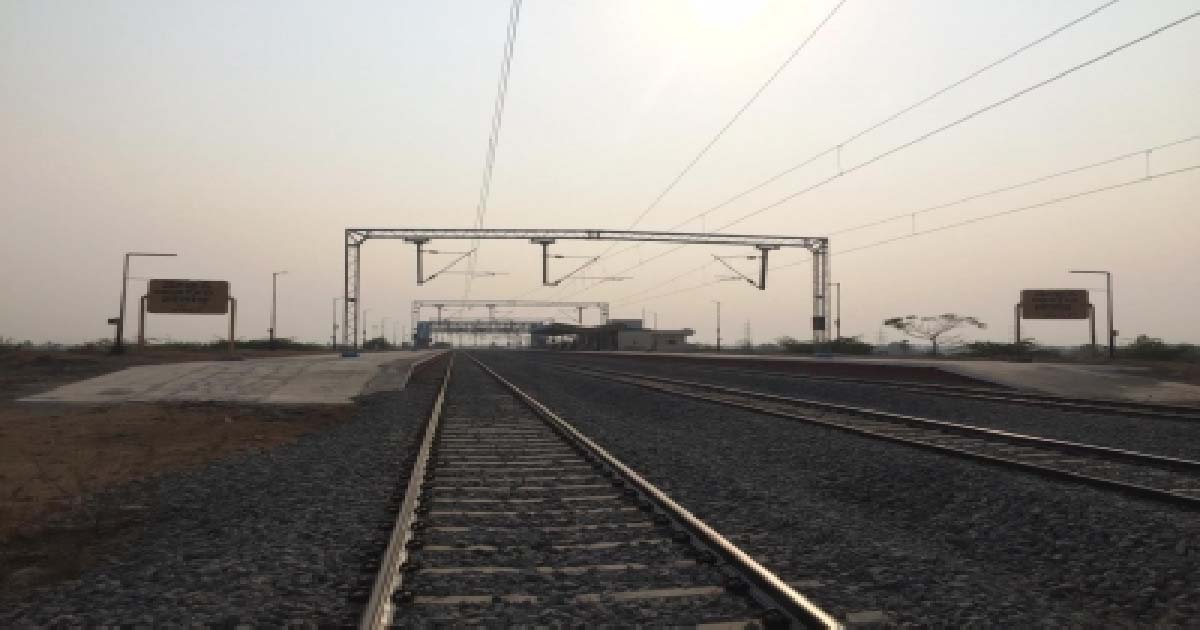
New Delhi, Dec 20: A total of 38 railway projects (11 new lines, 2 gauge conversion and 25 doubling) of a total length of 5,098 kms and costing Rs 89,780 crore have been sanctioned in Maharashtra (as on April 1, 2025), the government said on Saturday.
During the last three fiscals — 2022-23, 2023-24, 2024-25 and the current financial year 2025-26 — 98 surveys (29 New Line, 2 Gauge Conversion and 67 Doubling) of total length 8,603 km falling fully/partly in the state of Maharashtra, have been sanctioned, it said.
“Further, construction works on the flagship High-Speed Bullet Train project have gathered momentum in Maharashtra. Now 100 per cent of land acquisition has been completed. Works on bridges, aqueducts, etc. have been taken up,” the Railways Ministry said in a statement.
In addition, platform extension work at 34 stations to accommodate 15-car EMUs has been taken up.
To improve the capacity of the rail network in the Mumbai suburban area, the Mumbai Urban Transport Project (MUTP)-II costing Rs 8,087 crore, MUTP-III costing Rs 10,947 crore, and MUTP-IIIA costing Rs 33,690 crore have been sanctioned.
To enhance passenger carrying capacity, 238 rakes of 12 cars each with doors have been sanctioned under MUTP-III and IIIA at a cost of Rs 19,293 crore. The process for the procurement of these rakes has been taken up.
With Western DFC also passing through Maharashtra, as about 178 route km of it or about 12 per cent of the overall route length, falling in the state, the ministry said that “about 76 km of this project from New Gholvad to New Vaitarna in Maharashtra has already been commissioned. Balance works have been taken up. Connectivity of WDFC to JNPT will boost the capacity to handle cargo and container traffic from the port to Delhi NCR”.
Presently, about 120 originating Mail/Express trains and about 3,200 suburban trains are handled daily in the Mumbai area.
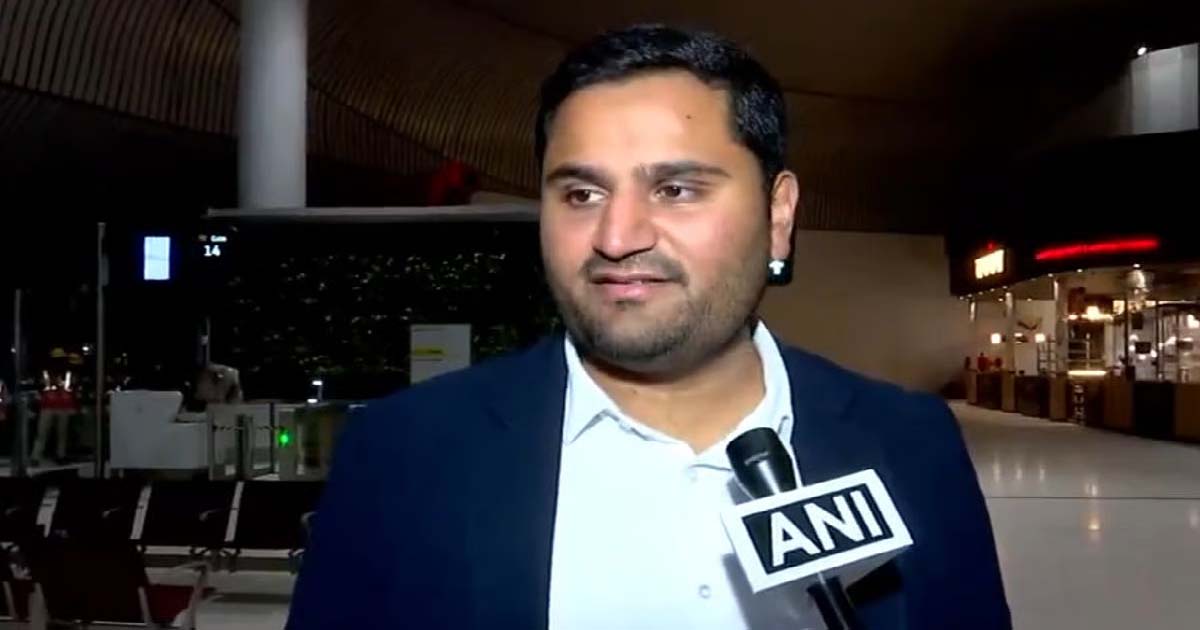
Mumbai: As Navi Mumbai International Airport (NMIA) is set to begin commercial operations, Jeet Adani, the Director at Adani Airports Holdings Limited, on Friday shared the upcoming plans in terms of adding more terminals, runways and connectivity modes.
Speaking to Media, Jeet Adani said, “We’ll have the first terminal operational. The terminal has a capacity of about 20 million passengers, and the first southern runway is going to be operational. As we grow in terms of traffic, we will be adding three more terminals, another runway, cross-field taxiways, metro connectivity, two kinds of metro connectivity, one towards Mumbai, one towards Panvel, water taxi and helipad.”
“So every form of transportation will be connected as a true multi-modal hub should be. This will keep going on for the next 15 years. So we see between 2038-2040, that time period is where we’ll see the entire Navi Mumbai fully built out,” he added.
Prime Minister Narendra Modi on October 8 inaugurated the Navi Mumbai International Airport (NMIA), one of India’s most ambitious infrastructure projects and a defining milestone in the nation’s aviation journey.
Speaking on the occasion, the Prime Minister said that Mumbai’s long wait was over as the city had now received its second international airport. He added that the Navi Mumbai International Airport would play a major role in establishing the region as Asia’s biggest connectivity hub.
NMIA has been developed as a public-private partnership (PPP) between Mumbai International Airport Limited (MIAL), a subsidiary of Adani Airport Holdings Limited (AAHL), and the City and Industrial Development Corporation (CIDCO).
The project represents a major stride in India’s infrastructure-building vision, reflecting the Government’s agenda of Viksit Bharat 2047.

Abu Asim Azmi praised for introducing a bill against hate speeches and hate crimes, Muslim organizations called Abu Asim Azmi’s step commendable.

A split in Maha Vikas Aghadi before BMC elections, Congress’s slogan is ‘akela Chalo’

‘Bulldozer on MGNREGA’: Sonia Gandhi attacks Modi govt over G RAM G Bill

38 Railways projects worth Rs 89,780 crore sanctioned in Maharashtra: Centre

‘We Will Be Adding 3 More Terminals’: Jeet Adani On Navi Mumbai Airport

Kalyan College Namaz Controversy: SIO Demands Action Against Perpetrators

Sensex, Nifty open lower amid weak global cues

Veteran Bollywood Actor Dharmendra Passes Away at 89

Mega Block On Sunday, 23-11-2025: Mumbai Local Train Services To Be Affected On CR’s Main Line, No Block On Harbour & Trans-Harbour Line; Check Details

Mukesh Ambani, Shiv Sena UBT Chief Uddhav Thackeray & Son Aaditya Share Warm Greetings At Mumbai’s Swadesh Event
-

 Crime3 years ago
Class 10 student jumps to death in Jaipur
-
 Maharashtra1 year ago
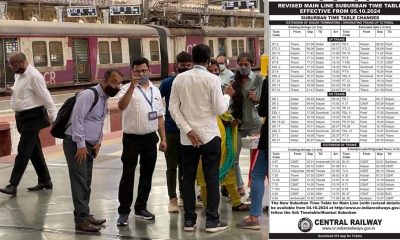
Mumbai Local Train Update: Central Railway’s New Timetable Comes Into Effect; Check Full List Of Revised Timings & Stations
-
 Maharashtra1 year ago
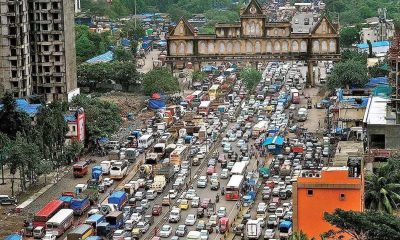
Mumbai To Go Toll-Free Tonight! Maharashtra Govt Announces Complete Toll Waiver For Light Motor Vehicles At All 5 Entry Points Of City
-
 Maharashtra1 year ago
False photo of Imtiaz Jaleel’s rally, exposing the fooling conspiracy
-
 National News1 year ago
Ministry of Railways rolls out Special Drive 4.0 with focus on digitisation, cleanliness, inclusiveness and grievance redressal
-
 Maharashtra1 year ago
Maharashtra Elections 2024: Mumbai Metro & BEST Services Extended Till Midnight On Voting Day
-

 National News1 year ago
J&K: 4 Jawans Killed, 28 Injured After Bus Carrying BSF Personnel For Poll Duty Falls Into Gorge In Budgam; Terrifying Visuals Surface
-
 Crime1 year ago
Baba Siddique Murder: Mumbai Police Unable To Get Lawrence Bishnoi Custody Due To Home Ministry Order, Says Report