
National News
‘Concerned over violence’: SC posts further hearing on Waqf (Amendment) Act challenge pleas for tomorrow (Lead)

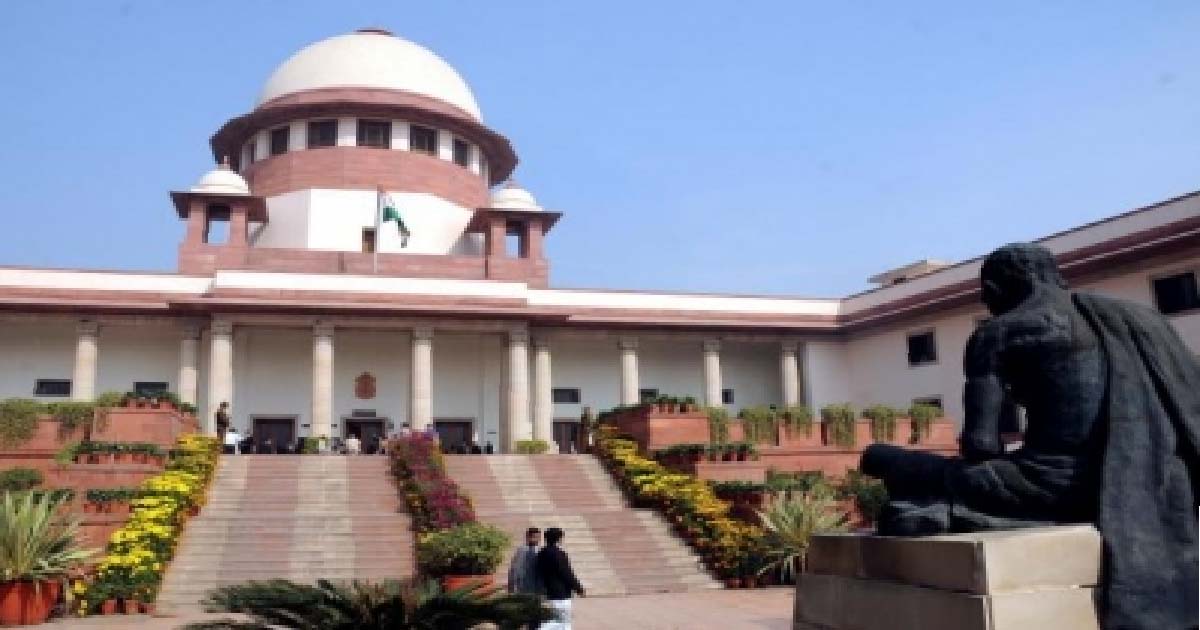
New Delhi, April 16: The Supreme Court on Wednesday expressed its concern over violence taking place amid protests against the Waqf (Amendment) Act, 2025.
“One thing that is very disturbing is the violence which is taking place. Once the matter is before court, it should not happen,” a bench headed by CJI Sanjiv Khanna remarked.
The bench, also comprising Justices Sanjay Kumar and K.V. Viswanathan, fixed the pleas challenging the constitutional validity of the amendments introduced in the Waqf Act, 1995, for further hearing on Thursday at 2 p.m., including the arguments of the Union government on passing of an interim order.
During the course of the hearing, the apex court indicated that it would pass an interim order providing that the properties already declared as waqf by court order or otherwise will not be denotified by virtue of the recent amendment.
It proposed that provision of the Waqf (Amendment) Act, 2025, providing that a waqf property would not be treated as a waqf while the Collector is conducting an inquiry on the aspect if the property is a government land, should not be given effect to.
Further, the CJI-led Bench said that it intends to pass an interim order providing that all members of the waqf boards and Central Waqf Council, except the ex-officio members, should be Muslims.
Solicitor General Tushar Mehta opposed the passing of an interim order and urged the CJI Khanna-led Bench to give the Union government a hearing before any order is passed. He added that a reply would be filed within two weeks if a notice is issued to the Union government, and the matter may be taken for hearing on a day-to-day basis.
At the very outset of the hearing, the top court said: “Two aspects we would like both sides to address. First, whether we should entertain writ petitions or relegate it to the High Court? Second, what do you (petitioners) want to argue?”
Multiple petitions have been filed before the Supreme Court challenging the constitutional validity of the recent amendments introduced in the Waqf Act, 1995.
After the legislation was passed by Parliament in the first week of April, the Congress announced it will challenge the Waqf (Amendment) Bill (now an Act after the Presidential assent) before the Supreme Court, claiming that it was an attack on the basic structure of the Constitution and was aimed at “polarising” and “dividing” the country on the basis of religion. On the other hand, the government has said that crores of poor Muslims will benefit from this legislation, and in no way does it harm any single Muslim.
In his petition filed before the apex court, Congress MP and party whip in Lok Sabha Mohammad Jawed contended that the amendments violated Articles 14 (right to equality), 25 (freedom to practice and propagate religion), 26 (freedom of religious denominations to manage their religious affairs), 29 (minority rights), and 300A (right to property) of the Constitution.
Another plea filed by All India Majlis-e-Ittehadul Muslimeen (AIMIM) chief Asaduddin Owaisi said the impugned amendments are “ex facie violative of Articles 14, 15, 21, 25, 26, 29, 30, 300A of the Constitution of India and manifestly arbitrary”.
Several others, including the Association for Protection of Civil Rights, AAP leader Amanatullah Khan, Maulana Arshad Madani of Jamiat Ulema-i-Hind, the All India Muslim Personal Law Board (AIMPLB), the Social Democratic Party of India (SDPI), the Indian Union Muslim League, Taiyyab Khan Salmani, and Anjum Kadari, have filed petitions challenging the constitutional validity of the provision.
In response to the petitions seeking a stay on the implementation of the Waqf (Amendment) Act, 2025, the Union government has filed a caveat, or notice submitted to a court by a party to a litigation who wishes to be heard before any order is likely to be issued on the opponent’s plea, in the Supreme Court.
Also, several BJP-ruled states, including Haryana, Maharashtra, Madhya Pradesh, Rajasthan, Chhattisgarh, Assam, and Uttarakhand, have approached the Supreme Court seeking to defend the Waqf (Amendment) Act, 2025.
The concept of ‘Waqf’, rooted in Islamic laws and traditions, refers to an endowment made by a Muslim for charitable or religious purposes, such as mosques, schools, hospitals, or other public institutions.

International News
Indian national among two people killed in attack on Saudi Arabia’s airport, two Indians injured

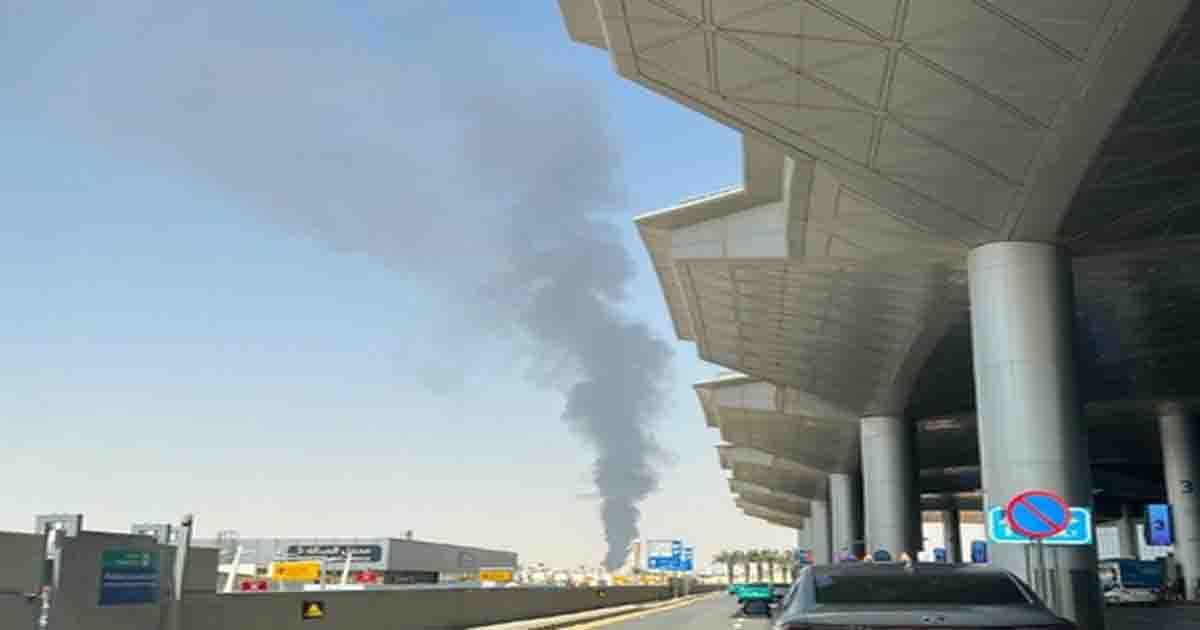
An Indian national was among two people killed, while two other Indian nationals were injured, in an attack on King Fahd International Airport in Saudi Arabia’s Dammam on Wednesday, the Indian Embassy said on Thursday.
The Indian Embassy in Saudi Arabia said that it is ascertaining further details and contacting the affected families.
“Saudi authorities have informed that one Indian national was among two people who unfortunately lost their lives in the attack on Dammam airport yesterday night and two Indian nationals were injured. We are ascertaining further details and contacting the affected families. Our thoughts and prayers are with the family and loved ones of the deceased and we wish speedy recovery of the injured,” it said in a post on X.
Earlier in the day, Saudi Arabia’s General Authority of Civil Aviation (GACA) said that two people were killed in the attack that targeted King Fahd International Airport on Wednesday, which includes one Indian resident and one Saudi citizen. It further said that eight people were injured in the attack.
In a statement shared on X, the GACA said, “Further to its earlier statement regarding the attack that targeted King Fahd International Airport in Dammam on the evening of Wednesday, October 21, 2026, corresponding to 10 Jumada Al-Awwal 1448 AH, the General Authority of Civil Aviation (GACA) clarifies that the number of fatalities has risen to (2) after an additional fatality was confirmed, involving (1) Saudi citizen and (1) Indian resident. The number of the injured remains at (8), including (1) Saudi citizen, and residents of the following nationalities: (2) Indian, (2) Yemeni, (2) Bangladeshi, and (1) Nepalese. Their injuries range from minor to critical, and they are receiving the necessary medical care at several hospitals.”
Saudi Arabia’s GACA stated that it is working in coordination with the relevant authorities to complete the damage assessment, verify the safety of the facilities, and take the necessary measures to ensure the safety of passengers and personnel and maintain the security and safety of Saudi Arabia’s civil aviation system. It further mentioned that airport operations have resumed and air traffic has returned to normal.
On Sunday, the Indian Embassy advised its nationals in Saudi Arabia to take due precautions under the prevailing situation, visit the nearest safe place in case of an aerial attack, and refrain from filming, publishing or sharing any information, photos and videos regarding the ongoing events.
“The Indian Community in Saudi Arabia is advised to take due precautions under the prevailing situation. In case of an aerial attack, immediately proceed to the nearest safe place (inside a building or an interior room away from windows), and refrain from filming, publishing, or sharing any information, photos, or videos related to the ongoing events,” it posted on X.
The Embassy said that its officials continue to visit hospitals where Indian nationals are undergoing treatment and are in constant touch with their families and providing necessary assistance.
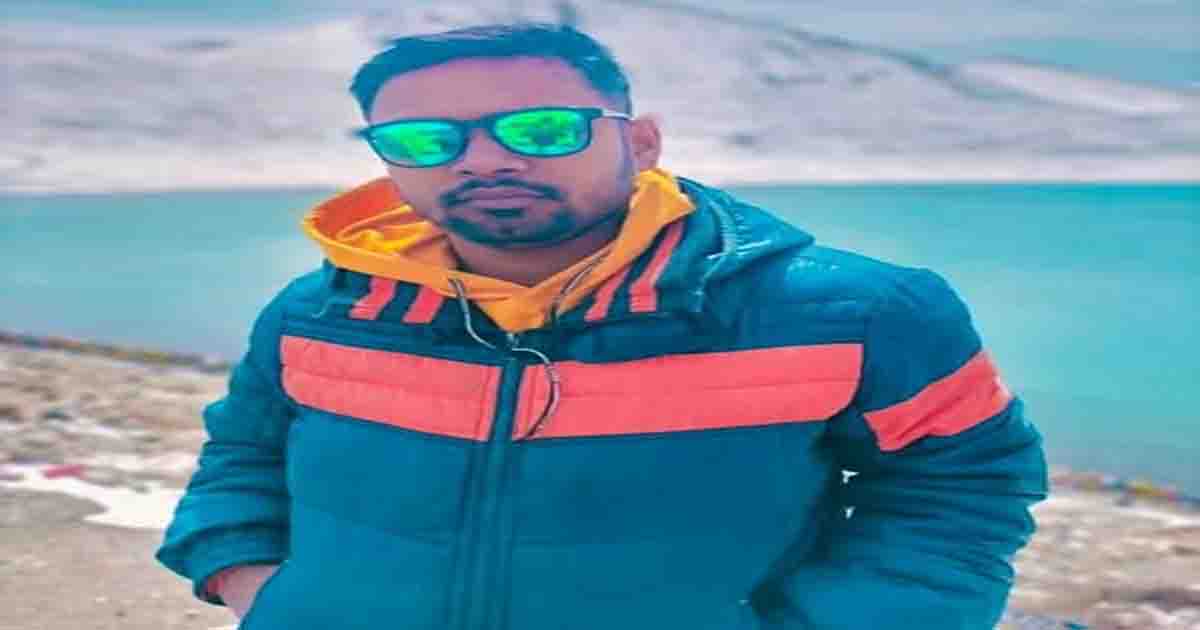
Police said on Thursday that a Bharatiya Janata Party (BJP) worker was first brutally hacked and then shot dead by a group of miscreants in a minority-dominated Malda district in West Bengal.
The incident occurred on Wednesday night. The deceased has been identified as Samir Ghosh.
“As per information available so far, a group of assassins first hacked Ghosh brutally. Thereafter, to ensure his death, he was shot from close range, which led to his death on the spot,” said a state police officer.
After receiving news of the incident, high-ranking police officials from the district reached the spot on Wednesday night.
The reason for this murder and those involved in the brutal killing were being investigated.
The police have detained one person who was being questioned.
Gosh’s family members have accused local miscreants associated with Trinamool Congress of being responsible for the brutal murder because he was associated with the BJP.
However, the local Trinamool Congress leadership has denied the allegations. Acute tension prevailed in the area.
It is learnt that the incident took place on Wednesday night in the Ramkeli area of English Bazar police station in Malda district. Allegedly, while the people were busy with idol immersion, some people entered Gosh’s house.
It is alleged that before anyone realised anything, he was attacked with sharp weapons. After that, he was also shot at from a close range to ensure his death, his family members alleged.
The brother of the deceased BJP worker said that his brother had been receiving threats in various ways for a long time for his association with the BJP, and he was even asked to leave the locality.
However, he did not leave the house out of fear. The incident took place on the occasion of Vijaya Dashami.
The brother of the deceased person also alleged that Gosh was alone at home at the time of the incident. The miscreants took advantage of that opportunity and entered the house and committed the brutal act.
The brother also claimed that all the accused persons have links with the Trinamool Congress. He also claimed that this murder had been planned for a long time.
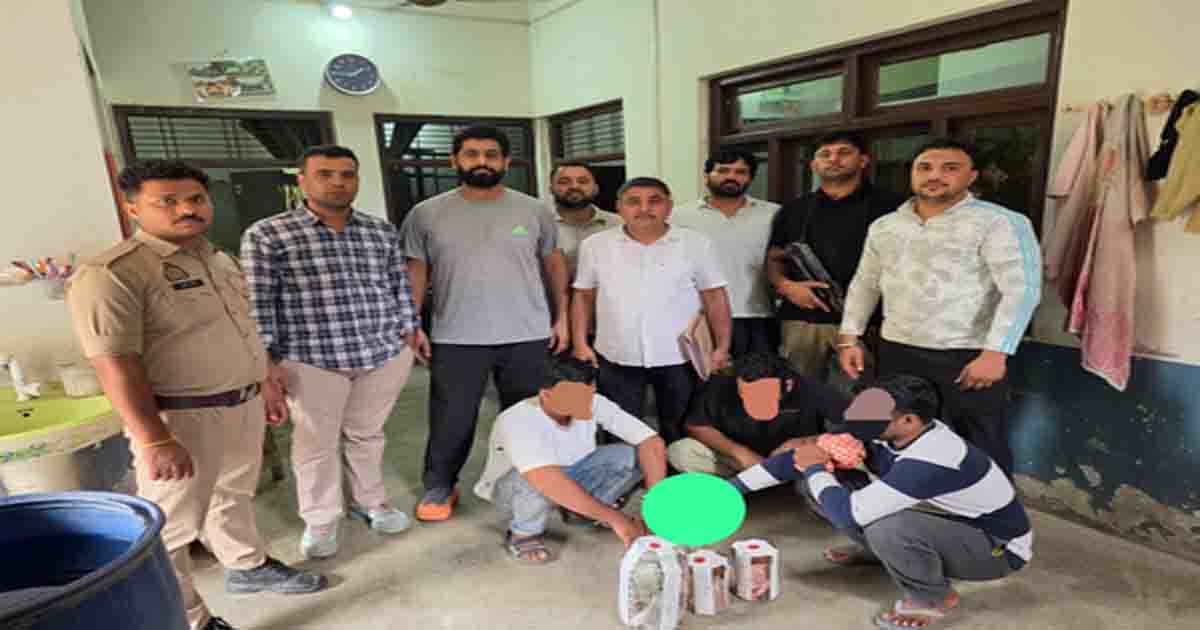
Delhi Police busted an interstate heroin supply and manufacturing network extending from Delhi and Haryana to Uttar Pradesh and Jharkhand, arresting seven accused and recovering 8.128 kg of heroin worth approximately Rs 60 crore in the international market.
The operation, conducted by the Special Staff of Rohini district under the Nasha Mukt Bharat Abhiyan, also led to the seizure of 3.291 kg of chemicals and raw materials used in heroin manufacturing, Rs 12.81 lakh in cash, three SUVs, a motorcycle and equipment used in the illegal drug production process.
According to the police, the operation was carried out by a team led by Inspector Sandeep Godara under the supervision of ACP (Operations) Ajmer Singh. The investigation uncovered links between suppliers, a heroin manufacturing unit and a person involved in illegal opium poppy cultivation.
The operation began on September 16, when police received information about narcotics movement in the Begumpur police station area. Acting on the tip-off, a team laid a trap in Sector 32, Begumpur, and intercepted a car. The police arrested Laxman Hooda, 58, a resident of Rohtak, Haryana, and recovered 300 grams of heroin and Rs 3 lakh in cash from the vehicle.
On September 17, the police arrested another accused, Anil alias Bhola, 51, from Sonipat, Haryana, and recovered 501 grams of heroin from his car. Anil has been involved in 12 criminal cases. He had previously been arrested in an NDPS case registered at Bhalswa Dairy police station in 2025.
After being granted interim bail, he failed to surrender and was subsequently declared a proclaimed offender by a court.
Further investigation and technical surveillance led the police to a heroin manufacturing facility in Sita Colony, Jankipuram, Lucknow, Uttar Pradesh, on October 4.
The police arrested Bablu, 35, and recovered 6.275 kg of freshly manufactured heroin. They also seized 2.504 kg of sodium, 787 grams of acetic anhydride, a gas cylinder, a mixer-grinder, utensils, a tub, an electronic weighing machine, polythene and other manufacturing equipment.
Following Bablu’s interrogation, the police traced and arrested Ruksar Ali alias Raju, the alleged owner and main source supplier of the manufacturing facility, from Bareilly, Uttar Pradesh, after an extensive search. Ruksar has previously been involved in three NDPS cases, according to the police.
On October 6, Ajaj Ahmed, 38, was arrested in Bareilly for supplying crude opium to Ruksar. The police recovered 501 grams of heroin and a motorcycle from him.
The investigation subsequently led to the arrest of Mohammad Azhar, 20, from Badaun, Uttar Pradesh, on October 16. He allegedly supplied heroin and crude opium to Ajaj. The police recovered 551 grams of heroin, Rs 9,81,700 in cash and a car from his possession.
On October 18, the team reached Jharkhand’s Chatra district, a Naxalite-affected area, and arrested Prakash Kumar, 31. He supplied raw opium to the other accused and was involved in illegal opium poppy cultivation on his agricultural land.

Indian national among two people killed in attack on Saudi Arabia’s airport, two Indians injured

BJP worker brutally attacked, shot dead in Bengal’s Malda; police detain one

Delhi Police busts interstate heroin network, arrests seven; drugs worth Rs 60 Cr seized

One killed, 100 injured in traditional stick fight in Andhra Kurnool

Four injured in sleeper bus-tempo collision in J&K Udhampur

Rahul, Cong ecosystem want to force regime change: BJP after Neha Bora praises B’desh Gen-Z protest

Attack on democratic rights: INDIA Bloc leaders on detentions of anti-ECI protestors

BJP pays tribute to ex-President Abdul Kalam, recalls his enduring influence on generations of India’s youth

INDIA bloc begins protest march against ECI

Maha Congress stages agitation against Gyanesh Kumar
-

 Crime4 years ago
Class 10 student jumps to death in Jaipur
-

 Maharashtra2 years ago
Mumbai Local Train Update: Central Railway’s New Timetable Comes Into Effect; Check Full List Of Revised Timings & Stations
-

 Maharashtra2 years ago
Mumbai To Go Toll-Free Tonight! Maharashtra Govt Announces Complete Toll Waiver For Light Motor Vehicles At All 5 Entry Points Of City
-

 Maharashtra2 years ago
False photo of Imtiaz Jaleel’s rally, exposing the fooling conspiracy
-

 National News2 years ago
Ministry of Railways rolls out Special Drive 4.0 with focus on digitisation, cleanliness, inclusiveness and grievance redressal
-

 Maharashtra2 years ago
Maharashtra Elections 2024: Mumbai Metro & BEST Services Extended Till Midnight On Voting Day
-

 National News2 years ago
J&K: 4 Jawans Killed, 28 Injured After Bus Carrying BSF Personnel For Poll Duty Falls Into Gorge In Budgam; Terrifying Visuals Surface
-

 Crime2 years ago
Baba Siddique Murder: Mumbai Police Unable To Get Lawrence Bishnoi Custody Due To Home Ministry Order, Says Report