
International News
Stubborn Taliban (Opinion)

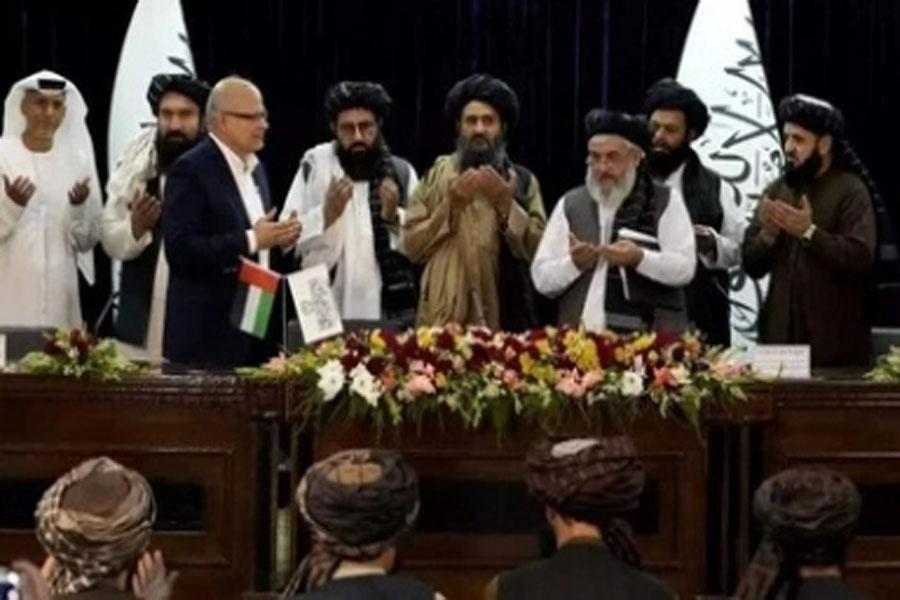
The manner in which the Taliban have been able to retain power in Afghanistan and their latest decisions show that to save millions of Afghanis from impoverishment and death, international community will have to adopt a new approach.
While the nearly one-year old Islamic Emirate of Afghanistan (IEA) government trundles on in the absence of international recognition, financial support and faces international backlash on its mostly anti-women and minorities decisions, reminding one of its earlier harsh tenure, the IEA government has not given up on efforts to cajole the international community whilst trying to engage with its neighbours and regional powers at an equal level.
Afghan Loya Jirga
Last week, a three-day assembly of Islamic clerics and tribal elders, called Loya Jirga, was held in Kabul. The assembly pledged support for the Taliban and called on the international community to recognise the country’s Taliban-led government and freeze its assets.
It is reported that some 70 personalities representing Afghan refugees in Pakistan and 30 others from Iran participated in the Jirga. According to the state-run Bakhtar news agency, about 3,500 religious scholars and elders from across Afghanistan were invited to attend the grand assembly.
Participants of the Jirga were expected to discuss a series of issues, including reopening schools for girls from 7th grade to 12th grade, the type of government, national flag and national anthem.
However, the indications are that the overwhelming majority of attendees were Taliban officials and supporters, mostly Islamic clerics. Women were not allowed to attend, a practice that started during the US-backed government in the past.
The Jirga issued an 11-point statement at the conclusion, urging countries in the region and the world, the UN, Islamic organisations and others to recognise theIEA, remove all sanctions imposed since the Taliban takeover and unfreeze Afghan assets abroad.
The US has frozen nearly $9 billion of Afghanistan’s funds. Reportedly US officials and Taliban Foreign Minister Amir Khan Mutaqqi held talks in Qatar last week to explore ways for unfreezing the money.
It also called for mutual respect and coexistence with neighbouring countries, in the region and the world at large, stressing that “the Afghan soil won’t be used against any country and Afghanistan also won’t allow anyone to interfere in its internal affairs”.
It also supported the administration’s ban on poppy plantation and drug production and its smuggling, noting that poppy cultivation, drug production and its trafficking are against Islamic teachings.
The participants also described the Islamic State terror group as “insurgent, terrorist”, noting cooperation with the group is against Islamic laws. The statement further described them as “Kharijite group of this age that spreads corruption in our Islamic country. Any help or association with them is illegal. And that any armed opposition against the Islamic establishment is a breach of Islamic laws and regarded as rebellion”.
In a surprise development, the reclusive supreme leader and spiritual chief of the Taliban, Haibatullah Akhundzada reached Kabul from his base in southern Kandahar province and addressed the gathering on July 1.
His appearance added symbolic heft to the gathering. In his hour-long speech carried by state radio, Akhundzada called the Taliban takeover of Afghanistan a “victory for the Muslim world”.
The battle for coal
Meanwhile, there are reports that the Taliban have increased the price of Afghan coal from $90 per tonne to $200 per tonne, and set custom duties at 30 per cent, hours after Pakistan Prime Minister Shehbaz Sharif announced import plans for the same. The move is also aimed at rejecting allegations that it’s becoming a “puppet” of Pakistan.
But now, members of the regime are seeking to alter the image of the Taliban’s relationship with the Pakistani government. On June 29, the spokesperson for Afghanistan’s Ministry of Petroleum and Minerals, Mufti Ismatullah Burhan, told The Independent Urdu that no coal trade agreement exists between the two countries, and that the Taliban will use coal as a “pressure point” for Pakistan.
Afghan newspaper Daily Hasht-e Subh also quoted warnings from expert Mirahmad Shakib that the real damage of any accelerated coal imports would not be to either country’s economies but to the environment in Afghanistan. “Pakistan is plundering Afghanistan’s resources in the absence of a responsible national government.” Shakib said.
Since it took over Afghanistan last year and the subsequent economic crisis, the Taliban government has been attempting to rely on natural resources for revenue as an answer to the country’s economic crisis.
The way forward
The Jirga opened in the absence of women representatives and concluded without hinting at reopening schools for girls above grade six and women’s right to work outside home.
In its reaction to the Jirga, Human Rights Watch has said that a decision-making body, such as a Jirga that excludes women and other groups is not legitimate. While human rights advocates claim they do not anticipate and expect significant improvements from the Taliban Jirga in Kabul, Heather Barr, co-director of the Women’s Rights Division at Human Rights Watch, said no one in the Taliban’s Jirga could speak up and that the assembly did not reflected ethnic diversity.
Reportedly, the Taliban elders have been able to keep a complete lock on decision-making since taking over the country last August, and they touted the Jirga as a forum to hear a range of voices on issues facing Afghanistan.
Overall, it appears that Taliban are desperate for the international community to recognise the new Islamic Emirate at the earliest and unfreeze its assets, enabling it to plan for the future.
In its first budget presented in May earlier this year, the IEA government announced a deficit of 44 billion Afghanis ($501 million), the authorities didn’t elaborate or clarified how the gap between expected revenues and planned spending will be met.
The Taliban are under international pressure to be more inclusive as they struggle with Afghanistan’s humanitarian crises. The international community is determined to set its terms while the Taliban are adamant to dictate their own terms for any compromise, as they have been able to control the country for almost a year.
It remains to be seen how it all will pan out as the Taliban are a very stubborn lot and instead of pressure, to find a common ground cajoling and being empathetic will be in favour of both the Afghan people and international community.
(Asad Mirza is a political commentator based in New Delhi. He writes on Muslims, educational, international affairs, interfaith and current affairs)

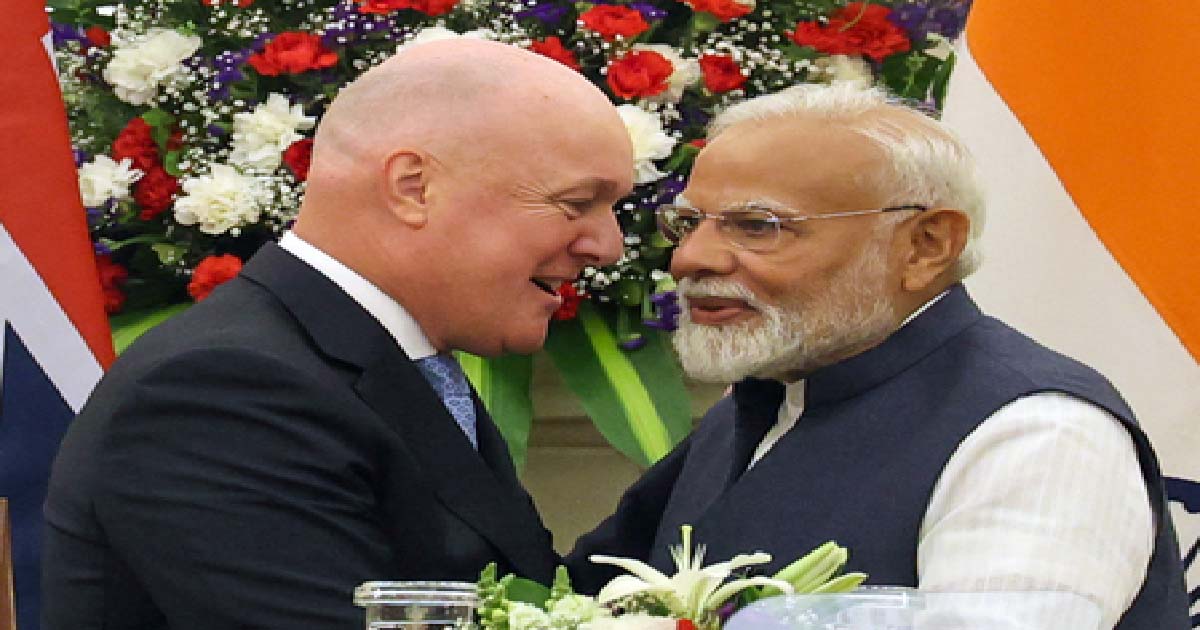
New Delhi, Dec 22: Prime Minister Narendra Modi held a telephone conversation with New Zealand’s Prime Minister, Christopher Luxon, on Monday as the two leaders jointly announced the successful conclusion of the historic, ambitious and mutually beneficial India-New Zealand Free Trade Agreement (FTA).
During the conversation, both leaders expressed confidence in doubling bilateral trade over the next five years as well as an investment of $20 billion in India from New Zealand over the next 15 years.
The negotiations began in March this year and the two leaders concluded the FTA in a record time of nine months, reflecting the shared ambition and political will to further deepen ties between the two countries, according to a statement from Prime Minister’s Office (PMO).
“The FTA would significantly deepen bilateral economic engagement, enhance market access, promote investment flows, strengthen strategic cooperation between the two countries, and also open up new opportunities for innovators, entrepreneurs, farmers, MSMEs, students and youth of both countries across various sectors,” said the statement.
The leaders also welcomed the progress achieved in other areas of bilateral cooperation such as sports, education, and people-to-people ties, and reaffirmed their commitment towards further strengthening of the India-New Zealand partnership.
This historic FTA eliminates and reduces tariffs on 95 per cent of New Zealand’s exports – among the highest of any Indian FTA – with almost 57 per cent being duty-free from day one, increasing to 82 per cent when fully implemented, with the remaining 13 per cent subject to sharp tariff cuts.
It puts New Zealand exporters on an equal or better footing to our competitors across a range of sectors and opens the door to India’s rapidly expanding middle class, according to an official statement from New Zealand.
“The Indian economy is forecast to grow to NZ$12 trillion by 2030. The India-NZ Free Trade Agreement unleashes huge potential for our world-class exporters to the world’s largest country and will significantly accelerate progress towards New Zealand’s ambitious goal of doubling the value of exports over 10 years,” it added.
International News
‘Bodes ill for democratic process’: Tharoor flags attacks on media amid violence in Bangladesh

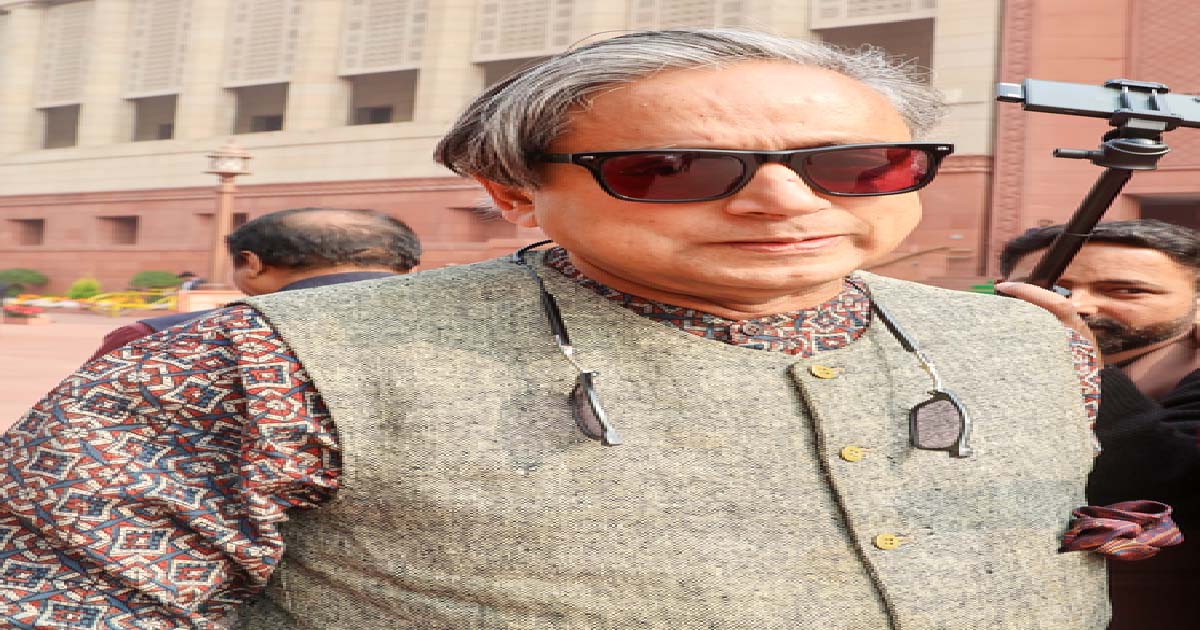
New Delhi, Dec 20: Congress MP Shashi Tharoor on Saturday voiced serious concern over what he described as targeted attacks on prominent media houses in violence-hit Bangladesh, while also condemning the forced suspension of visa services at Indian Assistant High Commissions in Khulna and Rajshahi amid worsening security conditions.
Bangladesh has witnessed a fresh wave of unrest following the death of radical Islamist leader Sharif Osman Hadi, who rose to prominence during the 2024 student movement that culminated in the ouster of the then Prime Minister Sheikh Hasina.
The killing has triggered widespread protests, with violence reported in Dhaka and several other parts of the country.
Protests over the death of Inqilab Moncho leader Hadi have continued to escalate, and the mobs targeted leading media organisations and locations associated with Bangladesh’s secular legacy. Reports of arson and vandalism at media establishments have sparked alarm both within the country and internationally.
Reacting to the developments, Tharoor said the attacks on the press strike at the core of democratic values.
In a post on X, he said: “Deeply concerned by the reports from Bangladesh. The targeted mob attacks and arson at the offices of Prothom Alo and The Daily Star are more than just an assault on two media houses; they are an assault on the freedom of the press and the very foundation of a pluralistic society.”
The Congress MP also expressed concern about the safety of journalists, including senior editors. He said he was worried about the well-being of Editor Mahfuz Anam and other media professionals working under increasingly hostile conditions.
Amid the unrest, India was compelled to shut down two visa application centres in Bangladesh, citing security threats. In Rajshahi, a march was organised by a group called ‘July 36 Mancha’ towards the Indian Assistant High Commission. The procession advanced towards the diplomatic mission but was halted midway following police intervention.
Similar demonstrations were also reported in Khulna, prompting authorities to suspend visa-related operations at both locations.
Condemning the disruption, Tharoor said the suspension of services would have far-reaching consequences.
“The forced suspension of visa services at the Indian Assistant High Commissions in Khulna and Rajshahi, driven by escalating security threats, is a major setback. This disruption directly impacts students, patients, and families who were finally seeing a glimpse of normalisation in cross-border mobility,” he said.
With Bangladesh scheduled to hold national elections on February 12, 2026, Tharoor warned that this atmosphere of violence and intolerance “bodes ill for the democratic process”.
The Congress leader also outlined steps for the Muhammad Yunus-led interim government to ensure stability and democratic continuity in the country.
Emphasising the need for decisive action, he said: “Protection of Journalists: Journalists should not have to post frantic messages for their lives while their offices burn. Mob rule must not be allowed to prevail.”
He further mentioned that the security of diplomatic facilities must be ensured to maintain vital people-to-people ties. “Extra protection must be provided for targeted embassies & consulates,” he said.
“Constructive dialogue must replace ochlocracy if the country is to survive this transition with any semblance of democracy. Interim Chief Mohammed Yunus must take the lead personally to ensure this,” he added, stressing the need to restore the calm.
Tharoor underscored that peace in Bangladesh holds significance beyond its borders, noting that stability in the country is “vital” for South Asia as a whole.
“We hope for a return to peace and a safe environment where the voice of the people is heard through the ballot, not through violence and intimidation,” he added.

New Delhi, Dec 18: The ban on Dhurandhar by Pakistan and some Gulf nations has not affected its run at the box office. The movie is showing no signs of slowing down, but the ISI has a major problem back in Pakistan.
The movie, which deals with the 1999 Khandahar hijacking, Mumbai 26/11 attacks and also the Lyari gang wars, has not gone down well with the Pakistan establishment, and all attempts have been made to block it. However, the ISI has completely lost control over the digital space and attempts at a blackout have failed miserably.
At least 2 million illegal downloads of the film have been reported in Pakistan in just two weeks. It has gone on to become the most pirated movie in Pakistan, beating 2.0 and Raees. The ban in Pakistan may have cost the movie makers Rs 50-60 crore, but the message about Pakistan being a complete terror state has been sent across Pakistan.
Although it makes no difference to the Pakistanis about what their country is, it is a psychological win for India, which has managed to spread the message despite the movie being banned. The Pakistanis are in particular upset about the portrayal of Lyari. The establishment is so desperate to counter this narrative that it has decided to fast-track a film about Lyari showing the place in a good light.
“Indian movie Dhurandhar is yet another example of negative propaganda by the Indian film industry against Pakistan, especially targeting Lyari. Lyari is not violence — it is culture, peace, talent, and resilience. Next month, Mera Lyari will release, showing the true face of Lyari: peace, prosperity, and pride. #MeraLyari,” Sindh’s Senior Provincial Minister for Information, Sharjeel Inam Memon said on X.
The ISI, despite monitoring the internet relating to the movie, has completely failed to take control. Torrents and piracy links are all over the internet, which are being used to download the movie.
The Dark Web experts in the country are using the servers in Sri Lanka, Nepal and Malaysia to ensure that the Pakistanis are able to download the film illegally and watch it. The Pakistanis are downloading the movie through Telegram channels, underground streams and also the VPN. The very fact that it has gone on to become the most pirated film to date only shows that the ISI has failed to control the situation, and all attempts to blackout the movie have fallen flat.
Officials say that this surge in the number of downloads indicates the curiosity that the people in Pakistan have about the movie.
While some may not agree with the narrative of the film, many are appreciative of the acting in the movie. Many Pakistanis are creating reels and memes on social media, it has come to light.
The social media accounts linked to both the ISI and ISPR have been using smaller clips in the movie to mock the narrative India has set. They are trying to pass off the content with false narratives against India.
The agencies say that there are attempts by the ISI-linked social media handles to manipulate the content to suit the local narrative. Experts say that the manner in which the movie Mera Lyari is being fast-tracked for a January release and the way in which the ISI is desperately trying to block out the film suggest that the Pakistanis are on the defensive.
The fact that the curiosity around the film is growing with each passing day and the rate at which it is being illegally downloaded only shows that the ISI has failed in its actions, the expert also points out.
The Pakistan Peoples Party (PPP) has also filed a legal challenge in a Karachi court questioning the images of the late Benazir Bhutto being used. The petition seeks an FIR against the cast and crew of the movie Dhurandhar.
The film’s star cast is led by Ranveer Singh, who plays Hamza, an Indian spy who infiltrates Pakistan’s Lyari to dismantle terror networks, which are backed by the ISI. The cast also includes Akshaye Khanna, Sanjay Dutt, R. Madhavan, Arjun Rampal and Rakesh Bedi.

Mumbai: Rickshaw driver beaten up in Vikhroli on suspicion of child theft, burqa-clad driver did this to collect fare, police claim

Municipal Corporation in Mumbai is committed to conducting administration and election process in a fearless, free and transparent environment: Bhushan Gagrani

Mira Road: Bundles Of Blank PVC Aadhar Card Found On Roadside Near Kashimira Ahead Of Municipal Corporations Polls 2026

CM Yogi’s ‘2 namoone’ jibe at Oppn over codeine row, Akhilesh hits back with a twist (Lead)

Drishyam 3 Release Date: Will It Be Ajay Devgn Starrer Vs Shah Rukh Khan’s King At The Box Office?

Kalyan College Namaz Controversy: SIO Demands Action Against Perpetrators

Sensex, Nifty open lower amid weak global cues

Veteran Bollywood Actor Dharmendra Passes Away at 89

Mukesh Ambani, Shiv Sena UBT Chief Uddhav Thackeray & Son Aaditya Share Warm Greetings At Mumbai’s Swadesh Event

Kartik Aaryan, Ananya Panday promote ‘Tu Meri Main Tera, Main Tera Tu Meri’ on Amitabh Bachchan’s KBC
-

 Crime3 years ago
Class 10 student jumps to death in Jaipur
-
 Maharashtra1 year ago
Mumbai Local Train Update: Central Railway’s New Timetable Comes Into Effect; Check Full List Of Revised Timings & Stations
-
 Maharashtra1 year ago
Mumbai To Go Toll-Free Tonight! Maharashtra Govt Announces Complete Toll Waiver For Light Motor Vehicles At All 5 Entry Points Of City
-
 Maharashtra1 year ago
False photo of Imtiaz Jaleel’s rally, exposing the fooling conspiracy
-
 National News1 year ago
Ministry of Railways rolls out Special Drive 4.0 with focus on digitisation, cleanliness, inclusiveness and grievance redressal
-
 Maharashtra1 year ago
Maharashtra Elections 2024: Mumbai Metro & BEST Services Extended Till Midnight On Voting Day
-

 National News1 year ago
J&K: 4 Jawans Killed, 28 Injured After Bus Carrying BSF Personnel For Poll Duty Falls Into Gorge In Budgam; Terrifying Visuals Surface
-
 Crime1 year ago
Baba Siddique Murder: Mumbai Police Unable To Get Lawrence Bishnoi Custody Due To Home Ministry Order, Says Report