
Business
Essar sets up Vertex Hydrogen to help drive energy transition in UK

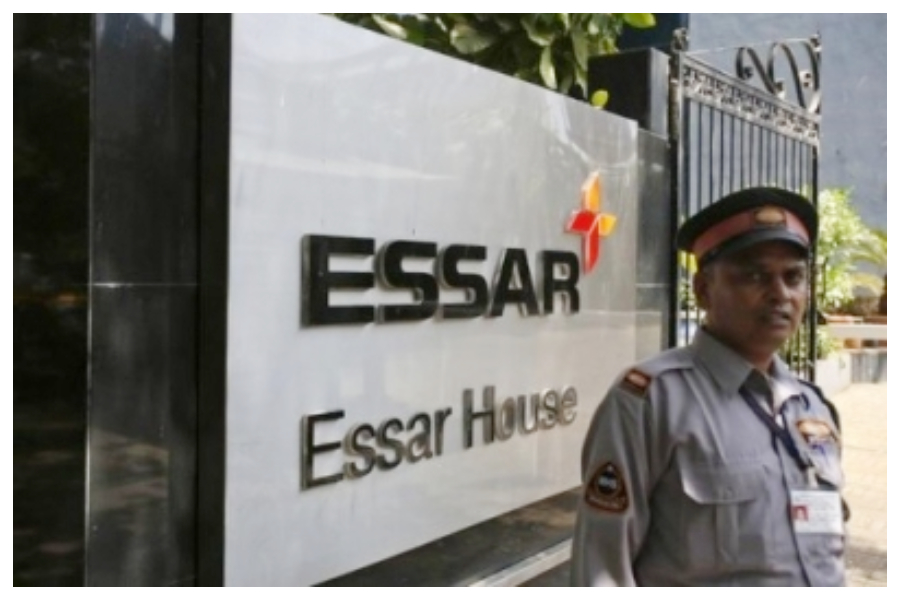
Essar has formed Vertex Hydrogen Limited, a transformative new joint venture, with Progressive Energy, to build the UKs largest hydrogen hub at the Stanlow Manufacturing Complex.
Led by Essar as the majority shareholder, Vertex Hydrogen has been formed to provide the catalyst for development of a hydrogen economy across North West England and North Wales, as a central part of the HyNet decarbonisation cluster.
This initiative is a core part of a wider strategy by Essar globally to focus on investing in energy transition through the transformation of existing portfolio companies, and investments in new ventures.
Providing low carbon hydrogen across North West England and North Wales
The UK’s first low carbon hydrogen facility at Essar Stanlow will sit at the heart of the HyNet low carbon cluster, to produce a total of 1GW per year of hydrogen, across two units, from 2026. This is equivalent to the domestic heating energy used by a major British city region, such as Liverpool.
Waste fuel gases from Essar Stanlow, and natural gas, will be converted by Vertex Hydrogen into hydrogen, with carbon dioxide safely captured and stored by HyNet partner Eni SpA, underground offshore in Liverpool Bay. The hydrogen production hub will provide low carbon energy to replace fossil fuels in industry across the HyNet region, as well as heating homes, and fuelling buses, trains and trucks.
A total investment of approximately 1 billion pounds will be committed to deliver the hydrogen production hub.
The hydrogen produced will, in the first instance, be utilised by Essar to reduce its carbon footprint at the Stanlow Manufacturing Complex. In addition, Vertex will also provide low carbon hydrogen to a wide range of businesses, including companies from the chemicals, ceramics, paper, glass and flexible power generation sectors, such as Tata Chemicals Europe, Encirc, InterGen, Solvay, Ingevity, Novelis, Glass Futures and Saica Paper, all having expressed interest already. More widely in the region, companies such as Pilkington are demonstrating use of hydrogen in their facilities. Cadent Gas Ltd is also developing the UK’s first multi-user hydrogen distribution network within HyNet.
Prashant Ruia, Essar Chairman, said: “Essar is massively committed to investing in energy transition and is building a portfolio of companies in this space. Vertex Hydrogen is a central component of that vision, which will be instrumental in helping create a hydrogen future for North West England and North East Wales. This will see over 1 billion pounds of investment, thereby creating jobs and supporting local communities for decades to come.”
Deepak Maheshwari, Essar Chief Executive Officer, commented: “Vertex Hydrogen is a critical investment for Essar in helping it achieve its vision of becoming the UK’s first low carbon refinery and supplying UK markets with the sustainable fuels of the future.”
Chris Manson-Whitton, Director at Progressive Energy, explained: “As the founding developer of HyNet, we see the launch of Vertex Hydrogen as a key milestone. Vertex is central to unlocking the low carbon hydrogen economy, reducing emissions, creating a cleaner world for future generations whilst creating and safeguarding jobs.”
In November 2020, the UK government published its Ten Point Plan for a Green Industrial Revolution, providing a roadmap to driving innovation, boosting export opportunities, and generating green jobs and economic growth across the country to level up regions.
As part of the plan, government committed to deploy Carbon Capture, Usage and Storage (CCUS) in two industrial clusters by the mid-2020s, with a further two clusters coming on-line by 2030. The successful deployment of CCUS is critical to meeting the UK’s net zero goals and remains crucial for industrial decarbonisation, low carbon power, engineered greenhouse gas removal technologies and delivering the government’s 5GW by 2030 low carbon hydrogen production ambition.
Vertex Hydrogen was launched in January 2022. A joint venture between Essar Oil UK (90 per cent) and Progressive Energy Ltd (10 per cent), Vertex will deliver the UK’s first low carbon hydrogen production plant to lead the country’s hydrogen production economy. Using Johnson Matthey’s Low Carbon Hydrogen (LCHTM) technology, the hydrogen production plant will sit at the heart of HyNet North West, the UK’s leading industrial decarbonisation cluster. HyNet will deploy a combination of low carbon hydrogen, distributed by Cadent Gas Ltd, and carbon capture and storage (CCS) infrastructure, provided by ENI, to decarbonise industry, transport and transform how we heat our homes across North West England and North East Wales.


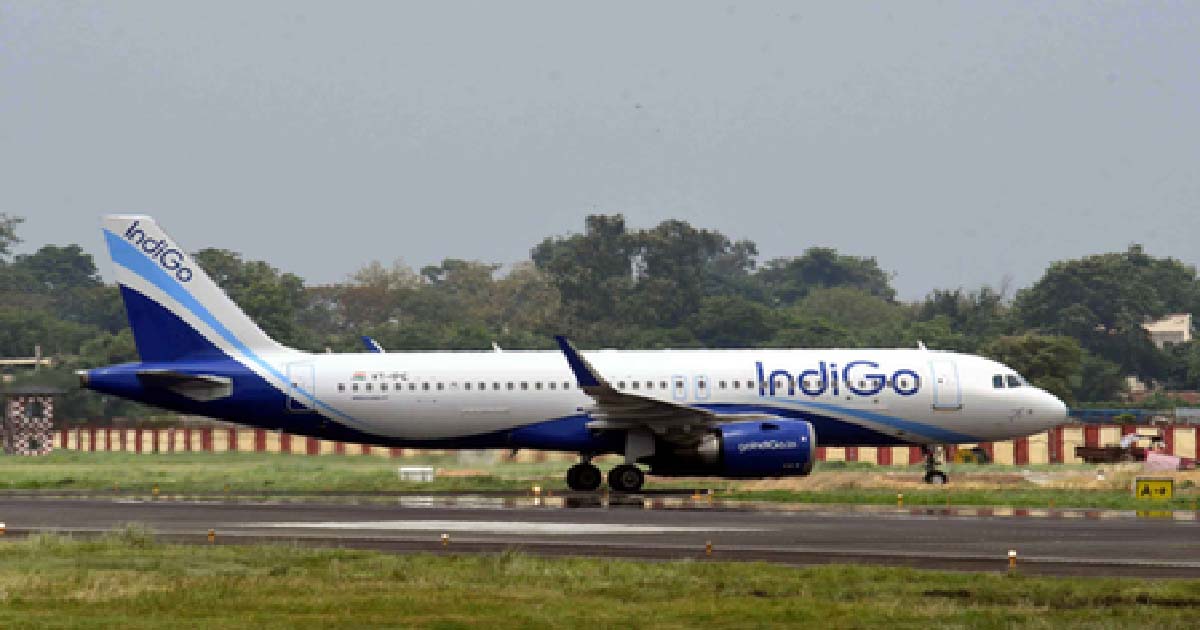
Hyderabad, Dec 5: Utter chaos continued at Hyderabad’s Rajiv Gandhi International Airport (RGIA) on Friday as IndiGo Airlines cancelled 92 flights for the day.
For the fourth consecutive day, the airline cancelled flights, causing severe inconvenience to thousands of passengers.
A total of 92 IndiGo flights have been cancelled for the day, an airport spokesman said. These include 43 arrivals and 49 departures.
This is the highest number of flights to be cancelled in four days. The airline had cancelled 74 flights on Thursday.
A total of 220 flights have been cancelled since December 2.
The cancellations for the fourth consecutive day triggered a protest by passengers at the terminal building. Angry passengers had heated arguments with the IndiGo staff.
A group of passengers was seen surrounding an official of the airline, seeking replies to their queries. Passengers complained that flights were cancelled after check-in.
The cancellations on key domestic routes severely disrupted the travel plans of the passengers for the fourth consecutive day.
A large number of passengers remained stranded at the airport. Long queues were seen outside and inside the terminal. Tempers were running high in the terminal building as angry passengers confronted the airline staff. Some were asking why the airline scheduled the flights when the staff was not available. Frustrated passengers had a heated argument with the staff and even raised slogans of ‘shame’.
Departures and arrivals on key domestic routes like Delhi, Bengaluru, Chennai, Kolkata, Visakhapatnam, Goa, Madurai and Bhubaneswar severely inconvenienced passengers.
A large number of Ayappa devotees were also stranded due to the cancellation of flights to Kochi. As a mark of protest, the devotees were seen chanting slogans of “Swamiye Saranam Ayyappa”.
Andhra Pradesh Minister Kolusu Partha Sarathy, who was at the airport to board a flight to Vijayawada, intervened to help Ayyappa devotees. He spoke to Civil Aviation Minister K. Ram Mohan Naidu over the phone to arrange a special flight.
The minister, who missed his flight to Vijayawada, later left by road.
Meanwhile, eight IndiGo flights were cancelled at Visakhapatnam airport. With flights to key destinations like Hyderabad, Chennai, Bengaluru and Ahmedabad getting cancelled, passengers lodged their protest with the airline staff.
IndiGo attributed the disruption to ‘a multitude of unforeseen operational challenges’ including minor technology glitches, winter-season driven schedule changes, adverse weather, increased congestion in the aviation system and the implementation of updated Flight Duty Time Limitations for crew.
RGIA authorities have advised passengers to check the latest status of their flights with their respective airlines before heading to the airport.

Mumbai, Dec 5: Indian equity markets opened slightly lower on Friday, as investors awaited the Reserve Bank of India’s key interest rate decision.
The Monetary Policy Committee (MPC) will announce the repo rate at 10 AM after concluding its three-day meeting, keeping traders cautious at the start of the session.
At the opening bell, the Sensex was at 85,187, down 79 points or 0.09 per cent. The Nifty also saw a mild decline, slipping 12 points or 0.05 per cent to 26,021.
Several heavyweight stocks dragged the market, with Reliance Industries, Trent, Tata Steel, Bharti Airtel, Tata Motors Passenger Vehicles, Sun Pharma and Titan trading in the red.
On the other hand, companies like Eternal, BEL, Maruti Suzuki, Bajaj Finance, Kotak Mahindra Bank, Infosys and Ultratech Cement were among the top gainers, offering some support to the benchmarks.
In the broader market, sentiment remained soft as the Nifty MidCap index edged down 0.07 per cent, while the Nifty SmallCap index fell 0.30 per cent.
Sector-wise, pharma and metal stocks were under pressure, with both indices declining 0.3 per cent.
However, real estate stocks bucked the trend, helping the Nifty Realty index gain 0.28 per cent.
Analysts said that the markets traded cautiously ahead of the RBI’s policy outcome, with investors keeping a close watch on the central bank’s commentary and the interest rate outlook.
Rupee’s sharp recovery yesterday to 89.97 from the low of 90.42 is signalling some sort of stability in the currency market.
“RBI governor’s views on the rupee today will significantly influence the near-term direction of the currency,” analysts said.
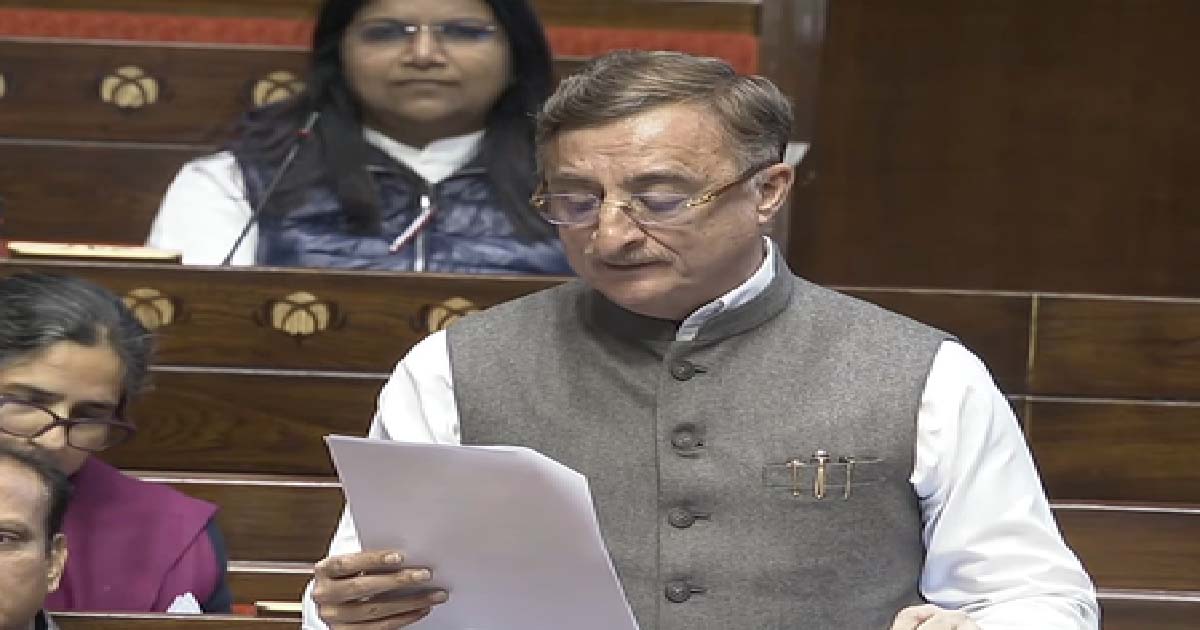
New Delhi, Dec 4: During Zero Hour in the Rajya Sabha on Thursday, Congress MP from Madhya Pradesh Vivek Tankha voiced deep concern over what he described as the “freefall of the Indian rupee” and the widening economic distress affecting ordinary citizens across the country.
Calling the issue “extremely topical and urgent”, Tankha said the currency’s sharp decline was inflicting widespread financial strain on households, businesses and key sectors of the economy.
Tankha noted that the rupee had crashed past Rs 90 per US dollar — touching between 90.14 and 90.19 — marking the weakest level in India’s history. Over the past five years, he said, the rupee has lost between 20 per cent and 27 per cent of its value, effectively reducing the purchasing power of people’s income by nearly one fourth. In global terms, the rupee has fallen 5 per cent this year alone, its steepest drop since 2022, making it one of Asia’s worst-performing currencies in 2025.
He further highlighted that India recently recorded a monthly trade deficit exceeding USD 40 billion, underscoring how sharply imports outweigh exports. At the same time, foreign investors have withdrawn more than USD 17 billion from Indian markets this year — the largest outflow in several years — drying up capital and weakening investor sentiment.
“FDI flows are stagnant, external borrowings have slowed, and the world is becoming increasingly wary of India’s external stability,” Tankha warned.
Emphasising the direct impact on citizens, he said that every bout of rupee depreciation makes imports costlier, and India relies heavily on imported fuel, cooking gas, electronic machinery and medicines. A 5 per cent fall in the rupee, he explained, pushes inflation up by 30-35 basis points.
“Every household ends up paying more. Food prices rise, transport costs increase, and a chain reaction follows that hits the poor the hardest,” he said.
The middle class, he added, is also feeling the squeeze as the prices of smartphones, laptops, medical equipment, school supplies, clothing and household appliances rise due to India’s dependence on imported components.
“For the common person, a falling rupee feels like a salary cut without the employer informing you. Your money buys less every day,” he remarked.
Tankha also drew attention to the pressure on Micro, Small and Medium Enterprises (MSMEs), many of which rely on imported raw materials. These businesses are facing a 20-30 per cent rise in input costs, shrinking already thin margins.
Machinery imports have become more expensive, slowing expansion and putting jobs at risk. Exporters, he said, are not gaining from the weaker rupee because major export sectors — such as textiles, chemicals and engineering goods — depend heavily on imported intermediaries.
“Small manufacturers are caught in a double blow: higher costs and weaker demand,” he said.
Companies with foreign currency loans are also struggling, with repayment costs rising by 15-20 per cent due to the rupee’s depreciation, weakening corporate balance sheets and threatening financial stability.
A falling rupee, Tankha added, discourages overseas investors, creating a “vicious cycle” where declining confidence further accelerates currency pressure. “As the rupee falls, investors pull out, and markets shift,” he cautioned.
Tankha urged the government to recognise the seriousness of the situation and take urgent corrective measures to stabilise the currency and safeguard vulnerable sectors of the economy.

Chaos continues at Hyderabad Airport as IndiGo cancels 92 flights

Mumbai Crime Branch Busts Fake Call Centre Selling ‘Viagra’ To US Citizens; 8 Arrested, Key Accused Absconding

Sensex , Nifty open lower as investors await RBI’s MPC decision

Mumbai Weather Update: AQI At 183 In ‘Unhealthy’ Category As Temperature Hovers Around 27°C

Mumbai: Crime Branch raids travel agency… Fraud in the name of sending abroad illegally, police action, case registered

Kalyan College Namaz Controversy: SIO Demands Action Against Perpetrators

FIR filed against unidentified person in Bilaspur train collision

Good News Navi Mumbaikars! Ulwe Coastal Road 60% Complete, Major Link Between Atal Setu & Upcoming NMI Airport Progresses Smoothly

A powerful explosion near Delhi’s Red Fort… High alert across Delhi after the blast; 8 people killed; forensic team arrives at the scene.

Dharmendra’s Fan, An Auto-Rickshaw Driver, Breaks Down Outside Actor’s Mumbai Home After His Discharge, Says ‘Admired Him Since Childhood
-

 Crime3 years ago
Class 10 student jumps to death in Jaipur
-
 Maharashtra1 year ago
Mumbai Local Train Update: Central Railway’s New Timetable Comes Into Effect; Check Full List Of Revised Timings & Stations
-
 Maharashtra1 year ago
Mumbai To Go Toll-Free Tonight! Maharashtra Govt Announces Complete Toll Waiver For Light Motor Vehicles At All 5 Entry Points Of City
-

 Maharashtra1 year ago
False photo of Imtiaz Jaleel’s rally, exposing the fooling conspiracy
-
 National News1 year ago
Ministry of Railways rolls out Special Drive 4.0 with focus on digitisation, cleanliness, inclusiveness and grievance redressal
-
 Maharashtra1 year ago
Maharashtra Elections 2024: Mumbai Metro & BEST Services Extended Till Midnight On Voting Day
-

 National News1 year ago
J&K: 4 Jawans Killed, 28 Injured After Bus Carrying BSF Personnel For Poll Duty Falls Into Gorge In Budgam; Terrifying Visuals Surface
-

 Crime1 year ago
Baba Siddique Murder: Mumbai Police Unable To Get Lawrence Bishnoi Custody Due To Home Ministry Order, Says Report