
Business
Inflation Check: Centre extends ‘free’ import policy for three pulses till Mar ’22

The Centre has extended the ease in quantitative import restrictions policy for pulses such as tur, urad and moong till March 2022.
Earlier, only tur and urad were under the ‘free’ category, which was supposed to be over by December 31, an industry insider said.
The move entails that ‘bill of lading’ or ‘lorry receipts’ from the originating countries need to be obtained on or before March 31, 2022, and the cargoes should reach Indian ports by June 30, 2022, the Ministry of Commerce and Industry said in a notification.
The Centre’s move is seen as an attempt to stem rising food inflation in the country.
“The move shall bring stability to the trade and provide continuity of shipments, thereby ensuring stability of prices, both at the place of origin and within India. The trade in Myanmar is highly appreciative of the pragmatic trade policies being adopted by the Indian authorities,” said Vatsal Lilani, President at Overseas Agro Traders Association, Myanmar.
Myanmar and Tanzania are two major suppliers of pulses to India.
“Tanzania is Africa’s top pulses’ exporter to India and only comes third – behind Canada and Myanmar – globally. It has always been consistent in supplying the world’s leading pulses consumers with products of good quality for years now,” said Zirack Andrew, national coordinator at Tanzania Pulses Network.
“This move will help restore the fading confidence in Tanzania’s exporters in doing business with India and wash away thoughts of abandoning the country in favour of emerging markets in the Middle East, South Africa, and Singapore. Fairly speaking, it’s long overdue.”
Even though India is a major producer of pulses, its domestic consumption outstrips the production, which pushes the country to import such commodities from other nations.
To check inflationary pressure, the Centre has also reduced import duty on refined palm oil, extended ‘free’ import policy for three variants of palm oil, and banned seven agri commodities from exchange trading.
According to Bimal Kothari, Vice Chairman, India Pulses and Grains Association (IPGA): “When comparing the prices of pulses to the price of oil, the former have remained relatively stable over the last three to four months. Pulses have not seen a significant increase in their prices. Chana is being sold for lower than MSP whereas tur and urad are being sold at MSP, so prices of pulses aren’t increasing.
“Tur harvesting has already been done in many places and is still in progress in some others. The late rains in the southern states may have caused some damage. In the next three months, however, tur’s availability on the international market will be limited.”


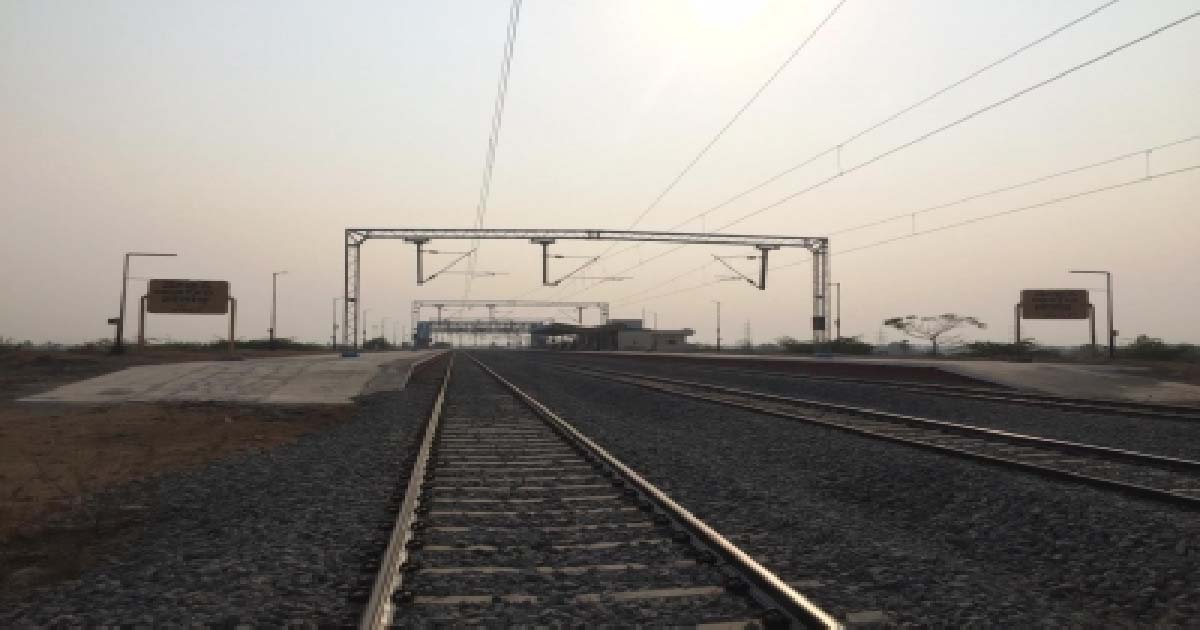
New Delhi, Dec 20: A total of 38 railway projects (11 new lines, 2 gauge conversion and 25 doubling) of a total length of 5,098 kms and costing Rs 89,780 crore have been sanctioned in Maharashtra (as on April 1, 2025), the government said on Saturday.
During the last three fiscals — 2022-23, 2023-24, 2024-25 and the current financial year 2025-26 — 98 surveys (29 New Line, 2 Gauge Conversion and 67 Doubling) of total length 8,603 km falling fully/partly in the state of Maharashtra, have been sanctioned, it said.
“Further, construction works on the flagship High-Speed Bullet Train project have gathered momentum in Maharashtra. Now 100 per cent of land acquisition has been completed. Works on bridges, aqueducts, etc. have been taken up,” the Railways Ministry said in a statement.
In addition, platform extension work at 34 stations to accommodate 15-car EMUs has been taken up.
To improve the capacity of the rail network in the Mumbai suburban area, the Mumbai Urban Transport Project (MUTP)-II costing Rs 8,087 crore, MUTP-III costing Rs 10,947 crore, and MUTP-IIIA costing Rs 33,690 crore have been sanctioned.
To enhance passenger carrying capacity, 238 rakes of 12 cars each with doors have been sanctioned under MUTP-III and IIIA at a cost of Rs 19,293 crore. The process for the procurement of these rakes has been taken up.
With Western DFC also passing through Maharashtra, as about 178 route km of it or about 12 per cent of the overall route length, falling in the state, the ministry said that “about 76 km of this project from New Gholvad to New Vaitarna in Maharashtra has already been commissioned. Balance works have been taken up. Connectivity of WDFC to JNPT will boost the capacity to handle cargo and container traffic from the port to Delhi NCR”.
Presently, about 120 originating Mail/Express trains and about 3,200 suburban trains are handled daily in the Mumbai area.
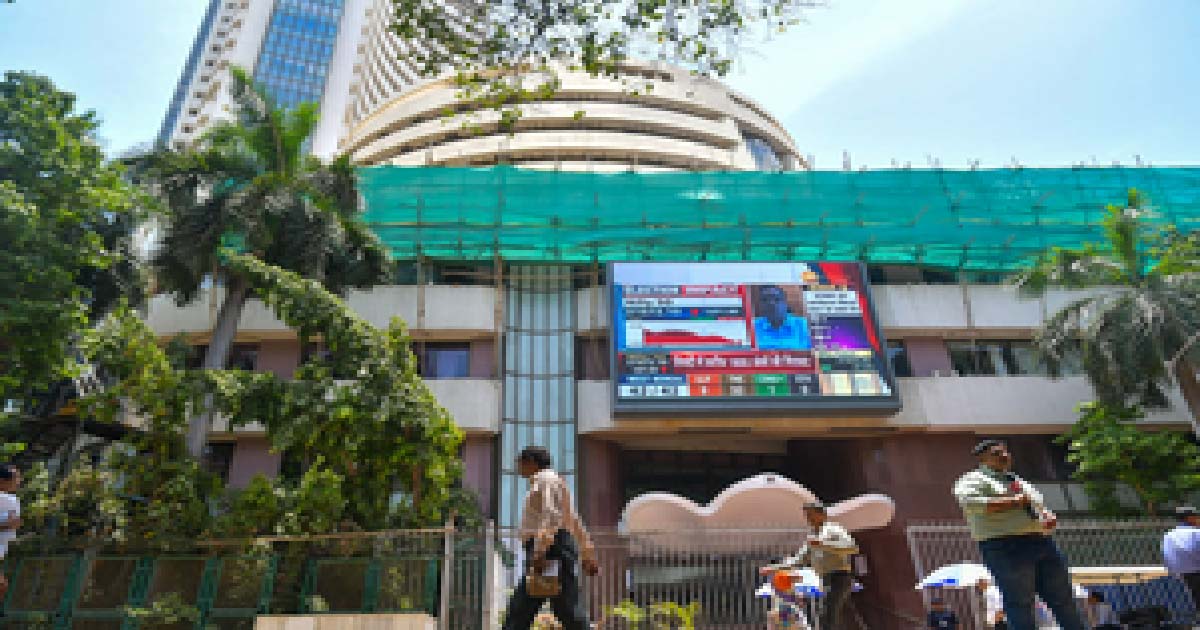
Mumbai, Dec 20: Indian equity benchmarks closed on a strong note this week, snapping a four-day losing streak amid positive global cues stemming from US inflation data.
The market ended the week in a bullish tone with Nifty surging 0.18 per cent during the week and 0.58 per cent on the last trading day to 25,966, after a softer US CPI print boosted expectations of a milder Fed stance.
At close, the Sensex was up 447.55 points or 0.53 per cent at 84,929.
Indian equities were traded in a cautious tone for most of the week, weighed down by persistent FII outflows, rupee depreciation, and heightened global uncertainties.
Further, early sessions also saw pressure from rising Japanese bond yields and expectations of Bank of Japan (BoJ) tightening, which amplified risk-off sentiment across emerging markets.
Bargain hunting and lower crude prices helped large caps drive a late rebound, trimming most of the week’s losses, market watchers said.
Broader indices also rose marginally during the week, with the Nifty Midcap100 up 0.04 per cent, while Nifty Smallcap100 was unchanged during the week. It gained 1.34 per cent at the close.
On the sectoral front, all sectors traded with a positive bias. Major contributions came from Nifty Realty, Auto, Healthcare, and Chemicals, while other sectors also posted modest gains.
Nifty has 26,200-26,300 as stiff resistance levels while 25,700–25,800 levels will act as support zone, they added.
Analysts said markets will likely maintain a cautiously positive bias in near future but remain highly sensitive to global cues.
Key drivers going forward include comments from the global central banks for the 2026 policy trajectory. While sentiment remains constructive, near-term volatility may persist amid uncertainty over trade deal timelines and the Indian rupee stability, they added.

New Delhi, Dec 19: India’s benchmark index Nifty is expected to touch 29,094 in one year based on long‑term valuation averages and earnings durability, a report said on Friday.
Wealth management firm PL Wealth said in the report that India enters the end of 2025 from a position of relative macro strength with record‑low inflation, a dovish monetary stance, resilient domestic demand and improved corporate earnings visibility.
“In the near term, large-cap stocks remain preferred due to their earnings stability and strong balance sheets, while selective exposure to high-quality mid-cap names is being added as visibility improves,” the wealth management firm cited its strategy.
Over the next 6 to 24 months, the earnings cycle is expected to broaden across consumption, financials, capex-linked sectors and select industrials, supported by benign inflation, lower interest rates and sustained domestic liquidity.
“India’s current macro configuration is among the most constructive we have seen in over a decade,” said Inderbir Singh Jolly, CEO, PL Wealth Management.
While global uncertainties will continue to create short-term volatility, India’s structural strengths—policy reform, financialisaton of savings and improving corporate balance sheets—position it well for sustained long-term growth, Inderbir added.
RBI’s 25 basis‑point cut to a 5.25 per cent policy repo rate lowered its CPI inflation projections and upgraded GDP growth estimates, signalling confidence in the sustainability of domestic demand, the report said.
The firm also noted FY26 GDP growth projection of 7.3 per cent underpinned by robust infrastructure spending, resilient consumption and key policy measures such as GST rationalisation and income-tax cuts.
The FY26 September quarter earnings season delivered broad-based strength, with several sectors—including hospitals, capital goods, cement, electronics manufacturing services, ports, NBFCs and telecom—reporting double-digit growth in EBITDA and profits.
The firm noted that Nifty earnings per share estimates for FY26–FY28 imply an earnings CAGR of nearly 14 per cent. Domestic institutional investors have anchored markets with record net inflows of over Rs 6.8 trillion year‑to‑date.

Abu Asim Azmi praised for introducing a bill against hate speeches and hate crimes, Muslim organizations called Abu Asim Azmi’s step commendable.

A split in Maha Vikas Aghadi before BMC elections, Congress’s slogan is ‘akela Chalo’

‘Bulldozer on MGNREGA’: Sonia Gandhi attacks Modi govt over G RAM G Bill

38 Railways projects worth Rs 89,780 crore sanctioned in Maharashtra: Centre

‘We Will Be Adding 3 More Terminals’: Jeet Adani On Navi Mumbai Airport

Kalyan College Namaz Controversy: SIO Demands Action Against Perpetrators

Sensex, Nifty open lower amid weak global cues

Veteran Bollywood Actor Dharmendra Passes Away at 89

Mega Block On Sunday, 23-11-2025: Mumbai Local Train Services To Be Affected On CR’s Main Line, No Block On Harbour & Trans-Harbour Line; Check Details

Mukesh Ambani, Shiv Sena UBT Chief Uddhav Thackeray & Son Aaditya Share Warm Greetings At Mumbai’s Swadesh Event
-

 Crime3 years ago
Class 10 student jumps to death in Jaipur
-
 Maharashtra1 year ago
Mumbai Local Train Update: Central Railway’s New Timetable Comes Into Effect; Check Full List Of Revised Timings & Stations
-
 Maharashtra1 year ago
Mumbai To Go Toll-Free Tonight! Maharashtra Govt Announces Complete Toll Waiver For Light Motor Vehicles At All 5 Entry Points Of City
-

 Maharashtra1 year ago
False photo of Imtiaz Jaleel’s rally, exposing the fooling conspiracy
-
 National News1 year ago
Ministry of Railways rolls out Special Drive 4.0 with focus on digitisation, cleanliness, inclusiveness and grievance redressal
-
 Maharashtra1 year ago
Maharashtra Elections 2024: Mumbai Metro & BEST Services Extended Till Midnight On Voting Day
-

 National News1 year ago
J&K: 4 Jawans Killed, 28 Injured After Bus Carrying BSF Personnel For Poll Duty Falls Into Gorge In Budgam; Terrifying Visuals Surface
-

 Crime1 year ago
Baba Siddique Murder: Mumbai Police Unable To Get Lawrence Bishnoi Custody Due To Home Ministry Order, Says Report