
Business
Traders up in arms against 12% GST on textiles, footwear

The Confederation of All India Traders (CAIT) said that instead of simplifying and rationalising the GST tax structure, the GST Council has made it as “most complicated GST law in India over the world” and much against the GST structure shown to CAIT by the then Finance Minister Arun Jaitley.
CAIT National President B.C. Bhartia and Secretary General Praveen Khandelwal said that in the cotton textile industry there was no inverted tax structure, then why fabric and other cotton textile goods were brought under the 12 per cent bracket.
Even in the man-made textile industry, at the stage of manufacturing garments, sarees and all types of made ups, there was no inverted tax issue. Without having any understanding of the stages of the textile industry such a harsh decision will be a regressive step.
The Central Government’s notification to increase the rate of GST on basic items like textiles and footwear from 5 per cent to 12 per cent is being opposed all over the country, including Delhi, and the CAIT has decided to launch a mega agitation across the country against such arbitrariness.
The agitation will be led by two important trade associations of cloth trade, namely Delhi Hindustani Mercantile Association and Federation of Surat Textile Association (FOSTA) under the umbrella of CAIT. Apart from textiles and footwear, trade organisations of all types of trade, workers, employees associated with them will also participate in it.
Bhartia and Khandelwal said, “Roti, Kapda & Makaan are three basic things of life. Bread has already become very expensive due to high rise in prices, buying a house is beyond the reach of a common man and the cloth, which was accessible, has also been made expensive by the GST Council.
“After all, what kind of treatment is being done to the common man of the country. In this matter not only the Central Government but also the State Governments are completely guilty because these decisions have been taken unanimously in the GST Council and no one has opposed such an irrational decision,” CAIT said.
They have demanded that the increased rate of GST on clothes and footwear should be withdrawn immediately. They said that retail trade in the country has already been destroyed due to Covid and now that the business was resuming on track from this year, the increase in the GST rates will be the last nail in the coffin of the trade, CAIT said.
Bhartia and Khandelwal said that according to sources, it has been learnt that the Fitment Committee of GST has recommended an increase in the GST rate on gold jewelry from 3 per cent to 5 per cent and the current tax rate in GST 5 per cent has been recommended to 7 per cent, 12 per cent to 14 per cent and 18 per cent to 20 per cent. They said that this proposed increase in tax rate is highly irrational and unjustified and is clearly arbitrary action by the fitment committee.
In the matter of increase in clothes and footwear, no consultation was done with any stakeholder of the country. GST is being distorted continuously and the concept of “One Nation-One Tax” has been made a joke.
They said that traders across the country have mobilised against this unilateral and arbitrary increase against which the traders across the country are in great anger and resentment.
To decide about the future strategy of the agitation, the CAIT has convened a video conference on November 28 with the leaders of textile and footwear trade across the country, which will also be joined by prominent trade leaders of all States.
Bhartia and Khandelwal said that it is very unfortunate that the GST which was talked and explained to CAIT by the then Finance Minister Arun Jaitley, who by soliciting the support of trading community on June 4, 2017 was a simple tax structure having minimal compliance, but has been blown up and replaced by a very complex GST tax system. Prime Minister Narendra Modi’s announcement of Ease of Doing Business and One Nation-One Tax is being openly ridiculed, CAIT said.
CAIT said the officers have become autocratic and either the command of the responsible leaders has become lose or they are also involved in torturing the traders. Traders across the country will no longer tolerate this situation.


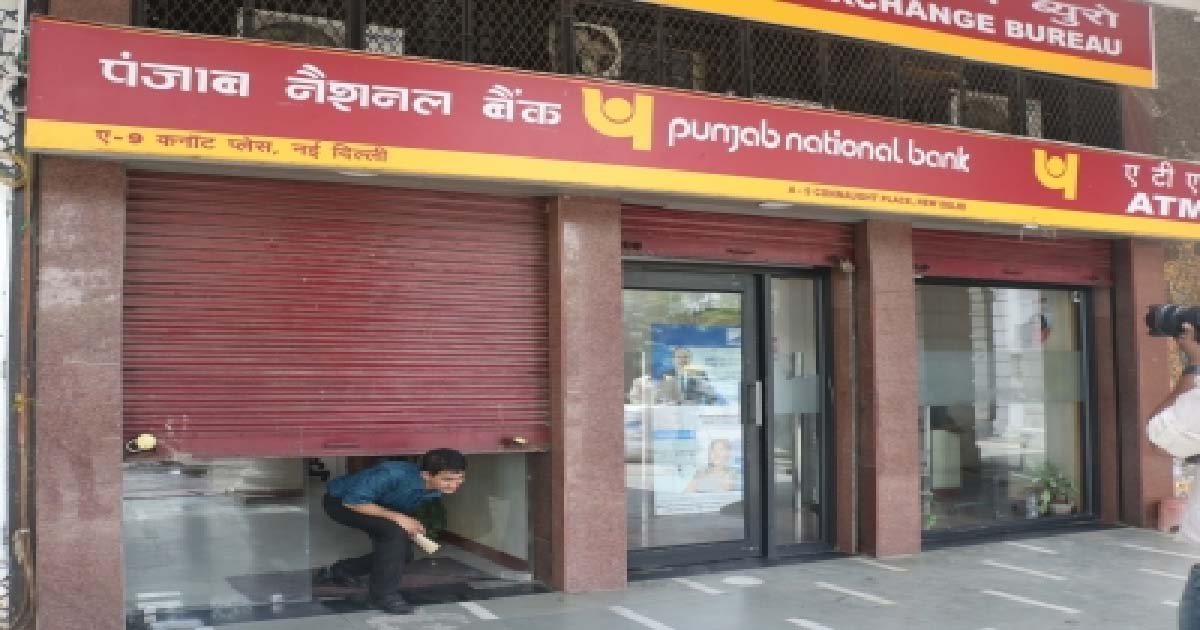
New Delhi, Dec 27: Punjab National Bank (PNB) has declared a Rs 2,434 crore alleged loan fraud by the former promoters of Srei Equipment Finance and Srei Infrastructure Finance.
In a late evening exchange filing, the state-run PNB said that “Pursuant to the applicable provisions of SEBI (LODFR) Regulations, 2015 and the Bank’s Policy for determining materiality of events/information required to be reported to the Stock Exchanges, it is hereby informed that the bank has reported borrowal fraud to RBI against the erstwhile promoters of Srei Equipment Finance and Srei Infrastructure Finance”.
PNB said that of the total fraudulent borrowings, Rs 1,240.94 crore is related to Srei Equipment Finance and the remaining Rs 1,193.06 crore is related to Srei Infrastructure Finance.
The public sector lender also said it has 100 per cent provisions for these loans. The bank said the declaration of these two accounts as frauds is based on a forensic audit, which pointed to irregularities such as loans to connected parties and potential evergreening of loans.
However, Srei group has challenged the forensic audit report as the basis for the fraud classification, noting the matter is subjudice.
Other banks such as Punjab & Sind Bank, Bank of Baroda, and Union Bank of India have also earlier declared a loan fraud in connection with Srei companies.
The Srei group has been undergoing an insolvency resolution process since 2021, and the National Company Law Tribunal has approved a resolution plan submitted by the National Asset Reconstruction Company in 2023. The Srei group was sent to the NCLT by the Reserve Bank in October 2021 after it had found governance issues and defaults and the regulator superseded the boards of Srei Infrastructure Finance and Srei Equipment Finance.
In February 2023, NARCL emerged as the successful bidder for SIFL and SEFL which together owed Rs 32,750 crore to lenders. NARCL won the bid in February 2023, got the NCLT approval in August 2023, and finalised the acquisition by January 2024.
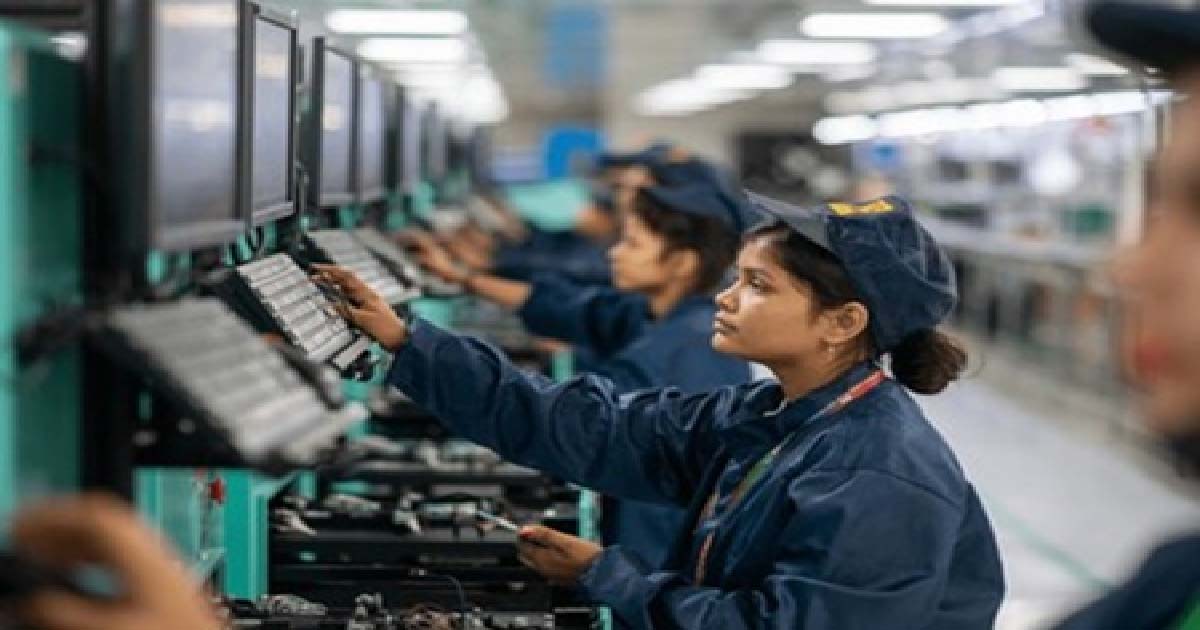
New Delhi, Dec 27: India has ramped up electronics production six-fold and is the second largest mobile manufacturing country in the world, Union Minister of Electronics and Information Technology Ashwini Vaishnaw said on Saturday.
In multiple posts on social media platform X, Vaishnaw said that the country has increased electronic exports eightfold over the past 11 years, mainly driven by policy support from the Production Linked Incentive Scheme.
The PLI scheme for Large Scale Electronics Manufacturing has attracted over Rs 13,475 crore in investment and helped achieve production of about Rs 9.8 lakh crore in the electronics sector, driving manufacturing, jobs, and exports, he said.
Vaishnaw highlighted that “over 1.3 lakh jobs were created in the last five years and that electronics is now India’s third‑largest export category, climbing from seventh place”.
He said the country was initially focusing on finished products, but the Electronics Component Manufacturing Scheme supported a shift to “building capacity for modules, components, sub-modules, raw materials, and the machines that make them.”
The Electronics Component Manufacturing Scheme has 249 applications representing Rs 1.15 lakh crore in investment, Rs 10.34 lakh crore in production, and creating 1.42 lakh jobs, the post said, adding it is the highest-ever investment commitment in India’s electronics sector, indicating industry confidence.
Vaishnaw also noted progress in the semiconductor sector, saying ten units have been approved, with three already in pilot or early production. The minister said that “fabs and ATMPs from India will soon supply chips to phone and electronics manufacturers”.
“Electronics manufacturing created 25 lakh jobs in the last decade. This is the real economic growth at the grassroots level,” the minister said.
“As we scale semiconductors and component manufacturing, job creation will accelerate. From finished products to components, production is growing. Exports are rising. Global players are confident. Indian companies are competitive. Jobs are being created. This is ‘Make in India’ impact story!” he noted.
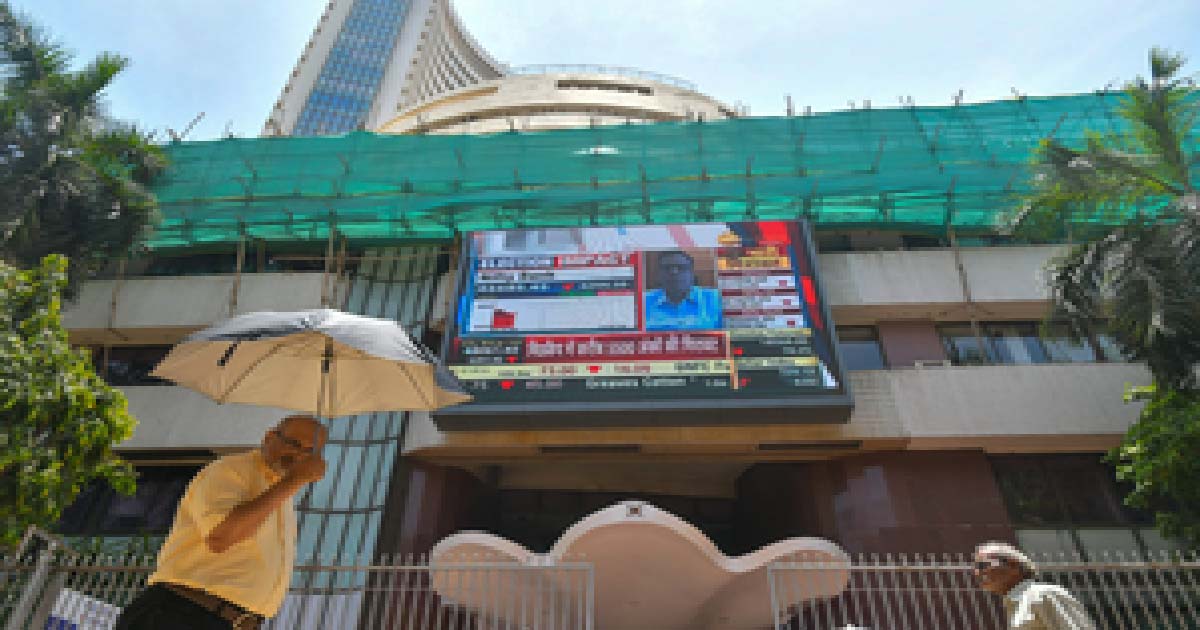
Mumbai, Dec 27: Indian equity markets ended the week in a positive terrain, buoyed by expectations of stronger domestic demand, a favourable liquidity outlook and optimism over potential Fed policy easing in 2026, analysts said on Saturday.
The holiday-shortened week opened with a bullish undertone; however, momentum tapered off as the days progressed.
On Friday, Sensex closed at 85,041.45, slipping 367.25 points or 0.43 per cent. Nifty also ended in the red, falling 99.80 points or 0.38 per cent to settle at 26,042.30.
According to market watchers, the year-end lull kept trading largely range-bound, with hopes for a Santa Claus rally diminishing amid the absence of fresh catalysts, limited progress in US–India trade talks, and caution ahead of the upcoming earnings season.
“Sectoral trends were mixed, marked by selective profit booking across most segments, while metals, FMCG, and media stocks offered notable resilience,” said Vinod Nair, Head of Research, Geojit Investments Ltd.
Nifty 50 ended the week at 26,042, continuing to respect its long-term rising channel on the daily chart. The index remains comfortably above the 20-day EMA cluster, preserving the medium-term bullish structure, said analysts, adding that as long as Nifty sustains above the 26,000–25,900 support zone, the overall bias remains positive.
On the domestic front, RBI’s liquidity interventions, such as open market operations and a USD/INR buy–sell swap, helped stabilise the rupee, though persistent FII outflows continued to weigh on sentiment.
Meanwhile, gold advanced on safe-haven demand, while crude prices hovered near multi-year lows, though U.S. steps to tighten pressure on Venezuelan oil shipments could exert upward pressure in the near term
Looking ahead, market sentiment is likely to stay cautious as investors brace for the upcoming earnings season while remaining attuned to global developments and currency movements, said analysts.
Attention will also turn to next week’s data releases, including India’s industrial and manufacturing output figures, manufacturing PMI, and the US FOMC minutes, said Nair.

Palghar Crime: Pelhar Police Seize Banned Gutkha Worth ₹6.39 Lakh, Shopkeeper Arrested In Nalasopara

Mumbai BMC Elections Samajwadi Party’s first list released but no decision on ward number 211

BMC Elections 2026 | ‘Fight Election, Win Majority’: Sanjay Raut’s Sharp Response To Waris Pathan’s, ‘Why Can’t Khan, Pathan, Shaikh, Qureshi, Syed Become Mumbai Mayor?’ Remark

Mother strangles 6-year-old to death in Navi Mumbai for not speaking Marathi

CWC meeting underway at AICC headquarters; Siddaramaiah, Shashi Tharoor in attendance

Sensex, Nifty open lower amid weak global cues

Mukesh Ambani, Shiv Sena UBT Chief Uddhav Thackeray & Son Aaditya Share Warm Greetings At Mumbai’s Swadesh Event

Kartik Aaryan, Ananya Panday promote ‘Tu Meri Main Tera, Main Tera Tu Meri’ on Amitabh Bachchan’s KBC

Samantha Ruth Prabhu Shares FIRST Wedding Photos With Raj Nidimoru, Exchanges Rings At Sadhguru’s Isha Foundation In Coimbatore

Lionel Messi’s G.O.A.T India Tour: Football Legend To Arrive On December 14 In Mumbai; CM Devendra Fadnavis Shares Excitement On X
-

 Crime3 years ago
Class 10 student jumps to death in Jaipur
-
 Maharashtra1 year ago
Mumbai Local Train Update: Central Railway’s New Timetable Comes Into Effect; Check Full List Of Revised Timings & Stations
-
 Maharashtra1 year ago
Mumbai To Go Toll-Free Tonight! Maharashtra Govt Announces Complete Toll Waiver For Light Motor Vehicles At All 5 Entry Points Of City
-

 Maharashtra1 year ago
False photo of Imtiaz Jaleel’s rally, exposing the fooling conspiracy
-
 National News1 year ago
Ministry of Railways rolls out Special Drive 4.0 with focus on digitisation, cleanliness, inclusiveness and grievance redressal
-
 Maharashtra1 year ago
Maharashtra Elections 2024: Mumbai Metro & BEST Services Extended Till Midnight On Voting Day
-

 National News1 year ago
J&K: 4 Jawans Killed, 28 Injured After Bus Carrying BSF Personnel For Poll Duty Falls Into Gorge In Budgam; Terrifying Visuals Surface
-

 Crime1 year ago
Baba Siddique Murder: Mumbai Police Unable To Get Lawrence Bishnoi Custody Due To Home Ministry Order, Says Report