
International News
Net zero emissions by 2070, India’s strong pledge: Climate advocates

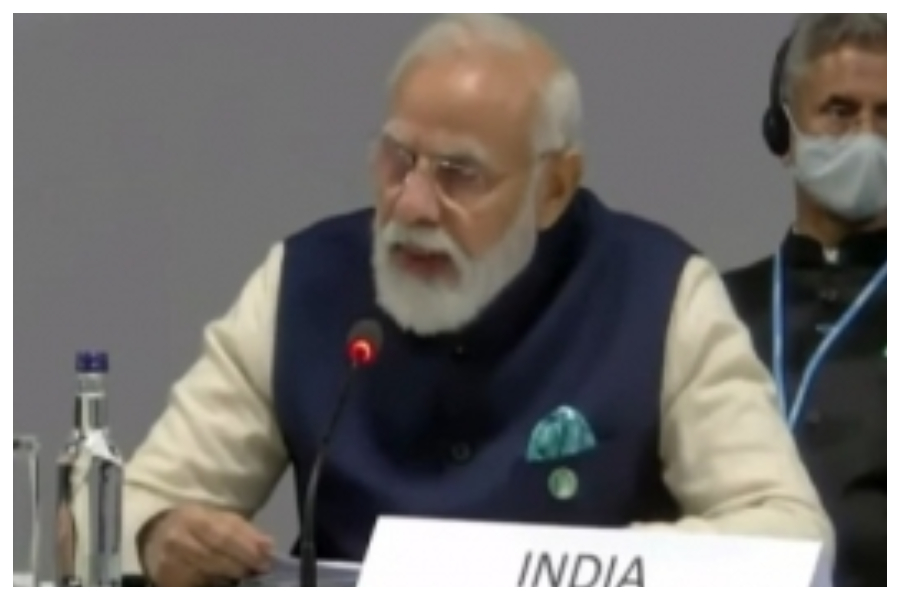
Prime Minister Narendra Modi at the global climate talks in Glasgow announced net zero by 2070 for India. This makes India as one of the last major economies to join the countries committing to net zero goals, climate experts said on Tuesday.
In addition, Modi called on developed countries to dramatically raise their financial help to developing countries for the transition to clean energy and protection against climate impacts.
Responding to announcements made on Monday at World Leaders Summit of a stronger climate target with 50 per cent of its energy requirements to be met by renewables by 2030 and a commitment to cut one billion tonnes of carbon dioxide emissions by 2030, NRDC (Natural Resources Defense Council) President and CEO Manish Bapna told IANS India is making a vital contribution in the global march against climate change, which disproportionately harms the world’s vulnerable people the most.
“Its bold pledges to cut climate pollution by a billion tonnes, in large part by meeting 50 per cent of its energy requirements with renewable energy by 2030, signals India’s resolute commitment to a healthier and clean future, for the people of India and the world.
“The world’s fifth-largest economy and fourth-largest carbon emitter has set a high bar for stronger climate commitments by key countries at COP26.”
Rhetorics ran high as the UN Climate Change Conference named COP26 in Glasgow on Monday.
There is a deficit of credibility and surplus of confusion over emissions reductions, said the UN Secretary General. Leaders’ speeches spoke about how climate change “is tearing us apart, and we need a new momentum, a quantum leap in the fight against climate change”.
On India’s bold announcemets, International Solar Alliance Director General Ajay Mathur said: “Prime Minister Modi cut through the rhetoric and delivered a big promise of climate action from India.
“Reducing 1 billion tonnes of emissions by 2030 and expanding non-fossils capacity to 500 GW are enormous and transformative steps. Fifty per cent of electricity generation from renewable energy sources speaks to India’s leadership and commitment to climate action.”
Describing it the real climate action, Council for Energy, Environment and Water (CEEW) CEO Arunabha Ghosh told IANS: “India has clearly put the ball in the court of the developed world. Now India demands $1 trillion in climate finance as soon as possible, and will monitor not just climate action but also climate finance.
“Most importantly, India has called once again for a change in lifestyle. If we cannot fix how we live, we can’t fix how we live on this planet.”
Chandra Bhushan, CEO, iForest, said: “India’s announcement of an ambitious 2030 target and a net zero target is a big step for climate collaboration.”
It’s a tremendous leadership gesture, says R.R. Rashmi, Distinguished Fellow, TERI.
“One billion tonne of reduction in absolute terms is massive. Compare this with the entire GHG inventory which is less than three billion tonne today, and will be 4.5 billion tonne in 2030. Committing to one billion is 25 per cent of the inventory in 2030.
“This shows a tremendous leadership gesture and commitment to act now and fix the road to 2030. It also sets the stage for carbon markets. In a way this means absolute emission reductions and this also means that India has set itself to commit to a peak in emissions without saying so explicitly.”
Dave Jones, Global Lead, Ember, said: “The world’s top 10 coal power countries have now all committed to net zero, as India announces a net zero pledge at COP26. But coal will need to end one, two or even three decades before the net zero dates that have been laid out. These net zero ambitions now need to transform into near-term action on coal. Failing to act on coal will undermine the credibility of net zero pledges.”
For Vibhuti Garg, Energy Economist and India lead with IEEFA, India’s pledge to increase the share of electricity generation from renewable energy sources to 50 per cent by 2030 would also reduce the emissions intensity of the economy by at least 45 per cent from its 2005 levels.
New Delhi-based Climate Trends Director Aarti Khosla said by announcing a commitment for achieving net zero targets by 2070, India has responded positively to the global call and it was the best climate action in Glasgow.
The commitment of 500GW of renewable energy by 2030, which is more than twice the installed capacity of coal currently, should set the stage for a quick transformation of the energy sector, the kind of which hasn’t been witnessed so far, she added.

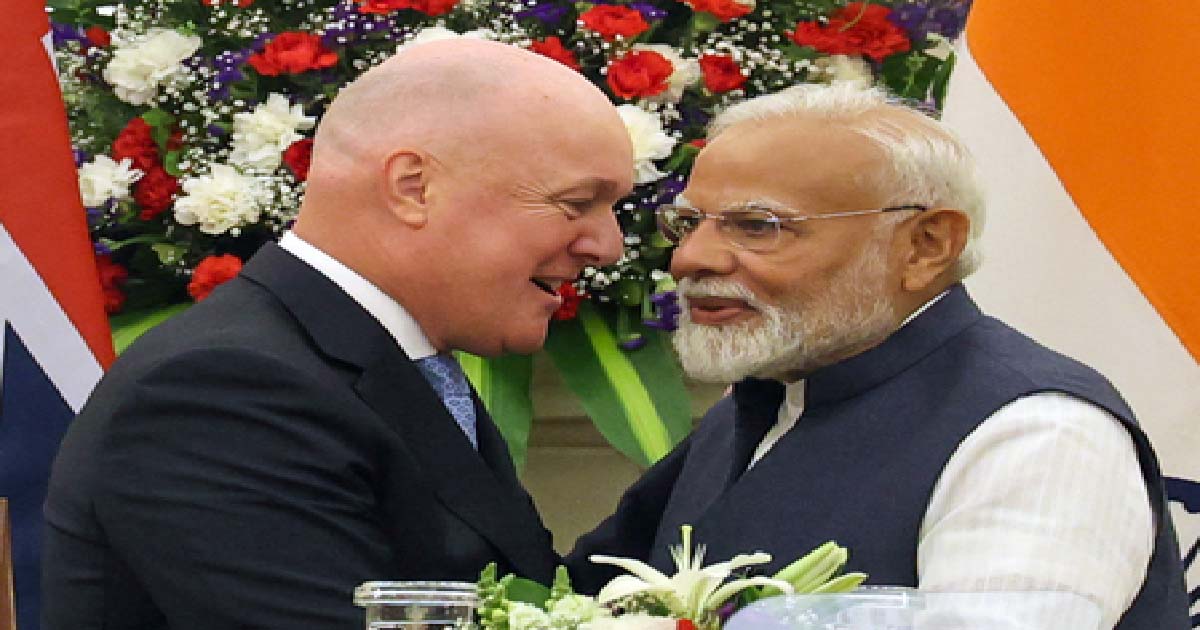
New Delhi, Dec 22: Prime Minister Narendra Modi held a telephone conversation with New Zealand’s Prime Minister, Christopher Luxon, on Monday as the two leaders jointly announced the successful conclusion of the historic, ambitious and mutually beneficial India-New Zealand Free Trade Agreement (FTA).
During the conversation, both leaders expressed confidence in doubling bilateral trade over the next five years as well as an investment of $20 billion in India from New Zealand over the next 15 years.
The negotiations began in March this year and the two leaders concluded the FTA in a record time of nine months, reflecting the shared ambition and political will to further deepen ties between the two countries, according to a statement from Prime Minister’s Office (PMO).
“The FTA would significantly deepen bilateral economic engagement, enhance market access, promote investment flows, strengthen strategic cooperation between the two countries, and also open up new opportunities for innovators, entrepreneurs, farmers, MSMEs, students and youth of both countries across various sectors,” said the statement.
The leaders also welcomed the progress achieved in other areas of bilateral cooperation such as sports, education, and people-to-people ties, and reaffirmed their commitment towards further strengthening of the India-New Zealand partnership.
This historic FTA eliminates and reduces tariffs on 95 per cent of New Zealand’s exports – among the highest of any Indian FTA – with almost 57 per cent being duty-free from day one, increasing to 82 per cent when fully implemented, with the remaining 13 per cent subject to sharp tariff cuts.
It puts New Zealand exporters on an equal or better footing to our competitors across a range of sectors and opens the door to India’s rapidly expanding middle class, according to an official statement from New Zealand.
“The Indian economy is forecast to grow to NZ$12 trillion by 2030. The India-NZ Free Trade Agreement unleashes huge potential for our world-class exporters to the world’s largest country and will significantly accelerate progress towards New Zealand’s ambitious goal of doubling the value of exports over 10 years,” it added.
International News
‘Bodes ill for democratic process’: Tharoor flags attacks on media amid violence in Bangladesh

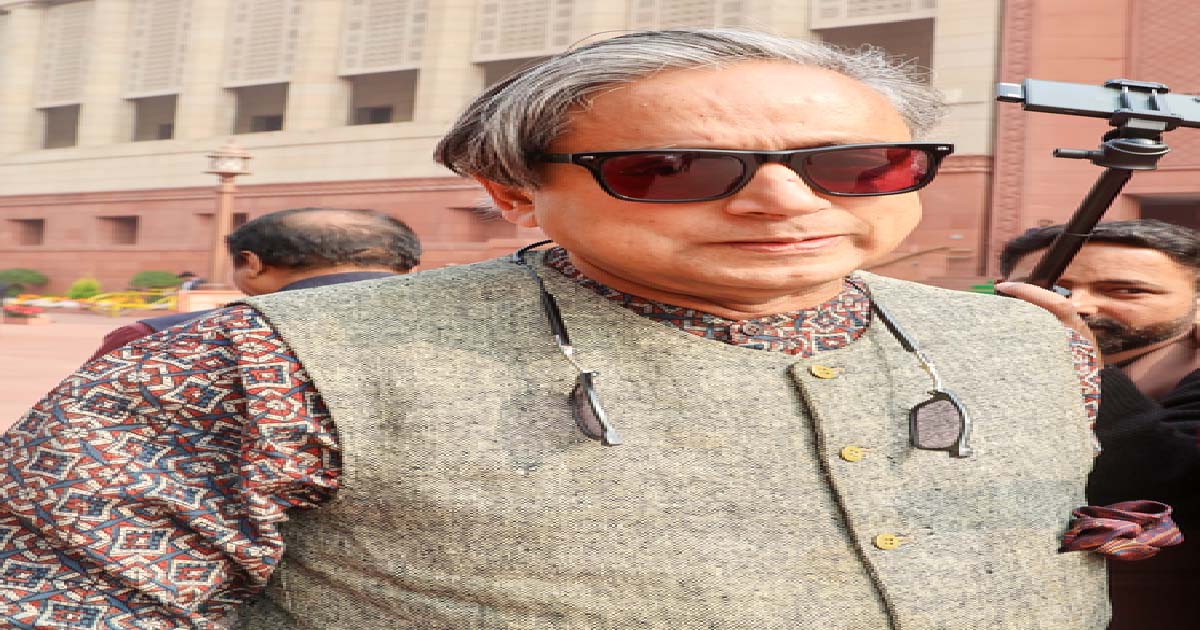
New Delhi, Dec 20: Congress MP Shashi Tharoor on Saturday voiced serious concern over what he described as targeted attacks on prominent media houses in violence-hit Bangladesh, while also condemning the forced suspension of visa services at Indian Assistant High Commissions in Khulna and Rajshahi amid worsening security conditions.
Bangladesh has witnessed a fresh wave of unrest following the death of radical Islamist leader Sharif Osman Hadi, who rose to prominence during the 2024 student movement that culminated in the ouster of the then Prime Minister Sheikh Hasina.
The killing has triggered widespread protests, with violence reported in Dhaka and several other parts of the country.
Protests over the death of Inqilab Moncho leader Hadi have continued to escalate, and the mobs targeted leading media organisations and locations associated with Bangladesh’s secular legacy. Reports of arson and vandalism at media establishments have sparked alarm both within the country and internationally.
Reacting to the developments, Tharoor said the attacks on the press strike at the core of democratic values.
In a post on X, he said: “Deeply concerned by the reports from Bangladesh. The targeted mob attacks and arson at the offices of Prothom Alo and The Daily Star are more than just an assault on two media houses; they are an assault on the freedom of the press and the very foundation of a pluralistic society.”
The Congress MP also expressed concern about the safety of journalists, including senior editors. He said he was worried about the well-being of Editor Mahfuz Anam and other media professionals working under increasingly hostile conditions.
Amid the unrest, India was compelled to shut down two visa application centres in Bangladesh, citing security threats. In Rajshahi, a march was organised by a group called ‘July 36 Mancha’ towards the Indian Assistant High Commission. The procession advanced towards the diplomatic mission but was halted midway following police intervention.
Similar demonstrations were also reported in Khulna, prompting authorities to suspend visa-related operations at both locations.
Condemning the disruption, Tharoor said the suspension of services would have far-reaching consequences.
“The forced suspension of visa services at the Indian Assistant High Commissions in Khulna and Rajshahi, driven by escalating security threats, is a major setback. This disruption directly impacts students, patients, and families who were finally seeing a glimpse of normalisation in cross-border mobility,” he said.
With Bangladesh scheduled to hold national elections on February 12, 2026, Tharoor warned that this atmosphere of violence and intolerance “bodes ill for the democratic process”.
The Congress leader also outlined steps for the Muhammad Yunus-led interim government to ensure stability and democratic continuity in the country.
Emphasising the need for decisive action, he said: “Protection of Journalists: Journalists should not have to post frantic messages for their lives while their offices burn. Mob rule must not be allowed to prevail.”
He further mentioned that the security of diplomatic facilities must be ensured to maintain vital people-to-people ties. “Extra protection must be provided for targeted embassies & consulates,” he said.
“Constructive dialogue must replace ochlocracy if the country is to survive this transition with any semblance of democracy. Interim Chief Mohammed Yunus must take the lead personally to ensure this,” he added, stressing the need to restore the calm.
Tharoor underscored that peace in Bangladesh holds significance beyond its borders, noting that stability in the country is “vital” for South Asia as a whole.
“We hope for a return to peace and a safe environment where the voice of the people is heard through the ballot, not through violence and intimidation,” he added.

New Delhi, Dec 18: The ban on Dhurandhar by Pakistan and some Gulf nations has not affected its run at the box office. The movie is showing no signs of slowing down, but the ISI has a major problem back in Pakistan.
The movie, which deals with the 1999 Khandahar hijacking, Mumbai 26/11 attacks and also the Lyari gang wars, has not gone down well with the Pakistan establishment, and all attempts have been made to block it. However, the ISI has completely lost control over the digital space and attempts at a blackout have failed miserably.
At least 2 million illegal downloads of the film have been reported in Pakistan in just two weeks. It has gone on to become the most pirated movie in Pakistan, beating 2.0 and Raees. The ban in Pakistan may have cost the movie makers Rs 50-60 crore, but the message about Pakistan being a complete terror state has been sent across Pakistan.
Although it makes no difference to the Pakistanis about what their country is, it is a psychological win for India, which has managed to spread the message despite the movie being banned. The Pakistanis are in particular upset about the portrayal of Lyari. The establishment is so desperate to counter this narrative that it has decided to fast-track a film about Lyari showing the place in a good light.
“Indian movie Dhurandhar is yet another example of negative propaganda by the Indian film industry against Pakistan, especially targeting Lyari. Lyari is not violence — it is culture, peace, talent, and resilience. Next month, Mera Lyari will release, showing the true face of Lyari: peace, prosperity, and pride. #MeraLyari,” Sindh’s Senior Provincial Minister for Information, Sharjeel Inam Memon said on X.
The ISI, despite monitoring the internet relating to the movie, has completely failed to take control. Torrents and piracy links are all over the internet, which are being used to download the movie.
The Dark Web experts in the country are using the servers in Sri Lanka, Nepal and Malaysia to ensure that the Pakistanis are able to download the film illegally and watch it. The Pakistanis are downloading the movie through Telegram channels, underground streams and also the VPN. The very fact that it has gone on to become the most pirated film to date only shows that the ISI has failed to control the situation, and all attempts to blackout the movie have fallen flat.
Officials say that this surge in the number of downloads indicates the curiosity that the people in Pakistan have about the movie.
While some may not agree with the narrative of the film, many are appreciative of the acting in the movie. Many Pakistanis are creating reels and memes on social media, it has come to light.
The social media accounts linked to both the ISI and ISPR have been using smaller clips in the movie to mock the narrative India has set. They are trying to pass off the content with false narratives against India.
The agencies say that there are attempts by the ISI-linked social media handles to manipulate the content to suit the local narrative. Experts say that the manner in which the movie Mera Lyari is being fast-tracked for a January release and the way in which the ISI is desperately trying to block out the film suggest that the Pakistanis are on the defensive.
The fact that the curiosity around the film is growing with each passing day and the rate at which it is being illegally downloaded only shows that the ISI has failed in its actions, the expert also points out.
The Pakistan Peoples Party (PPP) has also filed a legal challenge in a Karachi court questioning the images of the late Benazir Bhutto being used. The petition seeks an FIR against the cast and crew of the movie Dhurandhar.
The film’s star cast is led by Ranveer Singh, who plays Hamza, an Indian spy who infiltrates Pakistan’s Lyari to dismantle terror networks, which are backed by the ISI. The cast also includes Akshaye Khanna, Sanjay Dutt, R. Madhavan, Arjun Rampal and Rakesh Bedi.

Maharashtra Deputy CM Ajit Pawar-Led NCP To Consider Solo Run In Thane As Allies Exclude It From Seat Talks

Delhi Police arrest female drug peddler, seize ganja and cash

‘Stolen Symbol, Hollow Claim’: Shiv Sena (UBT) Attacks Maharashtra Deputy CM Eknath Shinde’s ‘Real Sena’ Assertion After Local Body Polls

Ara–Sasaram passenger train hits rotavator in Bihar’s Bhojpur

‘Avoid Sharp Attacks’: Maharashtra CM Devendra Fadnavis Warns BJP Leaders After Mahayuti Victory In Local Body Polls

Kalyan College Namaz Controversy: SIO Demands Action Against Perpetrators

Sensex, Nifty open lower amid weak global cues

Veteran Bollywood Actor Dharmendra Passes Away at 89

Mukesh Ambani, Shiv Sena UBT Chief Uddhav Thackeray & Son Aaditya Share Warm Greetings At Mumbai’s Swadesh Event

Kartik Aaryan, Ananya Panday promote ‘Tu Meri Main Tera, Main Tera Tu Meri’ on Amitabh Bachchan’s KBC
-

 Crime3 years ago
Class 10 student jumps to death in Jaipur
-

 Maharashtra1 year ago
Mumbai Local Train Update: Central Railway’s New Timetable Comes Into Effect; Check Full List Of Revised Timings & Stations
-
 Maharashtra1 year ago
Mumbai To Go Toll-Free Tonight! Maharashtra Govt Announces Complete Toll Waiver For Light Motor Vehicles At All 5 Entry Points Of City
-
 Maharashtra1 year ago
False photo of Imtiaz Jaleel’s rally, exposing the fooling conspiracy
-
 National News1 year ago
Ministry of Railways rolls out Special Drive 4.0 with focus on digitisation, cleanliness, inclusiveness and grievance redressal
-
 Maharashtra1 year ago
Maharashtra Elections 2024: Mumbai Metro & BEST Services Extended Till Midnight On Voting Day
-

 National News1 year ago
J&K: 4 Jawans Killed, 28 Injured After Bus Carrying BSF Personnel For Poll Duty Falls Into Gorge In Budgam; Terrifying Visuals Surface
-
 Crime1 year ago
Baba Siddique Murder: Mumbai Police Unable To Get Lawrence Bishnoi Custody Due To Home Ministry Order, Says Report