
Maharashtra
681 soak pits completed for rainwater management under road concreting project

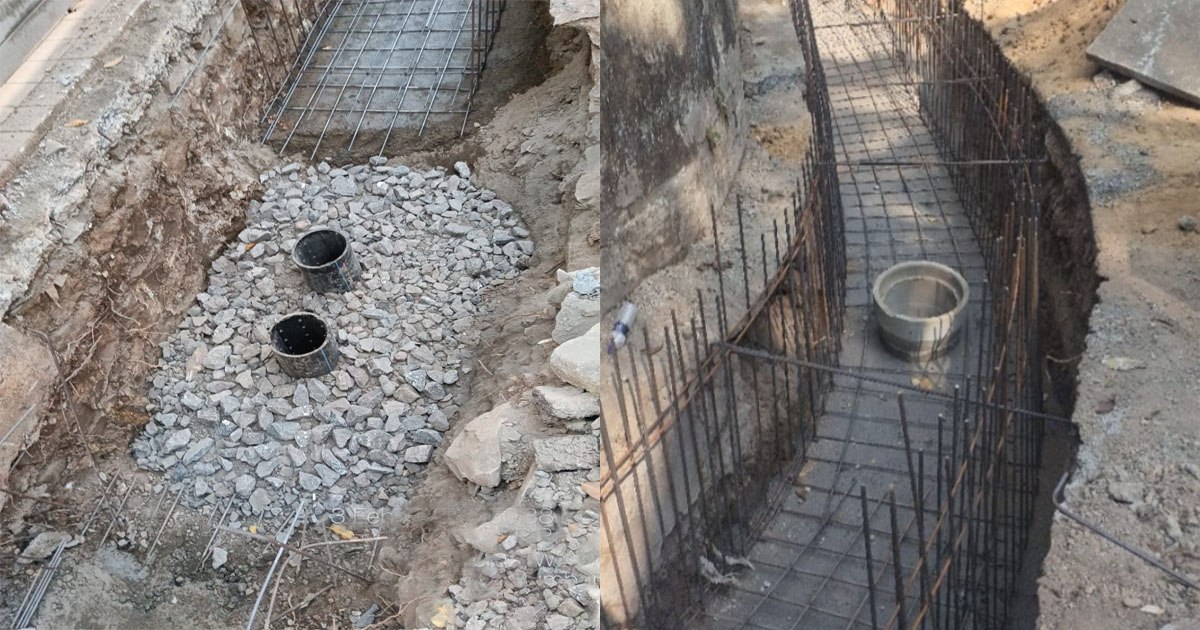
Under the Mumbai Pothole-Free Roads initiative, the Brihanmumbai Municipal Corporation has launched a road concreting project. Out of the 700 km of roads planned for concreting under Phase 1 and Phase 2, 576 km of roads are being concreted so far, achieving about 81% of the target. As an integral part of the concreting project, soak pits have been constructed to effectively manage rainwater and promote groundwater recharge. Accordingly, a total of 681 soak pits have been completed so far in the three divisions of Mumbai City, Eastern Suburbs and Western Suburbs. These soak pits will help in collecting rainwater in the ground and will also help in reducing the pressure on the drainage system.
The implementation of the road concreting project has become a major milestone in modernising Mumbai’s transport system. The project is helping to make traffic on major and secondary roads of Mumbai smoother, faster and more orderly, and the daily commute of citizens has improved significantly. So far, 576 km of roads have been concreted and all these roads have been opened for traffic. The project is being implemented within the stipulated time frame, strictly adhering to quality standards. The Mumbai Municipal Corporation administration, headed by Municipal Corporation Commissioner Ashwini Bhide, has launched a comprehensive cement concreting project to improve the quality of infrastructure in Mumbai. Due to which, travel on the roads is becoming easier. There are very few incidents of potholes due to rain on concrete roads and the maintenance costs have also come down. Apart from this, concrete roads last longer. The reason is that the citizens of Mumbai are getting pothole-free roads. Its long-term positive effects are being seen. To ensure that natural drainage of rainwater is uninterrupted due to concreting and to accelerate groundwater recharge, cesspits have been developed under the project.
Additional Municipal Commissioner (Project) Abhijeet Bangar said that special attention has been paid to natural drainage of rainwater and groundwater recharge while implementing the road concreting project.
It is planned to construct cesspits during the road work to allow rainwater to seep into the ground. These cesspits store rainwater and help it slowly infiltrate into the ground, which recharges the groundwater reserves. Filter media such as stones, gravel and sand are used in cesspools. Rainwater collected in roads or drains is diverted into these drains and from there it infiltrates into the deeper layers of the soil. This helps in storing rainwater locally without wasting it and helps in maintaining the groundwater level. It also helps in reducing the amount of water logging during heavy rainfall and aids in drainage system in urban areas. The completed concreting work has completed a total of 681 cesspools in Mumbai city, eastern suburbs and western suburbs by March 2026. While concreting of all remaining roads in Mumbai is being completed, more cesspools will be constructed along with it. This will help in developing a storm water management system across the city.
Pot filling method
In the construction of cement concrete roads, pits are made at desired locations to drain the rainwater collected on the road quickly into the ground, recharge the groundwater and prevent water from accumulating on the road surface and damaging the road. First, a pit of approximately 1.00 to 1.50 m diameter (circular) or 1.00 × 1.00 m to 1.50 × 1.50 m (square) size and 1.50 to 3.00 m deep is dug at the selected location for soaking. After the excavation is complete, the bottom of the pit is placed on natural soil without concrete, so that water can easily penetrate the ground.
Then a layer of large gravel 40 to 60 mm thick is placed at the bottom of the pit. On top of this, 20 to 40 mm. Gravel and finally 6 to 20 mm. A layer of gravel or coarse sand of the desired size is filled. Due to these layers, the water is filtered and gradually absorbed into the soil. Honeycomb brick construction or perforated RCC rings are installed on the sides of the pit due to which water also enters the soil from the sides and the absorption capacity is increased.
To carry water from the roadside drain or water channel to the absorption pit, two PVC or RCC pipes of 110 mm to 160 mm diameter are connected with a suitable slope. To prevent silt, plastic, garbage or other solids coming with the water from entering the absorption pit and clogging it, a silt trap or silt chamber is prepared before the pipe. This silt trap needs to be cleaned periodically.
A manhole cover is installed at the top of the absorption pit by providing an RCC slab of about 100 to 150 mm thickness. The location of the absorption pit is

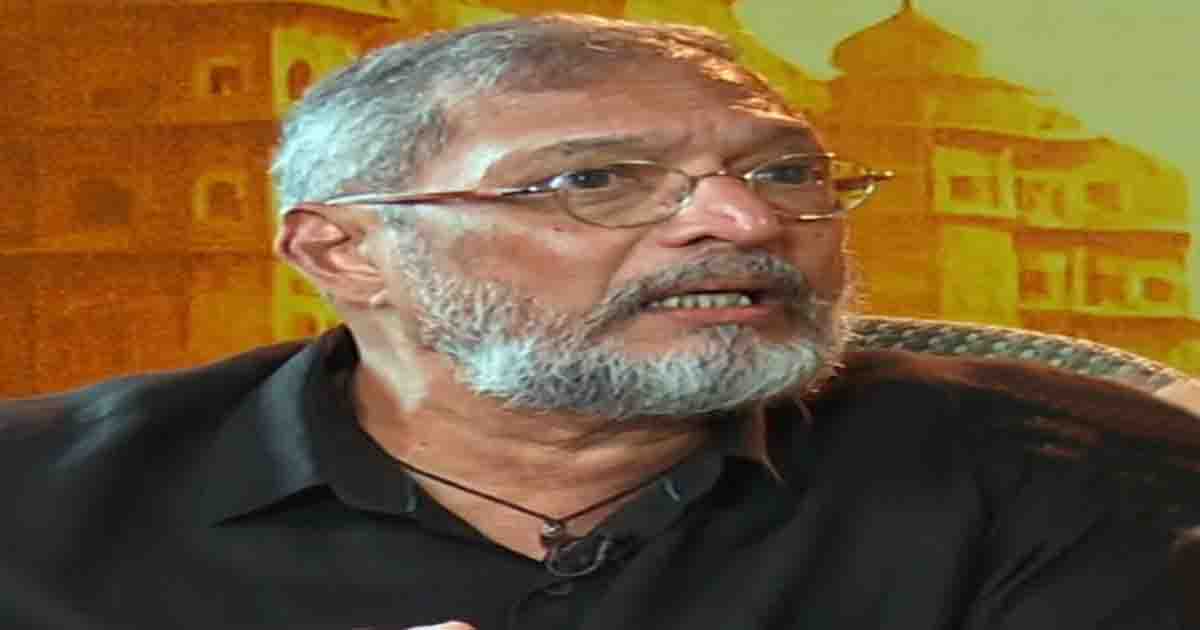
Mumbai, Oct 11: The final post-mortem report in the death case of veteran actor Nana Patekar has clarified the cause of death to be natural. A team of doctors at the Goa Medical College and Hospital (GMCH), Bambolim, in its report, has clarified that his death was a natural death, caused by a massive heart attack.
It was confirmed by the Goa Police to media. As per the police, the family has also been informed about the report and the family has also agreed to the medical report and has not raised any objection so far.
As per the final post-mortem report by GMC, the blood supply to the heart was stopped due to a blood clot in the main coronary artery, which led to a cardiac arrest. At around 2:30 am on October 8, the actor informed his family friend about his ill health on WhatsApp, after which he was brought to Manipal Hospital, Dona Paula, where doctors declared him dead even after about 45 minutes of CPR .
For the unversed, the Panaji police had registered a case of unnatural death under section 194 of the BNSS under UD No. 62/2026. Now that the post-mortem has confirmed natural death and ruled out any foul play by son Malhar Patekar and nephew Prasad Patekar, the case will be closed soon.
The late actor Nana Patekar was cremated with full state honours at his farmhouse in Donje in Pune district on Thursday. The actor was given a 3-gun salute.
The late actor’s friends and members of the film fraternity including Jackie Shroff, directors Anil Sharma, Aneez Bazmee, and producer Firoz nadiadwala arrived at Donje village to attend the last rites of Nana Patekar.
A huge crowd also turned up to bid adieu to the departed soul. Maharashtra Chief Minister Devendra Fadnavis also paid his last respects to Nana Patekar at Pune airport before leaving for Mumbai. Maharashtra Deputy Chief Minister Eknath Shinde went to the actor’s Pune farmhouse to pay his respects.
Maharashtra
Show proof for your claims before spreading anarchy: Ram Kadam on ongoing protests in Delhi

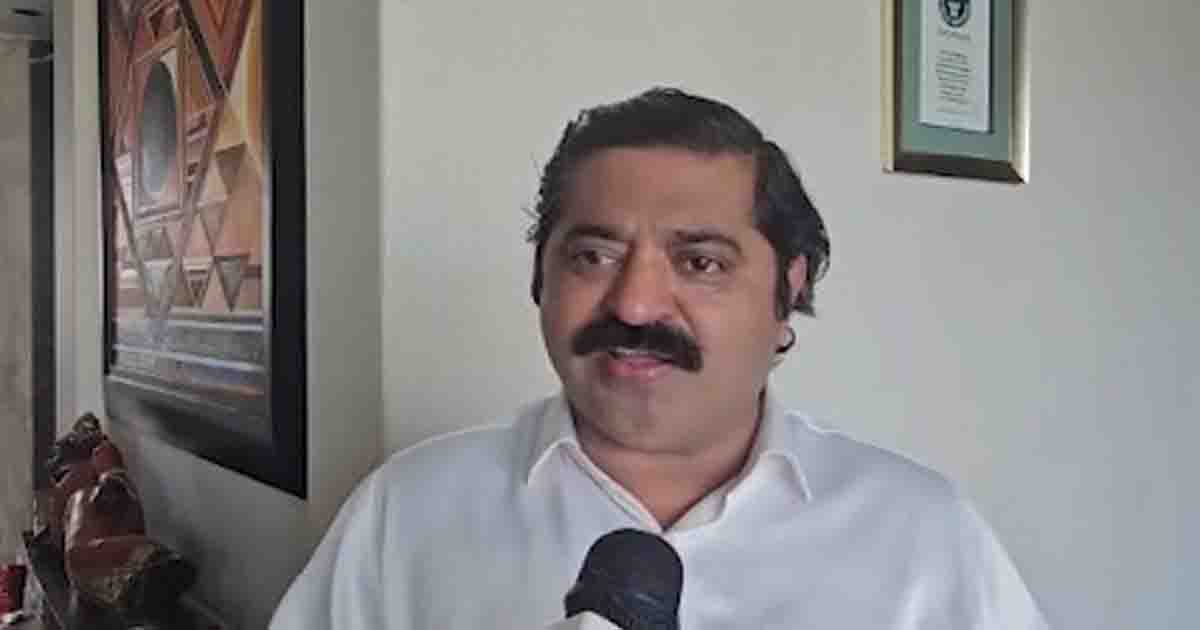
Mumbai, Oct 11: Condemning the ongoing protests that engulf the national capital and other major cities, Bharatiya Janata Party (BJP) leader Ram Kadam said on Sunday that evidence or facts should be presented before spreading anarchy in the state for just the sake of it.
Speaking to media, the BJP leader added, “Congress leaders carry the Constitution in their hands and speak about it, but their actions are aimed at undermining it. Are they above the law and administrative procedures, including the requirement to obtain permission?”
“Ever since he (Rahul Gandhi) returned from the US, it is unclear what has come over him and what is driving his actions. Is foreign funding behind his attempts to create unrest here? The voter list purification process has been carried out during the tenures of several Prime Ministers, from Jawaharlal Nehru to Manmohan Singh,” Kadam said.
“The electoral roll has not been reviewed since 2004 till 2025. That job is being done now. Is a dead person above the 2.8 crore voters. More than one crore voters’ names are repeated in the electoral rolls. Is removing those names a crime?” the BJP leader added.
“More than 6.3 crore voters have left their original homes. It’s a transparent process. If you have concrete proof and evidence, present it, but spreading anarchy in the state in the form of protests owing to foreign funding can’t be supported,” he said.
Reacting to the comments made by NCP-SP MLA Rohit Pawar on former Nationalist Congress Party (NCP) Chief and Deputy Chief Minister Ajit Pawar’s death, Kadam said, “Rohit Pawar has engaged in political theatrics by claiming that he would reveal the mystery behind the muffler on October 10. Ajit Dada Pawar has passed away, and 15 days ago, Rohit Pawar said he would reveal the mystery, but October 10 has passed without any revelation. This shows that he is engaging in cheap political stunts.”
Previously, NCP-SP leader Rohit Pawar had expressed his doubts about the plane crash that killed former Deputy Chief Minister Ajit Pawar and sought intervention of the probe agencies for further investigation.

Pune, Oct 11: An unknown person posing as an official of the Election Commission of India (ECI) defrauded a 78-year-old Pune resident of Rs 8 lakh, officials said on Sunday.
The victim, Jitendra Kumar Ahuja, is a resident of Pune’s Ghorpadi. He was cheated of Rs 8,00,015.34. A case was registered at the Mundhwa police station on October 10.
According to the police, the accused gained Ahuja’s trust by posing as an ECI official. He told Ahuja that his documents did not match. He then sent Ahuja a link and asked him to fill in his information.
It is alleged that the accused gained access to Ahuja’s mobile phone through the link and defrauded him of over Rs 8 lakh. This incident occurred between October 1 and 3.
The police have registered a case against the unidentified accused under sections 319(2), 318(4), 3(5) of the Indian Penal Code and sections 66(C) and 66(D) of the Information Technology Act.
This is the second such case that came to light on Sunday.
Earlier in the day, the police said that a person posing as an official of the Election Commission of India (ECI) cheated an 80-year-old man of Rs five lakh online under the guise of updating his voter card in Pune.
A case regarding this incident has been registered at the Lakshminagar Police Station in Pune.
According to the police, the complainant, Kanjasheri Vaidyanathan Venkatesan (80), is a retired employee of an automotive manufacturing company, residing in the Yerwada area of Pune. The accused called him, claiming to be from the ECI’s office, and stated that he needed to update his voter card.
Subsequently, the accused instructed him to download an APK file. After the file was downloaded, the accused gained access to the victim’s mobile screen, compromised his banking passwords, and fraudulently siphoned off Rs. 5 lakh.
A case has been registered at the Lakshminagar Police Station under Sections 308, 318(4), and 319(2) of the Bharatiya Nyaya Sanhita (BNS), as well as Sections 66(D) and 66(C) of the IT Act.
The full name and address of the accused have not yet been ascertained.
Investigations into both cases are currently underway, and further details are awaited, officials said.

Regime change certain in 2027: Akhilesh lashes out at BJP, Election Commission

Newlywed poisons husband, 3 family members in Maharashtra Jalgaon

Nana Patekar death: Final post-mortem report out, rules out foul play

Gujarat Police nab three more accused in Punjab’s Mad Sandhu murder case

FairPoint: Rahul-Priyanka aggressive street shows in Oppn power game

Gift to President Putin part of PM Modi bid to globally display India’s heritage

PM Modi’s warm camaraderie with Putin, Xi on full display at BRICS Summit

INDIA bloc begins protest march against ECI

Complaint against Netflix & Mukesh Chhabra for inappropriate language on ‘India’s Got Latent 2’

Maha Congress stages agitation against Gyanesh Kumar
-

 Crime4 years ago
Class 10 student jumps to death in Jaipur
-

 Maharashtra2 years ago
Mumbai Local Train Update: Central Railway’s New Timetable Comes Into Effect; Check Full List Of Revised Timings & Stations
-

 Maharashtra2 years ago
Mumbai To Go Toll-Free Tonight! Maharashtra Govt Announces Complete Toll Waiver For Light Motor Vehicles At All 5 Entry Points Of City
-

 Maharashtra2 years ago
False photo of Imtiaz Jaleel’s rally, exposing the fooling conspiracy
-

 National News2 years ago
Ministry of Railways rolls out Special Drive 4.0 with focus on digitisation, cleanliness, inclusiveness and grievance redressal
-

 Maharashtra2 years ago
Maharashtra Elections 2024: Mumbai Metro & BEST Services Extended Till Midnight On Voting Day
-

 National News2 years ago
J&K: 4 Jawans Killed, 28 Injured After Bus Carrying BSF Personnel For Poll Duty Falls Into Gorge In Budgam; Terrifying Visuals Surface
-

 Crime2 years ago
Baba Siddique Murder: Mumbai Police Unable To Get Lawrence Bishnoi Custody Due To Home Ministry Order, Says Report