
National News
46,000 police posts lying vacant in West Bengal

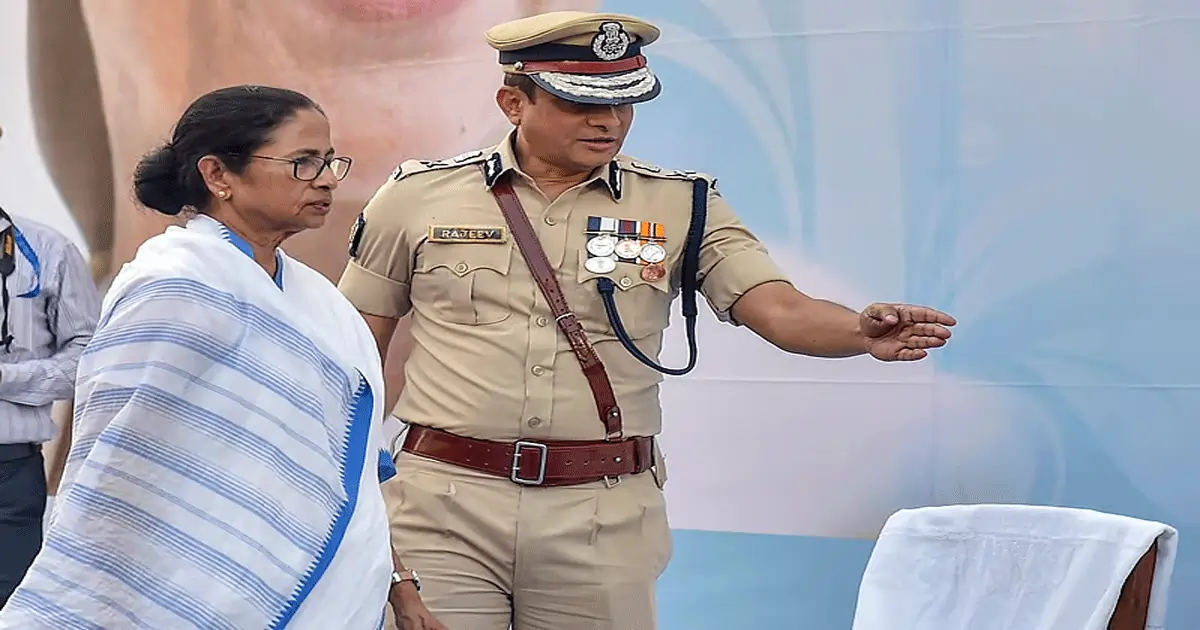
Kolkata, March 19: Approximately 46,000 active police posts are lying vacant in West Bengal as of now, according to information provided by the state police directorate to the Election Commission of India (ECI) through the office of the Chief Electoral Officer (CEO), West Bengal.
Of the total 46,000 vacant posts, around 30,000 vacancies are for constables who form the backbone of the police force in the state, while the remaining vacancies are for other ranks.
According to sources from the state police, among the posts of other ranks the maximum vacancies are for the sub-inspector or equivalent ranks, who represent the lowest officer level in the force.
The ECI recently requested details of the current police strength, including vacancies, as part of its early preparations for the state assembly election scheduled for next year. In response, the state police directorate reported that the force’s existing strength stands at approximately 80,000 personnel, while vacancies account for over one-third of the total sanctioned posts.
The state police directorate has already forwarded the data to the Election Commission through the office of CEO, West Bengal. It has stated that the existing strength of the forces, including officers and lower ranks stands at around 80,000, while the total number of vacant posts stands at 46,000.
Statistically, this means that over one-third of the strength in the state police forces is lying vacant as of now.
However, the list provided by the state police authorities to the ECI does not include data on civic volunteers attached to the forces since as per rule civic volunteers cannot be used in election-related duties.
Furthermore, a directive from the Calcutta High Court prohibits their deployment in law and order operations. The state government has faced criticism in the past for using civic volunteers in roles beyond their authorized scope.
Meanwhile, sources from the office of the CEO of West Bengal said that based on the available strength of the state police forces, the Election Commission will decide on the security arrangements for the polls and more especially on the ratio of state police forces and central armed police forces (CAPF) for the election purpose.

General
India condemns misleading content created by Chinese vloggers, deliberate distortion of geographical locations

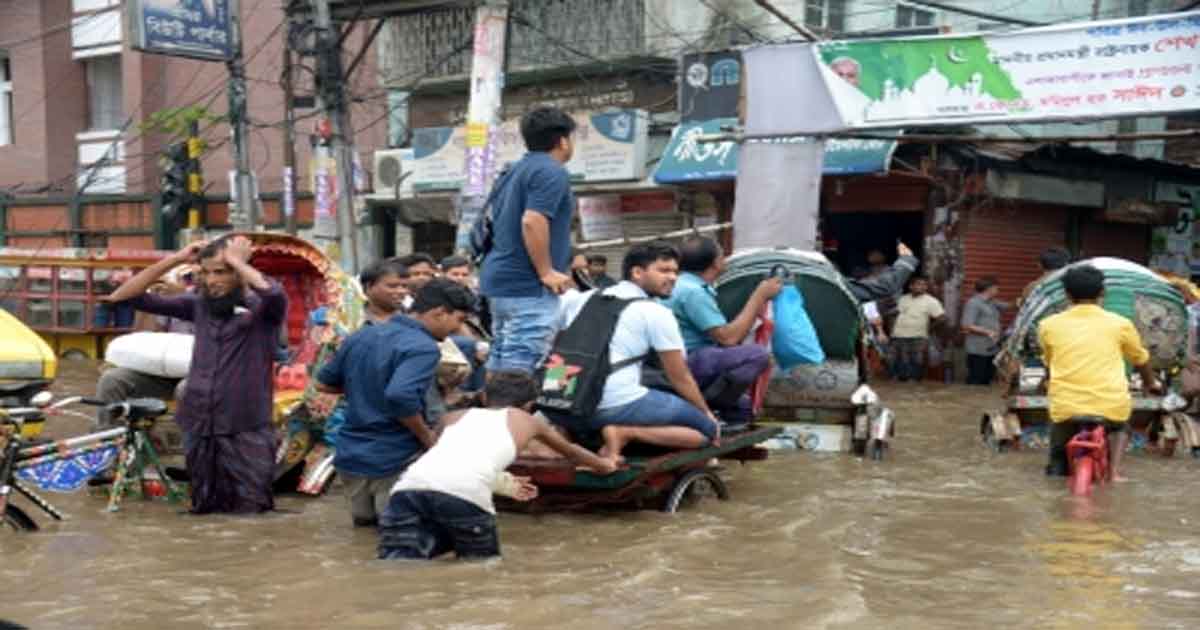
New Delhi : India on Tuesday severely condemned attempts being made by the Chinese vloggers to portray impoverished neighbourhoods in Bangladesh’s capital Dhaka as New Delhi through misleading content, saying such efforts to peddle false narratives undermine the credibility of those undertaking and backing them. Addressing a bi-weekly press briefing in New Delhi, Ministry of External Affairs (MEA) spokesperson Randhir Jaiswal urged the authorities concerned to take action against those involved.
“We have seen media reports in this regard. Such efforts to present a distorted picture of any country are unfortunate. Insofar as efforts to buy foreign elements to portray Dhaka as Delhi are concerned, the peddling of false narratives only undermines the credibility of those who are undertaking such actions and those who are behind them. And we would urge the authorities concerned to take action against such people,” he said.
The remarks came amid reports that over 150 Chinese nationals have been filming and livestreaming from economically disadvantaged neighbourhoods of Dhaka, falsely depicting them as parts of New Delhi.
While recording footage from these locations, they made disparaging comments about India’s living standards, sanitation, food habits, and poverty.
The misleading portrayal has sparked concerns over the deliberate distortion of geographical locations and the possible use of deceptive online content to create negative perceptions about India among international audiences.
The incident underscored the growing threat posed by misinformation and manipulated content on social media, where sensationalised posts can spread widely before their authenticity is established.
The activities have reportedly been taking place in Dhaka’s Tekpara and Uttara areas for several months, with streamers remaining active from early morning until late at night.
One Chinese woman identified as ‘Mianmian’, who claimed to be from China’s Sichuan province, livestreamed from beside a canal in Uttara Sector 12 of Dhaka on November 1. She reportedly presented the area to her online audience as New Delhi and described the residential buildings and surrounding areas as dirty, underdeveloped, and unhygienic.
“This is New Delhi. Their homes are extremely dirty. There isn’t even a fan inside the tin-roofed houses. This place is quite underdeveloped, dirty and unhygienic, and the law-and-order situation is poor,” leading Bangladeshi daily ‘Prothom Alo’ quoted her as saying.
In another instance, a Chinese national was seen live streaming from tea stalls in the Tekpara locality of Dhaka, making the offensive remarks that the tea consumed by locals was made using “cow urine”.
“Look, they are drinking tea. Do you know what kind of tea this is? This is cow urine tea. They drink cow urine tea,” Prothom Alo quoted him as saying.
The footage also contained derogatory comments on the residents’ lifestyles, with repeated references to poor hygiene, lack of sanitation, and substandard living conditions.
These are not isolated incidents, as reports of Chinese content creators recording videos in Dhaka’s underprivileged neighbourhoods have been emerging since May 2026.
The recurring pattern of Chinese content creators repeatedly filming in the same low-income neighbourhoods, along with allegations of geographical misrepresentation and intrusive filming, raises concerns about attempts to undermine India’s image internationally.
These recent developments point to a coordinated anti-India campaign. The issue is not merely the recording of impoverished neighbourhoods, but the calculated misrepresentation of locations in another country as parts of India, coupled with disparaging remarks intended to influence how international audiences perceive Indian society.
National News
Wife’s right to pursue higher education, career not dependent on husband’s favour: Jharkhand HC
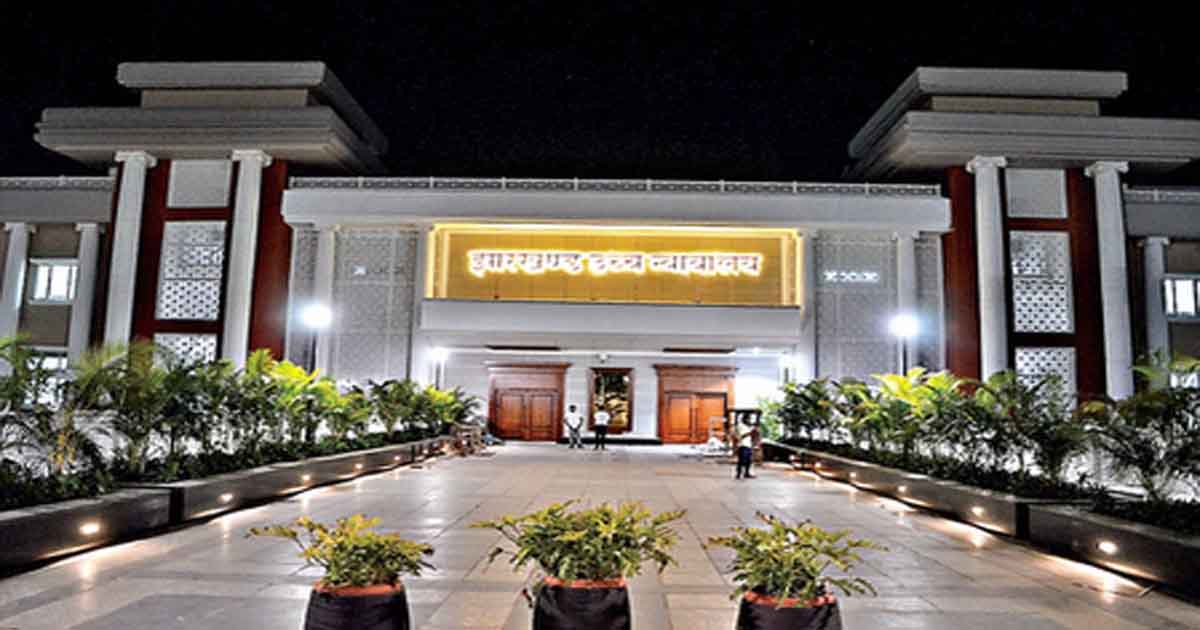
Ranchi : The Jharkhand High Court has observed that a married woman’s right to pursue higher education and a career is her inherent right and not a privilege granted by her husband. The court said that describing contrary views of a woman’s desire to study or work as “ambition” or “over-ambition” reflects a discriminatory mindset and is rooted in gender bias. A Division Bench comprising Chief Justice M.S. Sonak and Justice Manoj Prasad made the observations while allowing a matrimonial appeal filed by a woman from Jamshedpur seeking divorce on grounds of mental and physical cruelty.
The Bench set aside a March 16, 2019 order of the Family Court in Jamshedpur, which had dismissed her divorce petition. The High Court examined evidence presented by the wife during the appeal proceedings. She had testified before the Family Court and had corroborated the allegations by statements of her father, Alakh Ram, and neighbour, Pankaj Kumar Singh. The court noted that the husband neither produced any witness in his defence nor cross-examined the wife and her witnesses properly.
The Bench further observed that although the husband had denied the allegations in his written statement, his response was vague and general. Referring to provisions under Order VIII Rules 3, 4 and 5 of the Civil Procedure Code (CPC), the court said allegations must be specifically and categorically denied, and a blanket denial is legally insufficient. The court held that the Family Court had erred in disregarding the wife’s testimony. It also disagreed with the lower court’s observation that the wife’s education and employment were the result of the husband’s generosity and support. The High Court said that when a husband continues his education or career after marriage, it is considered normal, and the same standard must apply to a wife. Judicial decisions, it added, cannot be based on gender stereotypes. Setting aside the Family Court order, the High Court granted the woman a decree of divorce.
National News
Sonia Gandhi recalls losing first child : shares how Indira consoled her and Rajiv Gandhi

New Delhi : Congress leader Sonia Gandhi and her husband, former Prime Minister Rajiv Gandhi, suffered a major heartbreak and a deeply personal tragedy soon after marriage, as their newborn child passed away hours after birth. Sonia, in her autobiography titled ‘Belonging: A Journey of Love’, shares that the environment of joy and happiness that prevailed in the Gandhi household over her pregnancy turned sombre and macabre as she and Rajiv lost their first child, despite the newborn appearing healthy. She also recounts how her mother-in-law and former Prime Minister Indira Gandhi cut short her official tours and took time out to console and comfort the grieving young parents. According to the memoir, Sonia gave birth to a baby boy on January 18, 1969, and it was a preterm delivery. This happened about a year before Rahul Gandhi’s birth in 1970.
“I heard the baby’s first cry as he was placed in the incubator. Later Rajiv took me to see him, a tiny, perfectly formed boy, with thick, black hair and long, slim fingers,” Media quoted her saying in the memoir. “We fell in love with him immediately,” she adds. Hours later, they were told by the doctors that their child was no more. Penning down the excruciating experience, she says that the shock and fear of losing their first child was utterly difficult for both of them to swallow. “No, it was not possible! Why, why, I kept asking. Both of us were shocked and heartbroken,” she writes. Rajiv Gandhi also grieved and broke down over the child’s loss and cried along with her despite his “stiff upper lip” upbringing. She further recalls Indira Gandhi truncating her official tours and rushing back to the hospital to comfort and help them overcome the irreparable loss.
“She embraced us, her eyes red and swollen,” she says, recounting how the former Prime Minister sat with them. The Congress leader also shares the ‘anguished moments’ of bidding goodbye to their deceased child and how she refused the proposal of disposing of the body in a river, as was the traditional practice prevalent then. According to the memoir, the prospect of laying the infant’s body to rest was debated at home multiple times, and finally it was decided that the child be buried at Feroze Gandhi’s farm in South Delhi’s Mehrauli. “It was a painful and agonising option, but there was no other way,” she further says in the memoir and also adds that for a long time, she and Rajiv would pause and place a flower each time near the bougainvillaea bush, where the child was buried.

Subhash Ghai shares how AR Rahman changed Mumbai’s music culture with ‘Lagaan’ and ‘Rang De Basanti’

India condemns misleading content created by Chinese vloggers, deliberate distortion of geographical locations

Ankita Lokhande on celebrating Diwali in Bhilaspur: ‘It’s not about how grand the celebrations are’

Wife’s right to pursue higher education, career not dependent on husband’s favour: Jharkhand HC

Sonia Gandhi recalls losing first child : shares how Indira consoled her and Rajiv Gandhi

Rahul, Cong ecosystem want to force regime change: BJP after Neha Bora praises B’desh Gen-Z protest

BJP pays tribute to ex-President Abdul Kalam, recalls his enduring influence on generations of India’s youth

Attack on democratic rights: INDIA Bloc leaders on detentions of anti-ECI protestors

Congress trying to protect 3 crore Bangladeshi infiltrators in voter list: HM Shah

Online betting: ED conducts searches at 20 premises in Mumbai, Pune, Hyderabad
-

 Crime4 years ago
Class 10 student jumps to death in Jaipur
-

 Maharashtra2 years ago
Mumbai Local Train Update: Central Railway’s New Timetable Comes Into Effect; Check Full List Of Revised Timings & Stations
-

 Maharashtra2 years ago
Mumbai To Go Toll-Free Tonight! Maharashtra Govt Announces Complete Toll Waiver For Light Motor Vehicles At All 5 Entry Points Of City
-

 Maharashtra2 years ago
False photo of Imtiaz Jaleel’s rally, exposing the fooling conspiracy
-

 National News2 years ago
Ministry of Railways rolls out Special Drive 4.0 with focus on digitisation, cleanliness, inclusiveness and grievance redressal
-

 Maharashtra2 years ago
Maharashtra Elections 2024: Mumbai Metro & BEST Services Extended Till Midnight On Voting Day
-

 National News2 years ago
J&K: 4 Jawans Killed, 28 Injured After Bus Carrying BSF Personnel For Poll Duty Falls Into Gorge In Budgam; Terrifying Visuals Surface
-

 Crime2 years ago
Baba Siddique Murder: Mumbai Police Unable To Get Lawrence Bishnoi Custody Due To Home Ministry Order, Says Report