
International News
22 Palestinians killed in Israeli attacks on Gaza, communications blackout looms

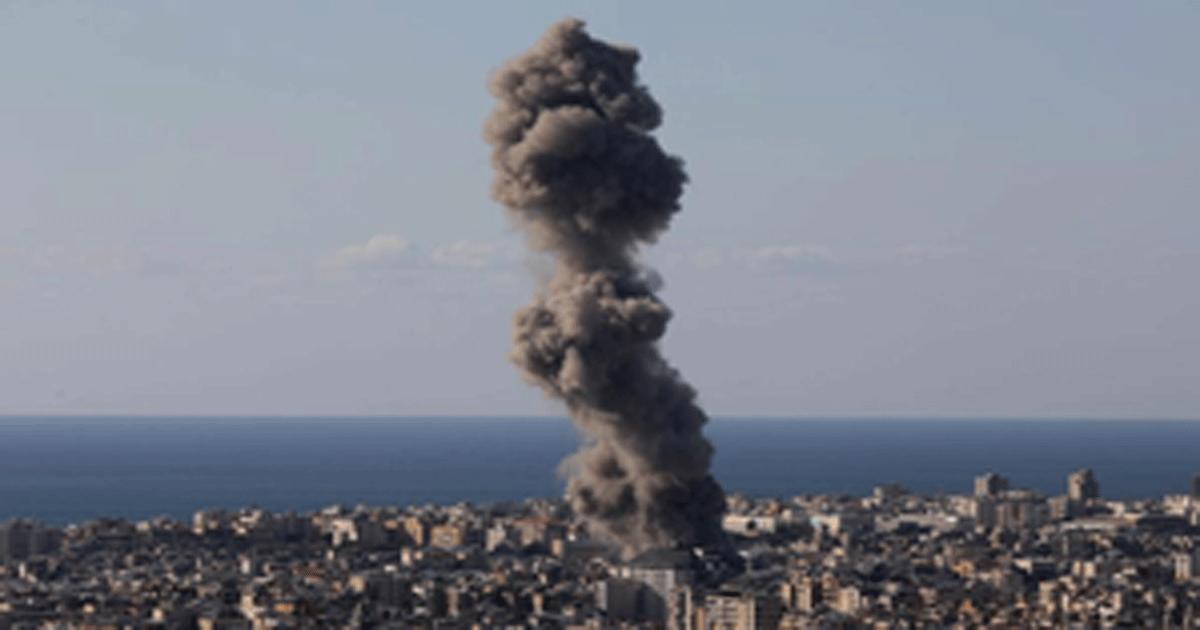
Gaza, Jan 11: Israeli airstrikes claimed the lives of at least 22 Palestinians, including a journalist, as fuel shortages threaten to plunge Gaza into a communications blackout, officials warned.
The Civil Defence in Gaza reported eight fatalities and several injuries from an airstrike targeting a group of people and a house in the Shuja’iyya neighbourhood of Gaza City. Later, an airstrike on the Al-Bureij refugee camp in central Gaza killed seven people.
In southern Gaza’s Khan Younis, medical officials at Nasser Hospital said that four bodies were recovered after aerial and artillery attacks struck multiple locations in the city. In Al-Nuseirat, central Gaza, Al-Awda Hospital reported three deaths, including journalist Sa’ed Nabhan of Al-Ghad TV, and six injuries from artillery shelling and drone strikes.
With the death of Nabhan, the number of journalists killed since the conflict began on October 7, 2023, has risen to 203, according to the government media office in Gaza. Meanwhile, Gaza’s Minister of Communications and Digital Economy, Abdul Razzaq Al-Natsha, warned that communication services, including internet and landlines, could be cut off by Friday night due to fuel shortages. The lack of fuel, exacerbated by Israel’s blockade of humanitarian supplies, threatens to disrupt emergency services and worsen the already dire humanitarian crisis, he said.
The ongoing conflict, now surpassing 460 days, began after a Hamas-led attack on southern Israel on October 7, 2023, which left over 1,200 Israelis dead and roughly 250 hostages taken. Israel’s large-scale military response in Gaza has caused over 46,000 Palestinian deaths, according to Gaza health authorities.
In another incident, Five people were killed and four others injured on Friday in an Israeli airstrike targeting Tayr Debba, a municipality in southern Lebanon’s Tyre district, the Lebanese Health Ministry reported.
According to the official National News Agency, an Israeli drone targeted a car in Tayr Debba, killing five and wounding four more, all of whom have been transferred to hospitals in Tyre.
Separately, the General Directorate of Civil Defence on Friday announced the recovery of five bodies it said were killed during recent Israeli strikes on the Lebanese town of Khiam, east of southern Lebanon.
Despite a ceasefire agreement with Lebanon, which took effect on November 27, 2024, Israel has conducted intermittent strikes in southern and eastern Lebanon, some of which have caused casualties.
Meanwhile, the Israel Defense Forces (IDF) said in a statement on Friday that Israeli aircraft struck a vehicle loaded with weapons belonging to Hezbollah in southern Lebanon.
The airstrike was launched after the IDF found several militants loading weapons onto the truck, according to the statement.
Earlier in the day, the IDF said in a separate statement that during searching operations in a southern Lebanese village, Israeli soldiers discovered a multi-barrel rocket launcher, hundreds of mortar shells, explosive devices, and RPG rifles inside a structure. It added that anti-tank fire positions and hidden weapons were also located nearby.
During another operation, Israeli troops found a weapons storage facility containing dozens of shoulder-launched missiles, explosive charges, and extensive military equipment, the IDF said, adding that all the weapons were either confiscated or dismantled.


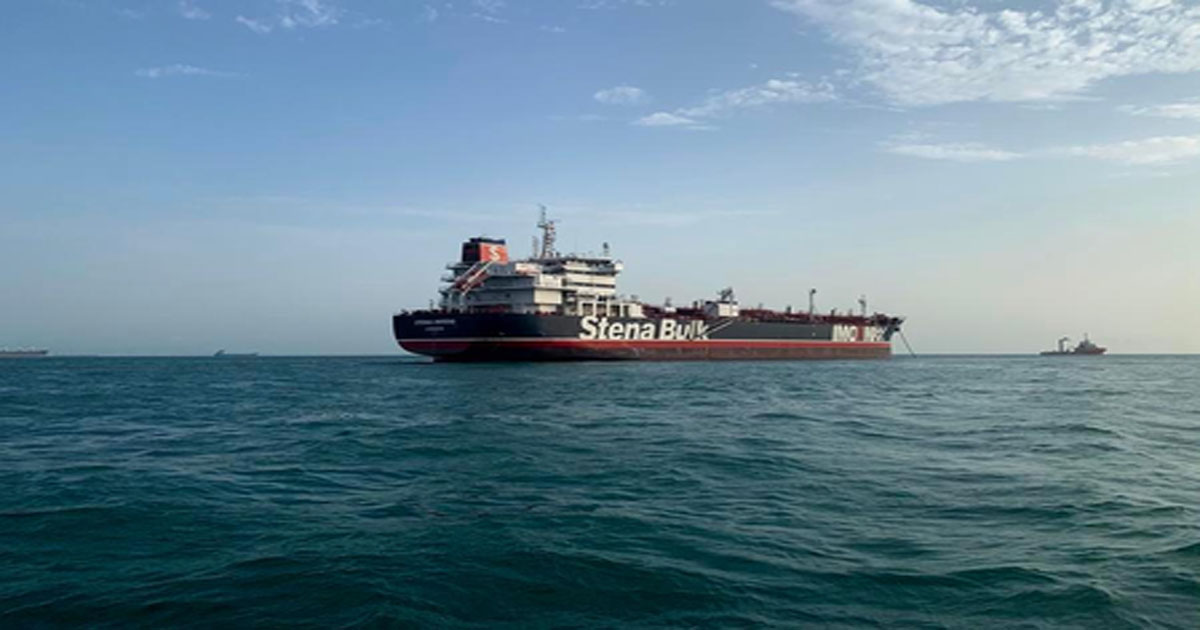
Washington, May 2: The Pentagon has estimated that Iran has suffered losses of around $4.8 billion in oil revenue due to a blockade imposed by the United States Navy on its ports, which cited unnamed officials.
The report noted that two tankers have been seized during the course of the blockade. In addition, officials said that as many as 31 tankers carrying approximately 53 million barrels of oil are currently “stuck in the Gulf,” highlighting the scale of disruption caused to Iran’s oil exports.
According to the same officials, some vessels are now opting for “a costlier and longer route to deliver oil to China for fear of US maritime interdiction,” indicating that shipping patterns have been altered due to concerns over enforcement actions by US forces.
The blockade was imposed by the United States on Iranian ports during a temporary truce, as part of efforts aimed at pressuring Iran to accept a Pakistan-brokered ceasefire that would permanently end the ongoing conflict involving Israel, the United States, and Iran.
Iran had stated last month that it had fully reopened the Strait of Hormuz to commercial shipping following the announcement of a 10-day truce between Israel and the Iranian-backed Hezbollah in Lebanon.
However, the waterway was subsequently restricted again after the US declined to lift its blockade, maintaining that restrictions would remain in place until a permanent agreement to end the war with Iran is reached.
Meanwhile, US President Donald Trump told lawmakers that the war against Iran has “terminated,” as the military action — which was launched without Congressional approval — has reached a 60-day legal deadline.
“There has been no exchange of fire between the United States and Iran since April 7, 2026,” Trump was quoted by Politico as saying in a letter to congressional leaders.
“The hostilities that began on February 28, 2026, have terminated,” Trump said.
According to the report, the latest move is an effort to quelch the fight over the need for Congress to approve the conflict, Xinhua reported.
Under the War Powers Resolution adopted in 1973, the president — after notifying Congress of the use of military force — must terminate the action within 60 days, unless Congress authorises continued military action.
The United States and Israel launched major combat operations against Iran on February 28. The Trump administration formally notified Congress on March 2 of the military action, meaning the 60-day legal deadline would expire on May 1.

Washington, April 29: The United States is sharpening its military focus on China as its primary long-term strategic challenge, with senior commanders warning that cyber capabilities and special operations forces will be critical in maintaining an edge in an increasingly contested global environment.
At a Senate hearing on the posture of US Special Operations Command and Cyber Command, Admiral Frank Bradley said American forces must simultaneously address multiple threats but remain oriented toward Beijing.
“We must also orient our force on the long-term pacing challenge of China,” Bradley told lawmakers during his testimony as he outlined a security landscape shaped by overlapping risks from Russia, Iran and transnational networks.
He said US forces no longer have “the luxury of focusing on only a single goal or mission,” describing a strategic environment defined by what officials called “simultaneity” — managing competition and conflict across regions and domains.
Cyber Command leaders stressed that technological competition, particularly in artificial intelligence, is central to countering China’s military rise. General Joshua Rudd said maintaining superiority in advanced technologies is essential to preserving US advantages.
“I think it’s critical that the US has the technological advantage in every aspect of warfighting,” he said, adding that Washington must “retain and maintain our advantage” as AI becomes more deeply embedded in military operations.
Lawmakers warned that China is actively leveraging emerging technologies. In exchanges during the hearing, officials agreed that Beijing is using artificial intelligence in military applications, underscoring the urgency of the technological race.
The Pentagon is responding through a sweeping overhaul known as “Cybercom 2.0,” aimed at strengthening the cyber workforce and accelerating innovation. Katherine Sutton, Assistant Secretary of Defense for cyber policy, said adversaries are moving rapidly to exploit vulnerabilities.
“Our adversaries have moved beyond conducting espionage and theft, and are preparing for conflict by pre-positioning disruptive capabilities inside our nation’s critical infrastructure,” Sutton said.
Responding to a question, Sutton described cyber as “the connective tissue of modern warfare.” Integration across domains is essential to counter increasingly sophisticated threats, she added.
Highlighting the growing role of partnerships in countering China, particularly in the Indo-Pacific, Bradley said strengthening alliances and building partner capacity remain central to deterrence.
He pointed to long-standing relationships in the region, emphasising that trust and credibility built over decades enable the United States to share intelligence and support partners facing evolving threats.
“Foremost and most important in any strategy of deterrence is to have that stronger alliance,” he said.
Special operations forces, which make up a small fraction of the military, provide “an indispensable asymmetric advantage,” particularly in contested environments where conventional forces may be limited.
At the same time, lawmakers expressed concern about the pace of operations and the strain on personnel, warning that sustained high demand could affect readiness over the long term.
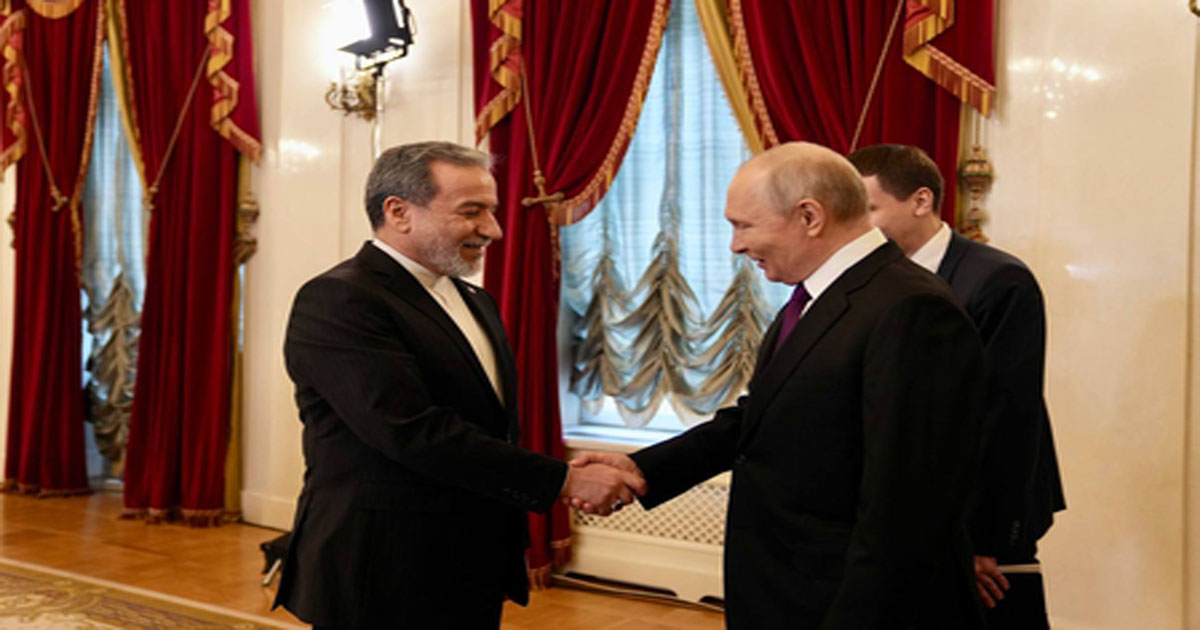
Saint Petersburg, April 28: Iranian Foreign Minister Abbas Araghchi on Tuesday said that Tehran is grateful for Russia’s solidarity and support for diplomacy as the war with the United States continues to escalate.
Araghchi on Monday called on Russian President Vladimir Putin in Saint Petersburg as the Kremlin reiterated its support for bringing peace to West Asia. He also held talks with his Russian counterpart, Sergey Lavrov.
Taking to X, Araghchi said, “Pleased to engage with Russia at the highest level as the region is in major flux. Recent events have evidenced the depth and strength of our strategic partnership. As our relationship continues to grow, we are grateful for solidarity and welcome Russia’s support for diplomacy.”
Putin on Monday reiterated Russia’s support for peace in Iran.
“For our part, we will do everything that serves your interests, the interests of all the peoples of the region, to ensure that this peace is achieved as quickly as possible. You know our position well,” Russia’s Tass news agency quoted Putin as saying during the meeting with the visiting Iranian minister.
Putin stated that the people of Iran are fighting “courageously and heroically” for their sovereignty. He expressed hope that the people of Iran will overcome this “difficult period of trials and peace will come”. He also expressed Moscow’s readiness to bolster its ties with Tehran.
During the meeting, Araghchi conveyed the wishes of Iran’s Supreme Leader, Mojtaba Khamenei and President Masoud Pezeshkian to Putin. He mentioned that people of Iran, through their courage, were able to resist “US aggression”.
He expressed gratitude to Putin and Russia for their support of Iran and stated that the ties between Iran and Russia share a “strategic partnership at the highest level” and will develop “regardless of everything that happens,” Tass reported.
Earlier in the day, Araghchi arrived in Russia’s St Petersburg to hold talks with President Putin. Upon arrival in St Petersburg, Araghchi was received by Russian officials and Iran’s Ambassador to Russia, Kazem Jalali, Iran’s Islamic Republic News Agency (IRNA) reported.
Speaking to IRNA, Jalali said Araghchi’s visit is part of “close consultations” between Iran and Russia as the two nations have similar approaches to regional and international issues. He further said that the Presidents of Iran and Russia have held three phone calls since the conflict began on February 28.
Araghchi arrived in Russia after concluding his visit to Oman amid the ongoing tensions in West Asia.
Iran and the US reached a two-week ceasefire starting on April 8. Later, the two nations held the first round of talks on April 11-12 aimed at ending the conflict. However, the talks collapsed after 21 hours of negotiations.

‘Marks Yet Another Technological Leap’: Maha CM Fadnavis Praises Govt’s Nationwide Emergency Test Alert Message Sent To Citizens

US believes naval blockade costs Iran $4.8 billion in oil revenue: Report

Mumbai Local Update: ‘No Daytime Mega Block On May 3’, Central Railway Cancels Morning Maintenance For NEET UG 2026 Exam; Midnight Work On Schedule

‘We Will Not Allow This!’: BJP MLA Sanjay Upadhyay Calls SGNP’s Price Hike For Monthly Passes ‘Completely Unjust’

Bacchu Kadu’s theatrical political shift a ‘Samadhi’ of sham, Shiv Sena UBT in Saamana

Iran-Israel Conflict Hits India’s Real Estate: Supply Disruptions & Rising Costs Delay Project Possessions

‘Son Falsely Implicated, We Are Well-Educated’: Father Of Accused Tausif Attar Defends Son After Skullcap, Namaz Coercion Allegations Rock TCS Nashik

Mumbai: Pan-India Hawala Trail Exposes Chilling Conspiracy Behind Rohit Shetty House Firing Case

Asha Bhosle’s son says last respects to be paid at residence in Lower Parel, followed by last rites at Shivaji Park

Mumbai: 15th arrest in Rohit Shetty shooting case, shooter identified, arrested, more arrests possible
-

 Crime4 years ago
Class 10 student jumps to death in Jaipur
-

 Maharashtra2 years ago
Mumbai Local Train Update: Central Railway’s New Timetable Comes Into Effect; Check Full List Of Revised Timings & Stations
-

 Maharashtra2 years ago
Mumbai To Go Toll-Free Tonight! Maharashtra Govt Announces Complete Toll Waiver For Light Motor Vehicles At All 5 Entry Points Of City
-

 Maharashtra2 years ago
False photo of Imtiaz Jaleel’s rally, exposing the fooling conspiracy
-

 National News2 years ago
Ministry of Railways rolls out Special Drive 4.0 with focus on digitisation, cleanliness, inclusiveness and grievance redressal
-

 Maharashtra1 year ago
Maharashtra Elections 2024: Mumbai Metro & BEST Services Extended Till Midnight On Voting Day
-

 National News2 years ago
J&K: 4 Jawans Killed, 28 Injured After Bus Carrying BSF Personnel For Poll Duty Falls Into Gorge In Budgam; Terrifying Visuals Surface
-

 Crime2 years ago
Baba Siddique Murder: Mumbai Police Unable To Get Lawrence Bishnoi Custody Due To Home Ministry Order, Says Report